



Who Is Legally Responsible When a Fiery Interstate Crash Claims Four Lives in California?
When a violent, multi-vehicle collision erupts in flames on a California freeway and kills four people, the legal questions facing surviving families are as urgent as they are devastating. According to the National Highway Traffic Safety Administration (NHTSA), 42,795 Americans died in motor vehicle crashes in 2022 — the highest toll in nearly two decades — and California consistently ranks among the states with the highest annual traffic fatality totals. For the families left behind, understanding who is legally responsible is the critical first step toward accountability and financial recovery.
Key Takeaways
- California records more than 4,100 traffic fatalities annually, with fiery multi-vehicle interstate crashes among the deadliest and most legally complex events on the road.
- Under California Civil Code § 1714 and CCP § 377.60, surviving family members may sue negligent drivers, trucking companies, vehicle manufacturers, and government entities for wrongful death damages.
- Families must act immediately — Electronic Logging Device (ELD) data, dashcam footage, and event data recorder information can be overwritten or destroyed within days of a crash.
- Compass Law Group, LLP has recovered over $250 million for California injury victims and bereaved families — with no upfront costs and a free initial consultation.
What Makes a Fiery Interstate Crash So Catastrophically Lethal?
Post-crash fires transform survivable collisions into fatal ones. When a vehicle’s fuel tank ruptures — whether from a high-speed rear-end impact, rollover, or underride collision with a commercial semi-truck — ignition can occur within seconds. Occupants who might survive the initial force of impact are left with no egress, resulting in fatal burn injuries, smoke inhalation, and asphyxiation. On California’s densely traveled interstate highway system, where passenger vehicles routinely share lanes with 80,000-pound commercial trucks at freeway speeds, the conditions for catastrophic multi-vehicle pileups are ever-present.

A fully loaded commercial truck generates kinetic energy far beyond what a passenger vehicle’s safety structure is designed to absorb. When that force ruptures a fuel line or compromises a fuel tank, the resulting fire can engulf multiple vehicles within moments — turning a chain-reaction collision into a mass-casualty event. California Highway Patrol investigators classify crashes involving four or more fatalities as requiring specialized major-accident investigation teams, triggering additional scrutiny of all involved parties and preserving a higher volume of investigative data. Understanding what causes traffic fatalities in California is the foundation of both prevention and legal accountability.
For surviving families, the legal landscape is equally complex. A single fiery crash may involve multiple at-fault parties: the driver who caused the initial collision, the trucking company that employed and improperly supervised them, the manufacturer of a defective fuel system, and potentially a government agency responsible for a dangerous stretch of highway. Each responsible party may carry separate insurance coverage, and identifying all of them requires immediate, expert legal investigation. Consulting with an experienced California car accident attorney in the days immediately following a fatal crash is essential to protecting your family’s legal rights before critical evidence disappears.
California Car Accident Statistics
The human and economic toll of fatal highway crashes in California is staggering. The following data points — drawn from federal and state safety authorities — place deadly interstate crashes in their broader statistical context and underscore why families affected by these tragedies deserve aggressive, fully resourced legal representation.

- 4,100+ people died in California traffic crashes in a recent reporting year, according to the California Highway Patrol — more than eleven lives lost on the state’s roads every single day.
- 42,795 Americans died in motor vehicle crashes in 2022, the highest national toll in nearly two decades, according to NHTSA’s 2023 Traffic Safety Facts.
- 5,932 people died in crashes involving large trucks nationally in 2022 — a 2% increase from the prior year — with California among the top five states for commercial truck-related fatalities (NHTSA).
- 29% of all U.S. traffic fatalities in 2022 involved speeding, making it the most common behavioral factor in deadly crashes, with California freeways among the highest-risk corridors (NHTSA).
- $1.4 trillion — the estimated annual economic cost of motor vehicle crashes in the United States, including medical expenses, lost productivity, property damage, and emergency response costs (NHTSA, 2021 Cost Study).
These figures are not abstract. Behind each one is a family changed forever by a sudden, preventable loss. California law exists precisely to ensure that when someone’s negligence causes death on the road, the responsible parties face real legal and financial consequences. That accountability begins with a thorough wrongful death investigation led by attorneys who understand the technical, forensic, and legal dimensions of a fatal highway crash.
What Does California Law Say About Liability in a Fatal Interstate Crash?
California’s foundational negligence statute — Civil Code § 1714 — establishes that “every person is responsible for injury occasioned to another by his or her want of ordinary care or skill in the management of his or her property or person.” In the context of a fatal highway crash, this means any driver, trucking company, manufacturer, or government entity whose lack of reasonable care contributed to the collision can be held legally responsible for the resulting deaths. California courts have interpreted this duty broadly — it extends not only to fellow motorists but to fleet maintenance contractors, cargo brokers, and highway design agencies whose failures create dangerous conditions.

For wrongful death claims specifically, California’s statutes are clear and detailed. CCP § 377.61 governs the full scope of recoverable damages in a wrongful death action, which include: the present discounted value of the financial support the deceased would have provided over their expected lifetime; funeral, burial, and cremation expenses; the reasonable value of household services the deceased performed; and non-economic damages, including the loss of love, companionship, comfort, care, assistance, protection, affection, society, and moral support. In cases where the defendant’s conduct was grossly negligent, reckless, or willful — such as a truck driver operating far beyond federal Hours of Service limits — punitive damages under Civil Code § 3294 may also be available.
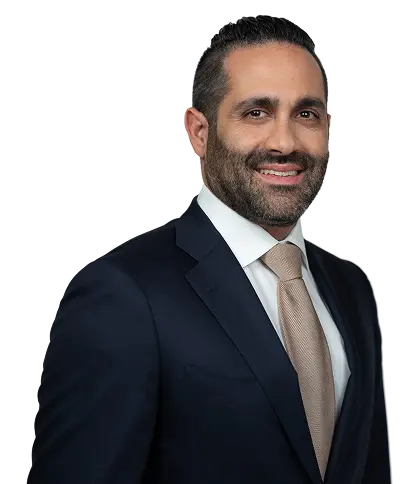
California also follows a “pure comparative fault” doctrine under Civil Code § 1431.2. This means that even if a jury finds your deceased loved one bore some share of responsibility for the collision, the family can still recover damages proportional to the fault of other responsible parties. Insurance carriers routinely attempt to shift blame onto the deceased victim to minimize their exposure. “Our job is to build an airtight case using accident reconstruction, event data recorder forensics, and expert witnesses that makes the true cause of the crash undeniable,” says Joseph Shirazi, Managing Partner of Compass Law Group, LLP. “California families should never have to accept a reduced settlement because a defendant’s insurer chose to blame the victim.”
Who Can Be Held Responsible for Deaths in a Fiery Multi-Vehicle Collision?
Fatal interstate crashes rarely have a single cause or a single defendant. A comprehensive legal investigation — encompassing accident reconstruction, ELD data analysis, vehicle inspection, cell phone records, and driver history — almost always reveals multiple responsible parties, each of whom may carry insurance coverage that can compensate the victim’s family. In a fiery crash that kills four or more people, the entities that may bear legal liability include:

Free Confidential Consultation — Compass Law Group, LLP | Car Accidents
- At-fault drivers — any motorist whose speeding, distracted or impaired driving, unsafe lane change, or failure to maintain a safe following distance triggered the initial collision or contributed to the chain-reaction crash
- Trucking companies — commercial carriers may be vicariously liable under respondeat superior for their drivers’ negligence; they may also face independent claims for inadequate driver screening, Hours of Service violations, negligent dispatching, and failure to maintain safe equipment
- Vehicle manufacturers — if a defective fuel system design, inadequate fuel tank shielding, faulty airbag deployment, or structural failure contributed to the post-crash fire or to greater fatality severity, the manufacturer may face product liability claims under both strict liability and negligence theories
- Cargo loaders and freight brokers — improperly secured or overweight freight can shift during transit, cause abrupt loss of vehicle control, and rupture fuel or hydraulic lines — creating the very conditions that turn a survivable collision into a fire fatality
- Government entities — if a poorly designed interchange, inadequate guardrail, missing lane delineation, or failure to maintain signage contributed to the crash, a claim against CalTrans or a local agency may be available under the California Government Claims Act, subject to specific filing deadlines
- Third-party contractors and employers — a negligent mechanic who failed to properly repair brake or fuel systems, or an employer whose employee was operating a company vehicle recklessly while on the clock, may share civil liability for the resulting deaths
Identifying every responsible party requires moving with urgency. Commercial trucks are equipped with Electronic Logging Devices, event data recorders, forward-facing cameras, and GPS tracking systems that preserve invaluable pre-crash data — but only for a limited window before automatic overwrite cycles destroy that information. Families who retain a commercial truck accident attorney in the days immediately following the crash are far better positioned to secure evidence preservation through litigation hold notices before it disappears permanently.
When a motorcycle was part of the chain-reaction crash — either as a contributing vehicle or as one caught in the collision — additional legal theories may apply, including California’s lane-splitting standards and motorcycle-specific traffic regulations. Our Los Angeles Motorcycle Accident Lawyer team routinely handles multi-vehicle fatal crash cases involving riders, and our Los Angeles Lane Splitting Accident Lawyer practice provides specialized expertise when lane-splitting behavior is alleged as a contributing factor.
What Is a Fatal Crash Wrongful Death Claim Worth in California?
The value of a wrongful death claim in California is determined by a combination of economic factors — the deceased’s age, income, earning trajectory, number of financial dependents, and expected work-life — and non-economic factors, including the depth and nature of the family relationship and the degree of the defendant’s culpability. While every family’s circumstances are unique, data from resolved California wrongful death cases provides important context for survivors evaluating their legal options.
Settlement values in fatal California car and truck crash cases commonly range from $500,000 to $5 million or more, with multi-defendant cases involving commercial carriers often resolving at the higher end of that range due to the combination of mandatory federal insurance minimums for commercial truckers, employer liability theories, and the additional leverage created by evidence of regulatory violations. Cases where a manufacturer’s defective fuel system or vehicle design contributed to the post-crash fire — giving rise to parallel product liability claims — can yield significantly larger recoveries. Compass Law Group has recovered over $250 million on behalf of California injury victims and bereaved families, including multi-million-dollar results in wrongful death cases arising from highway crashes.
Burn injury survivors — those who escaped the collision alive but with third or fourth-degree burns — face some of the highest medical costs in all of personal injury law. The CDC’s National Center for Injury Prevention and Control recognizes severe burn trauma as among the most devastating and expensive categories of traumatic injury, with lifetime care for serious burn cases frequently exceeding $1 million when accounting for surgeries, ICU stays, skin grafting, rehabilitation, and long-term psychological treatment. Families throughout Northern California can reach our Oakland Burn Injury Lawyer at Compass Law and our San Francisco Burn Injury Lawyer at Compass Law for dedicated representation in burn injury cases arising from fiery highway crashes.
How Can Compass Law Group Help Families After a Fatal California Interstate Crash?
Compass Law Group, LLP was built specifically to fight for California families in the aftermath of catastrophic, life-altering crashes. Our founding attorneys — Joseph Shirazi (Bar #265403) and Simon Esfandi (Bar #275307) — have spent years litigating the most complex wrongful death and serious injury cases in the state, consistently taking on the largest commercial carriers, insurers, and their defense teams. With over $250 million recovered on behalf of our clients, we bring both the financial resources and the legal firepower to pursue every available avenue of recovery — from commercial truck insurance policies and employer liability claims to parallel product liability actions against vehicle manufacturers.
When you retain Compass Law Group after a fatal crash, we immediately assign a team that includes a certified accident reconstruction specialist, a forensic vehicle inspector, and an on-the-ground investigator dispatched to the crash site before evidence is disturbed. We send litigation hold letters to all potentially responsible parties before data is overwritten. We manage every aspect of the investigation — the coroner’s report, the black box data download, the ELD forensic analysis, the insurer negotiations, and, when insurers refuse to offer fair value, the trial. Our clients focus on honoring their loved ones and beginning the long process of healing. We handle everything else. If your family needs a California car accident lawyer with the depth, dedication, and proven track record to handle a wrongful death case at the highest level of advocacy, we are prepared to help you today.
Our Los Angeles car accident lawyer team has an established record in multi-vehicle fatal crash litigation throughout Southern California, and our statewide presence means families in every part of the state — from Los Angeles to Sacramento to Oakland to San Francisco — have equal access to our full legal team. We operate on a strict No Win, No Fee basis: you pay nothing unless we recover compensation for your family, and your initial consultation is always free.
Q: Can a family file a wrongful death lawsuit after a fatal fiery crash on a California interstate?
Yes. Under California CCP § 377.60, the surviving spouse, domestic partner, children, or financial dependents of a crash victim may file a wrongful death lawsuit against any party whose negligence caused or contributed to the death. Recoverable damages include the deceased’s lost lifetime income and financial support, funeral and burial costs, and profound non-economic losses including love, companionship, and moral guidance. California imposes no cap on wrongful death damages, meaning families can pursue the full measure of their loss — including punitive damages where the defendant’s conduct was willful or grossly reckless.
Q: How long does a California family have to file a wrongful death claim after a fatal crash?
In most cases, California’s statute of limitations for wrongful death is two years from the date of the victim’s death, under CCP § 335.1. This deadline is absolute — missing it typically forfeits the family’s right to compensation regardless of the merits of the case. A shorter deadline applies when any government entity shares responsibility: a Government Claims Act notice must be filed within six months of the incident. Because crashes involving a defective public road, a government vehicle, or CalTrans negligence trigger this shorter clock, families should contact an attorney immediately — not months later.
Q: Who pays compensation when a commercial truck caused a fiery fatal crash?
When a commercial truck is involved in a fatal crash, multiple insurance policies may apply simultaneously: the driver’s personal auto policy, the trucking company’s commercial liability policy (which under federal FMCSA regulations must carry minimum limits of $750,000 to $5 million depending on cargo type), and potentially the cargo owner’s or freight broker’s liability policy. Beyond insurance, the trucking company may face direct employer liability for negligent hiring, inadequate driver training, and hours-of-service violations. Compass Law Group pursues every available source of recovery — including parallel claims against vehicle manufacturers when a defective component contributed to the fire.
Q: Can a family still recover damages if the crash victim was partially at fault?
Yes. California follows a pure comparative fault rule under Civil Code § 1431.2, which permits a family to recover wrongful death damages even if the deceased bore some share of responsibility for the crash. If a jury finds the victim 25% at fault and the defendant 75% at fault, the family recovers 75% of the total damages award. Insurance companies routinely and strategically overstate victim fault to reduce their payouts. An experienced wrongful death attorney counters these tactics with crash reconstruction analysis, ELD data forensics, and expert witnesses who can establish the true cause of the collision.
Q: Are burn injury survivors from a fiery crash entitled to additional compensation in California?
Absolutely. Burn injury survivors typically face the highest medical costs of any traumatic injury category — including emergency ICU care, multiple reconstructive surgeries, skin grafting, occupational therapy, psychological counseling, and long-term disability management. California law entitles burn survivors to recover all past and future medical expenses, lost earning capacity, disfigurement damages, pain and suffering, and emotional distress. These cases demand attorneys who understand both the medical complexity of burn trauma and the legal strategies required to compel insurers — who routinely undervalue burn claims — to fund complete lifetime care.
No Win, No Fee — Compass Law Group, LLP | Call (213) 320-1001
Source: Compass Law Group | Car Accidents

Steps to Take After a Car Accident
Whether you are a crash survivor or the family member of someone killed in a fiery interstate collision, the steps you take in the hours and days that follow will directly shape your ability to recover compensation. California imposes strict legal deadlines, and the most valuable evidence in a fatal crash case is perishable. Follow these steps carefully and in sequence:
- Call 911 immediately — Ensure that emergency medical services, fire suppression units, and law enforcement respond to the scene without delay. Do not attempt to move seriously injured crash victims unless they face immediate danger from active fire or an oncoming secondary collision.
- Photograph and video the scene while it is intact — If it is safe to do so, capture images of vehicle positions, fire damage, road surface conditions, skid marks, cargo spill or debris fields, missing or damaged signage, and the surrounding highway environment. This visual documentation cannot be recreated once cleanup begins.
- Obtain all official crash reports and records — Request the CHP incident report as soon as it becomes publicly available. Record the report number, the names of all investigating officers, any citations issued at the scene, and the assigned CHP unit. For fatal crashes, separately request the county coroner’s or medical examiner’s report for each deceased victim.
- Preserve all medical and financial documentation — Collect emergency room records, hospital bills, surgical and ICU reports, prescription records, and funeral and burial expense receipts. These documents form the evidentiary backbone of the economic damages component of your wrongful death or injury claim.
- Refuse recorded statements to at-fault insurers without legal counsel — Adjusters from the defendant’s insurance carrier will contact surviving family members quickly, often within 24 to 72 hours of the crash. Any recorded statement you provide may be used to reduce or deny your claim. Refer all insurer communications to your attorney before making any statement of any kind.
- Have your attorney issue litigation hold notices immediately — Your legal team should send written preservation demands to all involved parties — trucking companies, employers, vehicle manufacturers, and fleet operators — directing them to preserve Electronic Logging Device records, dashcam and forward-facing camera footage, GPS and telematics data, driver cell phone records, maintenance and inspection logs, and drug and alcohol screening records. These records are routinely destroyed or overwritten without such notices in place.
- Contact a wrongful death attorney and file within California’s deadlines — Most families have two years from the date of death to file a wrongful death lawsuit under CCP § 335.1. If a government entity is involved — due to a defective road, missing guardrail, or government-owned vehicle — a Government Claims Act notice must be filed within six months. Contact Compass Law Group at (213) 320-1001 today for a free, no-obligation consultation.
Compass Law Group serves families throughout California, with offices in Los Angeles, Beverly Hills, Sacramento, Oakland, Long Beach, and San Francisco. No matter where on California’s interstate highway system the crash occurred, a member of our legal team is prepared to respond.
Get Your Free Consultation Today
If your family lost a loved one — or you survived with serious burn or traumatic injuries — in a fiery California interstate crash, the attorneys at Compass Law Group, LLP are ready to fight for the accountability and full compensation your family deserves. No Win, No Fee.