





Can a Manufacturer Escape Liability by Claiming “State of the Art”? What California Injury Victims Need to Know
When a defective product injures you or a loved one, the manufacturer’s first move is often not an apology — it’s a legal defense strategy. One of the most powerful weapons in a corporate defendant’s arsenal is the “state of the art” defense, which argues the product was built using the best available technology and scientific knowledge at the time it was made. According to the Consumer Product Safety Commission’s National Electronic Injury Surveillance System, consumer products account for more than 29.4 million emergency department visits in the United States every year — and in many of those cases, manufacturers attempt to invoke this defense to sidestep accountability for the harm their products caused.
Key Takeaways
- The “state of the art” defense allows manufacturers to argue their product was built with the best available technology and scientific knowledge at the time of manufacture — but this does not automatically defeat all product liability claims in California.
- Under California’s dual-test strict liability framework established in Barker v. Lull Engineering Co. (1978), injury victims can often bypass the state of the art defense entirely by pursuing the consumer expectations theory of design defect liability.
- If a manufacturer raises this defense, victims should immediately preserve the product, document the scene, and consult a product liability attorney — most claims must be filed within 2 years under CCP § 335.1.
- Compass Law Group, LLP has recovered more than $250 million for injury victims across California, with free consultations and no fees unless we win your case.
What Is the “State of the Art” Defense in California Product Liability Cases?
The state of the art defense is a legal argument deployed by product manufacturers, distributors, and sellers when facing injury claims. In plain terms, the defendant argues: “At the time this product left our facility, it was designed and built using the most advanced technology and scientific knowledge available to the industry — and no manufacturer, engineer, or scientist could reasonably have foreseen or prevented the risk that caused your injury.” The defense is most frequently invoked in design defect and failure to warn cases, where the allegation is not that one unit was assembled incorrectly, but that the product’s fundamental design or labeling was unreasonably dangerous.

“The state of the art defense is a manufacturer’s attempt to define the ceiling of their own accountability,” says Joseph Shirazi, Managing Partner of Compass Law Group, LLP. “But California law doesn’t let corporations grade their own homework. Our strict liability doctrine was specifically designed to protect ordinary consumers from being held to the same standard of knowledge as the engineers who built the product — and we use that asymmetry aggressively in every case we take.”
It is important to understand what this defense does and does not claim. It does not assert the product was perfectly safe or that no one was hurt. It asserts only that the manufacturer acted reasonably given the scientific and technological landscape of the era. That distinction opens several powerful avenues for a California product liability attorney to challenge the defense — and California’s pro-victim statutory and case law framework provides tools to do so that few other states match.
How Does California Law Treat the State of the Art Defense?
California has one of the most victim-protective product liability frameworks in the nation, shaped by decades of California Supreme Court decisions and grounded in California Civil Code § 1714, which establishes a general duty of care owed by all persons. The foundational product liability precedent is Barker v. Lull Engineering Co. (1978), 20 Cal.3d 413, in which the California Supreme Court adopted a dual-test framework for design defect cases that fundamentally limits the power of the state of the art defense.

Under the consumer expectations test, a product is defective in design if it fails to perform as safely as an ordinary consumer would expect when used in an intended or reasonably foreseeable manner. This test requires no analysis of industry standards, technological feasibility, or available alternatives. If the product simply did not perform as any reasonable consumer would expect, strict liability attaches — and the state of the art defense has essentially no role. The question is not what engineers knew, but what ordinary people expected.
Under the risk-benefit test, a product is defective if the plaintiff proves the design’s risks outweigh its benefits. Here the state of the art defense is more relevant — manufacturers argue that no safer design was commercially or technically feasible at the time. However, under Barker, once a plaintiff demonstrates the product caused injury, the burden of proof shifts to the defendant to prove the benefits outweigh the risks — a critical procedural advantage for injury victims. For failure to warn claims, the California Supreme Court held in Anderson v. Owens-Corning Fiberglas Corp. (1991), 53 Cal.3d 987, that the defense applies only where the hazard was genuinely scientifically unknowable at the time — and internal corporate documents often defeat this claim by showing the manufacturer suspected the risk long before public disclosure. Los Angeles personal injury lawyers at Compass Law Group understand how to exploit this burden-shifting mechanism to maximum effect.
What Types of Product Liability Claims Can — and Cannot — This Defense Block?
Not all product liability theories respond to the state of the art defense in the same way. Understanding which legal theory applies to your case — and how it interacts with this defense — is one of the first and most critical strategic decisions an attorney must make. Bell Gardens personal injury lawyers and other Compass Law Group attorneys regularly evaluate cases under multiple theories to identify the path of least resistance to full compensation.

Design defect — consumer expectations test: The state of the art defense generally cannot block these claims. If the product failed to perform as safely as an ordinary consumer would expect, strict liability applies regardless of what technology was available at the time. This theory is particularly powerful for everyday consumer goods — vehicles, appliances, children’s toys, and household equipment. Design defect — risk-benefit test: Here the defense is more potent, but still rebuttable. The manufacturer must prove its design’s benefits outweighed its risks — and plaintiffs counter with expert evidence of feasible alternative designs that existed at the time. Manufacturing defect claims: The state of the art defense rarely applies here. A manufacturing defect means a specific unit deviated from the manufacturer’s own specifications — no state of the art argument changes the fact that the product left the factory flawed. Failure to warn claims: As established in Anderson v. Owens-Corning, the defense applies in this context but is defeated by showing the manufacturer had actual or constructive knowledge of the hazard — which discovery of internal corporate documents often reveals. California courts have also expanded seller liability for defective products sold through online platforms, opening additional avenues for recovery beyond the original manufacturer.
The following categories of products and industries represent the most common contexts where the state of the art defense is raised — and where skilled attorneys know to dig deepest for evidence of concealed corporate knowledge:
- Industrial machinery and heavy equipment — manufacturers claim engineering limitations of the era prevented safer guarding designs, emergency shutoffs, or load-stability features that are now standard
- Pharmaceutical drugs and medical devices — companies argue that clinical trial protocols, FDA approval standards, and peer-reviewed literature at the time represented the full extent of what was scientifically knowable about a drug’s side effects or a device’s failure modes
- Automotive components — manufacturers cite applicable NHTSA Federal Motor Vehicle Safety Standards in place at the time of production to argue their airbag systems, tire designs, fuel systems, or structural components complied with the state of the art for crash safety engineering
- Consumer electronics and appliances — companies argue that fire, electrical arcing, thermal runaway, or overheating hazards were not foreseeable under the UL, ASTM, or IEC standards applied during the product’s design and certification
- Construction and building materials — most famously in decades of asbestos litigation, manufacturers argued that the relationship between asbestos exposure and mesothelioma or lung cancer was scientifically contested or unknown during their period of manufacture and distribution
- Children’s products and juvenile furniture — manufacturers invoke contemporaneous CPSC standards and ASTM juvenile product guidelines as proof their product met all applicable requirements at the time of sale
- Agricultural chemicals and industrial solvents — pesticide, herbicide, and industrial chemical manufacturers frequently assert that toxicological knowledge about their products’ long-term carcinogenic or neurological effects was incomplete at the time of formulation and commercial distribution
By the Numbers: California Product Liability Defense Statistics
These figures underscore the scope of the product injury crisis in the United States and California, and illustrate why understanding — and defeating — defenses like “state of the art” carries real stakes for injured victims:

Free Confidential Consultation — Compass Law Group, LLP | Product Liability Defense
29.4 million+ consumer product-related injuries are treated in U.S. emergency departments each year, according to the CPSC National Electronic Injury Surveillance System (NEISS) — making consumer product harm one of the leading drivers of emergency department utilization nationwide.
400+ consumer product recalls were announced by the CPSC in 2023, spanning infant sleep products, power tools, recreational equipment, and electrical appliances. Each recall typically represents a span of years during which the product was on the market causing injuries while the manufacturer argued the product met applicable standards.
14 million+ vehicles were subject to safety recall orders in a recent year, according to the National Highway Traffic Safety Administration (NHTSA) — underscoring how pervasive automotive product defect claims remain even in an era of computer-aided design and advanced pre-market testing protocols.
$250 million+ has been recovered by Compass Law Group, LLP for injury victims across California, including cases where manufacturers and their insurance carriers argued that the products at issue were designed and built in full compliance with all contemporary safety standards and industry practices.
2 years is the standard statute of limitations for most product liability personal injury claims in California under California Code of Civil Procedure § 335.1 — and the clock typically begins running from the date of injury, not the date a defect is discovered. Missing this window forfeits your right to recover regardless of how strong your case is.
How Can California Injury Victims Fight Back Against the State of the Art Defense?
The state of the art defense is formidable — but not invincible. California’s strict liability doctrine and the victim-protective framework established by decades of Supreme Court precedent give experienced attorneys multiple powerful angles to dismantle it. Here is how skilled product liability lawyers fight back on behalf of their clients:
Invoke the consumer expectations test. The most direct route to defeating the state of the art defense is to frame the design defect claim under the consumer expectations theory. Under Barker v. Lull, this test asks only whether the product performed as safely as an ordinary consumer would expect — and technological feasibility, industry custom, and state of the art compliance are all irrelevant. An attorney evaluating your personal injury claim will determine whether your case facts align with this more direct path to liability before any other theory is considered.
Prove a feasible alternative design existed at the time. Even under the risk-benefit test, the state of the art defense collapses if counsel can demonstrate that a safer alternative design was technologically and commercially feasible at the time of manufacture — even if not yet widely adopted. Attorneys retain mechanical engineers, materials scientists, human factors experts, and industry veterans to identify what safer designs were available, what they would have cost to implement, and why the manufacturer chose not to use them.
Expose concealed corporate knowledge through discovery. One of the most powerful tools in product liability litigation is the pre-trial discovery process, which allows attorneys to compel production of internal company documents, engineering memos, safety committee meeting minutes, testing data, executive communications, and regulatory correspondence. Manufacturers sometimes publicly claim that a risk was scientifically unknowable while their own internal records show engineers or medical affairs staff flagged the identical hazard years — sometimes decades — before any public acknowledgment. When such evidence surfaces, the state of the art defense fails entirely, and punitive damages for fraudulent concealment of a known defect become available under California Civil Code § 3294.
Challenge the adequacy of the applicable industry standard itself. Manufacturers frequently equate compliance with a government regulation or industry standard with proof of non-defectiveness. California courts have consistently rejected this equation. An expert witness can testify that the standard relied upon lagged behind what leading engineers or scientists in the field actually knew — making compliance with a sub-par standard no defense to a product that caused foreseeable harm.
How Does Compass Law Group Help Defeat the State of the Art Defense?
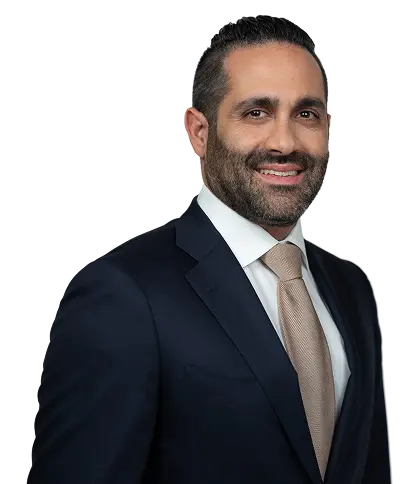
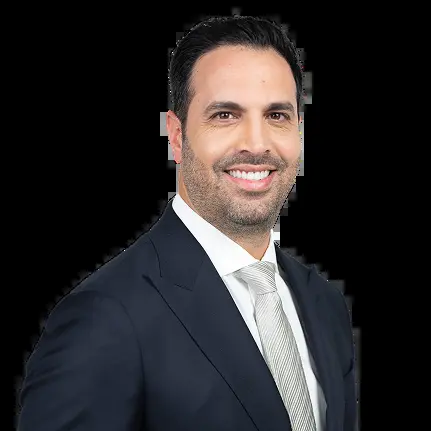
Compass Law Group, LLP represents injured Californians from offices in Beverly Hills, Los Angeles, Long Beach, San Francisco, Oakland, Sacramento, and Bell Gardens. Attorneys Joseph Shirazi (Bar #265403) and Simon Esfandi (Bar #275307) have built a practice centered on holding corporations accountable for the harm their products cause — regardless of how sophisticated the defenses their lawyers deploy. With more than $250 million recovered for California injury victims, the firm has a proven track record of taking on large manufacturers and their insurers at every stage of litigation, from pre-suit investigation through trial and appeal.
When a manufacturer invokes the state of the art defense, Compass Law Group responds with a comprehensive litigation strategy built around California’s strict liability doctrine, a network of credentialed expert witnesses who can establish what was actually known at the time, and aggressive discovery aimed at surfacing the internal corporate knowledge that dismantles these defenses. Whether your injury involved a defective consumer appliance, a failed automotive component, a dangerous pharmaceutical, a malfunctioning medical device, or a product that caused a traumatic brain injury, our attorneys have the resources and trial experience to challenge even the best-funded corporate defense teams. Spanish-speaking clients can learn about our services at our página de responsabilidad por productos defectuosos. All cases are handled on a contingency fee basis — no fees unless we win your case.
Q: Can a manufacturer completely escape liability by proving its product was “state of the art” at the time it was built?
In California, no — not if you pursue the right legal theory. Under the consumer expectations test established in Barker v. Lull Engineering Co. (1978), a manufacturer cannot use the state of the art defense to defeat strict liability if the product failed to perform as safely as an ordinary consumer would expect. The defense carries more weight under the risk-benefit test and in failure to warn cases, but even there it is rebuttable with evidence of what the manufacturer actually knew, what alternative designs existed, and what was knowable within the relevant scientific community at the time of manufacture.
Q: What is the difference between strict liability and negligence in a California product liability case involving the state of the art defense?
Under strict liability, you do not need to prove the manufacturer was careless — only that the product was defective and caused your injury. The state of the art defense is weaker in strict liability cases, particularly under the consumer expectations test. Under negligence, you must prove the manufacturer failed to exercise reasonable care given the available knowledge — making the defense more powerful, since it directly addresses whether the manufacturer acted reasonably. California allows victims to pursue both theories simultaneously, and an experienced attorney will evaluate which theory is strongest given the specific facts of your case.
Q: How does the state of the art defense apply to failure to warn claims under California law?
The California Supreme Court held in Anderson v. Owens-Corning Fiberglas Corp. (1991), 53 Cal.3d 987, that manufacturers may invoke the state of the art defense in failure to warn cases — but only where the specific risk was genuinely scientifically unknowable at the time of manufacture and sale. If the manufacturer had any actual or constructive knowledge of the hazard — even internal suspicion that never became scientific consensus — the defense fails. This is why discovery of internal corporate engineering reports, safety committee records, and executive communications is often decisive in failure to warn cases involving pharmaceuticals, industrial chemicals, and long-latency disease products like asbestos.
Q: How long do I have to file a product liability lawsuit in California?
Most product liability personal injury claims must be filed within two years of the date of your injury under California Code of Civil Procedure § 335.1. The discovery rule may extend this deadline in cases where the injury’s connection to a product defect was not and could not reasonably have been discovered at the time of harm — but California courts apply this exception narrowly. Claims against government entities may require a government tort claim notice within six months of the injury. Do not rely on any assumed extension — consult a product liability attorney immediately after being hurt by a defective product.
Q: What damages can I recover in a California product liability case involving the state of the art defense?
California product liability victims can recover economic damages — including past and future medical expenses, lost wages, and diminished earning capacity — as well as non-economic damages such as pain and suffering and emotional distress. Property damage is also recoverable. In cases where the manufacturer engaged in malicious, oppressive, or fraudulent conduct — such as knowingly concealing a product defect — California Civil Code § 3294 permits punitive damages on top of compensatory recovery. California imposes no cap on compensatory damages in most personal injury cases, which is why serious product liability claims involving documented concealment and severe injuries often result in substantial multi-million-dollar verdicts and settlements.
No Win, No Fee — Compass Law Group, LLP | Call (213) 320-1001
Source: Compass Law Group | Product Liability Defense

Steps to Take After a Product Liability Injury
- Seek emergency medical treatment immediately. Call 911 if the injury is serious. Your health is the priority — and your medical records documenting the nature, cause, and severity of your injuries become foundational evidence in your case. Prompt treatment also prevents any argument that you failed to mitigate your damages.
- Preserve the product and all original packaging. Do not repair, discard, clean, or alter the defective product in any way. Keep all original packaging, instruction manuals, warning labels, accessories, and any components that separated or broke during the incident. The physical product in its post-injury condition is irreplaceable evidence and must be protected from the first moment.
- Document the scene, the product, and your injuries thoroughly. Take date-stamped photographs and video of the product from multiple angles, any visible defects or failure points, the location of the incident, environmental conditions, and your injuries. A video walkthrough of the scene captured within hours of the incident can be especially persuasive to a jury or insurer.
- Report the defect to the CPSC at SaferProducts.gov. File a formal incident report at SaferProducts.gov, the Consumer Product Safety Commission’s official public injury reporting database. This creates a formal government record of your incident, may trigger a safety investigation or recall, and can support your claim by demonstrating a documented pattern of similar injuries associated with the same product or manufacturer.
- Gather all purchase records and product documentation. Locate your receipt, warranty card, order confirmation, the product’s model number and serial number, and any prior communications with the manufacturer or retailer. These documents establish your ownership of the specific product at issue, identify the correct manufacturing lot or batch, and help trace the chain of distribution — all critical to determining every party with potential liability.
- Do not give statements to manufacturer representatives or insurance adjusters without legal counsel. Manufacturers and their insurers frequently contact injured consumers quickly — sometimes within days — seeking recorded statements or offering fast settlements before the full extent of injuries is known. Consult with a product liability attorney before accepting any offer or providing any statement. Compass Law Group attorneys offer free case evaluations from offices in Beverly Hills, Los Angeles, Sacramento, and across California.
- Act before the statute of limitations expires. Most California product liability injury claims must be filed within two years of the date of injury. Missing that deadline permanently bars your recovery regardless of the strength of your case. If a government entity is involved, a government tort claim notice may be required within six months. Contact an attorney without delay.
Get Your Free Consultation Today
If a defective product has injured you or someone you love, don’t let a manufacturer’s “state of the art” defense stand between you and the compensation you deserve — Compass Law Group’s product liability attorneys have recovered over $250 million for California injury victims. No Win, No Fee.