




Your Battle, Our Compass:
Los Angeles Uber & Lyft Accident Lawyer
Injured in a uber & lyft accident in Los Angeles? With 3.9 million residents and 55,000+ annual collisions, our attorneys handle every type of uber & lyft accident case. Call (213) 516-9809. See all our California office locations.


PUBLISHED 5/18/2026 · UPDATED 5/18/2026
By Joseph Shirazi — Managing Partner, Compass Law Group, LLP • CA Bar #265403
TL;DR — Los Angeles Uber & Lyft Accident Lawyer
Compass Law Group represents uber & lyft accident victims across Los Angeles. Our firm has recovered $250,000,000+ for injury victims. No win, no fee. Free 24/7 consultation in English, Spanish, Farsi, and Korean at (213) 516-9809. See all Los Angeles practice areas. Past results do not guarantee future outcomes.
Los Angeles Uber & Lyft Accident Lawyers: Fighting for Maximum Compensation
Los Angeles is the largest rideshare market in the United States—Uber and Lyft complete an estimated 500,000 trips per day across L.A. County alone, according to the California Public Utilities Commission. That volume means thousands of collisions every year involving app-based drivers, yet most passengers and bystanders have no idea which insurance policy covers them, who is liable, or how to navigate the three distinct coverage phases that apply to every ride. Between the driver’s personal auto policy, Uber or Lyft’s contingent liability coverage, and the company’s $1 million commercial policy, rideshare accident claims are among the most insurance-complex personal injury cases in California.
Compass Law Group has recovered more than $250 million for injury victims—including a $2,250,000 rideshare accident settlement—and our attorneys know exactly how to cut through the coverage confusion that Uber, Lyft, and their insurers rely on to delay and deny claims. From our Downtown Los Angeles office at 633 W 5th Street, 26th Floor, managing partners Joseph Shirazi and Simon Esfandi handle Uber and Lyft accident cases involving passengers, other motorists, pedestrians, and cyclists across every L.A. neighborhood.
If you were injured in a rideshare accident anywhere in Los Angeles, call (213) 516-9809 for a free, confidential consultation—24 hours a day, 7 days a week. You pay nothing unless we win.
Why Choose Compass Law Group for Your Los Angeles Uber & Lyft Accident Case?
- Rideshare insurance expertise that most firms lack. We have litigated cases across all three TNC insurance phases—app off, waiting for a ride request, and ride active—and know exactly how to force Uber’s and Lyft’s underwriters (Progressive, Allstate, James River) to honor their $1 million policies.
- Proven rideshare results. Our $2,250,000 rideshare accident settlement demonstrates we can go toe-to-toe with Uber and Lyft’s national defense teams. With $250M+ recovered across all case types, we have the resources to take your case to trial if necessary.
- Deep knowledge of L.A.’s rideshare hotspots. We investigate crashes at LAX pickup/dropoff zones, DTLA entertainment districts, Hollywood nightlife corridors, and every high-traffic area where rideshare drivers cause accidents daily.
- Multilingual, 24/7 availability at zero cost to you. Our attorneys and staff speak English, Spanish, Farsi, and Korean. No Win, No Fee—we advance all case costs and only collect when we recover compensation for you.
Past results do not guarantee future outcomes. Every case is unique.
More Practice Areas in Los Angeles
View All 14 Practice Areas in Los Angeles+
Who Is Liable in a Los Angeles Uber or Lyft Accident?
Rideshare accident liability depends on who caused the crash, whether the driver was logged into the app, and what phase of the ride was active at the moment of impact. California’s Transportation Network Company (TNC) regulations under Public Utilities Code §5431 require Uber and Lyft to maintain specific insurance coverage at each stage, but the companies aggressively argue they are technology platforms—not transportation companies—to avoid paying claims.
The Uber or Lyft driver. Every rideshare driver carries a personal auto insurance policy, but most personal policies exclude commercial activity. If the driver caused the crash while logged into the app, their personal insurer will almost certainly deny the claim—leaving you trapped between two carriers pointing fingers at each other. Our attorneys cut through this by simultaneously filing against the driver, the TNC, and every applicable policy.
Uber or Lyft as a company. Under California Assembly Bill 5 (AB 5) and the ABC test for worker classification, rideshare companies bear significant responsibility for their drivers’ conduct. Although Proposition 22 carved out an exemption for gig workers in 2020, TNC companies still must provide insurance coverage and maintain safety standards under PUC §5431. When Uber or Lyft fails to screen drivers, ignores safety complaints, or designs app features that distract drivers, the company itself may be directly liable.
Third-party drivers. In many rideshare collisions, the at-fault party is not the Uber or Lyft driver but another motorist who rear-ended the rideshare vehicle, ran a red light, or made an illegal turn. As a rideshare passenger, you have claims against the at-fault third-party driver and their insurer—plus potential claims under Uber’s or Lyft’s underinsured motorist coverage if the third party’s policy is insufficient. Our Los Angeles car accident lawyers handle these multi-party claims daily, and our pedestrian accident attorneys represent individuals struck by rideshare vehicles while walking.
The Three Insurance Phases
Understanding which insurance applies requires knowing the driver’s app status at the time of the crash:
- Phase 1 — App off: Only the driver’s personal auto insurance applies. Uber and Lyft provide zero coverage.
- Phase 2 — App on, waiting for a ride request: Uber and Lyft provide contingent liability coverage—typically $50,000 per person/$100,000 per accident for bodily injury and $25,000 for property damage. This coverage only kicks in if the driver’s personal policy denies the claim.
- Phase 3 — Ride accepted through drop-off: Uber and Lyft carry $1 million in combined single-limit liability coverage, $1 million in uninsured/underinsured motorist coverage, and contingent comprehensive and collision coverage. This is the maximum protection available.
The insurance phase is the single most contested issue in rideshare litigation. Uber and Lyft frequently argue the driver was in Phase 1 or Phase 2 to avoid triggering their $1 million policy. Our attorneys subpoena app data, GPS logs, and trip records to prove the actual phase at the moment of impact.
Common Causes of Uber and Lyft Accidents in Los Angeles
L.A.’s density, traffic congestion, and nightlife economy create a perfect storm for rideshare collisions. The most common causes our attorneys see include:
- LAX pickup and dropoff zone chaos—The LAX-it lot and terminal curbside areas funnel thousands of rideshare vehicles into tight spaces every hour, producing rear-end collisions, sideswipes, and pedestrian strikes in one of the busiest airport zones in the world.
- DTLA bar and restaurant district—Late-night pickups along 7th Street, Spring Street, and the Arts District force drivers to double-park, make sudden U-turns, and pull into active traffic lanes without warning.
- Hollywood nightlife corridors—Hollywood Boulevard, Sunset Strip, and Cahuenga Boulevard see a surge of rideshare activity between 10 p.m. and 2 a.m., when intoxicated passengers and distracted drivers collide with pedestrians, parked cars, and other rideshare vehicles.
- App-distracted driving—Uber and Lyft drivers must constantly interact with the app to accept rides, follow navigation, and confirm pickups. This screen time takes their eyes off the road at the worst possible moments—merging onto the 101, navigating the 110/10 interchange, or entering congested intersections.
- Illegal U-turns to reach passengers—Drivers who miss a pickup location routinely execute illegal U-turns on Wilshire Boulevard, Olympic Boulevard, and other divided arterials, creating head-on collision risks.
- Double parking on busy streets—Rideshare drivers who stop in active traffic lanes on Figueroa Street, Vermont Avenue, and Western Avenue force following vehicles to brake suddenly or swerve into adjacent lanes.
- Freeway on-ramp and off-ramp stops—Passengers requesting pickup or dropoff near freeway ramps on the 10, 101, and 405 create sudden-stop hazards at highway speeds.
- Passenger injury from sudden stops—Unbelted passengers in the back seat suffer whiplash, facial injuries, and concussions when drivers brake suddenly to avoid a collision or respond to a navigation alert.
- Pedestrian struck at pickup/dropoff—Rideshare passengers stepping out of vehicles into bike lanes, traffic lanes, or intersections are struck by passing vehicles. Drivers who park on the wrong side of the street compound the danger.
- Wrong-way driving on one-way streets—Out-of-town and newly activated rideshare drivers unfamiliar with Downtown L.A.’s one-way grid—including Grand Avenue, Hope Street, and Olive Street—cause head-on collisions by following GPS prompts onto one-way streets in the wrong direction.
Frequently Asked Questions — Los Angeles Uber/Lyft Accident Attorney
Who is liable if I'm injured in an Uber or Lyft accident in Los Angeles?
Liability in a rideshare accident depends on who caused the collision and what phase of the trip was active at the time. If your Uber or Lyft driver caused the crash, both the driver and the company’s commercial insurance policy may be responsible for your injuries. If another driver caused the accident, we pursue their liability insurance first, then look to the rideshare company’s underinsured motorist coverage if that policy falls short. We investigate every responsible party — including vehicle owners, employers, and government entities if a road defect on the 405, 10, or 110 contributed to the crash.
What insurance coverage does Uber or Lyft carry for accident victims?
Both Uber and Lyft maintain a tiered commercial insurance structure based on the driver’s app status at the time of the crash. When the app is on and a driver has accepted a ride or has a passenger in the vehicle, Uber and Lyft each carry $1 million in liability coverage per incident. When the app is on but no ride has been accepted, coverage drops to $50,000 per person/$100,000 per accident for bodily injury. We analyze the driver’s app logs, GPS data, and the companies’ own records to confirm exactly which tier applied when you were hurt.
How long do I have to file a lawsuit after an Uber or Lyft accident in California?
Under California Code of Civil Procedure Section 335.1, you have two years from the date of the accident to file a personal injury lawsuit. If a government entity — such as the City of Los Angeles or Caltrans — is involved due to a road defect or signal failure, a government tort claim must be filed within six months. We strongly recommend contacting us as soon as possible so we can preserve evidence, secure dashcam footage before it’s overwritten, and meet every deadline that applies to your specific case.
What should I do immediately after an Uber or Lyft accident in Los Angeles?
Call 911 so law enforcement documents the scene and EMS evaluates your injuries — even if you feel fine, soft-tissue injuries like whiplash often don’t present symptoms until hours or days later. Take photos of the vehicles, road conditions, the driver’s rideshare app screen showing trip status, and any visible injuries. Get the names and contact information of witnesses at the scene, whether you’re on Wilshire, Venice Boulevard, or near LAX. Report the incident in the Uber or Lyft app as required, but do not give a recorded statement to any insurance adjuster before speaking with us.
Can I sue Uber or Lyft directly, or only the driver?
Rideshare companies classify their drivers as independent contractors specifically to limit direct liability, but that classification doesn’t end your recovery options. We can pursue the company’s commercial insurance policy, which is separate from any legal claim against the individual driver, and in cases involving negligent hiring or a defective app, the company itself may be named as a defendant. Our goal is to identify every available source of compensation — driver’s personal insurance, the rideshare company’s $1 million commercial policy, and any other at-fault parties — to maximize your recovery.
What if the Uber or Lyft driver was partially at fault and so was another driver?
California follows pure comparative fault under Civil Code Section 1714, meaning each party is assigned a percentage of responsibility for the accident, and you can recover from each at-fault party proportional to their share of fault. Even if multiple drivers contributed to the collision — for example, a chain-reaction crash on the 101 near the Cahuenga Pass — we can pursue all of them simultaneously. Our investigation team reconstructs the accident using police reports, traffic camera footage, and expert analysis to establish the strongest possible fault allocation in your favor.
What damages can I recover after an Uber or Lyft accident?
You may be entitled to compensation for economic damages including medical expenses, future treatment costs, lost wages, and reduced earning capacity, as well as non-economic damages like pain and suffering, emotional distress, and loss of enjoyment of life. California does not cap non-economic damages in personal injury cases (as distinct from medical malpractice), so a serious injury with significant long-term impact can support a substantial award. We work with medical experts and economists to document the full scope of your losses before we ever present a demand to the insurance company.
Who pays my medical bills while my Uber or Lyft accident case is pending?
Your own health insurance or MediCal will typically cover your ongoing treatment, and we can help negotiate letters of protection with medical providers who will defer billing until your case resolves. Uber and Lyft’s insurers will not voluntarily pay your bills as they accrue — they pay at settlement or judgment. We also explore whether the rideshare company’s medical payments (MedPay) coverage applies to your trip, which can provide an additional source of immediate reimbursement regardless of fault.
How long does an Uber or Lyft accident case take to resolve in Los Angeles?
Cases with clear liability and defined injuries often settle within six to twelve months after we open negotiations with the insurance carriers. Cases that involve disputed fault, catastrophic injuries, or litigation filed in Los Angeles Superior Court — whether at the Stanley Mosk Courthouse downtown or the Spring Street Courthouse — typically take one to three years from filing to resolution. We push hard for timely resolution but will not accept a low offer simply to close the file, especially when your medical treatment is still ongoing.
How much does it cost to hire an Uber or Lyft accident attorney?
We handle all rideshare accident cases on a contingency fee basis, which means you pay nothing unless and until we recover compensation for you. Our fee is a percentage of the total recovery, and we advance all case costs — filing fees, expert witness fees, investigation costs — so you never pay out of pocket while your case is in progress. We explain the exact fee structure in writing at the start of representation so there are never any surprises.
What if the other driver who caused the accident was uninsured?
Both Uber and Lyft carry uninsured and underinsured motorist (UM/UIM) coverage as part of their $1 million commercial policy when a ride is active, which means you have a direct claim against the rideshare company’s policy even if the at-fault driver carried no insurance. California law requires insurers to offer UM/UIM coverage, and we routinely stack available policies — including your own auto or umbrella policy — to ensure you are not left undercompensated because the negligent driver was uninsured. Hit-and-run accidents on LA freeways are unfortunately common, and UM coverage specifically applies to those situations as well.
Does it matter if I was a passenger, pedestrian, or another driver hit by an Uber or Lyft vehicle?
No — your status as a passenger in the rideshare vehicle, a pedestrian struck on a Los Angeles crosswalk, a cyclist, or the occupant of another vehicle does not eliminate your right to compensation from the rideshare company’s commercial policy. As a rideshare passenger you are owed the highest duty of care as a fare-paying invitee. As a third party struck by a rideshare vehicle, you have a direct claim against the commercial liability coverage. We represent all categories of rideshare accident victims and the applicable insurance analysis differs by situation, which is exactly why a thorough case evaluation matters.
What if the Uber or Lyft driver's app was off at the time of the accident?
If the driver’s app was completely offline, the rideshare company’s commercial insurance does not apply and the driver’s personal auto policy becomes the primary source of coverage. However, personal auto policies frequently contain exclusions for commercial use, which can create a coverage gap that we work to close by exploring every available policy and arguing waiver or estoppel where appropriate. We pull the driver’s app login records and GPS data to confirm the true app status, because drivers and companies do not always accurately report this information.
How much is my Uber or Lyft accident case worth?
Settlement value depends on the severity of your injuries, the clarity of liability, the available insurance limits, and the strength of your documented medical records. A soft-tissue injury with a full recovery may settle for tens of thousands of dollars, while a traumatic brain injury, spinal cord damage, or fatality case in Los Angeles can support seven-figure recoveries given Uber and Lyft’s $1 million per-incident commercial policy. We do not give settlement estimates at the outset of representation — we build the full picture of your damages first, then fight for every dollar you are owed.
Is a free consultation really free, and what happens when I call?
Yes — your initial consultation is completely free, confidential, and carries no obligation to hire us. When you call or submit your information, a member of our legal team will review the basic facts of your accident, explain what coverage likely applies, and tell you honestly whether we believe you have a viable claim worth pursuing. If we take your case, we begin investigating immediately: preserving evidence, pulling Uber or Lyft trip records, and sending preservation notices to the companies before critical data is deleted. Los Angeles rideshare accident cases move fast on the insurance side, so the sooner you contact us, the better positioned we are to protect you.
What Is Your Los Angeles Uber or Lyft Accident Case Worth?
Rideshare accident cases in Los Angeles carry significant value because of the substantial insurance coverage available—up to $1 million per incident when a ride is active—and the severity of injuries caused by crashes on congested L.A. freeways and surface streets. Compass Law Group secured a $2,250,000 settlement in a single rideshare accident case, and our full portfolio includes a $14.5M truck accident verdict, a $13M trial verdict, and a $5M car accident recovery.
The value of your case depends on the severity of your injuries, total medical costs, lost income, the insurance phase at the time of the crash, and the degree of negligence involved. Emergency treatment at Cedars-Sinai Medical Center, UCLA Ronald Reagan Medical Center, or Good Samaritan Hospital can easily exceed $100,000 for a single rideshare collision admission involving spinal injuries or traumatic brain injury. Add reconstructive surgery, months of physical therapy, and permanent disability, and medical costs can reach seven figures—well within the coverage limits of Uber’s and Lyft’s Phase 3 policies.
Past results do not guarantee future outcomes. Every case is unique.
Compensation Available in Los Angeles Rideshare Accident Cases
California law allows rideshare accident victims—passengers, other drivers, pedestrians, and cyclists—to recover both economic and non-economic damages:
- Emergency room, hospital, and surgical costs—including ambulance transport, trauma care, ICU stays, and imaging
- Future medical expenses—ongoing rehabilitation, pain management, chiropractic care, and any required surgeries
- Lost wages and earning capacity—past and future income you cannot earn while recovering or because of permanent disability
- Pain and suffering—physical pain, emotional distress, PTSD, anxiety, and depression caused by the crash
- Loss of enjoyment of life—inability to participate in daily activities, hobbies, and relationships you enjoyed before the accident
- Permanent disability or disfigurement—scarring, chronic pain conditions, or functional limitations resulting from the collision
- Wrongful death damages—if a loved one was killed, surviving family members can recover funeral costs, loss of financial support, and loss of companionship under CCP §377.60
California does not cap non-economic damages in personal injury cases. If the at-fault driver was intoxicated, on drugs, or engaged in reckless behavior, punitive damages may also be available.
The Three Phases of Rideshare Insurance in California
California Public Utilities Code §5431 mandates specific minimum insurance coverage for Transportation Network Companies at each stage of a ride. Understanding these phases is critical because Uber and Lyft will fight to classify the crash in the lowest-coverage phase possible.
Phase 1: App Off
When the driver is not logged into the Uber or Lyft app, only their personal auto insurance applies. Uber and Lyft provide zero coverage. Most personal auto policies in California carry the state minimum of $15,000/$30,000/$5,000—grossly insufficient for serious injuries. If the driver was between rides and had closed the app, you are limited to their personal policy and any underinsured motorist coverage on your own policy. Effective January 1, 2025, California’s minimum liability limits increase to $30,000/$60,000/$15,000 under the new Insurance Code §11580.1 requirements.
Phase 2: App On, Waiting for a Ride Request
When the driver has the app open and is waiting for a ping but has not yet accepted a ride, Uber and Lyft provide contingent liability coverage: $50,000 per person, $100,000 per accident for bodily injury, and $25,000 for property damage. This contingent coverage only activates after the driver’s personal insurer denies the claim—which they almost always do because of the commercial-use exclusion. Phase 2 coverage is often inadequate for serious injuries, but our attorneys stack every available policy to maximize your recovery.
Phase 3: Ride Accepted Through Passenger Drop-Off
From the moment the driver accepts a ride request through the passenger’s drop-off, Uber and Lyft carry $1 million in combined single-limit liability coverage, $1 million in uninsured/underinsured motorist (UM/UIM) coverage, and contingent comprehensive and collision coverage for the vehicle itself. This $1 million policy covers passengers inside the rideshare vehicle, occupants of other vehicles, pedestrians, and cyclists. Phase 3 is where the majority of our rideshare recoveries occur, and it is the phase Uber and Lyft fight hardest to avoid.
Uber and Lyft Claims Process vs. Filing Your Own Claim
After a rideshare accident, you will face two separate claims processes—and both are designed to minimize what you receive.
Uber’s and Lyft’s claims process. Both companies have in-app reporting tools that route your claim to their insurance carriers (currently Progressive and Allstate for Uber, and various underwriters for Lyft). These carriers assign adjusters whose sole objective is to close your claim for the lowest possible amount. They will request a recorded statement, dispute the insurance phase, challenge the severity of your injuries, and delay settlement negotiations for months.
Your own insurance claim. If you were a passenger in the rideshare vehicle, you may also have claims under your own auto policy’s uninsured/underinsured motorist coverage and medical payments (MedPay) coverage. If you were driving your own car and were hit by a rideshare driver, your own collision coverage can repair your vehicle while we pursue the at-fault rideshare driver and the TNC’s policy for your injuries.
Compass Law Group handles every aspect of both claims processes simultaneously. We subpoena Uber’s and Lyft’s trip data, GPS records, and driver screening files. We coordinate with your personal insurer to stack available coverages. And we prepare every case for trial so the insurance companies know we are not bluffing.
AB 5, Proposition 22, and Rideshare Driver Classification
California Assembly Bill 5 (AB 5), which took effect January 1, 2020, established the “ABC test” for determining whether a worker is an employee or independent contractor. Under the ABC test, rideshare drivers would be classified as employees—making Uber and Lyft directly liable for their actions on the road under respondeat superior.
In November 2020, California voters passed Proposition 22, which exempted app-based drivers from AB 5 and classified them as independent contractors with limited benefits. However, Proposition 22 did not eliminate TNC insurance requirements under PUC §5431, and ongoing legal challenges continue to chip away at its protections. In 2024, the California Supreme Court upheld portions of Prop 22 while striking down others, leaving the legal landscape in flux.
For rideshare accident victims, the practical impact is this: even under Proposition 22, Uber and Lyft must maintain the three-phase insurance structure required by state law, and drivers must carry their own personal auto coverage. Our attorneys leverage every available theory of liability—including negligent hiring, negligent retention, and direct negligence by the TNC—to hold these companies accountable regardless of how they classify their workforce.
What to Do After an Uber or Lyft Accident in Los Angeles
The steps you take immediately after a rideshare accident can make or break your claim. Here is what our attorneys recommend:
- Call 911 and stay at the scene. Request paramedics and an LAPD officer. A traffic collision report documenting the rideshare driver’s identity, insurance information, and the officer’s preliminary fault assessment is critical evidence.
- Screenshot your Uber or Lyft app immediately. Before closing the app, screenshot the ride status screen showing the driver’s name, vehicle information, trip route, and—most importantly—that a ride was active at the time of the crash. This screenshot proves you were in Phase 3 (maximum $1 million coverage). If you were the rideshare driver, screenshot your driver app showing trip status.
- Document everything at the scene. Photograph the vehicles, license plates, damage, road conditions, traffic signals, your injuries, and any visible injuries to passengers. Get the names and phone numbers of witnesses, including other passengers in the vehicle.
- Seek medical treatment within 24 hours. Go to the nearest emergency room—Cedars-Sinai, UCLA Medical Center, Good Samaritan Hospital, or California Hospital Medical Center. Even if your injuries seem minor, internal injuries and whiplash symptoms often emerge 24-72 hours after a crash. Your medical records create the causal link between the accident and your injuries.
- Contact Compass Law Group before speaking with Uber, Lyft, or any insurer. Call (213) 516-9809 immediately. Uber’s and Lyft’s insurance adjusters will contact you quickly, often within hours. Do not give a recorded statement. Do not accept any settlement offer. Let our attorneys handle every communication from day one.
Statute of Limitations for Uber and Lyft Accident Claims in Los Angeles
Under California Code of Civil Procedure §335.1, you have two years from the date of the accident to file a personal injury lawsuit against the rideshare driver, Uber, Lyft, or any third-party defendant. If a loved one was killed in a rideshare collision, the wrongful death statute of limitations is also two years.
If a government entity contributed to the crash—for example, a dangerous intersection design or malfunctioning traffic signal—you must file an administrative claim within six months under California Government Code §910. Additionally, Uber and Lyft both include arbitration clauses in their Terms of Service that may affect your legal options. Our attorneys evaluate whether these clauses apply to your specific situation and fight to preserve your right to a jury trial.
Uber & Lyft Accidents vs. Traditional Taxi Accidents in Los Angeles
While both rideshare and taxi accidents involve commercial passenger transportation, the legal and insurance frameworks are fundamentally different:
- Insurance structure. Traditional taxi companies carry a single commercial liability policy (typically $1 million) that covers the vehicle at all times. Uber and Lyft use the three-phase system described above, creating coverage gaps that do not exist with licensed taxis.
- Employment relationship. Taxi drivers are generally employees of the cab company, making the company directly liable under respondeat superior. Under Proposition 22, Uber and Lyft drivers are classified as independent contractors, which the companies use to argue they are not vicariously liable for driver negligence.
- Regulatory oversight. Taxi companies are regulated by local municipal authorities (in L.A., the Department of Transportation’s Taxicab Division). Uber and Lyft are regulated at the state level by the California Public Utilities Commission, which has less granular oversight of individual driver conduct.
- Driver screening. Taxi drivers must obtain a special permit requiring a background check, drug testing, and vehicle inspection. Uber and Lyft perform background checks but do not require drug testing, in-person vehicle inspections, or specialized driver training—contributing to a higher accident rate per mile driven.
The bottom line: rideshare accident claims require specialized knowledge of TNC insurance law that most personal injury firms simply do not have. Compass Law Group has litigated rideshare cases from Phase 1 through Phase 3 and knows how to defeat the coverage-denial strategies these companies deploy.
Evidence in Uber and Lyft Accident Cases
Rideshare accidents generate a unique category of digital evidence that can prove or disprove liability. Our legal team secures and analyzes:
- Uber/Lyft trip data and GPS logs—timestamped records showing exactly when the ride was requested, accepted, started, and ended—proving which insurance phase was active at the time of the crash
- Driver app activity logs—records of when the driver was interacting with the app (accepting rides, checking navigation, rating passengers) that prove distracted driving
- Driver screening and history records—background check results, driving records, prior accident reports, and any safety complaints filed against the driver through the app
- LAPD traffic collision reports—the officer’s scene diagram, witness statements, and preliminary fault determination
- Surveillance and traffic camera footage—LADOT operates over 4,700 traffic cameras across Los Angeles, and businesses near the crash site often have security cameras
- Vehicle event data recorders—“black box” data capturing speed, braking, acceleration, and steering inputs in the seconds before impact
- Cell phone records—call logs, text messages, and app usage data proving the driver was distracted at the time of the collision
- Medical records and expert testimony—treating physicians, surgeons, and life-care planners who document the full scope of your injuries and future care needs
We issue preservation letters to Uber, Lyft, and their insurance carriers within hours of being retained. Rideshare companies have been known to purge driver records and trip data after a set retention period—and once that data is gone, it is gone forever.
Los Angeles Rideshare Accident Statistics
The growth of rideshare services has reshaped Los Angeles traffic—and not for the better:
- The University of Chicago’s Becker Friedman Institute found that the introduction of rideshare services in major cities increased traffic fatalities by 2-3%, with the effect concentrated in urban cores like Downtown L.A.
- A UC Davis study found that Uber and Lyft increased vehicle miles traveled (VMT) in Los Angeles by 13.4%—adding millions of miles of driving to already-congested streets and freeways.
- The California Public Utilities Commission reported over 1,000 rideshare-involved collisions in Los Angeles County in a single reporting year, though the true number is likely much higher due to underreporting.
- LAX processed approximately 88 million passengers in 2024, generating massive rideshare demand that produces daily collisions in and around the airport’s pickup/dropoff zones.
- LAPD data shows that over 55% of all rideshare collisions in Los Angeles occur between 6 p.m. and 2 a.m.—peak rideshare hours when nightlife, impaired driving, and fatigue converge.
- The National Highway Traffic Safety Administration (NHTSA) reports that distracted driving—a core risk factor for rideshare drivers who must constantly monitor the app—was a factor in 3,308 fatalities nationwide in the most recent reporting year.
Contact a Los Angeles Uber & Lyft Accident Lawyer Today
Rideshare accident claims involve a level of insurance complexity that most personal injury firms are not equipped to handle. The three-phase coverage system, Uber’s and Lyft’s corporate defense strategies, and the digital evidence unique to TNC cases all require attorneys who have litigated these cases before—and won.
Compass Law Group’s Los Angeles office has the experience, resources, and track record to take on Uber, Lyft, and their billion-dollar insurance programs. Managing partners Joseph Shirazi (Cal. Bar #265403) and Simon Esfandi (Cal. Bar #275307) personally oversee every rideshare case. We speak English, Spanish, Farsi, and Korean. We are available 24/7. And we do not collect a fee unless we win your case.
Call (213) 516-9809 now or visit our office at 633 W 5th Street, 26th Floor, Los Angeles, CA 90071 for your free consultation. The sooner you act, the sooner we can preserve the app data, trip records, and GPS evidence that will prove your case.
Past results do not guarantee future outcomes. Every case is unique.
Talk to a Los Angeles Uber & Lyft Accident Lawyer Today
Call Compass Law Group at (213) 516-9809. Free consultation, no fees unless we win. 24/7. Visit our LA office.
Visit Our Los Angeles Office
Serving injury victims across Los Angeles and surrounding communities — free consultation, 24/7 availability.
Office Location
Compass Law Group — Los Angeles
633 W 5th Street, 26th Floor
Los Angeles, CA 90071
Call 24/7 — (213) 516-9809
Always on call
★★★★★ 5.0 Stars on Google
195 verified reviews

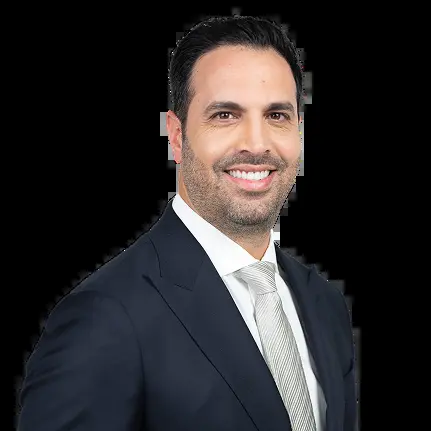
Joseph Shirazi
Managing Partner — Compass Law Group, LLP
State Bar: #265403
Joseph Shirazi is the co-founding Managing Partner of Compass Law Group, LLP and one of California’s most recognized personal injury attorneys. With offices throughout Los Angeles, Beverly Hills, Sacramento, Oakland, San Francisco, Long Beach, and Bell Gardens, Joseph has built a statewide practice dedicated to recovering maximum compensation for accident victims. He has helped clients recover more than $250 million in verdicts and settlements.
Joseph earned his J.D. from Loyola Law School and has been recognized by the National Top 100 Trial Lawyers, earning an Avvo 10.0 Superb rating and a Top 40 Under 40 distinction. His practice covers the full spectrum of personal injury law — car and truck accidents, motorcycle collisions, pedestrian injuries, premises liability, brain and spinal cord injuries, wrongful death, and sexual abuse civil claims.
In Los Angeles, Joseph and his team at 633 W 5th Street, 26th Floor represent clients throughout Downtown LA, Koreatown, Echo Park and surrounding communities. The firm handles all cases on a strict No Win, No Fee basis — clients pay nothing unless Compass Law Group wins. Call (213) 516-9809 for a free 24/7 consultation.
Joseph is licensed to practice before all California state and federal courts and is an active member of the California Bar Association and American Bar Association. Verified profiles: Avvo · Super Lawyers · Justia · Elite Lawyer · LinkedIn · CA Bar.
The information on this page is for general informational purposes only and does not constitute legal advice. Past results do not guarantee future outcomes. Contacting Compass Law Group does not create an attorney-client relationship. Compass Law Group, LLP is licensed to practice law in California.
Do I have a case?
Contact us today for a free consultation.
California's
Gold Standard
Injury Law Firm
With Joseph Shirazi and Simon Esfandi at the helm, our firm is a trusted name in accident law in California.
Meet Our Managing Partners
National Top 100 Trial Lawyers and Avvo 10.0 Superb. Loyola Law School graduate. Recognized for his $14,500,000 truck accident verdict and a $13,000,000 trial verdict.
Read Full Bio →
Super Lawyers Rising Star. Southwestern Law School graduate. Led the firm’s $9,870,000 motorcycle accident settlement and a $2,250,000 rideshare recovery.
Read Full Bio →- ★ National Top 100 Trial Lawyers
- ★ Super Lawyers Rising Star
- ★ Avvo 10.0 Superb Rating
- ★ Top 40 Under 40
- ★ Consumer Attorneys of California · CAALA · AAJ

Countless Real Client Reviews Verified by Google


Jerry
After 10 accidents and 9 attorneys, the client met Simon, who stood out for his honesty and clear communication. Years later, after another accident, the client called Simon and was impressed by his professionalism and follow-through. Simon explained everything, connected him with top doctors, and kept every promise. It was the first time the client felt truly supported—highly recommending Simon and Joseph for their integrity and dedication.
Jacob
Jacob was rear-ended by a big rig and left nearly paralyzed for a year. He found Cooper Law Group, and Joseph and Simon personally helped him through the legal process. Over two years, they ensured he got the medical care and surgeries he needed, helped repair his car, and secured the compensation he deserved. He highly recommends them for truly fighting for their clients.
Blandine
During the early days of COVID, Blandine was hit by a car while biking to work. Alone and unsure of what to do, they found Compass Law Group. Joseph was the first to respond with care and clarity. Throughout the case, the team—Joseph, Simon, and Julie—provided support, regular check-ins, and made the client feel safe and cared for. They now consider the firm like family and highly recommend them for their compassion and competence.