




AB 250 — Is California Opening a New Revival Window for Adult Sexual Abuse Survivors?
California has been the nation’s most consistent champion of sexual abuse survivor rights — and a new proposed law may soon extend those protections further than ever before. According to RAINN, 1 in 6 American women and 1 in 33 men have experienced sexual violence in their lifetime, yet statutes of limitations have historically prevented countless survivors from ever seeing justice. AB 250 is California’s next step: proposed legislation that would create a new civil revival window for adult survivors whose claims were time-barred — ensuring that even those who could not act within AB 2777’s existing deadline still have a path to accountability. If you are a survivor wondering whether your rights remain intact, this article is written for you.
Key Takeaways
- AB 218 (CCP §340.1) permanently eliminated the statute of limitations for childhood sexual abuse — any survivor who was abused as a minor in California may file a civil lawsuit at any age, with absolutely no deadline.
- AB 2777 (CCP §340.16) opened a civil revival window for adult survivors that closes on December 31, 2026. AB 250 proposes to create a new or extended window for survivors who missed or cannot meet that deadline, continuing California’s legislative commitment to survivor justice.
- Survivors should preserve all available evidence — therapy records, medical documentation, communications from the abuser or their institution, and any reports made at the time — and consult a California sexual abuse attorney immediately to assess which deadlines apply.
- Compass Law Group, LLP has recovered $250M+ for survivors throughout California on a strict No Win, No Fee basis. All consultations are free, fully confidential, and survivors may remain completely anonymous.
What Is AB 250, and Why Does It Matter to California Sexual Abuse Survivors?
California introduced AB 250 as part of its ongoing legislative effort to keep the courthouse doors open for adult sexual abuse survivors. The bill proposes to create a new or extended civil revival window for adults — meaning survivors who were 18 or older at the time of the abuse — whose claims would otherwise be permanently blocked once AB 2777’s deadline expires. If enacted, AB 250 would fill the gap left when that window closes on December 31, 2026, giving survivors who could not file within that period another meaningful opportunity to pursue civil claims against their abusers and the institutions that enabled the abuse. Any survivor seeking to understand whether AB 250 applies to their situation should consult a California sexual abuse attorney right away to assess the most current legislative status and what rights exist today under existing law.

The significance of this legislation reaches beyond legal technicality. For many survivors, the path to recognition, healing, and readiness to take legal action takes years — sometimes decades. Trauma affects memory, disclosure, and the capacity to confront an abuser in ways that rigid deadlines have never adequately accounted for. A statute of limitations effectively punishes survivors for the psychological reality of their trauma. AB 250 acknowledges this by proposing to keep accountability alive, consistent with California’s broader philosophy that civil justice — not just criminal prosecution — is a critical component of survivor recovery and community protection.
It is important to recognize that as legislation moves through the California Assembly and Senate, its specific provisions — including exact deadlines, eligible claim types, and lookback periods — may evolve. Compass Law Group monitors all California legislative developments affecting survivor rights in real time, serving clients across the state from Los Angeles to San Francisco and beyond. The firm’s attorneys can advise you on exactly how AB 250 interacts with your specific circumstances and which deadlines are most urgent for your case right now.
How Have California’s Revival Window Laws Already Protected Adult Survivors?
Understanding AB 250 requires understanding the legislative foundation it builds upon. California’s modern approach to sexual abuse statutes of limitations is built on two landmark laws that permanently reshaped the legal landscape — and AB 250 represents the next chapter in that evolution.

AB 218 (2019) amended California Code of Civil Procedure §340.1 to eliminate the statute of limitations for childhood sexual abuse entirely. Under AB 218, any survivor who was abused as a minor — regardless of when that abuse occurred or how many decades have passed — may file a civil lawsuit at any age. There is no deadline for childhood survivors. AB 218 also created a three-year civil lookback window (2020–2022) that allowed previously time-barred childhood abuse claims to be revived, leading to hundreds of millions of dollars in accountability settlements from schools, churches, youth organizations, and other institutions across California.
AB 2777 (2022) extended comparable protections to adult survivors — those who were 18 or older at the time the abuse occurred. It amended California Code of Civil Procedure §340.16 to open a revival window from January 1, 2023, through December 31, 2026. During this period, adult survivors whose claims were previously time-barred may file or refile civil lawsuits against their abusers and the institutions that facilitated or concealed the abuse. The December 31, 2026 deadline is firm and final under current law — which is precisely why AB 250 matters so deeply to survivors who missed it or are not yet ready to act. For a complete plain-language breakdown of how these deadlines interact, Compass Law Group’s in-depth resource on the California Statute of Limitations for Sexual Assault covers every scenario in detail.
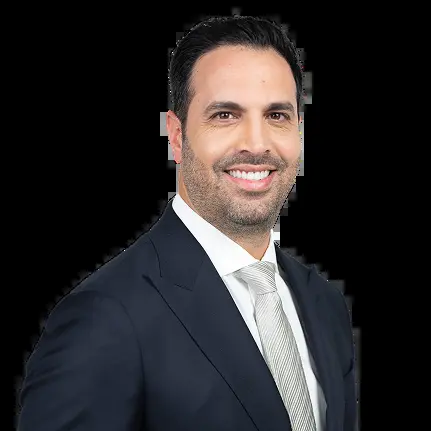
“Every legislative cycle in California has produced new protections for survivors,” says Joseph Shirazi, Managing Partner of Compass Law Group. “AB 218 gave childhood survivors unlimited time. AB 2777 gave adult survivors a window. AB 250 is about making sure that window never fully closes on someone who simply wasn’t ready yet.” This consistent legislative trajectory reflects a statewide recognition that time limits are poor proxies for survivor readiness — and that justice delayed by trauma should not mean justice denied permanently.
Who Can Be Held Liable Under California’s Sexual Abuse Laws?
One of the most critical — and frequently misunderstood — aspects of California sexual abuse litigation is that legal liability extends well beyond the individual perpetrator. Institutions that knew, or reasonably should have known, about abuse and failed to prevent it can be held financially responsible under multiple legal theories. This institutional liability is often where the most substantial compensation originates, because organizations typically carry significant insurance coverage and assets that individual abusers do not.
Under California law, the following parties may be named as defendants in a civil sexual abuse lawsuit:
- Individual abusers — The perpetrator of the sexual abuse is always a potential defendant in a civil claim, regardless of whether criminal charges were filed, whether a conviction resulted, or whether any prior civil action was attempted.
- Employers and organizations — Employers may be held vicariously liable under the doctrine of respondeat superior when an employee commits abuse within the scope of employment, or under negligent hiring, negligent retention, and negligent supervision theories when the organization failed to screen or remove a foreseeable abuser.
- Schools and school districts — Public and private schools that employed teachers, coaches, or staff who committed abuse — particularly where administrators had prior notice of misconduct and failed to act — face substantial civil liability. A California child sexual abuse lawyer can identify whether a school’s failure to report constituted actionable negligence.
- Religious institutions and clergy organizations — Dioceses, churches, and religious orders that transferred known abusers rather than reporting them have faced billions in California civil liability. California clergy sexual abuse cases often involve cover-ups spanning decades, which can support claims for punitive damages under California Civil Code §52.4.
- Youth and civic organizations — Scouting groups, youth sports leagues, CYO programs, 4-H organizations, and similar entities that placed children or young adults in contact with predatory adults and failed to implement adequate screening and safeguarding policies may be named as defendants in both childhood and adult abuse cases.
- Medical providers and mental health professionals — Licensed therapists, physicians, and other healthcare professionals who abused patients in treatment settings face both civil liability and mandatory licensing consequences under California law.
- Government entities — Government employers, public school districts, county foster care systems, and juvenile detention facilities may be liable for abuse by their employees; however, claims against government entities require a Government Claims Act notice — typically within 6 months of the date the survivor discovers their legal claim — before a civil lawsuit can be filed.
Identifying every liable party is one of the most consequential decisions in a sexual abuse case. An experienced Los Angeles sexual abuse lawyer with institutional liability experience can trace the full chain of negligence — from the individual abuser through the supervisors, administrators, and governing bodies that created the conditions for abuse to occur.
What Damages Can Adult Sexual Abuse Survivors Recover in California?
California law allows sexual abuse survivors to pursue comprehensive compensation that reflects the full and lasting scope of harm they have experienced — including harms that do not manifest for years after the abuse. Civil litigation is not simply about money; it is about recognition, accountability, and ensuring that survivors have the financial resources to rebuild their lives.

Under California law — including California Civil Code §52.4, which provides civil remedies specifically for gender-based violence including sexual assault — adult survivors working with a sexual abuse survivors lawyer may recover the following categories of damages:
- Therapy and mental health treatment costs — Past, present, and future expenses for psychological counseling, trauma-focused cognitive behavioral therapy (TF-CBT), EMDR, psychiatric care, support groups, and any other mental health treatment directly related to the abuse.
- Medical expenses — Emergency medical care received after the abuse, ongoing physical health treatment for trauma-related conditions such as chronic pain and somatic disorders, and reasonably anticipated future medical costs.
- Lost wages and diminished earning capacity — Income lost because of the psychological impact of abuse, career disruption caused by PTSD or other trauma-related impairments, reduced lifetime earning capacity, and time spent in treatment rather than working.
- Pain and suffering — Compensation for the physical and emotional suffering caused by the abuse itself and its long-term consequences on the survivor’s body, relationships, sense of safety, and quality of life.
- Emotional distress damages — Separate from pain and suffering, California allows significant awards for documented emotional distress including anxiety disorders, clinical depression, post-traumatic stress disorder, sleep disturbances, and the cumulative psychological burden of complex trauma.
- Punitive damages — Where institutional defendants engaged in deliberate cover-ups, knowingly concealed abuse from parents or authorities, or recklessly disregarded survivor safety in pursuit of institutional reputation, California courts may award punitive damages designed to punish the defendant and deter similar misconduct in the future. These awards can significantly exceed compensatory damages in cases of egregious institutional misconduct.
Compass Law Group’s team of dedicated sexual abuse lawyers has recovered more than $250 million for survivors throughout California, including cases involving institutional defendants where punitive damage awards were warranted. Every case is handled on a strict No Win, No Fee basis — survivors never pay a fee unless compensation is actually recovered on their behalf.
California Sexual Abuse Statistics
The scale of sexual abuse in California — and the historical barriers that have prevented survivors from accessing justice — makes the legislative case for AB 250 not only compassionate but statistically urgent. The following data, drawn from federal and national research sources, illustrates why California’s ongoing expansion of survivor rights is both necessary and overdue.
- 1 in 4 girls and 1 in 13 boys in the United States experience sexual abuse at some point during childhood, according to the CDC’s Sexual Violence Prevention research — representing millions of potential claimants who may not yet have come forward.
- 1 in 6 American women will be the victim of an attempted or completed rape in her lifetime, with the majority never reporting the assault to law enforcement (RAINN, 2024).
- Every 68 seconds, another American is sexually assaulted — yet only 23 out of every 1,000 rapes result in incarceration, underscoring why the civil justice system plays an irreplaceable role that the criminal system cannot fulfill alone (RAINN).
- The CDC estimates that the lifetime economic cost of rape — including medical treatment, mental health care, lost productivity, and criminal justice costs — exceeds $122,461 per victim, reflecting the profound financial as well as human toll of sexual violence.
- Since the AB 2777 revival window opened on January 1, 2023, California courts have seen a significant surge in adult survivor civil filings — demonstrating that the demand for accountability among adult survivors dramatically exceeds what any single, time-limited window can accommodate, and reinforcing the legislative rationale for AB 250.
These numbers represent real people — survivors in Sacramento, throughout Southern California, and in communities statewide who deserve the right to pursue civil accountability regardless of when they were finally ready or able to come forward. California’s legislative response to these realities — from AB 218 to AB 2777 to AB 250 — reflects a hard-won understanding that survivor timelines are not legal deficiencies but human realities.
How Does Compass Law Group Help Survivors Navigate AB 250 and California’s Evolving Laws?
Compass Law Group, LLP was founded on a single commitment: ensuring every sexual abuse survivor in California has access to experienced, compassionate legal advocacy regardless of their financial resources. Managing Partner Joseph Shirazi (California Bar #265403) and Senior Partner Simon Esfandi (California Bar #275307) lead a team that has represented survivors in every category of sexual abuse case — from individual perpetrators to large institutional defendants with decades of documented cover-up history. The firm has recovered more than $250 million for survivors, and every case is handled on a strict No Win, No Fee basis.
“California’s legislative commitment to survivors — from AB 218 to AB 2777 to now AB 250 — reflects what we see in our practice every single day: survivors are ready to come forward, but they need the law to be ready for them,” says Joseph Shirazi. “Our job is to make sure that no survivor misses a critical deadline they did not know existed, and that every liable party — individual or institutional — is held fully accountable.” The firm’s comprehensive practice areas span the full range of California sexual abuse and serious personal injury cases, from California workplace sexual abuse claims to institutional abuse by schools, clergy, and youth organizations.
With headquarters in Beverly Hills and additional offices throughout the state — including Long Beach and Oakland — Compass Law Group serves survivors across all of California. Whether your case involves a California workplace sexual abuse claim, California child sexual abuse, California clergy sexual abuse, California CYO sexual abuse, or abuse in a school, 4-H program, youth organization, or healthcare setting, the firm’s attorneys understand both the legal complexity and the deeply human cost of what you have endured. You are not alone — and you do not have to navigate this process alone. Call (213) 320-1001 today. There is no fee unless the firm recovers compensation for you, and your consultation is completely confidential from start to finish.
Q: What is AB 250 and how is it different from AB 2777?
AB 2777 amended CCP §340.16 to create a three-year civil revival window (January 1, 2023 – December 31, 2026) for adult sexual abuse survivors — those 18 or older at the time of abuse — allowing them to revive previously time-barred claims. AB 250 is proposed California legislation designed to create a new or extended revival window after AB 2777’s deadline closes. Where AB 2777 was California’s first major step toward adult survivor revival, AB 250 is the continuation of that commitment — ensuring that survivors who could not act within the earlier window still have a legal pathway to accountability. Survivors should contact a California sexual abuse attorney immediately to determine which law applies to their specific situation.
Q: Can a California workplace sexual abuse lawyer help me file a claim under AB 250?
Yes. An experienced California workplace sexual abuse lawyer can evaluate your situation under both current law — AB 2777, which closes December 31, 2026 — and any enacted provisions of AB 250. Workplace sexual abuse cases may also involve parallel employment law claims under California’s Fair Employment and Housing Act (FEHA) and Title VII for hostile work environments, negligent supervision, or institutional failure to address known harassment. Compass Law Group handles both the civil sexual abuse claim and any related employment claims arising from the same course of abuse, maximizing the range of defendants and recovery channels available to survivors.
Q: Are there special rules for California clergy sexual abuse or California CYO sexual abuse cases?
Yes. California clergy sexual abuse cases and California CYO (Catholic Youth Organization) sexual abuse cases frequently involve institutional defendants — dioceses, archdioceses, religious orders, or national organizations — in addition to the individual abuser. Under both AB 218 (CCP §340.1) for childhood abuse survivors and AB 2777/AB 250 for adult survivors, these institutional defendants can be held liable under respondeat superior, negligent hiring, and negligent supervision theories. Many clergy abuse cases also involve documented decades-long cover-ups, which may support substantial punitive damage claims under California Civil Code §52.4. Critically, if you were abused as a child by clergy, there is no statute of limitations — you may file at any age.
Q: Does AB 250 apply to California child sexual abuse cases, or is it only for adult survivors?
AB 250 is specifically aimed at adult survivors — those who were 18 or older when the abuse occurred — whose civil claims may be time-barred after AB 2777’s window closes on December 31, 2026. Childhood sexual abuse survivors do not need AB 250 because AB 218 already permanently eliminated the statute of limitations for them under CCP §340.1: any person abused as a minor in California can file a civil lawsuit at any age, with no deadline whatsoever. For childhood survivors, neither AB 2777 nor AB 250 creates any new restriction or deadline — they simply are not needed, because the right to sue never expires.
Q: What should I do if I am a California 4-H sexual abuse survivor or was abused in a similar youth organization?
If you were sexually abused in a California 4-H program, scouting organization, youth sports league, or similar civic youth organization, you may have civil claims against both the individual abuser and the parent organization. California 4-H sexual abuse cases and similar claims often center on negligent supervision, failure to implement adequate background screening, and failure to report abuse to authorities under California’s mandatory reporting laws. If you were a minor at the time, AB 218 (CCP §340.1) means there is no deadline for your civil claim — ever. If you were an adult, act immediately under AB 2777 before December 31, 2026, and speak with a California sexual abuse attorney today about whether AB 250 may also apply.
References
- California Code of Civil Procedure §340.1 (AB 218) — Sexual Abuse Statute of Limitations
- RAINN — Sexual Violence Statistics
- California Code of Civil Procedure §340.16 (AB 2777) — Adult Survivor Civil Revival Window
California Sexual Abuse Lawsuit — Key Statistics

Steps to Take After Understanding Your Rights Under California’s Latest Sexual Abuse Laws
- Consult a California sexual abuse attorney immediately — AB 2777’s revival window for adult survivors expires on December 31, 2026, and AB 250 has not yet been enacted into law. Do not wait for AB 250’s passage before protecting your current rights. An attorney can assess within days whether your claim qualifies under existing law and help you file before any deadline closes.
- Document everything you remember about the abuse — Write down dates, locations, a description of the abuser, any witnesses present, disclosures you made at the time to friends, family, or supervisors, and your best recollection of the institutional context. Memory documentation is admissible evidence and is critical to building your attorney’s timeline and liability theory.
- Gather and preserve all records — Collect medical records and hospital reports, therapy and counseling notes, any communications from the abuser or their institution (including emails, texts, and letters), police reports or school incident reports if filed, and any documentation of formal complaints you submitted. Do not delete digital communications — screenshot and back them up.
- Identify every institution involved — Think carefully about who employed or supervised your abuser at the time of the abuse, whether any supervisors or administrators were informed, and which organization managed the setting where the abuse occurred. Institutional defendants often carry substantially greater financial resources than individual abusers, and identifying them early is essential to maximizing your recovery.
- Act before the AB 2777 deadline if it applies to you — If you were an adult (18 or older) at the time of the abuse, your right to file a revival claim under CCP §340.16 expires on December 31, 2026. A Sacramento sexual abuse lawyer or a Beverly Hills sexual abuse attorney at Compass Law Group can evaluate your claim quickly and begin the filing process within days of your first contact.
- Understand the Government Claims Act deadline if a public entity is involved — If your abuser worked for a government employer — a public school, county child welfare agency, state juvenile facility, or other public entity — you must file a Government Claims Act notice within 6 months of discovering your legal claim before a civil lawsuit can proceed. This deadline is separate from, and often earlier than, the AB 2777 or AB 250 civil filing deadline. Missing it may permanently bar your government-entity claims.
- Contact Compass Law Group for a free, confidential consultation — Call (213) 320-1001 to speak with a California sexual abuse attorney today. There is no cost, no obligation, and no requirement to share your name. Every survivor deserves to understand their rights fully before making any decision about pursuing a claim.