





A California federal judge has dismissed a proposed class action that sought up to $32.8 billion from Apple over child sexual abuse material (CSAM) circulating through iCloud. U.S. District Judge Noël Wise dismissed the case with prejudice in an order reported on July 15, 2026, holding that Section 230 of the Communications Decency Act shields the platform from liability for content uploaded by its users.
Video: WION News report on the ruling.
- A California federal judge dismissed, with prejudice, a proposed class action seeking up to $32.8 billion against Apple over CSAM on iCloud.
- The dismissal rests on Section 230 of the Communications Decency Act (1996), which protects online platforms from liability for content their users upload.
- The two plaintiffs, using the pseudonyms “Amy” and “Jessica,” sought to represent a class of about 2,680 people and asked the court to order Apple to change how iCloud operates.
- The plaintiffs’ attorney said they are reviewing the decision and considering an appeal.
- The ruling limits claims against platforms — but survivors’ civil claims against abusers and enabling institutions remain fully viable under California law.
The court held that Section 230 bars holding Apple liable for material uploaded by its users, and that no federal law requires Apple to build or deploy technology to detect CSAM. The decision narrows survivors’ ability to sue technology platforms — but it does not affect a survivor’s right to pursue the individuals and institutions directly responsible for abuse under state law.
What the court actually ruled
According to reports, Judge Noël Wise dismissed the case with prejudice, meaning it cannot be refiled in that form. The two plaintiffs, identified only as “Amy” and “Jessica,” alleged that images documenting their childhood abuse circulated through Apple’s iCloud service. They sought to represent roughly 2,680 people with similar claims and asked the court to order Apple to change how iCloud detects and handles such material. The judge concluded the plaintiffs were, in substance, trying to hold Apple responsible for failing to detect, remove, or prevent the distribution of content uploaded by users.
Why Section 230 blocked the claim
Section 230 of the Communications Decency Act (1996) generally protects online platforms from civil liability for content that their users create and upload. Courts have applied it broadly for more than two decades. Here, the judge found that no federal law requires Apple to develop or deploy CSAM-detection technology, and that Section 230 shielded Apple from claims premised on its handling of user-uploaded files. The plaintiffs’ attorney, James Marsh, said his clients disagree with the court’s interpretation and are considering an appeal, while agreeing that lawmakers should strengthen online protections for children.
What this means for CSAM survivors
The ruling is a reminder of how difficult Section 230 makes it to hold a technology platform financially responsible for user-uploaded abuse material. But it is critical to understand what the decision does not do: it does not close the courthouse door on survivors. Civil claims against the people who committed the abuse — and against institutions whose negligence enabled it — proceed under state law and are not governed by Section 230. The platform question and the survivor’s core civil remedy are two very different things.
It also matters that the dismissal turned on a question of federal immunity, not on any finding about the underlying harm the plaintiffs described. The court did not decide that the abuse did not happen or that the images did not circulate; it decided that Section 230 barred this particular theory against this particular defendant. For survivors, that distinction is everything. The abuse itself — and the responsibility of the people and institutions behind it — remains fully actionable in state court. Congress and several state legislatures continue to debate carve-outs to Section 230 for child-safety cases, and the plaintiffs’ attorney pointed to exactly that need. Until the law changes, survivors and their advocates focus their civil claims where the law already provides a clear remedy.
How California law still protects survivors
Under AB 218 (Code of Civil Procedure §340.1), California survivors of childhood sexual abuse generally have until age 40, or five years from discovering the harm, to bring a civil claim against an abuser or an enabling institution — a church, school, youth program, or similar organization — and enhanced damages may apply where a cover-up is proven. These state-law remedies are entirely unaffected by the Apple ruling. If you are unsure whether your situation qualifies, our California sexual abuse practice and our AB 218 guide explain the options.
What compensation and process look like
California does not cap damages in sexual abuse cases. Survivors may recover economic damages (therapy, medical care, lost income) and non-economic damages (pain, suffering, emotional distress), with treble damages available against an institution that covered up abuse. Civil cases can usually be filed confidentially as a “Jane Doe” or “John Doe.” Our guide on how a case is valued and our article on how sexual abuse compensation works in California walk through what to expect.
The push to change the law
As the plaintiffs’ own attorney noted, cases like this have intensified calls for lawmakers to strengthen legal protections for children online. Until Section 230 is narrowed by Congress or the courts, survivors’ strongest civil path generally runs through the abusers and the institutions directly responsible — not the platforms that host content.
Who can still be held responsible
It helps to separate the two questions the Apple case raises. The first — can a platform be sued for user-uploaded material — is where Section 230 does its work, and where survivors face the steepest climb. The second — can the people and institutions responsible for the underlying abuse be held accountable — is governed by ordinary state tort law and is very much alive. That includes the person who committed the abuse and any organization (a school, a church, a youth or sports program, a treatment facility) whose negligence in hiring, screening, supervising, or reporting enabled it. California courts routinely allow those institutional abuse claims to proceed, and AB 218 gives survivors years to bring them.
What survivors and families should do now
- Reach out for support first. Confidential help is available through RAINN (800-656-4673) and licensed trauma counselors.
- Preserve anything relevant. Save records, messages, and the names of any people or institutions connected to the abuse — details matter years later.
- Ask about your deadline. Under CCP §340.1 many survivors have until age 40 or five years from discovery, but the rules are fact-specific.
- Protect your privacy. Civil claims can usually be filed anonymously as a “Jane Doe” or “John Doe.”
- Speak with a sexual abuse attorney. A free, confidential consultation can identify every responsible party and the strongest path forward.
How Compass Law Group helps
Compass Law Group represents sexual abuse survivors across California from offices in Los Angeles, San Francisco, Sacramento, and Oakland. We investigate the individuals and institutions responsible, protect our clients’ privacy, advance every case cost ourselves, and work on a strict No Win, No Fee basis — survivors pay nothing unless we recover for them. Your consultation is free and completely confidential, and there is never any obligation. To understand the process end to end, start with our AB 218 lawsuit guide.
Frequently Asked Questions
Does the Apple ruling stop sexual abuse survivors from suing?
No. It limits claims against technology platforms for user-uploaded content under Section 230. Survivors can still sue the individuals who abused them and the institutions whose negligence enabled the abuse, under state law such as California’s AB 218.
What is Section 230 and why did it matter here?
Section 230 of the Communications Decency Act (1996) generally shields online platforms from liability for content their users create. The court applied it to bar claims that Apple failed to detect or remove user-uploaded CSAM.
Can survivors still recover damages under California law?
Yes. AB 218 (CCP §340.1) lets childhood sexual abuse survivors sue abusers and enabling institutions until age 40 or five years from discovery, with enhanced damages available where a cover-up is proven.
Can the plaintiffs appeal the Apple decision?
Their attorney said they are reviewing the decision and considering an appeal, and exploring whether other legal avenues remain available.
How long do California survivors have to file a claim?
Generally until age 40 or five years from discovering the harm under CCP §340.1 for childhood abuse, with separate deadlines for adult survivors. Confirm your deadline with an attorney.
Is my consultation confidential and free?
Yes. Compass Law Group offers free, confidential consultations and works on a No Win, No Fee basis — you pay nothing unless we recover for you.
Speak With a California Sexual Abuse Attorney
Compass Law Group represents sexual abuse survivors across California — confidential, compassionate, and on a strict No Win, No Fee basis. Your call is private and there is no obligation.
References
- WION News — video report
- Storyboard18 — original report
- 47 U.S.C. §230 (Communications Decency Act)
- California Code of Civil Procedure §340.1 (AB 218)
Written & legally reviewed by Compass Law Group partners

Joseph Shirazi
Managing Partner, Compass Law Group, LLP
California State Bar #265403 · Loyola Law School, J.D.
Joseph Shirazi is the Managing Partner of Compass Law Group, LLP, leading the firm’s personal-injury, catastrophic-injury, and wrongful-death trial practice. He authored the analysis on this page.
Profiles: Avvo · Super Lawyers · Justia · LinkedIn · CA State Bar · Full Bio →
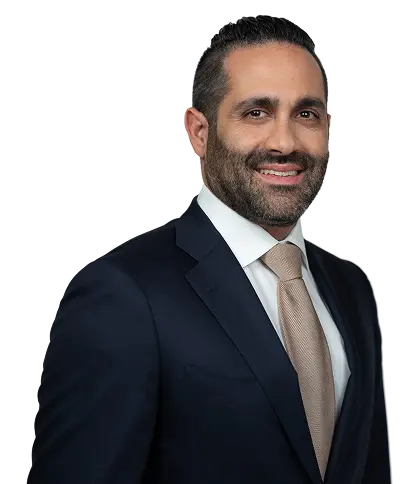
Simon Esfandi
Partner & Co-Founder, Compass Law Group, LLP
California State Bar #275307 · Loyola Law School, J.D.
Simon Esfandi is a Partner and Co-Founder of Compass Law Group, LLP. He reviewed this page for legal accuracy. Compass represents California sexual abuse survivors on a No Win, No Fee basis.
Profiles: Avvo · Super Lawyers · Justia · LinkedIn · CA State Bar · Full Bio →
Past results do not guarantee future outcomes. This article is legal information, not legal advice.