





A Compass Law Group Viewpoint | Sexual Abuse Practice Group | Updated May 2026
TL;DR. On April 30, 2026, the Los Angeles Times reported that the Los Angeles Unified School District (LAUSD) had agreed to pay $30.5 million to 19 additional former students of convicted child molester Mark Berndt, pushing the district’s total Berndt-related payouts past $200 million. To Compass Law Group’s Sexual Abuse Practice Group, the milestone is not just another headline — it is a working roadmap of how California institutions fail children, how CCP §340.1, CCP §340.11, and AB 218 put accountability back into survivors’ hands, and how every parent in Los Angeles County should be reading this case. The numbers below are public record. The viewpoint is ours. Past results do not guarantee future outcomes; this article is commentary, not legal advice.

The Newest Chapter — and Why It Is Not the Last
Reporting from the Los Angeles Times on April 30, 2026 confirmed that LAUSD agreed to pay $30.5 million to 19 more former students who say they were sexually abused by Mark Berndt while he taught at Miramonte Elementary School in South Los Angeles. With this settlement, the district’s total payouts tied to Berndt’s crimes now exceed $200 million. (LA Times, “L.A. Unified payouts reach $200 million in Mark Berndt student abuse claims after latest settlement,” April 30, 2026.)
For context, this is the same case that produced:
- A $139.25 million settlement in 2014 covering 81 students — at the time the largest school-district sexual-abuse settlement in U.S. history (LAUSD General Counsel statement, Nov. 21, 2014).
- A roughly $30 million earlier round of settlements with about 65 additional Miramonte families.
- A $3.55 million 2024 settlement with two further survivors who came forward more than a decade after Berndt’s arrest.
- A $500 million bond issuance by LAUSD in 2025 to fund payouts on historical sexual-abuse claims, plus an additional $250 million approved earlier in 2026 (LAUSD Board of Education actions, public minutes).
When you add the new $30.5 million to the running total, you reach the $200 million figure now confirmed in print. Berndt himself pleaded no contest in 2013 to 23 counts of lewd conduct upon a child (Penal Code §288) and is serving a 25-year sentence at California state prison. The criminal case ended over a decade ago. The civil reckoning, plainly, has not.
That is the central fact a Compass Law Group viewpoint has to start with: fourteen years after Berndt’s arrest, survivors are still walking through our doors, and through other plaintiffs’ firms across California, for the first time. As plaintiffs’ attorney Morgan Stewart told the LA Times, “Fourteen years later, victims are still coming forward, and that is remarkable… The red flags were obvious here, and we are seeing more cases where the reports are ignored.”
How Compass Law Group Looks at the Miramonte File
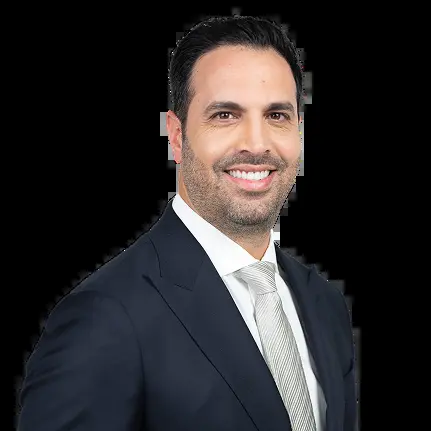
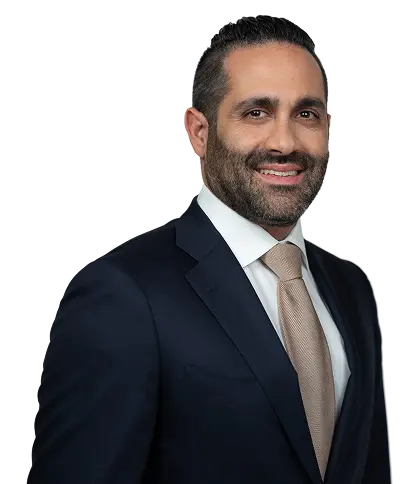
Compass Law Group, LLP has been representing California survivors of sexual abuse and personal injury since 2017, with offices in Los Angeles, Beverly Hills, Long Beach, Sacramento, Oakland, and across the state. We have recovered more than $250 million for our clients across all practice areas, with managing partners Joseph Shirazi and Simon Esfandi leading our trial teams. Our Sexual Abuse Practice Group — including Lead Trial Counsel Sean Shriver, who tries catastrophic-injury and sexual-violence cases to verdict — has represented survivors in claims involving schools, hospitals, religious organizations, employers, and other institutions that failed to protect them.
When we read the Berndt file as advocates for survivors, three patterns jump off the page. They are the same patterns we see, in different uniforms, in case after case across Los Angeles County:
- The complaints existed long before the criminal case. Court documents made public in the underlying Miramonte litigation showed LAUSD received complaints about Berndt’s conduct dating back to 1983 — when a parent reported he had dropped his pants during a student field trip to a museum. Berndt was not arrested until 2012, after a CVS photo technician flagged disturbing images he brought in for development.
- The institutional response was discovery, not protection. During pretrial proceedings, a Los Angeles County Superior Court judge fined LAUSD $6,000 for failing to disclose hundreds of photographs in its possession, including images that showed children being abused. The district at one point said it had destroyed 20 years’ worth of suspected child abuse reports. Whatever else those facts mean, they do not look like a system optimized for the safety of children.
- The survivors had to drive accountability themselves. Each new wave of settlements — 2014, 2024, 2026 — corresponds not to LAUSD voluntarily auditing its files, but to survivors stepping forward, retaining counsel, and forcing the issue under California’s expanded statute of limitations.
That third pattern is where California’s child-sexual-abuse statutes — CCP §340.1, CCP §340.11, Government Code §905(m), and AB 218 — become the most important sentences a survivor’s family will ever read.
The California Legal Framework Survivors Need to Understand
Compass Law Group’s Long Beach, Beverly Hills, and Los Angeles sexual-abuse pages all anchor on the same statutory backbone, because that backbone is what gives survivors leverage against well-funded public school districts. Here is the framework as it stands in 2026, in plain English. (For legal questions about your specific situation, talk to a California attorney — that is what consultations are for, and ours are free and confidential.)
1. California Code of Civil Procedure §340.1 — The Modern Childhood Sexual Assault Statute
Section 340.1 is the statute governing “an action for recovery of damages suffered as a result of childhood sexual assault.” After AB 218 (2019), and further amended through subsequent legislation:
- For abuse occurring on or after January 1, 2024, CCP §340.1 imposes no statute of limitations at all — a survivor can file a civil action at any age, at any point in their life. (See AB 452 and the current text of §340.1.)
- The statute uses the term “childhood sexual assault” rather than “abuse,” and incorporates the broader definition tied to Penal Code §§288, 311.1, 311.2, and 311.4 — including lewd and lascivious acts and child sexual abuse material (CSAM).
2. CCP §340.11 — The Statute Governing Pre-2024 Abuse
For acts of childhood sexual assault that occurred before January 1, 2024 — which is the bucket every Berndt survivor falls into — CCP §340.11 preserves the framework AB 218 originally created. A survivor may file:
- Until their 40th birthday (22 years after age of majority), OR
- Within 5 years from the date the survivor discovered, or reasonably should have discovered, that psychological injury or illness occurring after age 18 was caused by the childhood sexual assault — whichever is later.
This “delayed discovery” rule matters immensely. A 50-year-old who first connects adult depression, PTSD, or substance-use disorder to childhood abuse during therapy in 2026 may have until 2031 to file — even though the pure age-40 calculation expired a decade ago.
3. Government Code §905(m) — No Government Tort Claim Required
Ordinarily, a lawsuit against a public entity in California requires a six-month administrative claim under the Government Claims Act. AB 218 amended Government Code §905(m) to explicitly exempt childhood sexual abuse claims from the claim-presentation requirement.
In practical terms, that means a survivor of abuse at a California public school — LAUSD, San Diego Unified, Oakland Unified, any K-12 or community-college district — does not have to navigate the standard six-month government-claim trap before filing. Public-entity defendants like LAUSD are subject to suit on essentially the same procedural footing as a private institution, while remaining subject to the §340.11 deadline framework.
4. The AB 218 Revival Window
AB 218 opened a three-year revival window that brought back to life claims that would otherwise have been time-barred as of January 1, 2020 — regardless of how long ago the abuse occurred. Subsequent legislative action has extended portions of the window, and the current revival framework — discussed at length on Compass Law Group’s Long Beach Sexual Abuse Lawyer page — remains a critical access point for survivors of historical abuse, including the survivors continuing to bring Miramonte cases today.
5. Treble Damages for Cover-Ups (CCP §340.1(b))
AB 218 added a provision allowing treble (triple) damages where a defendant is found to have engaged in a cover-up of childhood sexual assault. The California Court of Appeal has ruled, in Los Angeles Unified School District v. Superior Court (2021) 64 Cal.App.5th 549, that public entities like LAUSD retain sovereign immunity from these specifically punitive damages under Government Code §818 — but the treble-damages provision still has substantial force against private institutional defendants such as private schools, religious organizations, and youth-serving nonprofits, and the underlying cover-up evidence can still be devastating to a public entity’s case on the merits.
6. The Theory of Liability — Negligence, Not Respondeat Superior
This is the key legal mechanic non-lawyers tend to miss. As the Advocate Magazine analysis “Making the Grade” lays out, in nearly every public-school childhood sexual abuse case, the abusive conduct itself is outside the scope of employment — meaning the school district is not vicariously liable for the abuse under respondeat superior. Liability instead runs through the district’s own negligence: negligent hiring, negligent supervision, negligent retention, failure to follow mandated reporter statutes (Penal Code §11164 et seq., the Child Abuse and Neglect Reporting Act, “CANRA”), and breach of the special relationship between schools and the students entrusted to them. California Civil Code §1714 anchors the basic duty: every person — including every public entity — is responsible for injuries caused by their want of ordinary care.
That negligence framework is exactly why the Miramonte file is so devastating to LAUSD: when a parent complains in 1983 and the same teacher is still in a classroom in 2011, the negligent-supervision theory writes itself.
Why the $200 Million Number Should Not Surprise Anyone
Source: Compass Law Group | LAUSD Court Records · CCP §340.1 · AB 218

From our viewpoint, the most predictable thing about LAUSD’s running tab in the Berndt case is that it keeps going up. That is not because California law has gotten more aggressive in some unfair way; it is because the Miramonte facts and the law are interacting exactly as the Legislature designed.Source: Compass Law Group | Case Results & Settlement History | Los Angeles, CA
When AB 218 passed in 2019, the Legislature was responding — explicitly — to the institutional patterns documented in the Catholic Church abuse scandal (think Spotlight), the Boy Scouts of America bankruptcy, USA Gymnastics, and large public-school cases like Miramonte itself. The legislative findings recognized that delayed disclosure is the rule, not the exception, that survivors of childhood sexual abuse routinely take decades to connect adult symptoms to the abuse, and that the prior age-26 deadline and 3-year discovery rule was effectively a statute of immunity for institutions that successfully ran out the clock.
The 2026 Berndt settlement is what AB 218’s framework looks like in operation:
- Survivors who were 8, 9, 10 years old in Berndt’s classroom in the late 1990s and early 2000s are now adults in their late 20s and 30s.
- Many have only recently completed enough trauma-focused therapy — EMDR, trauma-focused CBT, prolonged-exposure therapy — to identify the connection between Berndt’s classroom conduct and adult diagnoses such as PTSD, complex PTSD, major depressive disorder, generalized anxiety disorder, and substance-use disorders.
- Under §340.11, that triggers a fresh five-year filing window from the date of discovery, layered on top of the age-40 deadline.
In other words, the new $30.5 million does not represent some new generation of unknown victims. It represents the same generation of children, finally healing enough to file.
What the Berndt Case Tells Other California Districts (and Parents)
LAUSD is not alone. Public reporting confirms that more than 1,100 alleged survivors have sued California school districts under AB 218’s framework, with roughly $700 million in settlements paid out by public entities and counting. Recent years have produced significant institutional settlements involving:
- Roman Catholic Archdiocese of Los Angeles — Clergy Cases litigation, which previously resulted in landmark settlements and has continued to generate new claims under AB 218’s revival window.
- Boy Scouts of America — the national Chapter 11 bankruptcy that produced one of the largest sexual-abuse compensation funds in U.S. history, with thousands of California claimants.
- USC — the Tyndall and Puliafito-related settlements, exceeding $1 billion in total resolutions.
- University of California system — multiple eight-figure resolutions tied to physician misconduct.
- Los Angeles County Probation Department / juvenile halls — a wave of AB 218-driven litigation alleging decades of staff abuse at MacLaren Children’s Center and county juvenile facilities.
For Los Angeles parents specifically, the Berndt facts highlight institutional risks that exist far beyond any single classroom:
- Mandated reporter compliance. Under CANRA (Penal Code §§11164–11174.3), teachers, administrators, school counselors, school nurses, and many other school personnel are mandated reporters. Failure to report suspected abuse is a misdemeanor and an independent basis for civil negligence per se.
- Personnel-file practices. When prior complaints exist and are ignored, transferred, or destroyed, that is exactly the evidentiary footprint AB 218’s cover-up provision was designed to address.
- Employment policies. Decades of California case law — and the ongoing Miramonte litigation itself — make clear that “we didn’t know” is rarely a credible defense when the records show otherwise.
From Compass Law Group’s vantage point, Miramonte is less a one-school scandal than a stress test of the entire institutional-supervision model in California public education — and a reminder to parents that the right questions to ask their school district are not theoretical.

Talk to a California Sexual Abuse Attorney Today
If you or a loved one survived abuse by a school employee or institution, California law may give you the right to hold them accountable. Our consultations are free, confidential, and available 24/7. No Win, No Fee.
What Compass Law Group Watches For in Institutional School-Abuse Cases
Every Compass Law Group sexual-abuse intake — whether the facts arise in Beverly Hills, Long Beach, Sacramento, Oakland, Los Angeles, or anywhere our California offices reach — works through a common analytical framework when an institution is involved. Without giving legal advice and without commenting on any particular pending case, the questions our team asks include:
- Was there a prior complaint, rumor, transfer, “verbal warning,” or HR file? Any prior notice — even informal — can convert a “tragic isolated event” into a textbook negligent-supervision claim.
- Were mandated reporting laws followed? A failure to file a Suspected Child Abuse Report (SCAR) under CANRA is, in itself, both a criminal violation and powerful civil evidence.
- Were background checks, fingerprinting, and Live Scan procedures actually followed? California Education Code §44830.1 and related statutes are not optional.
- What did the institution do once allegations surfaced? Cover-ups, document destruction, NDAs pressuring survivors into silence, and “quiet transfers” all expose institutions to enhanced damages and significant reputational risk.
- What is the nature and duration of the survivor’s psychological injury? Sexual-abuse damages in California are economic (therapy, medication, lost earnings, vocational disruption, future care) and non-economic (pain and suffering, emotional distress, loss of enjoyment of life). The non-economic component is often the larger figure.
We also place enormous weight on trauma-informed handling of the case itself. Survivors should never feel re-victimized by their own lawyer’s office. Our standing protocols include filing under a pseudonym (Doe v. Defendant) where appropriate, requesting protective orders and sealing of records, scheduling depositions in survivor-controlled environments, and aligning with licensed mental-health providers throughout the case.
What This Viewpoint Does Not Do
Because Compass Law Group is publishing this on our blog as a public-affairs viewpoint, we want to be direct about what we are not doing here:
- We are not commenting on any specific pending case. Our analysis is grounded in the LA Times coverage, the public LAUSD record, published California appellate decisions, and the text of California statutes.
- We are not telling any individual reader what their case is worth. Every case turns on the survivor’s specific facts, the institutional evidence, the available defendants, and the statutory window.
- We are not giving legal advice. This is a viewpoint piece. If you believe you or your child were harmed by an educator, coach, clergy member, healthcare provider, employer, or other institutional actor, the next step is a confidential conversation with a California attorney — ours, or any other qualified counsel you trust.
- We are not offering predictions about future verdicts or settlements. Past results do not guarantee future outcomes. The Berndt numbers are public record; whether any new case rises or falls depends entirely on its own facts.
What California’s 2026 Push to “Cap” Survivor Compensation Looks Like From the Survivor Side
The LA Times April 30 article notes a parallel and growing effort in Sacramento — driven by teachers’ unions, cash-strapped school districts, and other public entities including Los Angeles County — to cap survivor compensation, raise evidentiary standards, and shorten or re-impose statutes of limitations. Trial lawyers and survivor advocates oppose those efforts.
From our Sexual Abuse Practice Group’s standpoint, this debate is the most consequential California public-policy fight survivors face right now. The legitimate fiscal pressure on public school districts is real — bonded debt to pay abuse settlements directly competes with classroom funding. We do not pretend otherwise. But several truths complicate the “cap it” narrative:
- The institutions facing these payouts are the same institutions whose negligence created the underlying claims. Many of the historical complaints in Miramonte and elsewhere were made before bond markets existed in their current form. The bond pressure reflects past failures of supervision, not present litigation aggression.
- Capping non-economic damages disproportionately harms survivors. In sexual-abuse cases, the largest measurable injury is almost always psychological. A non-economic damages cap functionally writes that injury out of California law for the very survivors AB 218 was passed to protect.
- California has been here before with MICRA. California’s medical-malpractice non-economic damages cap (originally $250,000 under the Medical Injury Compensation Reform Act of 1975) was untouched for nearly 50 years before 2022’s AB 35 reforms — and even those long-overdue reforms only partially closed a half-century gap. A premature damages cap for institutional sexual-abuse claims risks the same generational lock-in.
Compass Law Group’s viewpoint: California’s elected officials should be very cautious about responding to a $200 million Miramonte tab by making it harder, not easier, for the next Mark Berndt’s victims to come forward.
A Note for Parents and Educators in Los Angeles County
If you are a Los Angeles County parent reading the LA Times coverage and wondering whether your child’s school is meaningfully different from Miramonte, here are concrete, non-legal steps any family or PTA can take this week:
- Ask for your school’s sexual-abuse prevention training records. California AB 1432 (2014) requires K-12 districts to train staff on the duties of mandated reporters. Districts must be able to document compliance.
- Ask how complaints against staff are recorded and escalated. The Berndt file shows what happens when complaints are written down, then ignored. A healthy reporting system is auditable.
- Ask your school board about Live Scan, fingerprinting, and credentialing. Education Code §44830.1 sets the floor — many districts go further.
- Talk to children in age-appropriate language. RAINN, the California Coalition Against Sexual Assault (CALCASA), and licensed pediatric mental-health providers offer parent-facing resources.
- Trust disclosures. When a child discloses uncomfortable behavior by an adult — even partial, even confused, even contradictory — that is not the time for a parent to “wait and see.” That is the time to write it down, report it to the school in writing, copy the district, and consult a mandated-reporter resource or attorney as appropriate.
Why Compass Law Group Is Speaking Up About Miramonte
Our Sexual Abuse Practice Group could have published a quiet update to our Los Angeles Sexual Abuse Lawyer page and called it a day. We chose to publish a viewpoint instead because the Mark Berndt case represents a moment in California law where every institutional actor — public school districts, religious organizations, youth sports leagues, healthcare systems, employers — should be re-examining their own files in light of CCP §340.11 and Government Code §905(m).
For survivors, the takeaway is simpler:
- You have more time than you think. Section 340.11’s age-40 deadline, plus the 5-year delayed-discovery rule, plus AB 218’s revival framework, plus the elimination of the government-claim presentation requirement, mean that survivors of pre-2024 California school abuse have multiple, overlapping paths to filing. For abuse occurring on or after January 1, 2024, CCP §340.1 imposes no time limit at all.
- Pseudonymous filing is standard. California courts routinely allow Doe filings, sealed records, and confidential settlement structures.
- You do not pay unless we recover. Compass Law Group, like most plaintiffs’ firms in California, handles sexual-abuse claims on a contingency-fee basis — no fees unless we recover compensation for you.
- A consultation is just a conversation. A confidential intake call commits you to nothing. Many survivors call us, talk through their options, and decide not to file. That is also a valid outcome of the conversation.
If you or someone you love was harmed at an LAUSD school — or any California public or private school, religious institution, youth program, healthcare facility, or employer — Compass Law Group’s Sexual Abuse Practice Group is available 24/7 for a free, confidential consultation. We have offices in Los Angeles, Beverly Hills, Long Beach, Sacramento, Oakland, and across California, and we serve clients in English, Spanish, Farsi, and Korean.
Compass Law Group, LLP — Sexual Abuse Practice Group Managing Partners: Joseph Shirazi & Simon Esfandi Lead Trial Counsel (Sexual Abuse / Catastrophic Injury): Sean Shriver Free, confidential consultations | No win, no fee | Pseudonymous filings welcomed Call (310) 289-7126 or visit cmplawgroup.com to start a confidential conversation.
Sources & References
Primary news source for this commentary:
- Richard Winton, L.A. Unified payouts reach $200 million in Mark Berndt student abuse claims after latest settlement, Los Angeles Times, April 30, 2026. https://www.latimes.com/california/story/2026-04-30/lausd-mark-berndt-settlement (also republished via AOL/Yahoo news network).
- LAUSD borrowing $250 million to settle sex abuse claims on top of earlier half-billion, Los Angeles Times, February 21, 2026.
- LAUSD reaches $139M settlement in Miramonte sex abuse case, ABC7 / KABC, November 21, 2014.
- Miramonte settlement is largest ever involving LAUSD, LA School Report, November 21, 2014.
- Breaking down the $140 million payout from LAUSD to Miramonte abuse plaintiffs, LAist / KPCC, 2014.
- LAUSD to pay $3.55M to additional victims of convicted pedophile, former Miramonte teacher, FOX 11 Los Angeles, January 23, 2024.
California statutory references:
- California Code of Civil Procedure §340.1 — Statute of limitations for childhood sexual assault claims (post-Jan. 1, 2024 framework, no time limit).
- California Code of Civil Procedure §340.11 — Statute of limitations for childhood sexual assault claims arising from pre-Jan. 1, 2024 conduct (age-40 / 5-year-discovery framework).
- California Government Code §905(m) — Exemption from the Government Claims Act presentation requirement for CCP §340.1 claims.
- California Government Code §818 — Sovereign immunity from punitive/exemplary damages for public entities.
- California Civil Code §1714 — General duty of care.
- California Education Code §44830.1 — Background checks and fingerprinting for school employees.
- California Penal Code §288 — Lewd or lascivious acts with a child under 14.
- California Penal Code §§11164–11174.3 — Child Abuse and Neglect Reporting Act (CANRA), mandated reporter framework.
- AB 218 (Gonzalez, Stats. 2019, ch. 861) — Childhood sexual assault statute of limitations reform.
- AB 452 — Elimination of statute of limitations for post-Jan. 1, 2024 childhood sexual assault.
- SB 558 — Codification of CCP §340.11 for pre-Jan. 1, 2024 conduct.
- AB 1432 (2014) — Mandated reporter training in K-12 districts.
California appellate authority:
- Los Angeles Unified School District v. Superior Court (2021) 64 Cal.App.5th 549 — public-entity sovereign immunity from CCP §340.1(b) treble damages under Gov. Code §818.
- X.M. v. Superior Court (2021) Cal.App. — companion authority on §340.1 treble damages and Government Code §818.
- Doe v. City of Los Angeles (2007) 42 Cal.4th 531 — California Supreme Court on negligence theories against public entities in childhood sexual abuse claims.
- Robson v. MJJ Productions, Inc. (Cal. Ct. App. 2020) — application of AB 218 / CCP §340.1 revival framework to non-perpetrator institutional defendants.
Compass Law Group reference content cited within this viewpoint:
- Compass Law Group, Los Angeles Sexual Abuse Lawyer, https://cmplawgroup.com/los-angeles-sexual-abuse-lawyer/
- Compass Law Group, Long Beach Sexual Abuse Lawyer, https://cmplawgroup.com/locations/long-beach/sexual-abuse-lawyer/
- Compass Law Group, Beverly Hills Sexual Abuse Lawyer, https://cmplawgroup.com/beverly-hills-sexual-abuse-lawyer/
- Compass Law Group, Sexual Abuse vs. Sexual Assault: What’s the Difference?, https://cmplawgroup.com/sexual-abuse-vs-sexual-assault-law/
- Compass Law Group, California Statute of Limitations for Sexual Assault, https://cmplawgroup.com/california-statute-of-limitations-sexual-assault/
- Compass Law Group, Can Personal Injury Attorneys Help Me With My Sexual Abuse Case?, https://cmplawgroup.com/blog/can-personal-injury-attorneys-help-me-with-my-sexual-abuse-case/
Secondary legal commentary:
- Natalie Weatherford & Sonya Ostovar (Taylor & Ring), Making the Grade, Advocate Magazine (2021).
- Lawyer Monthly, How Will the California Assembly Bill 218 Impact Victims of Childhood Sexual Assault? (2019).
- California School Boards Association, Legal Update: New Laws Related to Childhood Sexual Assault (Jan. 2024).
About the Author — Compass Law Group, LLP, Sexual Abuse Practice Group
Compass Law Group, LLP is a California personal injury and sexual abuse law firm founded in 2017 by managing partners Joseph Shirazi and Simon Esfandi. The firm has recovered more than $250 million for clients across all practice areas. Our Sexual Abuse Practice Group represents survivors in claims involving public and private schools, religious organizations, healthcare providers, employers, youth-serving organizations, and other institutional defendants throughout California. The firm operates on a contingency-fee basis and offers free, confidential, 24/7 consultations in English, Spanish, Farsi, and Korean.
Office Locations: Beverly Hills (Headquarters) · Los Angeles · Long Beach · Sacramento · Oakland · and additional California locations.
Contact: cmplawgroup.com | (310) 289-7126
This article is a public-policy viewpoint prepared by Compass Law Group, LLP’s Sexual Abuse Practice Group. It does not constitute legal advice, does not create an attorney-client relationship, and is not a substitute for consultation with a qualified California attorney. Past results described herein are public record and do not guarantee future outcomes. © 2026 Compass Law Group, LLP. All rights reserved.
Talk to a California Sexual Abuse Attorney Today
If you or a loved one survived abuse by a school employee or institution, California law may give you the right to hold them accountable. Our consultations are free, confidential, and available 24/7. No Win, No Fee.