




5,932 motorcyclists were killed nationally in 2022, representing 14% of all U.S. traffic fatalities — despite motorcycles accounting for fewer than 3% of registered vehicles (NHTSA, Traffic Safety Facts 2022).
83,000+ non-fatal motorcycle crash injuries were recorded in police reports across the United States in 2022, a rate of approximately 14 serious injuries for every motorcycle fatality — meaning the injury burden far eclipses the death toll in both human and economic terms (NHTSA, 2022).
29 times more likely — that is how much greater a motorcyclist’s per-mile fatality risk is compared to a passenger car occupant. This figure from NHTSA crash data explains why helmet use, formal rider training, and defensive riding techniques remain the most critical survival variables on any California road.
Approximately 500+ motorcyclists are killed in California each year, according to the California Office of Traffic Safety (OTS), making California consistently one of the top three states nationally for total motorcycle fatalities. Year-round riding conditions, freeway congestion, and a high volume of distracted drivers all contribute to the elevated count.
42% of fatal motorcycle crashes nationally involve a passenger vehicle making a left turn directly into the path of an oncoming motorcyclist (NHTSA) — the single most common fatal crash configuration, and one that almost always involves the non-motorcyclist’s failure to yield or failure to see the approaching rider.
Why Are California Motorcycle Riders at Greater Risk Than Most?
California’s environment creates specific and compounding hazards for motorcycle riders that go beyond what raw national statistics capture. Riders in Los Angeles face some of the highest traffic density in the country, creating a constant gauntlet of inattentive drivers, aggressive lane changes, and unpredictable merge patterns on freeways that were built before distracted driving became a daily crisis. A single moment of inattention from a passenger car driver — a glance at a phone, an unsignaled lane change — can send a motorcyclist into serious injury or worse. If you have been hurt in a Southern California crash, an experienced Los Angeles motorcycle accident lawyer at Compass Law Group can evaluate your case at no cost.
Several specific risk factors make California roads especially hazardous for two-wheeled vehicles. Understanding them is the first step toward riding defensively — and recognizing your legal rights when something goes wrong:
- Distracted and inattentive drivers: Passenger vehicle operators failing to check mirrors or blind spots before lane changes are the single leading cause of serious motorcycle collisions in California. Despite hands-free laws, cell phone use behind the wheel remains a persistent and deadly problem.
- Left-turn intersection crashes: Approximately 42% of fatal motorcycle crashes involve a car turning left across the rider’s path — a scenario almost always attributable to the turning driver’s failure to yield or to detect the motorcyclist approaching at speed.
- Road hazards disproportionate to two wheels: Potholes, raised lane markings, gravel, oil slicks, drainage grates, debris, and uneven pavement transitions that a car absorbs with minimal disruption can throw a motorcycle rider to the ground at highway speed.
- Large commercial truck blind zones: Tractor-trailers and large delivery vehicles create extended no-visibility zones alongside and behind them; a motorcyclist occupying those zones during a merge or lane change may have no escape path and no way to be seen.
- Speed and impairment: California OTS data links excessive speed and alcohol or drug involvement to a disproportionate share of fatal crashes — both among other drivers and, in some cases, among riders themselves.
- Defective motorcycle components: Manufacturing defects in brakes, tires, throttle assemblies, fuel systems, and steering components have caused catastrophic crashes even when riders did everything correctly, creating product liability claims against manufacturers alongside negligence claims against at-fault drivers.
Riders across Northern California face equally serious risks on congested Bay Area freeways and coastal highways. A San Francisco motorcycle accident lawyer at Compass Law Group can investigate the specific cause of your crash, identify all parties whose negligence contributed, and build a case that holds every responsible party accountable.
What California Laws Protect Injured Motorcycle Riders?
California’s legal framework for motorcycle accident claims draws from several overlapping statutes and common-law principles. The foundation is California Civil Code § 1714, which establishes the universal duty of care: every person must exercise ordinary care to prevent foreseeable injury to others. When a driver’s negligence — whether through distraction, speeding, failure to yield, or impairment — causes a crash that injures a motorcyclist, that driver has breached their duty and may be held civilly liable for the full range of resulting economic and non-economic damages.

On the equipment side, California Vehicle Code § 27803 requires every motorcycle operator and passenger to wear a properly fitted, fastened, and U.S. DOT-compliant helmet while the vehicle is in motion. Non-compliance does not automatically bar an injury claim, but defense attorneys routinely argue that a helmetless rider assumed additional risk or contributed to their own head injuries — a comparative fault argument that can reduce the final recovery amount. Where a helmet itself was defective and failed to provide adequate protection, a separate claim under California product liability law may be available against the manufacturer in addition to the negligence claim against the at-fault driver.
California applies a pure comparative fault rule, meaning an injured rider who was partially responsible for a crash may still recover damages — reduced proportionally by their share of fault. A rider found 20% at fault in a case with $500,000 in proven damages would still recover $400,000. This rider-favorable framework, combined with California’s broad definition of recoverable damages — including future medical expenses, lost earning capacity, and emotional distress — makes retaining an experienced motorcycle accident attorney essential to protecting the full value of your claim. Insurance adjusters are trained to inflate your fault percentage; an attorney is trained to push back with evidence.
Who Can Be Held Legally Responsible After a California Motorcycle Crash?
One of the first questions an experienced attorney asks after a motorcycle crash is: who — beyond the most obvious at-fault driver — may share legal responsibility? California’s comparative fault rules allow multiple defendants to be held accountable simultaneously, which is vital when serious injuries generate multi-million-dollar damage claims that exceed any single defendant’s insurance coverage. Potentially liable parties in a California motorcycle accident can include the negligent driver, their employer if they were working at the time, a government agency responsible for a dangerous road condition, a motorcycle or parts manufacturer with a defective product, or a commercial establishment that over-served an intoxicated driver who then caused a crash.

Traumatic brain injuries are among the most life-altering and financially catastrophic consequences of motorcycle crashes, and they demand specialized legal expertise to value and litigate properly. A rider who suffers a TBI may face years of rehabilitation, permanent cognitive or physical disability, and astronomical long-term care costs that dwarf their initial hospital bills. A dedicated brain injury attorney at Compass Law Group understands how to document these damages comprehensively — including future care projections from life care planners, lost lifetime earnings from vocational experts, and the profound personal impact on the rider and their family — so that no recoverable item is ever left on the table.
Motorcycle passengers present a unique legal posture: they are almost never at fault for a crash and typically hold strong claims against the at-fault driver, and sometimes against the motorcycle operator depending on the circumstances. Understanding the specific dynamics of common motorcycle passenger injuries in LA is critical when building a comprehensive recovery strategy. Compass Law Group represents injured riders and passengers from offices in Beverly Hills, San Francisco, Oakland, and throughout California — bringing the same aggressive, evidence-driven advocacy to clients statewide.
How Much Is a California Motorcycle Accident Claim Worth?
Settlement value in a California motorcycle accident case is not produced by a formula — it is the result of a thorough legal and medical analysis of every category of harm the rider has experienced. Economic damages include past and future medical expenses, lost wages during recovery, diminished lifetime earning capacity, rehabilitation costs, in-home care, and property damage to the motorcycle and gear. Non-economic damages — pain and suffering, emotional distress, loss of enjoyment of life, and loss of consortium for a rider’s spouse or partner — are equally compensable under California law. For a detailed breakdown of how courts and insurers evaluate these claims, our analysis of the average settlement in a motorcycle accident walks through the factors that drive case value up or down.

Free Confidential Consultation — Compass Law Group, LLP | Motorcycle Accident
Several variables directly influence the ultimate value of a California motorcycle accident claim. The severity and permanence of injuries is the primary driver — a fractured wrist with full recovery produces a fundamentally different case from a spinal cord injury or TBI requiring lifelong care. Liability clarity matters significantly: the cleaner the evidence of the other party’s fault, the stronger the negotiating leverage. Available insurance coverage sets the effective ceiling — the at-fault driver’s bodily injury liability limits, any umbrella policy, a manufacturer’s product liability coverage, and the rider’s own uninsured/underinsured motorist (UM/UIM) policy can all be sources of recovery in the same case. An experienced attorney knows how to layer all available coverage to maximize total compensation.
Compass Law Group’s personal injury attorneys bring expert witnesses, life care planners, vocational rehabilitation specialists, and accident reconstructionists to cases where the evidence warrants it — because presenting damages in their full scope is what separates adequate settlements from complete ones. We serve clients from our offices in Sacramento, Long Beach, and throughout California. Contact us for a free consultation to understand the realistic value of your specific claim.
How Does Compass Law Group Help After a Motorcycle Accident?
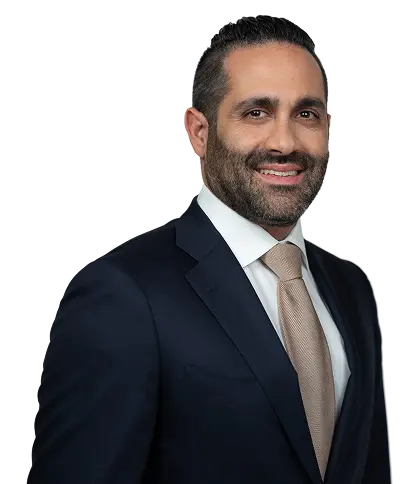
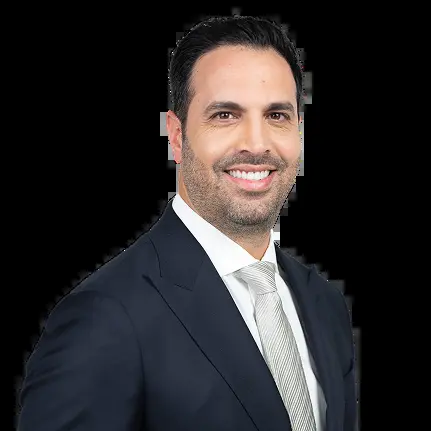
At Compass Law Group, LLP, Managing Partner Joseph Shirazi (Bar #265403) and Senior Partner Simon Esfandi (Bar #275307) lead a team of personal injury attorneys who have built their practice on recovering maximum compensation for California injury victims. With more than $250 million recovered across our personal injury practice areas, we understand that a motorcycle accident claim is rarely straightforward: it requires identifying every responsible party, documenting every category of harm, and meeting insurer tactics with the kind of strategic preparation that only comes from years of trial-level experience in California courts.
Our attorneys handle every aspect of the claims process from the moment you call — preserving scene evidence, consulting with medical and economic experts, negotiating across multiple insurers, and, when a fair settlement cannot be reached, taking cases to trial. We work exclusively on contingency: no legal fees are owed unless and until we recover compensation for you. If you or someone you love was injured in a motorcycle accident anywhere in California, call (213) 320-1001 or toll-free at (800) 602-4010 for a free, no-obligation consultation with an experienced member of our team today.
Q: How often do motorcycle riders get in accidents compared to car drivers?
Motorcyclists are involved in fatal accidents at a rate 29 times higher per mile traveled than passenger car occupants, according to NHTSA. On an annual basis, roughly 1–2% of registered motorcycles are involved in a police-reported crash. Over a lifetime of riding, cumulative probability climbs to an estimated 15–33% for regular riders. California’s year-round riding season, congested freeways, and high volume of distracted drivers push individual risk above the national average for riders in this state.
Q: What is the most common cause of fatal motorcycle accidents in California?
Approximately 42% of fatal motorcycle crashes nationally involve a passenger vehicle making a left turn across the path of an oncoming motorcyclist — the single most common fatal crash configuration — and California data closely mirrors this national pattern. The turning driver typically fails to see the rider or misjudges their approach speed. Other leading causes in California include driver inattention, speeding, impaired driving, and road hazards such as potholes and debris. In the majority of these scenarios the non-motorcyclist is at fault, giving the injured rider a viable negligence claim under California Civil Code § 1714.
Q: How much can I recover after a California motorcycle accident?
Compensation in a California motorcycle accident case can include past and future medical expenses, lost wages, diminished earning capacity, rehabilitation costs, pain and suffering, emotional distress, and property damage. California imposes no statutory cap on non-economic damages in personal injury cases — unlike medical malpractice. Factors that drive case value upward include permanent injuries, clear liability evidence, and available insurance coverage across all defendants. Compass Law Group offers a free consultation to help you assess the realistic value of your specific claim based on actual case facts.
Q: Can I still recover damages if I was partially at fault for my motorcycle accident?
Yes. California applies a pure comparative fault rule under Civil Code § 1714, meaning an injured rider recovers damages even if they share some responsibility — with the award reduced proportionally by their percentage of fault. A rider found 25% at fault in a case with $600,000 in proven damages would still recover $450,000. Insurance adjusters frequently attempt to inflate a rider’s fault percentage to minimize payouts. An experienced attorney counters these tactics by building strong, documented evidence of the opposing party’s primary negligence before any settlement discussions begin.
Q: How long do I have to file a motorcycle accident lawsuit in California?
California Code of Civil Procedure § 335.1 gives most motorcycle accident victims two years from the date of injury to file a personal injury lawsuit. Exceptions apply: claims against a government agency — such as Caltrans for a road hazard — require filing a government tort claim within six months of the incident, with the lawsuit to follow within six months of the agency’s rejection. For minor victims, the statute is tolled until they turn 18. Missing the applicable deadline results in permanent loss of the right to pursue compensation, regardless of how meritorious the underlying claim would have been.
No Win, No Fee — Compass Law Group, LLP | Call (213) 320-1001
Source: Compass Law Group | Motorcycle Accident

Steps to Take After a Motorcycle Accident
The decisions made in the hours and days immediately following a motorcycle crash can significantly affect the strength and value of a legal claim. Evidence disappears, witnesses become difficult to locate, and insurers begin their investigation the moment they receive notice of a crash. Acting quickly and strategically protects both your health and your legal rights.
- Call 911 and secure medical attention immediately. Even if you believe your injuries are minor, adrenaline masks pain and serious conditions — including traumatic brain injuries and internal bleeding — may produce no obvious symptoms for hours. A police report creates an official record that is difficult for insurers to dispute later.
- Document the scene thoroughly with photos and video. Capture the position of all vehicles, road conditions, skid marks, traffic signals, lane markings, your gear, your damaged motorcycle, and any visible injuries. Wide-angle shots and close-ups from multiple angles preserve details that fade from memory within days.
- Exchange information with all involved parties. Collect the name, driver’s license number, insurance company, policy number, and contact details of every driver involved. Record the make, model, color, and license plate of all vehicles.
- Gather witness contact information before leaving the scene. Bystanders who independently observed the crash can provide accounts that are difficult for insurers to challenge. Names, phone numbers, and email addresses — collected on the spot — are among the most valuable pieces of evidence in a disputed liability case.
- Preserve all physical evidence without alteration. Do not repair your motorcycle, discard your helmet or riding gear, or clean or modify anything connected to the crash before your attorney has had the opportunity to inspect and document it. Damaged equipment demonstrates crash severity and, in defective-product cases, establishes the manufacturer’s liability.
- Attend all medical appointments and maintain complete records. Follow every treatment recommendation from your physicians and keep organized copies of all records, bills, prescriptions, and imaging results. Gaps in treatment are routinely exploited by insurance adjusters to argue that your injuries were not serious or that you failed to mitigate your damages.
- Contact a California motorcycle accident attorney before speaking with any insurer. Anything you say to an insurance representative — including the at-fault driver’s insurer — can be recorded and used to reduce or deny your claim. Compass Law Group handles all insurer communications on your behalf from the moment you retain us, at no upfront cost to you.

Get Your Free Consultation Today
If you or someone you love was seriously injured in a California motorcycle accident, Compass Law Group is ready to fight for every dollar you deserve — from medical bills and lost wages to pain and suffering. No Win, No Fee, and your first consultation costs you nothing.