
Your Battle, Our Compass:
Los Angeles Workplace Sexual Abuse Attorney
If you experienced sexual abuse or assault in your Los Angeles workplace, our attorneys are here to help. Compass Law Group has extensive experience handling workplace sexual abuse cases throughout Los Angeles County and is committed to holding employers and perpetrators accountable. Call us today for a free, confidential consultation at (213) 320-1001.


Civil Law for Clergy Sexual Abuse Survivors in Long Beach and Los Angeles County
California law gives clergy sexual abuse survivors powerful civil remedies independent of any criminal prosecution. Under California Code of Civil Procedure § 340.1, as amended by AB 218, victims of childhood clergy abuse may file suit until age 40 — or within five years of discovering the connection between their injuries and the abuse, whichever is later. Courts may also award treble damages against institutional defendants like the Archdiocese of Los Angeles when the organization was found to have concealed abuse. Long Beach falls within Los Angeles County Superior Court jurisdiction, where clergy abuse civil litigation has resulted in landmark institutional settlements. A successful civil claim can recover damages for therapy costs, lost earnings, pain and suffering, and emotional distress — regardless of whether criminal charges were ever filed.Who Can Be Held Liable for Clergy/Church Sexual Abuse in Long Beach?
Liability for clergy and church sexual abuse in Long Beach extends far beyond the individual abuser. Under California law, any clergy member, deacon, religious volunteer, or youth ministry leader who commits acts of sexual abuse can be held directly liable. In Los Angeles County, at least 88 clergy members have been credibly accused of abuse, underscoring how widespread institutional failure contributed to ongoing harm.
Churches and religious organizations face institutional liability when they knew or should have known an abuser posed a risk and failed to act. Under the doctrine of respondeat superior, the Archdiocese of Los Angeles — which oversees parishes throughout Long Beach — can be held vicariously liable for abuse committed within the scope of a cleric’s duties. Separately, negligent hiring, retention, and supervision claims arise when church leadership ignored red flags or concealed misconduct. California Code of Civil Procedure §340.1 gives childhood sexual abuse survivors until age 40 — or five years from discovery — to file civil claims, removing barriers for survivors abused decades ago.
Religious institutions operating in Long Beach, including Roman Catholic parishes, independent evangelical churches, and non-profit religious schools, may all bear liability depending on their role in enabling or concealing abuse.
- Individual clergy abusers — priests, deacons, ministers, or religious educators who committed the abuse
- The Archdiocese of Los Angeles — for parishes in Long Beach where supervisory failures occurred
- Independent churches and congregations — non-Catholic institutions with their own negligent oversight
- Church-affiliated schools and youth organizations — Long Beach religious schools and youth ministries that employed or supervised the abuser
- Denominational governing bodies — national or regional organizations that transferred or protected known abusers across assignments
Frequently Asked Questions: Clergy/Church Sexual Abuse Attorney Long Beach
What is the December 31, 2026 deadline for clergy sexual abuse claims in Long Beach, and why does it matter?
December 31, 2026 is the closing date of the AB 2777 revival window under California Code of Civil Procedure §340.16(e), the Sexual Abuse and Cover Up Accountability Act signed into law in September 2022. AB 2777 reopened the statute of limitations for adult survivors of sexual assault that occurred on or after January 1, 2009, allowing time-barred claims against clergy and institutional defendants — including the Archdiocese of Los Angeles — to be filed in Los Angeles County Superior Court. Any Long Beach clergy abuse survivor whose claim falls under this provision must file before midnight on December 31, 2026, or permanently lose the right to seek civil damages.
Who qualifies to file a lawsuit under AB 218 and CCP §340.1 for childhood clergy abuse in Long Beach?
Under AB 218 (CCP §340.1), any person who suffered childhood sexual abuse — meaning abuse that occurred before their 18th birthday — by a member of the clergy, church employee, or volunteer at a Long Beach parish may file a civil lawsuit regardless of when the abuse occurred. AB 218, effective January 1, 2020, extended the statute of limitations to the survivor’s 40th birthday or within five years of discovering a psychological injury caused by the abuse, whichever is later, and eliminated the prior $250,000 cap on non-economic damages. Los Angeles County Superior Court has accepted CCP §340.1 cases involving abuse dating to the 1950s and 1960s, meaning no Long Beach survivor should assume their claim is too old to pursue.
How does the AB 2777 cover-up provision apply to Long Beach churches and the Archdiocese of Los Angeles?
AB 2777 added California Code of Civil Procedure §340.16(e), which imposes expanded civil liability on any organization — including Long Beach Catholic parishes and the Archdiocese of Los Angeles — that ‘covered up’ a sexual assault committed by a person in a position of authority. Under §340.16(e), a cover-up is defined as a knowing concealment, suppression, or failure to disclose information about the assault that prevented the survivor from learning of the abuse or their legal rights. If your attorney can demonstrate that diocesan officials transferred an accused priest rather than reporting him or destroyed complaint records, the Archdiocese faces direct institutional liability separate from any claim against the individual perpetrator.
Can I sue the Archdiocese of Los Angeles for abuse committed by a priest at a Long Beach parish decades ago?
Yes — the Archdiocese of Los Angeles, which exercises ecclesiastical authority over all Roman Catholic parishes in Long Beach and throughout Los Angeles County, can be held liable for clergy sexual abuse under theories of negligent hiring, negligent supervision, and negligent retention under California Civil Code §1714 and CCP §340.1. In 2007, the Archdiocese paid $660 million to settle claims from 508 abuse survivors, the largest clergy abuse settlement in U.S. history at that time, and the institution’s pattern of transferring accused priests rather than removing them has been extensively documented in public court records. Survivors who file before applicable deadlines can name the Archdiocese as a direct defendant in Los Angeles County Superior Court even if the individual abuser is deceased.
Which court handles clergy sexual abuse lawsuits filed by Long Beach survivors?
Civil clergy abuse claims originating in Long Beach are filed in the Los Angeles County Superior Court, which operates a Long Beach Courthouse serving the South Bay and Harbor areas. Complex multi-plaintiff cases or those involving the Archdiocese of Los Angeles may be coordinated at the Stanley Mosk Courthouse in downtown Los Angeles under a judicial coordination order pursuant to California Rules of Court, Rule 3.501. Your attorney will evaluate the most strategic venue based on the facts of your case, the identity of the institutional defendants, and any existing coordination orders affecting Archdiocesan litigation.
What damages can I recover in a Long Beach clergy sexual abuse lawsuit under CCP §340.1?
California law permits clergy abuse survivors to recover both economic and non-economic damages — AB 218 expressly eliminated the prior $250,000 statutory cap on non-economic damages for institutional sexual abuse cases, meaning there is no ceiling on pain and suffering awards in qualifying CCP §340.1 cases. Economic damages include past and future psychiatric and psychological treatment costs, lost wages, and diminished earning capacity; research published in the Journal of Child Psychology and Psychiatry found that childhood sexual abuse survivors earn an average of 10 to 20 percent less over their lifetimes than non-abused peers. Punitive damages are also available under California Civil Code §3294 when the plaintiff can show the institutional defendant acted with malice, oppression, or fraud — a standard frequently met in cases involving documented cover-ups by diocesan leadership.
Does California law allow Long Beach survivors to file clergy abuse claims even when the abuse happened 30 or 40 years ago?
Yes — AB 218 (CCP §340.1) specifically revived childhood clergy abuse claims that were previously extinguished by California’s former statutes of limitations, allowing survivors to file regardless of when the abuse occurred so long as they have not yet reached age 40 or discovered their abuse-related injury within the past five years. The California Legislature enacted AB 218 based on findings that childhood sexual trauma routinely causes dissociation, suppressed memory, and delayed psychological recognition that prevents survivors from identifying the cause of their injuries for decades. Long Beach survivors abused at parishes such as those administered by the Archdiocese of Los Angeles should consult an attorney immediately, as individual facts — including the survivor’s age and discovery date — determine which filing window remains open.
Can adult survivors of clergy abuse in Long Beach file a claim under AB 2777 if the assault occurred after they turned 18?
Yes — AB 2777 specifically created a revival window for adult survivors (those who were 18 or older when abused) by amending CCP §340.16(e) to allow previously time-barred claims to be filed between January 1, 2023 and December 31, 2026, provided the assault occurred on or after January 1, 2009. Adult survivors must show either that their claim was previously time-barred under the standard three-year sexual assault statute (CCP §335.1) or that the defendant institution engaged in the cover-up conduct defined by AB 2777. Long Beach survivors abused as adults by deacons, youth ministers, or other church officials — not just ordained priests — qualify under AB 2777’s broad definition of ‘a person in a position of authority.’
Will my name be kept confidential if I file a clergy sexual abuse lawsuit in Los Angeles County Superior Court?
California Code of Civil Procedure §367.3, enacted in 2021, expressly permits sexual assault survivors to proceed anonymously — as ‘Jane Doe’ or ‘John Doe’ — in any civil action filed in California state court, including Los Angeles County Superior Court. Your attorney files a motion to proceed under a pseudonym at the outset of the case, and Long Beach court practice has consistently granted these motions in clergy abuse litigation, ensuring your legal name does not appear in any publicly accessible court record or filing. The court may issue a protective order restricting disclosure of identifying information to opposing counsel only under strict confidentiality conditions throughout discovery and trial.
How does California's 'delayed discovery' rule under CCP §340.1 help Long Beach clergy abuse survivors who are over 40?
CCP §340.1, as amended by AB 218, includes a delayed discovery provision allowing survivors who are older than 40 to file a civil claim within five years of the date they discovered — or reasonably should have discovered — that a psychological injury or illness was caused by the childhood sexual abuse. This rule is critical for Long Beach survivors who suppressed memories for decades or who only recently connected diagnosed conditions such as PTSD, major depressive disorder, or complex trauma — often through treatment at facilities like Harbor-UCLA Medical Center or with private therapists — to clergy abuse they experienced as children. Courts apply an objective standard: the clock begins when a reasonable person in the survivor’s position would have connected their injury to the abuse, not necessarily when the survivor subjectively made that connection.
Can I still file a Long Beach clergy abuse claim if the priest who abused me has died?
Yes — California law allows survivors to sue the institutional defendants directly, including the Long Beach parish, the Archdiocese of Los Angeles, or the applicable religious order, even when the individual abuser is deceased. Under respondeat superior liability and the direct negligence theories codified in CCP §340.1, institutional liability attaches to the organization’s own conduct — its hiring, supervision, and retention decisions — independent of whether the individual perpetrator is alive or capable of being served. CCP §377.20 further permits a deceased defendant’s estate to be substituted into an existing civil action, giving your attorney additional options when the perpetrator’s estate holds assets.
How much have California dioceses paid in clergy abuse settlements, and what should I expect from a Long Beach case?
The Archdiocese of Los Angeles paid $660 million in 2007 to settle claims from 508 survivors, yielding an average of approximately $1.3 million per claimant; subsequent California diocesan settlements have ranged from the Diocese of San Diego’s $198 million for 144 claimants to individual verdicts exceeding $5 million in cases involving egregious institutional cover-up conduct. The value of a Long Beach clergy abuse case depends on the severity and duration of the abuse, the strength of evidence establishing the Archdiocese’s knowledge of the perpetrator’s history, the survivor’s documented economic and psychological damages, and whether the case resolves through settlement or jury verdict. AB 218 and AB 2777 both eliminate statutory damage caps for qualifying institutional cases, meaning a Los Angeles County jury may award any amount it finds appropriate based on the evidence presented.
What evidence does a Long Beach clergy sexual abuse attorney use to build an institutional liability case?
An attorney will typically begin by cross-referencing your abuser’s name against the Archdiocese of Los Angeles’ publicly released list of ‘credibly accused’ clergy, which was produced pursuant to court orders arising from prior litigation and names priests against whom the institution substantiated allegations — and which has identified over 300 priests in the Archdiocese. Through civil discovery in Los Angeles County Superior Court, counsel can compel production of diocesan personnel files, transfer records, victim complaint logs, and internal communications that establish what Archdiocesan officials knew about the perpetrator and when they knew it. Medical and psychiatric records documenting conditions such as PTSD, chronic depression, or substance use disorders — linked through expert testimony to the abuse — form the damages foundation of the case, while testimony from other survivors victimized by the same perpetrator establishes the pattern of conduct courts have consistently permitted under California Evidence Code §1108.
Does the December 31, 2026 deadline under AB 2777 apply to non-Catholic clergy abuse cases in Long Beach?
Yes — AB 2777 (CCP §340.16(e)) applies to sexual assault committed by any person in a ‘position of authority’ within any organization, meaning the revival window and cover-up liability provisions extend to abuse by clergy, ministers, youth leaders, and volunteers at Protestant churches, evangelical congregations, and other religious institutions in Long Beach, not only Roman Catholic parishes. The statute defines ‘organization’ broadly to include any entity, association, or institution, and ‘position of authority’ encompasses any role that granted the perpetrator access to or power over the survivor — such as a youth pastor, choir director, or Sunday school teacher. Survivors who experienced institutional concealment at any Long Beach religious organization between January 1, 2009 and the present should consult an attorney to evaluate their claim before December 31, 2026.
Will filing a Long Beach clergy abuse lawsuit require me to testify in open court or confront my abuser?
The vast majority of California clergy sexual abuse cases — including those filed in Los Angeles County Superior Court — resolve through private confidential settlement before trial, meaning most survivors never appear in open court at all. If a case does proceed toward trial, California law and local court rules provide substantial protections for sexual abuse survivors, including the right to testify via closed-circuit video under California Evidence Code §1347 in appropriate circumstances, the use of victim advocates, and the pseudonymity protections of CCP §367.3. Your attorney handles all court appearances, discovery hearings, and procedural filings on your behalf, and any deposition testimony you give can be conducted in a private setting with strict confidentiality agreements governing who may review the transcript.
How We Value a Clergy/Church Sexual Abuse Case in Long Beach
Compass Law Group has recovered more than $250 million for abuse survivors across California, and every Long Beach clergy sexual abuse case we accept is valued on documented compensatory damages: therapy and psychiatric care, emergency medical expenses, and lost wages or diminished earning capacity. The abuse’s duration, the abuser’s position of religious authority, and the institution’s role in concealing misconduct all amplify the baseline award.
Emotional distress damages in Los Angeles County clergy cases regularly exceed economic losses. Where a diocese, church, or religious organization knowingly shielded an abuser, California courts may also impose punitive damages specifically designed to hold that institution financially accountable for its cover-up.
Under AB 218 and AB 2777, California eliminated the statute of limitations on childhood sexual abuse claims and authorized unlimited financial recovery — even for cases that were previously time-barred. Long Beach survivors who believed their claims were too old to pursue may still have a full legal remedy. Call (213) 320-1001 for a free, confidential consultation.
What to Do If You Are a Clergy/Church Sexual Abuse Survivor in Long Beach
- Get to a Safe Place First — Your immediate physical and emotional safety comes before anything else. If you are in ongoing contact with an abusive clergy member or church environment in Long Beach, remove yourself from that situation and reach out to a trusted person, counselor, or crisis line.
- Write Down Everything You Remember — Document the abuse in as much detail as possible, including dates, locations, the abuser’s name, the church or diocese, and the names of anyone who may have witnessed or been told about the abuse. Written accounts created soon after disclosure carry significant weight in civil proceedings.
- Preserve All Physical and Digital Evidence — Gather and secure any correspondence, emails, text messages, photographs, church bulletins, or internal records that may connect you to the abuser or institution. Do not confront the church, demand records directly, or post publicly — doing so can complicate a future claim.
- Report to Law Enforcement If You Choose — You may report clergy sexual abuse to the Long Beach Police Department or the Los Angeles County Sheriff’s Department; a criminal report is your choice and is never required to pursue civil compensation. Reporting creates an official record that can support your civil case even if criminal charges are never filed.
- Contact a Long Beach Clergy Sexual Abuse Attorney Before the AB 2777 Deadline — California’s AB 2777 revival window reopened time-barred sexual abuse claims, but this window closes permanently on December 31, 2026. Once that date passes, claims that were previously revived under the law can no longer be filed, regardless of circumstances.
- Let an Attorney Handle the Institution — The Archdiocese of Los Angeles and other large religious organizations have experienced defense teams whose job is to minimize payouts and protect the institution. An attorney who handles Long Beach clergy abuse cases knows how to compel production of secret personnel files, identify prior complaints against the same abuser, and hold the church accountable for enabling known predators.
To speak with a Long Beach clergy and church sexual abuse attorney today — at no cost and with no obligation — call (213) 320-1001. Time is critical, and every day closer to December 31, 2026 is a day closer to losing your right to pursue justice.
Do I have a case?
Contact us today for a free consultation.
California's
Gold Standard
Injury Law Firm
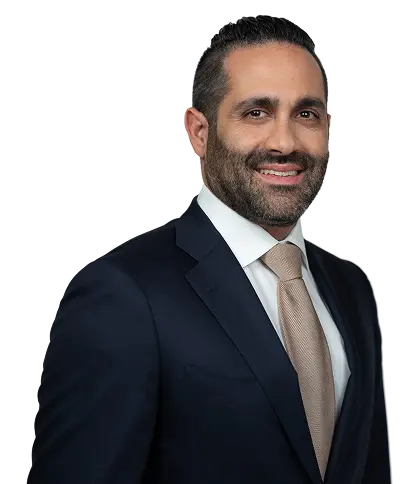
With Joseph Shirazi and Simon Esfandi at the helm, our firm is a trusted name in accident law in California.
Meet Our Managing Partners
National Top 100 Trial Lawyers and Avvo 10.0 Superb. Loyola Law School graduate. Recognized for his $14,500,000 truck accident verdict and a $13,000,000 trial verdict.
Read Full Bio →
Super Lawyers Rising Star. Southwestern Law School graduate. Led the firm’s $9,870,000 motorcycle accident settlement and a $2,250,000 rideshare recovery.
Read Full Bio →- ★ National Top 100 Trial Lawyers
- ★ Super Lawyers Rising Star
- ★ Avvo 10.0 Superb Rating
- ★ Top 40 Under 40
- ★ Consumer Attorneys of California · CAALA · AAJ

Countless Real Client Reviews Verified by Google


Jerry
After 10 accidents and 9 attorneys, the client met Simon, who stood out for his honesty and clear communication. Years later, after another accident, the client called Simon and was impressed by his professionalism and follow-through. Simon explained everything, connected him with top doctors, and kept every promise. It was the first time the client felt truly supported—highly recommending Simon and Joseph for their integrity and dedication.
Jacob
Jacob was rear-ended by a big rig and left nearly paralyzed for a year. He found Cooper Law Group, and Joseph and Simon personally helped him through the legal process. Over two years, they ensured he got the medical care and surgeries he needed, helped repair his car, and secured the compensation he deserved. He highly recommends them for truly fighting for their clients.
Blandine
During the early days of COVID, Blandine was hit by a car while biking to work. Alone and unsure of what to do, they found Compass Law Group. Joseph was the first to respond with care and clarity. Throughout the case, the team—Joseph, Simon, and Julie—provided support, regular check-ins, and made the client feel safe and cared for. They now consider the firm like family and highly recommend them for their compassion and competence.
Understanding Your Rights:
Frequently Asked
Questions
#1 Do I have a case?
Understanding whether a claim exists is one of the challenges of personal injury law. This is why we offer free initial consultations to help you make this determination and allow you an avenue to vindicate your rights.
We’re committed to fighting for the rights of accident victims throughout Southern California, and, unlike other California personal injury attorneys, we will take on any case if we can help, no matter how big or small.
#2 What is personal injury?
Personal injury involves harm to an individual’s body or property caused by someone else’s negligence. It can range from minor to significant injuries, often requiring legal action to recover damages. We specialize in representing and securing fair settlements for such victims.
#3 Why hire Compass Law Group?
Our client-focused approach ensures personalized attention, detailed case building, and compelling evidence presentation. We’re skilled in negotiating settlements and prepared for trial with aggressive strategies. Our firm maintains transparent communication, involves clients in the process, and utilizes a wide network of expert witnesses and resources to strengthen cases. Choosing us means trusting a team dedicated to your success and justice.
#4What if I didn't go to the hospital?
No matter the injury size, you have rights that need defending. Many injuries seem minor at first but can worsen over time. Ignoring treatment or legal advice risks your health and compensation. Seek immediate medical and legal help after any accident to ensure proper diagnosis and strengthen your compensation claim.