


Your Battle, Our Compass:
Los Angeles Workplace Sexual Abuse Attorney
If you experienced sexual abuse or assault in your Los Angeles workplace, our attorneys are here to help. Compass Law Group has extensive experience handling workplace sexual abuse cases throughout Los Angeles County and is committed to holding employers and perpetrators accountable. Call us today for a free, confidential consultation at (213) 320-1001.


Civil Law Governing Nursing Home Sexual Abuse in Long Beach and Los Angeles County
California’s Elder Abuse and Dependent Adult Civil Protection Act (Welfare & Institutions Code §§ 15600–15675) gives Long Beach nursing home sexual abuse survivors significantly stronger civil remedies than a standard negligence claim. Qualifying victims can recover pain and suffering damages, attorney’s fees, and punitive damages against both the individual abuser and the institution that employed or failed to supervise them. Los Angeles County nursing homes are licensed by the California Department of Public Health under Title 22 regulations, establishing enforceable standards of care. When a facility knew — or should have known — that a staff member or resident posed a sexual threat and failed to act, the institution bears direct civil liability. AB 2777 (2022) created a three-year lookback window for adult sexual assault claims previously barred by the statute of limitations, while AB 218 (2019) extended the same relief to survivors of childhood sexual abuse — both laws remain critical tools for Long Beach victims seeking justice.
Who Can Be Held Liable for Nursing Home Sexual Abuse in Long Beach?
Sexual abuse in Long Beach nursing homes rarely involves a single bad actor working in isolation. Under California’s Elder Abuse and Dependent Adult Civil Protection Act (Welf. & Inst. Code §15610 et seq.), both the individual perpetrator and the facility that employed, supervised, or housed them bear civil liability. Research indicates that institutional failures — inadequate background checks, insufficient supervision, and suppression of complaints — contribute to more than 60% of elder sexual abuse incidents nationally, a pattern regulators have documented at Los Angeles County skilled nursing facilities.
Long Beach nursing facilities, including those operated by regional corporate chains throughout the South Bay and Harbor area, can be held liable under the doctrine of respondeat superior when abuse is committed by an employee acting within the scope of employment. Even where abuse falls outside that scope, facilities face independent liability for negligent hiring, negligent supervision, and negligent retention of staff with known histories of misconduct or prior complaints. California Code of Civil Procedure §340.1 extends the limitations period for survivors of childhood sexual abuse, while Welf. & Inst. Code §15657 authorizes attorney’s fees and enhanced damages when a facility’s conduct is found reckless or oppressive.
Potentially liable parties in a Long Beach nursing home sexual abuse case include:
- The individual abuser — staff member, contractor, volunteer, or co-resident
- The nursing home or skilled nursing facility as a direct institutional defendant
- Corporate parent companies and management chains operating the Long Beach facility
- Staffing agencies that placed inadequately screened or improperly credentialed personnel
- Third-party vendors (rehabilitation providers, medical contractors) whose employees had unsupervised facility access
Frequently Asked Questions: Nursing Home Sexual Abuse Attorney Long Beach
What is the December 31, 2026 deadline under California's AB 2777 revival window for suing a Long Beach nursing home for sexual abuse?
California’s AB 2777, codified at Code of Civil Procedure §340.16, allows survivors of sexual assault that occurred on or after January 1, 2009 to revive otherwise time-barred civil claims against Long Beach nursing homes until December 31, 2026. This window applies even when the standard three-year statute of limitations under CCP §335.1 has already expired. Once this deadline passes, permanently time-barred claims cannot be refiled, making immediate legal consultation essential.
Who qualifies to use the AB 2777 revival window to file a sexual abuse lawsuit against a Long Beach nursing home?
Any adult survivor of sexual assault that occurred in a Long Beach nursing home on or after January 1, 2009 may use California’s AB 2777 revival window under CCP §340.16, even if they previously believed their claim had expired. The revival window allows victims to hold both the individual abuser and the facility liable in Los Angeles Superior Court. Claims must be filed before December 31, 2026, regardless of when the abuse was discovered.
How does California's Elder Abuse and Dependent Adult Civil Protection Act protect Long Beach nursing home residents from sexual abuse?
The EADACPA, codified at Welfare & Institutions Code §15600 et seq., defines sexual abuse of elders and dependent adults under §15610.63 and imposes heightened duties on Long Beach skilled nursing facilities to protect residents. Under W&I Code §15657, facilities found to have acted with recklessness or intentional misconduct face enhanced remedies including attorney’s fees, unrestricted pain-and-suffering damages, and punitive damages. The act also permits heirs or personal representatives to recover these enhanced damages on behalf of deceased elder abuse victims.
What damages can a Long Beach nursing home sexual abuse victim recover under Welfare & Institutions Code §15657?
Victims may recover economic damages including medical and psychiatric treatment costs, non-economic damages for pain and suffering without the MICRA cap that applies in standard medical malpractice cases, and punitive damages under Civil Code §3294 where the nursing home acted with malice, oppression, or fraud. Attorney’s fees and litigation costs are also recoverable under W&I Code §15657, making these claims financially viable even for survivors with limited resources. Punitive damage awards in Los Angeles County elder abuse cases have historically reached multiples of the compensatory award.
Can a Long Beach nursing home be held liable for sexual abuse committed by one of its staff members under California law?
Long Beach nursing homes face vicarious liability under respondeat superior for employee sexual abuse and independent liability under theories of negligent hiring, retention, and supervision. California Health & Safety Code §1430 imposes a direct statutory duty on licensed skilled nursing facilities to protect residents from abuse, giving rise to a private right of action. Under W&I Code §15657.3, liability can extend to the facility’s owners, operators, and managing agents who authorized or ratified the abusive conduct.
How does CCP §340.1, amended by AB 218, extend the statute of limitations for victims who were minors when nursing home sexual abuse occurred?
California Code of Civil Procedure §340.1, as amended by AB 218 in 2019, allows victims who were under 18 at the time of nursing home sexual abuse to bring civil claims until age 40 or within five years of discovering that their psychological injury was caused by the abuse, whichever is later. AB 218 created a separate three-year lookback window for previously expired childhood claims that ran from January 1, 2020 through December 31, 2022. For victims who were minors at the time of abuse, CCP §340.1 governs their claims independently of the adult AB 2777 revival window under CCP §340.16.
Who investigates criminal sexual abuse allegations at Long Beach nursing homes?
Criminal allegations at facilities within Long Beach city limits are investigated by the Long Beach Police Department, while the Los Angeles County Sheriff’s Department handles facilities in unincorporated county areas. The Los Angeles County District Attorney’s Elder Abuse and Dependent Adult Division prosecutes charges under Penal Code §368 (elder abuse) and Penal Code §261 et seq. (sexual assault). The California Department of Justice and CDPH conduct parallel administrative investigations, and criminal findings are frequently introduced as evidence in related civil proceedings.
What role does the California Department of Public Health play in nursing home sexual abuse cases involving Long Beach facilities?
The CDPH Licensing and Certification Division licenses all Long Beach skilled nursing facilities under Health & Safety Code §1250 and investigates sexual abuse complaints through its Los Angeles District Office. Upon receiving a complaint, CDPH can conduct unannounced inspections, issue Statements of Deficiency, impose civil money penalties, and refer criminal matters to law enforcement or the California Attorney General. CDPH inspection reports and deficiency citations are public records that attorneys routinely obtain and introduce as evidence in civil lawsuits.
How do I report nursing home sexual abuse at a Long Beach facility to California authorities?
Abuse should be reported simultaneously to the California Department of Public Health at 1-800-236-9747, the Los Angeles County Adult Protective Services at 1-877-477-3646, and the Long Beach Police Department at (562) 435-6711. The LA County Long-Term Care Ombudsman Program, reachable at 1-800-334-9473, also investigates complaints at licensed facilities and can access nursing homes unannounced. Nursing home staff are mandated reporters under Welfare & Institutions Code §15630 required to report suspected sexual abuse immediately, and failure to do so creates additional civil liability for the facility.
What evidence is typically needed to prove a nursing home sexual abuse claim in Los Angeles Superior Court?
Successful claims generally rely on CDPH inspection reports and Statements of Deficiency against the facility, the victim’s medical and mental health records documenting physical injuries and psychological trauma, incident reports and internal nursing home documentation, and witness statements from residents, staff, or visitors. Expert testimony from geriatric care specialists or sexual assault nurse examiners (SANEs) is frequently essential, as are electronic access records, surveillance footage, and criminal background check records that reveal the facility’s negligent hiring practices. Prior substantiated abuse complaints against the same employee or facility establish a pattern and support punitive damage claims.
Does California's Welfare & Institutions Code §15657 allow punitive damages in Long Beach nursing home sexual abuse cases?
Yes, W&I Code §15657 specifically authorizes punitive damages where the defendant engaged in recklessness, oppression, fraud, or malice in connection with elder or dependent adult abuse, including sexual abuse. To hold a corporate nursing home liable for punitive damages, Civil Code §3294(b) additionally requires showing that an officer, director, or managing agent authorized, ratified, or had advance knowledge of the misconduct. Los Angeles County juries have awarded punitive damages in elder abuse cases that substantially exceed the compensatory award, particularly where the facility had prior notice of the abuser’s conduct.
Will my Long Beach nursing home sexual abuse lawsuit be filed at the Long Beach Courthouse?
Most lawsuits against Long Beach nursing home facilities are filed in the Los Angeles Superior Court at the Governor George Deukmejian Courthouse located at 275 Magnolia Avenue, Long Beach, CA 90802, as venue is proper where the injury occurred and the facility is situated. Cases involving facilities in unincorporated Los Angeles County may be assigned to other courthouses, including the Stanley Mosk Courthouse at 111 N. Hill Street in downtown Los Angeles. Attorneys with experience litigating elder abuse claims in the Long Beach courthouse can navigate local procedural rules and judicial preferences specific to that district.
Can family members bring a nursing home sexual abuse lawsuit on behalf of a Long Beach resident with dementia?
Yes, under California Code of Civil Procedure §372, a conservator, guardian ad litem, or other authorized legal representative may file a nursing home sexual abuse lawsuit on behalf of a resident who lacks litigation capacity due to dementia or other cognitive impairment. In Los Angeles County, family members may petition the Superior Court for appointment as guardian ad litem specifically to authorize the civil action. The Los Angeles County Public Guardian can also serve in this capacity for residents who have no available family members to act on their behalf.
What is the role of the Los Angeles County Long-Term Care Ombudsman in Long Beach nursing home sexual abuse cases?
The LA County Long-Term Care Ombudsman Program, established under the Older Americans Act and California Welfare & Institutions Code §9700 et seq., has statutory authority to investigate complaints of sexual abuse at Long Beach nursing homes and can access facilities unannounced and review records without facility consent. While the Ombudsman cannot impose civil or criminal penalties, their investigation findings and complaint history are valuable evidence in civil litigation and often prompt CDPH enforcement actions against the facility. Survivors or their families can contact the LA County Ombudsman at 1-800-334-9473 to initiate an investigation independently of any civil lawsuit.
How long does a nursing home sexual abuse lawsuit typically take to resolve in Los Angeles County Superior Court?
Cases filed in Los Angeles Superior Court against Long Beach nursing homes typically take between 18 months and four years to conclude, depending on case complexity, the number of defendants, and court docket backlog. Many cases settle before trial during mandatory settlement conferences, often following the completion of discovery and expert witness designation required under the California Rules of Court. Claims filed under the AB 2777 revival window at CCP §340.16 involving multiple plaintiffs may be coordinated as complex litigation under California Rules of Court, Rule 3.400, which can affect the timeline but often increases settlement leverage.
How We Value a Nursing Home Sexual Abuse Case in Long Beach
California law entitles nursing home sexual abuse survivors to two categories of damages. Compensatory damages cover every measurable loss: emergency medical treatment, ongoing therapy with a trauma-specialized counselor, psychiatric medication, and lost wages when injuries prevent a victim or a family caregiver from working. In Los Angeles County, where documented therapy costs average $150–$250 per session, these economic losses can accumulate quickly. Beyond economic harm, courts regularly award substantial compensation for emotional distress, loss of dignity, and the lasting psychological injuries inflicted by abuse in a setting where residents had every right to feel safe.
When the facility itself enabled or concealed the abuse, survivors may also pursue punitive damages under California’s Elder Abuse and Dependent Adult Civil Protection Act (Welfare & Institutions Code § 15600). California AB 218 and AB 2777 eliminated statutory caps on recovery for qualifying survivors, allowing unlimited compensation against institutional defendants. These provisions exist precisely because nursing home operators must face consequences severe enough to compel systemic change.
At Compass Law Group, our attorneys have recovered more than $250 million for abuse and injury victims across California. Every Long Beach nursing home abuse case we evaluate is assessed individually — facility ownership records, staffing histories, prior complaints filed with the California Department of Public Health, and insurance coverage all factor into our valuation. Call (213) 320-1001 for a free, confidential consultation.
What to Do If You Are a Nursing Home Sexual Abuse Survivor in Long Beach
- Ensure Immediate Safety — If your loved one is still residing in the facility where the abuse occurred, request a room transfer or arrange a move to a different Long Beach nursing home right away. No legal case is worth more than removing the survivor from an environment where abuse can continue.
- Seek Medical Attention and Documentation — Take the survivor to a physician or emergency room as soon as possible and ask that the provider document all findings in writing. Medical records created close in time to the abuse carry significant evidentiary weight in civil cases against California nursing facilities.
- Photograph Injuries and Preserve Physical Evidence — Photograph any visible injuries, bruising, or physical signs of abuse before they heal, and preserve clothing or bedding without washing it. Physical evidence collected in the hours and days after abuse is often the most difficult for a nursing home’s legal team to challenge.
- Report the Abuse — File a complaint with the California Department of Public Health (CDPH) and the Long Beach Police Department, since nursing home sexual abuse is both a civil tort and a criminal act under California law. An official report creates an independent record that can corroborate your claim and may trigger a state investigation of the facility.
- Preserve Facility Records Before They Disappear — Request copies of staffing logs, incident reports, prior complaint history, and the resident’s care plan from the nursing home in writing. These records are frequently altered or “lost” once litigation is anticipated, so securing them early can be the difference between a strong case and a weak one.
- Contact a Long Beach Nursing Home Sexual Abuse Attorney Before December 31, 2026 — California’s AB 2777 revival window gives qualifying sexual abuse survivors a limited opportunity to file civil claims that would otherwise be time-barred, but that window closes permanently on December 31, 2026. An attorney can evaluate whether your claim qualifies, identify every liable party — from individual staff members to the facility’s ownership group — and file before the deadline.
If you or someone you love suffered sexual abuse in a Long Beach nursing home, do not wait to get answers. Call our Long Beach nursing home sexual abuse attorneys at (213) 320-1001 for a free, confidential consultation — we can review your case today and advise you on every option before the AB 2777 window closes.
Do I have a case?
Contact us today for a free consultation.
California's
Gold Standard
Injury Law Firm
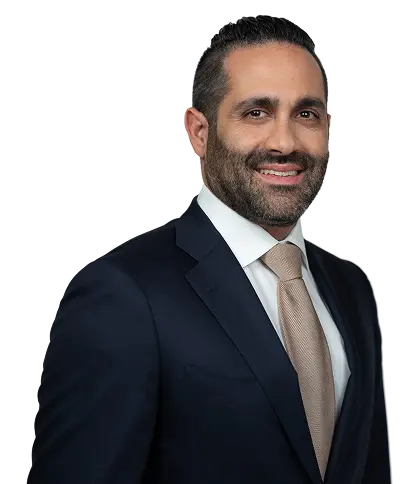
With Joseph Shirazi and Simon Esfandi at the helm, our firm is a trusted name in accident law in California.
Meet Our Managing Partners
National Top 100 Trial Lawyers and Avvo 10.0 Superb. Loyola Law School graduate. Recognized for his $14,500,000 truck accident verdict and a $13,000,000 trial verdict.
Read Full Bio →
Super Lawyers Rising Star. Southwestern Law School graduate. Led the firm’s $9,870,000 motorcycle accident settlement and a $2,250,000 rideshare recovery.
Read Full Bio →- ★ National Top 100 Trial Lawyers
- ★ Super Lawyers Rising Star
- ★ Avvo 10.0 Superb Rating
- ★ Top 40 Under 40
- ★ Consumer Attorneys of California · CAALA · AAJ

Countless Real Client Reviews Verified by Google


Jerry
After 10 accidents and 9 attorneys, the client met Simon, who stood out for his honesty and clear communication. Years later, after another accident, the client called Simon and was impressed by his professionalism and follow-through. Simon explained everything, connected him with top doctors, and kept every promise. It was the first time the client felt truly supported—highly recommending Simon and Joseph for their integrity and dedication.
Jacob
Jacob was rear-ended by a big rig and left nearly paralyzed for a year. He found Cooper Law Group, and Joseph and Simon personally helped him through the legal process. Over two years, they ensured he got the medical care and surgeries he needed, helped repair his car, and secured the compensation he deserved. He highly recommends them for truly fighting for their clients.
Blandine
During the early days of COVID, Blandine was hit by a car while biking to work. Alone and unsure of what to do, they found Compass Law Group. Joseph was the first to respond with care and clarity. Throughout the case, the team—Joseph, Simon, and Julie—provided support, regular check-ins, and made the client feel safe and cared for. They now consider the firm like family and highly recommend them for their compassion and competence.
Understanding Your Rights:
Frequently Asked
Questions
#1 Do I have a case?
Understanding whether a claim exists is one of the challenges of personal injury law. This is why we offer free initial consultations to help you make this determination and allow you an avenue to vindicate your rights.
We’re committed to fighting for the rights of accident victims throughout Southern California, and, unlike other California personal injury attorneys, we will take on any case if we can help, no matter how big or small.
#2 What is personal injury?
Personal injury involves harm to an individual’s body or property caused by someone else’s negligence. It can range from minor to significant injuries, often requiring legal action to recover damages. We specialize in representing and securing fair settlements for such victims.
#3 Why hire Compass Law Group?
Our client-focused approach ensures personalized attention, detailed case building, and compelling evidence presentation. We’re skilled in negotiating settlements and prepared for trial with aggressive strategies. Our firm maintains transparent communication, involves clients in the process, and utilizes a wide network of expert witnesses and resources to strengthen cases. Choosing us means trusting a team dedicated to your success and justice.
#4What if I didn't go to the hospital?
No matter the injury size, you have rights that need defending. Many injuries seem minor at first but can worsen over time. Ignoring treatment or legal advice risks your health and compensation. Seek immediate medical and legal help after any accident to ensure proper diagnosis and strengthen your compensation claim.