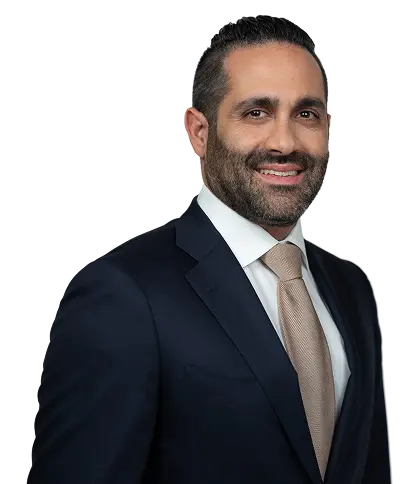




Your Battle, Our Compass:

Los Angeles Workplace Sexual Abuse Attorney

If you experienced sexual abuse or assault in your Los Angeles workplace, our attorneys are here to help. Compass Law Group has extensive experience handling workplace sexual abuse cases throughout Los Angeles County and is committed to holding employers and perpetrators accountable. Call us today for a free, confidential consultation at (213) 320-1001.

TL;DR — Sports/Coach Sexual Abuse Attorney Long BeachA Long Beach sports/coach sexual abuse attorney can help survivors of abuse by coaches, trainers, or sports organizations file civil claims for damages — independent of any criminal case. California’s AB 218 (Child Victims Act) extended the statute of limitations and opened a lookback window for childhood sexual abuse survivors, while AB 2777 (Sexual Abuse and Cover Up Accountability Act) provides additional civil remedies for survivors whose abuse was concealed by an institution. If you or a family member experienced abuse in a Long Beach sports program, school, club, or recreation league, call (213) 320-1001 for a free, confidential consultation.
## Sports and Coach Sexual Abuse Civil Law in Long Beach and Los Angeles County Civil claims for sports and coach sexual abuse in Long Beach are governed by California law, which holds not only individual abusers liable but also the institutions — youth sports leagues, private clubs, school districts, and recreation programs — that employed, supervised, or shielded them. Under California Code of Civil Procedure § 340.1, as amended by AB 218, survivors of childhood sexual abuse may file suit until age 40, or within five years of discovering a connection between the abuse and resulting injury. Los Angeles County courts have seen significant institutional liability verdicts against organizations that failed to screen coaches or ignored reported misconduct. Compensation in these civil cases can include damages for medical treatment, therapy, lost earnings, and pain and suffering — remedies that exist entirely apart from any criminal prosecution.
★★★★★
5.0 / 5
195 Google Reviews  ·  Read Reviews ↗

Who Can Be Held Liable for Sports/Coach Sexual Abuse in Long Beach?

Individual coaches and trainers who commit sexual abuse bear direct personal liability under California law. But in most Long Beach cases, the greater financial recovery comes from the institutions that enabled the abuse — school districts, private clubs, and sports organizations that knew or should have known a coach posed a danger to the athletes in their care. Studies of institutional abuse cases consistently show that abusers exploit positions of unsupervised access granted and maintained by negligent organizations.

Under the doctrine of respondeat superior, employers are vicariously liable for employees’ wrongful acts committed within the scope of employment. Beyond vicarious liability, California’s negligent hiring and retention doctrine holds institutions accountable when they fail to screen, supervise, or remove coaches with known or discoverable histories of misconduct. California Code of Civil Procedure §340.1 extends the statute of limitations for childhood sexual abuse claims until a survivor’s 40th birthday — or five years from discovery of injury — giving Long Beach victims meaningful time to pursue all responsible parties.

  • The individual coach or trainer who committed the abuse
  • Long Beach Unified School District or any private school employing or supervising the abuser
  • Private youth sports clubs and academies — including club soccer, gymnastics, and competitive swim programs operating in Long Beach and Los Angeles County
  • National governing bodies such as USA Gymnastics, USA Swimming, or US Soccer Federation that credentialed or sanctioned the abuser
  • The City of Long Beach (Parks, Recreation and Marine Department) for abuse occurring in city-run youth athletic programs
Call Compass Law Group — Free Consultation for School Sexual Abuse Survivors

Frequently Asked Questions: Sports/Coach Sexual Abuse Attorney Long Beach

Under California AB 2777, the Sexual Abuse and Cover-up Accountability Act (SPACE Act), codified at Code of Civil Procedure §340.16, adult survivors of sexual assault have until December 31, 2026 to revive civil claims that would otherwise be time-barred under the standard two-year statute of limitations. This three-year revival window, which opened January 1, 2023, applies to claims against employers and institutions—including sports clubs, leagues, and schools—where a coach or employee committed sexual abuse and the organization concealed it. Once December 31, 2026 passes, these revived claims are permanently extinguished under California law and cannot be filed regardless of the circumstances.

California Code of Civil Procedure §340.1, as amended by AB 218, gives childhood sexual abuse survivors until age 40—or five years from the date they discovered that their psychological injury was caused by the abuse—whichever is later, to file a civil lawsuit. The law also imposes treble damages on defendants who engaged in a cover-up, meaning victims may recover up to three times their actual compensatory damages where institutional concealment is proven. These protections apply to all forms of coach and sports-related sexual abuse occurring while the survivor was under age 18, regardless of how many decades have passed since the abuse.

Yes, but California’s Government Claims Act (Government Code §910 et seq.) requires you to file an administrative claim with Long Beach Unified School District within six months of the abusive incident—or within six months of discovery—before filing a lawsuit in Los Angeles Superior Court. If the District rejects your claim or fails to respond within 45 days, you then have six months to file suit at the Los Angeles Superior Court – Governor George Deukmejian Courthouse at 415 W. Ocean Blvd., Long Beach, CA 90802. Because public entity claims carry shorter notice deadlines than standard civil claims, contacting a Long Beach sexual abuse attorney immediately after discovering the abuse is critical to preserving your right to sue.

Liability can extend well beyond the individual perpetrator to include the youth sports organization, its board of directors, supervising staff, parent associations, and third-party facility owners in Long Beach and throughout Los Angeles County. California courts apply respondeat superior doctrine and negligent supervision theories to hold organizations accountable when they knew or should have known of a coach’s dangerous propensity. Organizations affiliated with USA Swimming, USA Gymnastics, or AYSO Region 57 in Long Beach may face additional institutional liability if they failed to implement the mandatory background check and SafeSport training protocols required by their own governing bodies.

AB 2777 (SPACE Act), codified at CCP §340.16, created a three-year revival window running from January 1, 2023 through December 31, 2026 during which adult sexual assault survivors can revive previously time-barred civil claims against their perpetrators and any institution that employed or covered for them. In Long Beach, this means a survivor abused as an adult by a coach at a sports club, gymnasium, or recreational facility—who missed the standard two-year limitations period—can still file suit if the complaint is filed before the deadline. Because December 31, 2026 is a hard statutory cutoff with no extensions, survivors should consult a California sexual abuse attorney as soon as possible to evaluate eligibility under this window.

California’s Child Abuse and Neglect Reporting Act (Penal Code §11165 et seq.) designates coaches, athletic directors, and sports staff with supervisory authority over minors as mandatory reporters required to immediately report known or reasonably suspected child sexual abuse to law enforcement or Los Angeles County DCFS. Failure to report is a misdemeanor under Penal Code §11166, and evidence that a Long Beach sports organization employed a coach who violated CANRA—or failed to train its staff on reporting obligations as required by Education Code §44691—can be used in civil litigation to establish institutional negligence. DCFS reports and law enforcement investigation records generated through CANRA are frequently among the most powerful evidence available to plaintiffs in civil abuse cases filed in Los Angeles Superior Court.

Adult survivors whose claims were previously time-barred may be eligible to file under the AB 2777 revival window, which remains open until December 31, 2026. For childhood survivors, CCP §340.1 provides until age 40 or five years from the date of discovery of the causal link between the abuse and resulting harm, whichever is later—meaning many survivors in their 30s may have active claims entirely independent of the revival window. Because eligibility turns on the survivor’s age at the time of abuse, when the discovery rule clock began, and whether an institutional cover-up occurred, a Long Beach sports/coach sexual abuse attorney can assess which statute—or combination of statutes—applies to the specific facts of your case.

California law permits sexual abuse survivors to recover economic damages including past and future medical expenses, therapy costs, and lost wages, as well as non-economic damages for pain and suffering, emotional distress, and loss of enjoyment of life—categories that Los Angeles County juries have valued in the millions of dollars in comparable institutional abuse cases. Under CCP §340.1, survivors who prove a cover-up by the defendant institution are entitled to treble damages, multiplying the compensatory award threefold as a statutory penalty. Punitive damages under California Civil Code §3294 may also be available where the institution acted with fraud, malice, or oppression—for example, where school administrators or club officials knowingly concealed a coach’s pattern of abuse to avoid scandal.

California law requires organizations that employ or use volunteers working with minors to conduct criminal background checks pursuant to Penal Code §11105.3, and AB 506 (2021) specifically mandates that youth sports organizations operating in California implement screening, training, and supervision policies to protect minor athletes effective January 1, 2022. Failure to comply with these statutory obligations can constitute negligence per se in a civil lawsuit, meaning a jury may presume the club was negligent without requiring the plaintiff to prove every element of the standard negligence test. Evidence that a Long Beach sports club skipped required background checks, ignored prior abuse complaints, or violated USA Swimming or USA Gymnastics SafeSport policies substantially strengthens a negligent hiring and retention claim under California law.

Civil sexual abuse claims arising in Long Beach are filed in the Los Angeles Superior Court – Governor George Deukmejian Courthouse at 415 W. Ocean Blvd., Long Beach, CA 90802, which serves the South District of Los Angeles County. The complaint typically alleges causes of action including sexual battery under Civil Code §1708.5, intentional infliction of emotional distress, negligent supervision, and negligent hiring and retention against both the individual abuser and the institutional defendants. When the defendant is a public entity such as Long Beach Unified School District or Long Beach Parks and Recreation, the Government Claims Act imposes a mandatory pre-filing administrative notice requirement, making the procedural timeline more compressed and necessitating immediate legal counsel.

Under Penal Code §11165.7, mandatory reporters in sports settings include coaches, assistant coaches, athletic trainers, and any employee or volunteer at a youth sports organization who holds supervisory or disciplinary authority over minors. Public school coaches employed by Long Beach Unified School District carry additional obligations under Education Code §44691, which requires completion of annual mandatory reporter training as a condition of continued employment. An organization’s failure to train its staff on CANRA reporting duties—or its pattern of discouraging internal complaints—can be introduced at trial as evidence of the institutional negligence that enabled the abuse to continue, directly supporting a civil claim for damages.

Under California Code of Civil Procedure §340.1 as expanded by AB 218, survivors of childhood sexual abuse have until the later of their 40th birthday or five years from the date they discovered—or reasonably should have discovered—that the psychological or physical harm they suffered was caused by the abuse. There is no distinction in the statute between abuse occurring at a Long Beach Unified school, a private sports club, a Long Beach Recreation facility, or any other venue; the extended limitations period is determined solely by the survivor’s age at the time of abuse and the date of discovery. Survivors currently under age 40 or within five years of a recent psychological diagnosis linking their symptoms to the abuse should consult a Long Beach attorney immediately, as the exact trigger date of the limitations period requires individualized factual analysis.

California Code of Civil Procedure §367.3, enacted by AB 1788, allows survivors of sexual assault and childhood sexual abuse to file civil lawsuits using a pseudonym such as Jane Doe or John Doe, shielding their true identity from public court records throughout the litigation. This protection applies to cases filed in Los Angeles Superior Court, including those heard at the Long Beach Courthouse, and permits the survivor’s name to be withheld from the case caption, pleadings, and most publicly accessible filings. Courts may also issue protective orders sealing sensitive personal and medical information from disclosure, and experienced Long Beach sexual abuse attorneys routinely use these procedures to safeguard client privacy while aggressively pursuing full institutional accountability.

Under California law, a sports organization can be held liable for negligent supervision if it failed to exercise reasonable care in overseeing a coach whose conduct—or prior history—made harm to athletes foreseeable, even if the organization did not directly participate in or observe the abuse. The doctrine extends to negligent hiring, where a club retained a coach without conducting the background checks required by Penal Code §11105.3 or AB 506, and negligent retention, where the organization continued employing the coach after receiving complaints or warning signs. California courts have applied these theories against USA Gymnastics affiliates, USA Swimming clubs, and school districts throughout Los Angeles County, recognizing that the inherent authority imbalance between coaches and youth athletes creates an elevated duty of care on the part of supervising institutions.

Survivors eligible under the AB 2777 revival window must have their lawsuit filed—not merely initiated—before December 31, 2026, and the complexity of institutional abuse cases means that waiting until the final months creates serious risk of missing the deadline due to investigation delays, government claims requirements, or difficulty identifying all liable defendants. When a public entity such as Long Beach Unified School District or a Long Beach city-run sports program is involved, the Government Claims Act requires an administrative notice to be filed before any lawsuit can proceed, adding another layer of procedural lead time. Contacting a Long Beach sports/coach sexual abuse attorney as soon as possible ensures adequate time to gather evidence, satisfy all pre-filing requirements, and preserve every available legal remedy before the December 31, 2026 deadline closes permanently.

Sports/Coach Sexual Abuse — Long Beach — image 1
Los Angeles school hallway — school sexual abuse attorney

How We Value a Sports/Coach Sexual Abuse Case in Long Beach

California’s AB 218 and AB 2777 eliminated the statute of limitations cap for childhood sexual abuse claims, opening the door to full compensatory recovery regardless of when the abuse occurred. At Compass Law Group — with more than $250 million recovered for abuse survivors across Los Angeles County — we evaluate every Long Beach sports and coach sexual abuse case across three distinct damage categories: economic losses, non-economic harm, and institutional liability. Economic damages include the full cost of trauma-focused therapy, psychiatric care, emergency medical treatment, and any lost wages or diminished earning capacity caused by the psychological impact of abuse.

Non-economic damages in California sexual abuse cases routinely exceed the economic baseline. Survivors of coach or sports-program abuse frequently suffer PTSD, depression, damaged intimate relationships, and lifelong disruption to educational and professional trajectories. Los Angeles County juries have awarded multi-million-dollar emotional distress verdicts where the perpetrator held a position of trust — exactly the dynamic present in coach-athlete relationships.

Punitive damages are available against the institutions that enabled the abuse. Under AB 218, schools, youth leagues, and sports organizations throughout Long Beach face direct liability when they knew or should have known about misconduct. Punitive awards against such institutions are uncapped and designed to punish deliberate indifference. Call Compass Law Group at (213) 320-1001 for a free, confidential case valuation.

Sports/Coach Sexual Abuse — Long Beach — image 2
Los Angeles school building exterior — school sexual abuse lawsuit

What to Do If You Are a Sports/Coach Sexual Abuse Survivor in Long Beach

  1. Get to a Safe Place First — Your immediate physical safety is the priority. If you are in ongoing contact with the abuser through a sports program, league, or coaching relationship, remove yourself from that environment and tell a trusted person what happened.
  2. Seek Medical Care and Document Your Injuries — Visit a doctor, urgent care, or emergency room as soon as possible — even if time has passed since the abuse. Medical records create an official record of physical and psychological harm that can be critical evidence in a civil lawsuit.
  3. Preserve All Evidence — Save every text message, email, voicemail, social media message, or photograph connected to your coach, trainer, or the sports organization. Do not delete anything. Write down a detailed account of what happened — dates, locations, who was present — while memories are fresh.
  4. Report to Authorities If You Choose — You may report sports or coach sexual abuse to the Long Beach Police Department, the Los Angeles County Sheriff’s Department, or directly to the relevant sports governing body or school district. Reporting is your right, not a requirement for pursuing a civil claim — an attorney can help you weigh this decision.
  5. Contact a Long Beach Sexual Abuse Attorney Before the AB 2777 Deadline — California’s AB 2777 revival window gives adult survivors of institutional sexual abuse the right to file civil claims that may otherwise be time-barred — but this window closes permanently on December 31, 2026. Acting now protects your right to compensation.
  6. Let an Attorney Handle Communication With the Sports Organization — Do not contact the team, league, school, or institution on your own, and do not sign any releases or settlement offers without legal counsel. Sports organizations and their insurers move quickly to limit liability — having an attorney from the start levels the playing field.

If you or a loved one experienced sexual abuse by a coach, trainer, or sports official in Long Beach, call our office today at (213) 320-1001 for a free, confidential consultation — and to protect your rights before the AB 2777 window expires.

Call Compass Law Group — Free Consultation for School Sexual Abuse Survivors
COMPASS LAW GROUP — LOS ANGELES OFFICE

Do I have a case?

Contact us today for a free consultation.

This field is for validation purposes and should be left unchanged.

California's
Gold Standard
Injury Law Firm

With Joseph Shirazi and Simon Esfandi at the helm, our firm is a trusted name in accident law in California.

Meet Our Managing Partners

Joseph Shirazi
Managing Partner · CA Bar #265403

National Top 100 Trial Lawyers and Avvo 10.0 Superb. Loyola Law School graduate. Recognized for his $14,500,000 truck accident verdict and a $13,000,000 trial verdict.

Read Full Bio →
Simon Esfandi — Managing Partner
Simon Esfandi
Managing Partner · CA Bar #275307

Super Lawyers Rising Star. Southwestern Law School graduate. Led the firm’s $9,870,000 motorcycle accident settlement and a $2,250,000 rideshare recovery.

Read Full Bio →
Firm Recognition
  • ★ National Top 100 Trial Lawyers
  • ★ Super Lawyers Rising Star
  • ★ Avvo 10.0 Superb Rating
  • ★ Top 40 Under 40
  • ★ Consumer Attorneys of California · CAALA · AAJ

Total Recovered for Clients
$250,000,000+
$14.5M truck verdict · $13M trial verdict · $9.87M motorcycle · $5M car accident
Past results do not guarantee future outcomes. Every case is unique.
Client Rating
★★★★★ 5.0
193+ verified Google reviews · No win, no fee

Countless Real Client Reviews Verified by Google

Jerry

After 10 accidents and 9 attorneys, the client met Simon, who stood out for his honesty and clear communication. Years later, after another accident, the client called Simon and was impressed by his professionalism and follow-through. Simon explained everything, connected him with top doctors, and kept every promise. It was the first time the client felt truly supported—highly recommending Simon and Joseph for their integrity and dedication.

Jacob

Jacob was rear-ended by a big rig and left nearly paralyzed for a year. He found Cooper Law Group, and Joseph and Simon personally helped him through the legal process. Over two years, they ensured he got the medical care and surgeries he needed, helped repair his car, and secured the compensation he deserved. He highly recommends them for truly fighting for their clients.

Blandine

During the early days of COVID, Blandine was hit by a car while biking to work. Alone and unsure of what to do, they found Compass Law Group. Joseph was the first to respond with care and clarity. Throughout the case, the team—Joseph, Simon, and Julie—provided support, regular check-ins, and made the client feel safe and cared for. They now consider the firm like family and highly recommend them for their compassion and competence.

Understanding Your Rights:

Frequently Asked
Questions

Understanding whether a claim exists is one of the challenges of personal injury law. This is why we offer free initial consultations to help you make this determination and allow you an avenue to vindicate your rights.

We’re committed to fighting for the rights of accident victims throughout Southern California, and, unlike other California personal injury attorneys, we will take on any case if we can help, no matter how big or small.

Personal injury involves harm to an individual’s body or property caused by someone else’s negligence. It can range from minor to significant injuries, often requiring legal action to recover damages. We specialize in representing and securing fair settlements for such victims.

Our client-focused approach ensures personalized attention, detailed case building, and compelling evidence presentation. We’re skilled in negotiating settlements and prepared for trial with aggressive strategies. Our firm maintains transparent communication, involves clients in the process, and utilizes a wide network of expert witnesses and resources to strengthen cases. Choosing us means trusting a team dedicated to your success and justice.

No matter the injury size, you have rights that need defending. Many injuries seem minor at first but can worsen over time. Ignoring treatment or legal advice risks your health and compensation. Seek immediate medical and legal help after any accident to ensure proper diagnosis and strengthen your compensation claim.