

Your Battle, Our Compass:
Los Angeles Workplace Sexual Abuse Attorney
If you experienced sexual abuse or assault in your Los Angeles workplace, our attorneys are here to help. Compass Law Group has extensive experience handling workplace sexual abuse cases throughout Los Angeles County and is committed to holding employers and perpetrators accountable. Call us today for a free, confidential consultation at (213) 320-1001.


Who Can Be Held Liable for Workplace Sexual Abuse in Long Beach?
Under California Government Code §12940, employers with five or more employees carry an affirmative legal duty to prevent and remedy workplace sexual harassment and abuse. In Long Beach — where major employers include the Port of Long Beach, Long Beach Unified School District, Long Beach Memorial Medical Center, and Cal State Long Beach — liability for a single act of workplace sexual abuse can extend well beyond the individual perpetrator.
The abuser faces direct civil liability for assault, battery, and intentional infliction of emotional distress. Employers bear institutional liability under the doctrine of respondeat superior when abuse occurs within the scope of employment or when a supervisor exploits their position of authority over a subordinate. Separately, an employer who hired or retained someone with a known history of predatory conduct faces negligent hiring and negligent retention claims — exposure that exists even when the abuser acted outside their formal job description.
Staffing agencies that placed an abuser at a Long Beach worksite, parent corporations, and third-party vendors sharing the employer’s premises may each carry independent exposure depending on their degree of control over the work environment and personnel.
- The individual abuser — supervisors, managers, coworkers, or third-party contractors who committed the abuse
- The direct employer — liable under FEHA and respondeat superior for abuse occurring within the employment relationship
- Staffing and temp agencies — companies that placed the abuser and retained control over their conduct at Long Beach facilities
- Negligent-hiring or retaining employers — organizations that ignored prior complaints, failed background checks, or kept a known abuser in a position of access
- Property owners and general contractors — entities controlling Long Beach commercial properties, port facilities, or construction sites where the abuse occurred
Frequently Asked Questions: Workplace Sexual Abuse Attorney Long Beach
What is the AB 2777 revival window and how does it affect my workplace sexual abuse claim in Long Beach?
AB 2777 created a three-year revival window under CCP §340.16(b)(3), running from January 1, 2023 through December 31, 2026, allowing survivors of adult workplace sexual assault to revive civil claims that were previously time-barred under the prior two-year statute of limitations. If you were sexually assaulted or abused at a Long Beach employer and previously missed the filing deadline, you may still bring a civil lawsuit provided you file in Los Angeles Superior Court before December 31, 2026. This window applies to sexual assault as defined under California Civil Code §1708.5, including workplace assault and harassment claims involving physical sexual conduct.
How long do I have to file a workplace sexual abuse lawsuit against a Long Beach employer?
Under California CCP §335.1, survivors of workplace sexual assault generally have two years from the date of the incident to file a civil lawsuit, but the AB 2777 revival window extends this through December 31, 2026 for previously time-barred claims. If your claim arises under the Fair Employment and Housing Act (Government Code §12940), you must first file a complaint with the California Civil Rights Department within three years of the last act, obtain a right-to-sue notice, and then file in court within one year. Missing any of these deadlines can permanently bar your claim, making it critical to consult a Long Beach sexual abuse attorney immediately.
Who can be held liable for workplace sexual abuse at a Long Beach business?
In a Long Beach workplace sexual abuse case, liable parties may include the individual perpetrator, the employing company, supervisors who knew or should have known of the abuse, and third parties such as contractors or clients who committed abuse on the employer’s premises. Under California Government Code §12940(j), employers are strictly liable for sexual harassment committed by supervisors and are liable for co-worker harassment if they had actual or constructive knowledge and failed to act promptly. A Long Beach employer can also face liability for negligent hiring, retention, or supervision of a known abuser under California common law tort principles.
What is the difference between quid pro quo harassment and hostile work environment under California's FEHA?
Quid pro quo sexual harassment under California Government Code §12940(j) occurs when a person in authority conditions employment benefits—such as a promotion, raise, or continued employment—on submission to sexual conduct, and a single such incident is sufficient to state a claim. Hostile work environment harassment occurs when unwelcome sexual conduct is sufficiently severe or pervasive to alter the conditions of employment and create an abusive environment, applying a totality of circumstances standard under FEHA. Long Beach workers may assert both theories simultaneously, and California courts have interpreted FEHA more broadly than federal Title VII in protecting employees from such conduct.
Can I sue my Long Beach employer for workplace sexual abuse even if HR dismissed my complaint?
Yes—under California Government Code §12940(k), an employer’s failure to take immediate and appropriate corrective action after receiving a complaint of sexual harassment or abuse is an independent basis for liability under FEHA. HR’s dismissal or burial of your complaint can be used as direct evidence of the employer’s failure to maintain a harassment-free workplace, and may support a claim for punitive damages under California Civil Code §3294 if the inaction was willful or oppressive. Courts at the Los Angeles Superior Court and the Ninth Circuit have consistently allowed FEHA claims to proceed—and even strengthened—when internal complaints were ignored by management.
Does California law protect Long Beach workers from retaliation after reporting workplace sexual abuse?
Yes—California Government Code §12940(h) explicitly prohibits retaliation against any employee who opposes unlawful sexual harassment, participates in a FEHA investigation, or files a complaint with the Civil Rights Department, covering adverse actions such as termination, demotion, schedule changes, or hostile reassignments. California Labor Code §1102.5 also provides independent whistleblower protections for employees who report workplace sexual misconduct to a supervisor or public body, with prevailing plaintiffs entitled to lost wages, emotional distress damages, and attorney’s fees. A separate retaliation claim may be filed alongside your underlying abuse claim with the Civil Rights Department in Los Angeles.
How do I file a FEHA complaint with the California Civil Rights Department before suing my Long Beach employer?
To pursue a FEHA-based civil lawsuit against a Long Beach employer, you must first file an administrative complaint with the California Civil Rights Department (CRD), which operates a Los Angeles office at 320 W. 4th Street, Suite 1000, Los Angeles, CA 90013. You have three years from the last act of sexual harassment or abuse to file with the CRD, after which the agency issues a right-to-sue notice that starts a one-year clock to file your lawsuit in Los Angeles Superior Court. If your employer has 15 or more employees, your attorney can simultaneously cross-file with the federal EEOC, which requires a charge within 300 days of the discriminatory act in California.
What damages can I recover in a Long Beach workplace sexual abuse lawsuit?
Long Beach workplace sexual abuse survivors may recover economic damages including past and future lost wages, lost earning capacity, and out-of-pocket medical, psychological, and therapy expenses, as well as non-economic damages for emotional distress, pain and suffering, and loss of enjoyment of life. In cases where the employer acted with malice, oppression, or fraud—such as knowingly concealing a predatory supervisor—California Civil Code §3294 authorizes punitive damages with no statutory cap. Under FEHA’s fee-shifting provision at Government Code §12965(b), prevailing plaintiffs are also entitled to reasonable attorney’s fees and litigation costs.
When does the December 31, 2026 deadline apply to a Long Beach workplace sexual abuse claim?
The December 31, 2026 deadline is the closing date of the AB 2777 revival window codified under CCP §340.16(b)(3), which temporarily revived adult workplace sexual assault claims that had previously expired under the standard two-year statute of limitations. If you were sexually assaulted or abused at a Long Beach worksite at any point in the past and never filed suit because the limitations period had run, you must file your civil complaint in the Los Angeles Superior Court—Governor George Deukmejian Courthouse, 275 Magnolia Avenue, Long Beach—on or before December 31, 2026. After that date, the revival window closes permanently and previously time-barred claims cannot be resurrected.
Will filing a workers' compensation claim prevent me from also suing for workplace sexual abuse in Long Beach?
Generally no—California courts have consistently held that intentional sexual assault and abuse fall outside the exclusive remedy bar of the workers’ compensation system under Labor Code §3600, because intentional sexual misconduct is not a normal risk of employment. This means Long Beach workers can simultaneously pursue a workers’ compensation claim for related physical injuries and a separate civil lawsuit against the perpetrator, the employer, or both for full compensatory and punitive damages. An experienced attorney can structure both claims to maximize your recovery without one action barring the other.
How does AB 218 under CCP §340.1 apply to childhood sexual abuse that occurred at a Long Beach workplace or institution?
AB 218 amended California CCP §340.1 to extend the statute of limitations for childhood sexual abuse claims to the later of the survivor’s 40th birthday or five years from the date of discovery of injury caused by the abuse, with no requirement that the limitations period had not yet run. AB 218 also created a three-year lookback window from January 1, 2020 through December 31, 2022 that has now closed, but the standard extended limitations period under §340.1 continues to protect survivors against institutional defendants such as the Long Beach Unified School District or corporate employers. Under §340.1(b)(2), delayed discovery claims remain available if the institution concealed the abuse, allowing suit even after the general period would otherwise bar it.
What court handles workplace sexual abuse lawsuits filed in Long Beach, California?
State workplace sexual abuse lawsuits in Long Beach are filed in the Los Angeles Superior Court, South District, at the Governor George Deukmejian Courthouse located at 275 Magnolia Avenue, Long Beach, CA 90802, which handles civil matters for the Long Beach and South Bay area. Federal claims under Title VII of the Civil Rights Act (42 U.S.C. §2000e) or §1983 for public employers are filed in the U.S. District Court for the Central District of California at 350 W. 1st Street, Los Angeles, CA 90012. Your attorney will evaluate whether state court, federal court, or concurrent filings in both provide the best forum based on the defendants, available damages, and applicable legal theories.
Can I keep my identity confidential when filing a workplace sexual abuse lawsuit in Los Angeles County?
Yes—California Code of Civil Procedure §367.3, effective January 1, 2022, grants sexual assault survivors the statutory right to use a pseudonym such as ‘Jane Doe’ or ‘John Doe’ in all court filings throughout the litigation. In cases filed at the Governor George Deukmejian Courthouse in Long Beach, courts routinely grant motions to proceed under a pseudonym in sexual abuse matters, shielding the survivor’s name from public court records, press reports, and online legal databases. The defendant receives your identity through confidential discovery channels, but public access to your identifying information can be restricted for the duration of the case.
What evidence should I preserve immediately if I was sexually abused at a Long Beach workplace?
You should immediately preserve all digital communications with the abuser—texts, emails, voicemails, and social media messages—along with written HR complaints, company policies, performance reviews, and contact information for co-workers who witnessed the abuse or its aftermath. Under FRCP Rule 37 and California Evidence Code principles, once litigation is reasonably anticipated your employer has a legal duty to preserve electronically stored information including surveillance footage, badge access logs, and internal HR communications, and spoliation of that evidence can result in adverse inference jury instructions against the employer at trial. A contemporaneous written journal documenting each incident with specific dates, times, locations, and witnesses substantially strengthens a pattern-of-conduct theory under FEHA.
Does California's FEHA protect independent contractors who experience sexual abuse at a Long Beach worksite?
California Government Code §12940 extends FEHA’s sexual harassment protections to independent contractors in certain circumstances, particularly when the hiring entity exercises control over working conditions, and the California Civil Rights Department has interpreted these protections broadly following AB 5’s expansion of the Dynamex ABC test under Labor Code §2750.3. Many workers misclassified as independent contractors at Long Beach businesses may qualify as employees entitled to full FEHA protection, including the right to be free from sexual harassment and to file civil suit against the employer for damages. An attorney can assess whether your working relationship meets the legal threshold for FEHA coverage and whether claims under both state law and Title VII are available based on your employer’s size and conduct.
How We Value a Workplace Sexual Abuse Case in Long Beach
No dollar amount erases the harm caused by workplace sexual abuse, but California law provides some of the strongest financial remedies in the country. At Compass Law Group, our attorneys have recovered more than $250 million for survivors across Los Angeles County, and we apply that same depth of analysis to every Long Beach case we accept. Compensatory damages form the foundation of recovery: documented costs for therapy and psychiatric care, emergency medical treatment, lost wages during recovery, and reduced future earning capacity. California courts also recognize the full weight of emotional distress — anxiety, PTSD, depression, and the lasting impact on relationships and quality of life — as independently compensable harm, separate from any economic loss.
When an employer knew or should have known abuse was occurring and failed to act, California permits punitive damages designed to punish institutional negligence. These awards can far exceed the underlying compensatory figure. Under AB 2777 — the Sexual Abuse and Cover Up Accountability Act — survivors whose employers concealed assault may bring claims that were previously time-barred, with no statutory cap on the damages recoverable. Combined with existing FEHA liability exposure, employers in Long Beach face significant financial consequences for enabling or ignoring abuse in the workplace.
Case value depends on factors specific to your situation: the severity and duration of the abuse, the employer’s response, whether supervisors were involved, and the extent of your documented losses. To discuss what your case may be worth, contact our Long Beach sexual abuse attorneys at (213) 320-1001 for a free, confidential consultation.
What to Do If You Are a Workplace Sexual Abuse Survivor in Long Beach
- Remove Yourself From Immediate Danger — If you are in ongoing contact with your abuser at work, prioritize your physical and emotional safety first by requesting a shift change, remote work arrangement, or leave of absence. California Labor Code Section 230 prohibits employers from retaliating against employees who take time off related to sexual assault.
- Document Everything You Remember — Write down dates, locations, names of witnesses, and a detailed account of every incident as soon as possible, while the details are fresh. Courts in Los Angeles County rely heavily on documented timelines, and survivors who record specifics early are better positioned to support their claims.
- Preserve All Physical and Digital Evidence — Save text messages, emails, voicemails, and any written communications from your abuser or supervisors who were made aware of the conduct. Do not delete anything from your personal devices, and if possible, forward copies to a personal account outside the workplace system.
- Report Internally and to the DFEH / CRD (If You Choose To) — You may file a complaint with the California Civil Rights Department (CRD), formerly the DFEH, which oversees workplace harassment claims in Long Beach and throughout Los Angeles County. Filing is not required to pursue a civil lawsuit, but it creates an official record that can strengthen your case.
- Contact a Long Beach Workplace Sexual Abuse Attorney — An experienced attorney can evaluate your claim, identify every liable party — including employers who failed to prevent or stop the abuse — and pursue maximum compensation for your physical, emotional, and financial injuries.
- Act Before the AB 2777 Deadline of December 31, 2026 — Under California’s AB 2777 revival window, survivors of workplace sexual assault may be able to file claims that were previously time-barred, but this window closes permanently on December 31, 2026. If you believe your claim may have expired, you may still have legal options — but only if you act now.
To speak with a Long Beach workplace sexual abuse attorney today, call (213) 320-1001 for a free, confidential consultation — there is no fee unless we win your case.
Do I have a case?
Contact us today for a free consultation.
California's
Gold Standard
Injury Law Firm
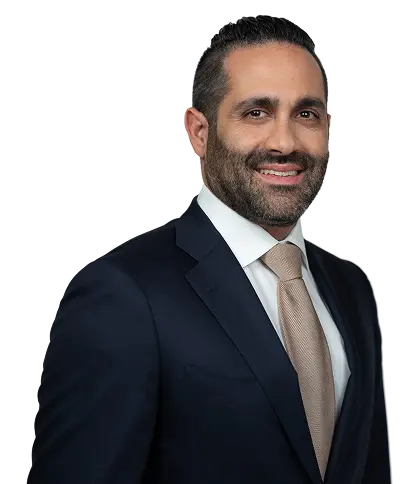
With Joseph Shirazi and Simon Esfandi at the helm, our firm is a trusted name in accident law in California.
Meet Our Managing Partners
National Top 100 Trial Lawyers and Avvo 10.0 Superb. Loyola Law School graduate. Recognized for his $14,500,000 truck accident verdict and a $13,000,000 trial verdict.
Read Full Bio →
Super Lawyers Rising Star. Southwestern Law School graduate. Led the firm’s $9,870,000 motorcycle accident settlement and a $2,250,000 rideshare recovery.
Read Full Bio →- ★ National Top 100 Trial Lawyers
- ★ Super Lawyers Rising Star
- ★ Avvo 10.0 Superb Rating
- ★ Top 40 Under 40
- ★ Consumer Attorneys of California · CAALA · AAJ

Countless Real Client Reviews Verified by Google


Jerry
After 10 accidents and 9 attorneys, the client met Simon, who stood out for his honesty and clear communication. Years later, after another accident, the client called Simon and was impressed by his professionalism and follow-through. Simon explained everything, connected him with top doctors, and kept every promise. It was the first time the client felt truly supported—highly recommending Simon and Joseph for their integrity and dedication.
Jacob
Jacob was rear-ended by a big rig and left nearly paralyzed for a year. He found Cooper Law Group, and Joseph and Simon personally helped him through the legal process. Over two years, they ensured he got the medical care and surgeries he needed, helped repair his car, and secured the compensation he deserved. He highly recommends them for truly fighting for their clients.
Blandine
During the early days of COVID, Blandine was hit by a car while biking to work. Alone and unsure of what to do, they found Compass Law Group. Joseph was the first to respond with care and clarity. Throughout the case, the team—Joseph, Simon, and Julie—provided support, regular check-ins, and made the client feel safe and cared for. They now consider the firm like family and highly recommend them for their compassion and competence.
Understanding Your Rights:
Frequently Asked
Questions
#1 Do I have a case?
Understanding whether a claim exists is one of the challenges of personal injury law. This is why we offer free initial consultations to help you make this determination and allow you an avenue to vindicate your rights.
We’re committed to fighting for the rights of accident victims throughout Southern California, and, unlike other California personal injury attorneys, we will take on any case if we can help, no matter how big or small.
#2 What is personal injury?
Personal injury involves harm to an individual’s body or property caused by someone else’s negligence. It can range from minor to significant injuries, often requiring legal action to recover damages. We specialize in representing and securing fair settlements for such victims.
#3 Why hire Compass Law Group?
Our client-focused approach ensures personalized attention, detailed case building, and compelling evidence presentation. We’re skilled in negotiating settlements and prepared for trial with aggressive strategies. Our firm maintains transparent communication, involves clients in the process, and utilizes a wide network of expert witnesses and resources to strengthen cases. Choosing us means trusting a team dedicated to your success and justice.
#4What if I didn't go to the hospital?
No matter the injury size, you have rights that need defending. Many injuries seem minor at first but can worsen over time. Ignoring treatment or legal advice risks your health and compensation. Seek immediate medical and legal help after any accident to ensure proper diagnosis and strengthen your compensation claim.