

Your Battle, Our Compass:
Los Angeles Workplace Sexual Abuse Attorney
If you experienced sexual abuse or assault in your Los Angeles workplace, our attorneys are here to help. Compass Law Group has extensive experience handling workplace sexual abuse cases throughout Los Angeles County and is committed to holding employers and perpetrators accountable. Call us today for a free, confidential consultation at (213) 320-1001.


Foster Care Sexual Abuse Civil Law in Los Angeles County
In California, foster children are legal wards of the state, which means the Los Angeles County Department of Children and Family Services (DCFS) and its contracted private placement agencies bear an affirmative legal duty to protect every child in their care. When that duty is breached and sexual abuse occurs, California Government Code Section 815.2 allows survivors to hold the county vicariously liable for the negligent acts of its employees and agents. Private foster family agencies licensed by the California Department of Social Services face parallel liability under negligent supervision and negligent placement theories. AB 218 eliminated the former 26-year-old age cap that had barred countless survivors from filing, and AB 2777 specifically targets institutional defendants that concealed abuse. Los Angeles foster care abuse cases frequently involve DCFS placement records, mandatory reporter violation evidence, and prior complaints—all of which our attorneys subpoena and analyze. Call (213) 320-1001 to speak with a Los Angeles foster care sexual abuse attorney today.Who Can Be Held Liable for Foster Care Sexual Abuse in Los Angeles?
Multiple parties can be held legally responsible for sexual abuse that occurs within the Los Angeles foster care system. Individual abusers — foster parents, group home staff, volunteers, or other residents — bear direct personal liability. Under California Code of Civil Procedure § 340.1, survivors have until age 40, or five years from discovery of the abuse, to file a civil claim, giving victims substantial time to pursue accountability.
Institutional liability extends to the agencies and government entities entrusted with a child’s safety. The Los Angeles County Department of Children and Family Services (DCFS), licensed Foster Family Agencies (FFAs), and Short-Term Residential Therapeutic Programs (STRTPs) can face claims under respondeat superior when abuse is committed by their employees or agents during the scope of their duties. Where an agency failed to conduct adequate background checks, ignored prior complaints, or placed a child with a known-risk caregiver, negligent hiring and negligent retention claims apply. California courts have consistently held that institutional failures — not just individual acts — are compensable.
Courts have also recognized that DCFS social workers who overlooked repeated warning signs during mandatory home visits can expose the County to liability under a special-relationship theory, given their statutory duty to protect children in their legal custody.
Potentially liable parties in Los Angeles foster care sexual abuse cases include:
- Individual foster parents or household members who committed the abuse
- Licensed Foster Family Agencies (FFAs) that screened, approved, or supervised the placement
- Los Angeles County DCFS for negligent supervision, inadequate investigation, or failure to act on abuse reports
- Group home operators and STRTPs that employed or housed the abuser
- Third-party contractors or service providers (therapists, tutors, transporters) granted unsupervised access to foster children
Frequently Asked Questions: Foster Care Sexual Abuse Attorney Los Angeles
What is the statute of limitations for filing a foster care sexual abuse lawsuit in California?
Under CCP §340.1 as amended by AB 218, survivors of childhood sexual abuse in Los Angeles County foster care have until age 40, or five years from the date they discover that psychological injury was caused by the abuse, whichever is later. AB 218 also amended Government Code §905(m) to exempt childhood sexual abuse claims from the standard six-month Government Claims Act filing requirement against public entities like LA County DCFS. The separate AB 2777 revival window under CCP §340.16 applies to certain institutional abuse claims and closes on December 31, 2026.
Can I sue Los Angeles County DCFS for sexual abuse I suffered in a foster care placement?
Yes. The County of Los Angeles and its Department of Children and Family Services can be sued under Government Code §815.2 when DCFS employees negligently screened, supervised, or responded to complaints about foster placements where abuse occurred. AB 218 amended Government Code §905(m) to eliminate the six-month pre-lawsuit government claims filing requirement specifically for childhood sexual abuse claims, removing a major procedural barrier that previously blocked many survivors. Lawsuits against LA County DCFS are typically filed in Los Angeles Superior Court and may name the County, individual social workers, and the foster parent as defendants.
How does AB 218 and CCP §340.1 extend my rights as a foster care sexual abuse survivor in California?
AB 218, signed in 2019 and codified at CCP §340.1, extended the civil statute of limitations for childhood sexual abuse to age 40 or five years from discovery of the abuse-injury connection, whichever is later, with no cap on damages against private parties. The legislation also created a three-year lookback window from January 1, 2020 through December 31, 2022, which revived previously time-barred claims, and permanently exempted childhood sexual abuse claims from the Government Claims Act under Government Code §905(m). For Los Angeles County foster care survivors, these combined provisions significantly broadened access to civil courts, including Los Angeles Superior Court.
What is the AB 2777 revival window and does it apply to Los Angeles foster care abuse cases?
AB 2777, effective January 1, 2023, amended CCP §340.16 to create a three-year revival window through December 31, 2026, for sexual assault claims occurring on or after January 1, 2009, where an institutional defendant knew or should have known of the perpetrator’s propensity for assault. This window can apply to Los Angeles foster care abuse cases involving private foster care agencies, licensed group homes, or other organizations operating in LA County that employed or supervised the perpetrator. Survivors with otherwise time-barred claims against private foster care organizations should consult an attorney immediately given the approaching December 31, 2026 deadline.
Who can be held legally liable for sexual abuse that occurred in a Los Angeles County foster home?
Potentially liable parties include the individual foster parent, the County of Los Angeles through DCFS under Government Code §815.2, private foster care agencies licensed by the California Department of Social Services under Welfare and Institutions Code §16001, group home operators, and any mandatory reporter who failed to report known or suspected abuse under Penal Code §11166. Private foster care agencies may face liability under negligent hiring, negligent supervision, and premises liability theories, while LA County faces liability for failures in its placement screening, home assessment, and complaint investigation processes. An attorney can review DCFS placement records and California Department of Social Services licensing files to identify all responsible parties.
Does the California Government Claims Act require me to file a claim before suing LA County DCFS for foster care abuse?
No. Under Government Code §905(m), as amended by AB 218, claims arising from childhood sexual abuse against public entities are expressly exempt from the Government Claims Act’s standard six-month pre-lawsuit filing requirement. This exemption applies to claims under CCP §340.1 and eliminates a procedural barrier that previously prevented many foster care survivors from suing LA County DCFS or other public agencies. Your attorney can file directly in Los Angeles Superior Court without first presenting a government tort claim, provided your case falls within the applicable statute of limitations.
What compensation can I recover in a Los Angeles County foster care sexual abuse lawsuit?
Survivors can pursue economic damages including past and future costs of psychological therapy, medical treatment, and lost earning capacity, as well as non-economic damages for pain and suffering, emotional distress, and loss of quality of life. California law does not cap non-economic damages in sexual abuse lawsuits against private foster care agencies or individual foster parents, though Government Code §985 imposes considerations specific to public entity defendants. In cases where a private agency or foster parent engaged in willful misconduct or concealed prior abuse complaints, punitive damages under Civil Code §3294 may also be available.
How do I start a foster care sexual abuse lawsuit in Los Angeles, and which courthouse handles these cases?
Foster care sexual abuse civil lawsuits are filed as personal injury complaints in the Los Angeles Superior Court Civil Division, most commonly at the Stanley Mosk Courthouse at 111 North Hill Street in downtown Los Angeles. The complaint must identify all defendants, allege specific causes of action such as sexual battery under Civil Code §1708.5, negligent supervision, and intentional infliction of emotional distress, and comply with the applicable statute of limitations under CCP §340.1 or the AB 2777 revival window under CCP §340.16. A Los Angeles foster care sexual abuse attorney will conduct pre-suit discovery by obtaining DCFS placement files, Welfare and Institutions Code §827 juvenile records, and California Department of Social Services licensing records to build the strongest possible case.
Will my identity be protected if I file a foster care sexual abuse lawsuit in Los Angeles Superior Court?
Yes. California courts routinely permit sexual abuse survivors to file civil complaints under pseudonyms such as Jane Doe or John Doe, and Los Angeles Superior Court judges regularly grant protective orders sealing victim identities in foster care abuse litigation upon a showing of good cause under California Rules of Court, Rule 2.550. Your attorney can file a motion to proceed anonymously before the complaint is filed, ensuring your name does not appear in public court records, filings, or proceedings. This protection is especially important for foster care survivors whose cases may attract media attention or involve identifiable placement histories.
What evidence is needed to prove a foster care sexual abuse claim against LA County or a private foster care agency?
Key evidence includes DCFS placement records, prior abuse complaints or investigations obtained through Welfare and Institutions Code §827 proceedings, licensing inspection reports from the California Department of Social Services, school records, and medical or psychological evaluations documenting trauma consistent with the alleged abuse. Testimony from the survivor, corroborating witnesses, former foster children placed with the same foster parent, and expert witnesses in child trauma psychology can significantly strengthen the case. Prior complaints that DCFS or the agency received and failed to act upon are particularly powerful evidence of negligent supervision and institutional liability.
Can an adult who was sexually abused in Los Angeles foster care as a child still file a lawsuit today?
Yes. Under CCP §340.1, survivors of childhood foster care sexual abuse in Los Angeles County can file civil lawsuits until their 40th birthday, regardless of when the abuse occurred or how long ago the foster care placement ended. If you are over 40, the discovery rule extension in CCP §340.1(b)(2) may still allow filing within five years of discovering that current psychological injuries such as PTSD, depression, or complex trauma are causally connected to the childhood abuse. An experienced Los Angeles foster care sexual abuse attorney can evaluate which limitation period applies and whether the AB 2777 revival window through December 31, 2026 provides an additional avenue for your specific claim.
How does the discovery rule under CCP §340.1 apply to foster care survivors who repressed memories of abuse?
CCP §340.1(b)(2) provides that the five-year discovery period begins when the plaintiff discovers, or in the exercise of reasonable diligence should have discovered, that psychological injury occurring after age 18 was caused by the childhood sexual abuse. California courts have interpreted this standard broadly for foster care survivors, recognizing that trauma responses including repressed memory, dissociation, and delayed PTSD diagnosis frequently prevent survivors from connecting their adult mental health conditions to childhood abuse for years or even decades. A formal diagnosis from a licensed therapist or psychiatrist documenting the causal link between foster care abuse and current injuries is typically the triggering event that starts the five-year discovery clock under CCP §340.1.
What is the difference between criminal prosecution and a civil lawsuit for foster care sexual abuse in California?
Criminal prosecution of foster care sexual abuse is conducted by the Los Angeles County District Attorney under charges such as Penal Code §288 (lewd acts with a minor under 14), requires proof beyond a reasonable doubt, and can result in incarceration, lifetime sex offender registration under Penal Code §290, and other criminal penalties. A civil lawsuit brought by the survivor in Los Angeles Superior Court requires only a preponderance of the evidence standard and is designed to compensate the victim with monetary damages for medical costs, therapy, lost income, pain and suffering, and emotional distress. A civil case can proceed independently of any criminal case and does not require a criminal conviction, arrest, or even a criminal investigation for the survivor to recover compensation.
Does California mandatory reporting law affect a foster care sexual abuse lawsuit against DCFS or a foster care agency?
Yes. California Penal Code §11165.7 designates DCFS social workers, foster parents, teachers, and other child care providers as mandatory reporters, and Penal Code §11166 requires them to immediately report known or suspected child sexual abuse to law enforcement or child protective services. A failure by a mandatory reporter to report suspected abuse—especially by a DCFS social worker who investigated a complaint and took no action—constitutes evidence of negligence and can support civil claims for negligent supervision and failure to protect under Government Code §815.2. Documentation of unreported complaints, delayed investigations, or inadequately investigated abuse reports obtained through Welfare and Institutions Code §827 discovery can be critical to establishing institutional liability against LA County DCFS or a private foster care agency.
When should I contact a Los Angeles foster care sexual abuse attorney, and why does timing matter?
You should contact a Los Angeles foster care sexual abuse attorney as soon as possible to preserve critical evidence, including DCFS placement files, prior abuse investigation reports, and California Department of Social Services licensing records that may be subject to retention and destruction schedules. The AB 2777 revival window under CCP §340.16 closes permanently on December 31, 2026, meaning survivors with otherwise time-barred claims against private foster care institutions must act before that date or lose the right to sue entirely. An attorney experienced in Los Angeles County foster care litigation can conduct a confidential case evaluation, determine which statute of limitations applies under CCP §340.1 or CCP §340.16, and identify all liable parties including LA County DCFS, private agencies, and individual perpetrators.
How We Value a Foster Care Sexual Abuse Case in Los Angeles
California foster care sexual abuse cases can result in substantial compensation, and our attorneys at Compass Law Group have recovered over $250 million for survivors across Los Angeles County. Every valuation begins with compensatory damages: documented therapy and psychological counseling costs, medical treatment, and lost wages or diminished earning capacity caused by lasting trauma. Studies show adult survivors of childhood sexual abuse in foster care face lifetime earnings losses averaging 30–50% compared to peers, making economic documentation a critical component of every case we build.
Beyond economic losses, Los Angeles courts recognize significant emotional distress damages—including PTSD, depression, anxiety, and loss of enjoyment of life—that reflect the full scope of harm inflicted on survivors. When a licensed foster care agency, Los Angeles County DCFS contractor, or institutional defendant enabled or concealed abuse, California law permits punitive damages designed to punish that institutional misconduct and deter future failures. These awards can substantially exceed the underlying compensatory amount.
Under AB 218 and AB 2777, California eliminated prior caps on damages for institutional defendants in childhood sexual abuse cases and created extended lookback windows that allow survivors to pursue claims regardless of when the abuse occurred. These landmark statutes mean there is no ceiling on what Los Angeles survivors may recover. To learn what your case may be worth, call Compass Law Group at (213) 320-1001 for a free, confidential consultation.
What to Do If You Are a Foster Care Sexual Abuse Survivor in Los Angeles
- Get to a Safe Place First — If you or a child in your care is in immediate danger, call 911 or contact the Los Angeles Department of Children and Family Services (DCFS) hotline at (800) 540-4000. Your physical safety and the safety of any other children in the placement comes before anything else.
- Write Down Everything You Remember — As soon as you are safe, record the names of the abuser, foster parents, case workers, and any witnesses; dates and locations of incidents; and any complaints you made to DCFS or a group home. Memory fades over time, and detailed notes become critical evidence in a civil claim.
- Seek Medical Attention and Preserve Physical Evidence — Visit a hospital or a Los Angeles SART (Sexual Assault Response Team) facility as soon as possible. Do not shower, change clothes, or discard any items that may hold forensic evidence. A medical exam creates an official record that supports your case even years later.
- Report the Abuse to the Appropriate Authorities — You may file a report with the Los Angeles Police Department, the Los Angeles County Sheriff’s Department, or DCFS. Reporting creates an official paper trail and can trigger an investigation into the foster care agency or placement home responsible for your safety.
- Gather and Preserve All Relevant Records — Request copies of your DCFS case file, placement records, any prior complaints or investigations, and school or medical records from the period of abuse. California law gives survivors access to their own DCFS records; an attorney can help you obtain records that are withheld.
- Contact a Los Angeles Foster Care Sexual Abuse Attorney Before the AB 2777 Deadline — California’s AB 2777 revival window gives survivors of sexual abuse — including those whose claims were previously time-barred — the right to file a civil lawsuit regardless of when the abuse occurred. This window closes on December 31, 2026. Once it closes, expired claims cannot be revived. Do not wait to learn whether your case qualifies.
If you or a loved one suffered sexual abuse in a Los Angeles foster care placement, call our team today at (213) 320-1001 for a free, confidential consultation — we will explain your rights under AB 2777 and help you take the next step before the deadline passes.
Do I have a case?
Contact us today for a free consultation.
California's
Gold Standard
Injury Law Firm
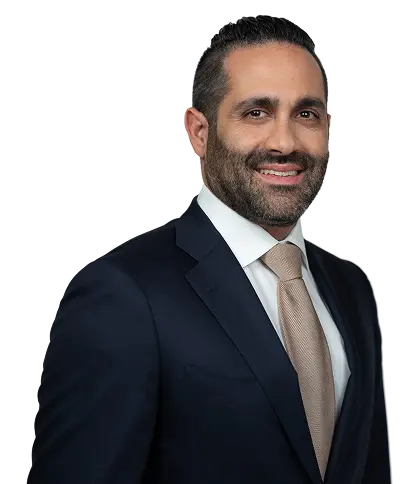
With Joseph Shirazi and Simon Esfandi at the helm, our firm is a trusted name in accident law in California.
Meet Our Managing Partners
National Top 100 Trial Lawyers and Avvo 10.0 Superb. Loyola Law School graduate. Recognized for his $14,500,000 truck accident verdict and a $13,000,000 trial verdict.
Read Full Bio →
Super Lawyers Rising Star. Southwestern Law School graduate. Led the firm’s $9,870,000 motorcycle accident settlement and a $2,250,000 rideshare recovery.
Read Full Bio →- ★ National Top 100 Trial Lawyers
- ★ Super Lawyers Rising Star
- ★ Avvo 10.0 Superb Rating
- ★ Top 40 Under 40
- ★ Consumer Attorneys of California · CAALA · AAJ

Countless Real Client Reviews Verified by Google


Jerry
After 10 accidents and 9 attorneys, the client met Simon, who stood out for his honesty and clear communication. Years later, after another accident, the client called Simon and was impressed by his professionalism and follow-through. Simon explained everything, connected him with top doctors, and kept every promise. It was the first time the client felt truly supported—highly recommending Simon and Joseph for their integrity and dedication.
Jacob
Jacob was rear-ended by a big rig and left nearly paralyzed for a year. He found Cooper Law Group, and Joseph and Simon personally helped him through the legal process. Over two years, they ensured he got the medical care and surgeries he needed, helped repair his car, and secured the compensation he deserved. He highly recommends them for truly fighting for their clients.
Blandine
During the early days of COVID, Blandine was hit by a car while biking to work. Alone and unsure of what to do, they found Compass Law Group. Joseph was the first to respond with care and clarity. Throughout the case, the team—Joseph, Simon, and Julie—provided support, regular check-ins, and made the client feel safe and cared for. They now consider the firm like family and highly recommend them for their compassion and competence.
Understanding Your Rights:
Frequently Asked
Questions
#1 Do I have a case?
Understanding whether a claim exists is one of the challenges of personal injury law. This is why we offer free initial consultations to help you make this determination and allow you an avenue to vindicate your rights.
We’re committed to fighting for the rights of accident victims throughout Southern California, and, unlike other California personal injury attorneys, we will take on any case if we can help, no matter how big or small.
#2 What is personal injury?
Personal injury involves harm to an individual’s body or property caused by someone else’s negligence. It can range from minor to significant injuries, often requiring legal action to recover damages. We specialize in representing and securing fair settlements for such victims.
#3 Why hire Compass Law Group?
Our client-focused approach ensures personalized attention, detailed case building, and compelling evidence presentation. We’re skilled in negotiating settlements and prepared for trial with aggressive strategies. Our firm maintains transparent communication, involves clients in the process, and utilizes a wide network of expert witnesses and resources to strengthen cases. Choosing us means trusting a team dedicated to your success and justice.
#4What if I didn't go to the hospital?
No matter the injury size, you have rights that need defending. Many injuries seem minor at first but can worsen over time. Ignoring treatment or legal advice risks your health and compensation. Seek immediate medical and legal help after any accident to ensure proper diagnosis and strengthen your compensation claim.