



Your Battle, Our Compass:

Los Angeles Workplace Sexual Abuse Attorney

If you experienced sexual abuse or assault in your Los Angeles workplace, our attorneys are here to help. Compass Law Group has extensive experience handling workplace sexual abuse cases throughout Los Angeles County and is committed to holding employers and perpetrators accountable. Call us today for a free, confidential consultation at (213) 320-1001.

TL;DR — Rideshare Sexual Abuse Attorney Los AngelesA Los Angeles rideshare sexual abuse attorney can help survivors pursue civil claims against Uber, Lyft, and other transportation network companies for sexual assault committed by their drivers — separate from any criminal case. California’s AB 2777 (the FAIR Act) opened a revival window through December 31, 2025 allowing adult survivors of institutional sexual assault occurring on or after January 1, 2009 to file claims that may have previously been time-barred, while AB 218 extended similar protections for childhood sexual abuse survivors. If you or someone you love was assaulted by a rideshare driver in Los Angeles, call our team today at (213) 320-1001 for a free, confidential consultation.

Rideshare Sexual Abuse Civil Claims Under California Law

In Los Angeles County, survivors of rideshare sexual assault have the right to pursue civil litigation against both the individual driver and the company — Uber or Lyft — that employed or contracted them. California courts have consistently held that transportation network companies can face negligence liability for inadequate background checks, negligent retention, and failure to implement safety protocols, even when drivers are classified as independent contractors. Under California Civil Code § 1714, any person or entity whose negligence causes harm to another may be held liable for resulting damages, including medical expenses, therapy costs, lost income, and substantial pain and suffering. Los Angeles County juries have returned multi-million dollar verdicts in rideshare assault cases. The statute of limitations for adult survivors is generally three years from the date of the assault under California Code of Civil Procedure § 335.1, though AB 2777 may extend this deadline for qualifying institutional claims — making early consultation with a qualified attorney essential.

★★★★★
5.0 / 5
195 Google Reviews  ·  Read Reviews ↗

Who Can Be Held Liable for Rideshare Sexual Abuse in Los Angeles?

The driver who commits the assault bears direct personal liability under California Civil Code §1708.5, which establishes a civil cause of action for sexual battery independent of any criminal proceeding. A conviction is not required—victims may simultaneously pursue civil claims for medical expenses, lost wages, and emotional distress. For victims who were minors at the time of the abuse, California Code of Civil Procedure §340.1 extends the filing deadline and permits claims against institutional third parties who enabled the assault.

Uber and Lyft face institutional liability through respondeat superior and negligent hiring or retention. Although both platforms classify drivers as independent contractors, California courts examine actual operational control when determining vicarious liability. Uber’s own U.S. Safety Report disclosed 2,573 reported sexual assaults in 2021–2022, establishing that the companies had notice of systemic risk yet failed to implement sufficient driver screening for those operating throughout Los Angeles—including LAX, Union Station, and Hollywood pickup corridors. Negligent retention claims arise when a platform continues allowing a driver access after receiving complaints or identifying disqualifying background information.

  • The rideshare driver — personally liable for the sexual battery under California Civil Code §1708.5
  • Uber or Lyft — for negligent hiring, inadequate background checks, and negligent retention of drivers with disqualifying histories
  • Third-party background screening vendors — whose failures allowed unfit drivers to pass platform onboarding
  • Fleet operators and vehicle rental partners — Los Angeles-area businesses that lease vehicles to drivers through rideshare rental programs may share liability when they had independent knowledge of risk
  • Other negligent third parties — venue operators, hotels, or event security personnel at Los Angeles locations whose own negligence created conditions for the assault
Call Compass Law Group — Free Consultation for School Sexual Abuse Survivors

Frequently Asked Questions: Rideshare Sexual Abuse Attorney Los Angeles

Under California Code of Civil Procedure §340.1 and related provisions, adult survivors of sexual assault generally have 10 years from the date of the assault or 3 years from discovery of the psychological injury, whichever is later. AB 2777 (the STAND Act) created a one-time revival window reopening previously time-barred adult sexual assault claims, with a critical filing deadline of December 31, 2026. Survivors who believe their claim may be time-barred should consult a Los Angeles rideshare sexual abuse attorney immediately to determine whether the revival window preserves their right to sue.

Yes — California law allows survivors to bring civil claims against Uber or Lyft under theories of negligent hiring, negligent retention, and negligent supervision when the company failed to adequately screen or remove a dangerous driver. As Transportation Network Companies regulated by the California Public Utilities Commission, Uber and Lyft are treated as common carriers under California law, imposing a heightened duty of care to passengers. Los Angeles Superior Court has jurisdiction over these corporate defendants because they operate throughout Los Angeles County.

AB 2777, the STAND (Sexual Assault and Violence: Termination of Limitation Periods) Act, amended California law to revive civil claims for adult sexual assault survivors that were previously barred by expired statutes of limitations — including assaults committed in Uber and Lyft vehicles. Survivors must file their revived claims in Los Angeles Superior Court or another appropriate California court before the December 31, 2026 deadline. This window is a one-time legislative opportunity, and once it closes, previously time-barred claims are permanently extinguished without new legislation.

California law permits rideshare sexual abuse survivors to seek economic damages including emergency medical treatment, ongoing therapy, psychiatric care, and lost wages, as well as non-economic damages for pain and suffering, emotional distress, and loss of enjoyment of life. Unlike some personal injury categories, California does not cap non-economic damages in sexual assault civil claims, meaning juries in Los Angeles Superior Court can award substantial amounts for trauma, PTSD, and long-term psychological harm. Punitive damages may also be available against Uber or Lyft if evidence shows the company acted with oppression, fraud, or malice in concealing driver misconduct.

Potentially liable parties include the individual driver under civil assault and battery law, Uber or Lyft under corporate negligence theories for inadequate background screening and supervision, and in some cases, third-party background check vendors that failed to identify disqualifying criminal history. California’s joint and several liability rules under Civil Code §1431.2 can allow survivors to pursue all responsible parties simultaneously in Los Angeles Superior Court. An experienced rideshare sexual abuse attorney can investigate the driver’s full employment and criminal history to identify every viable defendant.

The California PUC requires TNCs like Uber and Lyft to conduct criminal background checks on all drivers and submit annual safety reports under General Order 157, which applies to all rideshare operations throughout Los Angeles County. However, these administrative regulations establish only a regulatory minimum — a survivor may still bring a civil negligence claim in Los Angeles Superior Court even if Uber or Lyft technically complied with PUC requirements. California courts have recognized that regulatory compliance does not necessarily satisfy the common carrier duty of care owed to passengers under Civil Code §2100.

Under California PUC regulations and the rideshare companies’ own stated policies, all drivers must pass background checks that include searches of national sex offender registries and county criminal records. When Uber or Lyft activates or retains a driver with a disqualifying criminal history — including prior sex offenses — this failure can form the basis of a negligent hiring or negligent retention claim under California tort law. California courts in Los Angeles have allowed survivors to conduct discovery into a rideshare company’s internal screening policies and driver complaint histories to establish corporate knowledge of driver danger.

Critical evidence includes the rideshare trip receipt showing the driver’s name, vehicle, pickup and drop-off locations, and timestamp, along with GPS route data preserved from the Uber or Lyft application before the session resets or the account is closed. Medical records from an emergency evaluation at a Los Angeles County hospital, a Sexual Assault Response Team (SART) examination, and any report filed with the Los Angeles Police Department all create contemporaneous documentation that is highly probative in civil litigation. Internal safety complaints or prior passenger reports against the same driver — obtainable through discovery from Uber or Lyft — can demonstrate the company’s pre-existing knowledge of the driver’s dangerous conduct.

Yes — California civil sexual assault claims require proof by a preponderance of the evidence (more likely than not), which is a far lower burden than the criminal standard of proof beyond a reasonable doubt. A decision by the Los Angeles County District Attorney’s Office not to file criminal charges has no legal effect on your right to pursue civil damages against the driver, Uber, or Lyft in Los Angeles Superior Court. In many rideshare abuse cases, civil litigation proceeds independently and successfully even when criminal prosecution does not.

The AB 2777 revival window closes on December 31, 2026, after which previously time-barred adult sexual assault claims cannot be revived without new legislation from the California Legislature. Survivors whose claims were extinguished under prior statutes of limitations — including those assaulted in Uber or Lyft vehicles years ago — must file their complaints in Los Angeles Superior Court before that date to preserve their legal rights. Because gathering records, identifying defendants, and drafting a complaint take time, survivors should contact a Los Angeles rideshare sexual abuse attorney well in advance of the deadline.

California courts can grant protective orders limiting public disclosure, and Los Angeles Superior Court permits survivors to file civil complaints under a pseudonym to protect their identity during proceedings under California Rules of Court, Rule 2.1008. Your attorney can petition the court for additional privacy protections, including sealing sensitive records, restricting media access during testimony, and requesting that the court clear the gallery for a survivor’s testimony. While trials are generally public proceedings, courts have broad discretion under California Evidence Code §352 to balance the survivor’s privacy interests against openness.

California Code of Civil Procedure §340.1, as significantly amended by AB 218, gives childhood sexual abuse survivors until age 40, or within 22 years of the date the plaintiff discovered the connection between the abuse and their psychological injury, whichever is later. AB 218 also created the possibility of treble damages — up to three times the actual damages — against institutional defendants like Uber or Lyft that concealed, failed to report, or failed to take reasonable action against a known perpetrator of childhood sexual abuse. Survivors who were under 18 at the time of a rideshare sexual assault should consult a Los Angeles attorney promptly, as the statute’s discovery rule and AB 218 amendments may significantly extend the filing window beyond what standard statutes would allow.

No — the federal Ending Forced Arbitration of Sexual Assault and Sexual Harassment Act of 2022 prohibits corporations, including Uber and Lyft, from enforcing pre-dispute arbitration agreements in sexual assault or sexual harassment cases. This federal law applies to all rideshare sexual assault claims regardless of any arbitration language in the Uber or Lyft user agreement, restoring your right to file in Los Angeles Superior Court and have your case heard by a jury of your peers. The law applies retroactively to claims arising before its enactment, meaning even older agreements cannot force sexual assault survivors into private arbitration.

Yes — Los Angeles Superior Court has jurisdiction over civil claims arising anywhere within Los Angeles County, which encompasses over 88 cities including Long Beach, Pasadena, Santa Monica, Burbank, and Glendale. Under California Code of Civil Procedure §395, venue is proper in any county where the defendant regularly conducts business or where the tort occurred, both of which apply to Uber and Lyft operating throughout Los Angeles County. Survivors assaulted in any Los Angeles County city, unincorporated area, or city-adjacent rideshare pickup or drop-off zone may file their claims at the Stanley Mosk Courthouse or other Los Angeles Superior Court locations.

Immediately after the assault, screenshot all trip details in the Uber or Lyft app — including the driver’s name, photo, vehicle plate, and route — before logging out or closing the session, and do not delete the app. Seek medical attention at a Los Angeles County emergency room or through SART (Sexual Assault Response Team), as a forensic examination preserves physical evidence and creates a contemporaneous medical record critical to civil litigation. File a report with the Los Angeles Police Department and a separate safety report directly to Uber or Lyft to create an internal corporate record, then contact a Los Angeles rideshare sexual abuse attorney as soon as possible to secure a litigation hold on the company’s driver data before it is deleted under routine data retention policies.

Rideshare Sexual Abuse — Los Angeles — image 1
Los Angeles school hallway — school sexual abuse attorney

How We Value a Rideshare Sexual Abuse Case in Los Angeles

Rideshare sexual abuse cases in Los Angeles County can carry significant financial value — often far exceeding initial expectations. Compensatory damages form the foundation of every claim: past and future therapy costs, emergency medical treatment, lost wages if trauma prevented you from working, and the ongoing cost of psychiatric care. California courts recognize that sexual abuse survivors frequently require years of mental health treatment, and Los Angeles juries have consistently awarded substantial sums to reflect that reality. Our attorneys have recovered more than $250 million for injured clients, and we apply that experience to build the strongest possible damages picture for every survivor we represent.

Emotional distress damages — pain, suffering, humiliation, and loss of enjoyment of life — often represent the largest component of a rideshare abuse verdict or settlement. These are not speculative; courts in Los Angeles County routinely award six- and seven-figure sums for the psychological harm sexual violence causes.

Under California’s AB 218 and AB 2777, corporate institutions such as Uber and Lyft face unlimited punitive exposure when they knew or should have known of a driver’s dangerous propensity and failed to act. There is no cap. If you were assaulted in Los Angeles, call Compass Law Group at (213) 320-1001 for a free, confidential case evaluation.

Rideshare Sexual Abuse — Los Angeles — image 2
Los Angeles school building exterior — school sexual abuse lawsuit

What to Do If You Are a Rideshare Sexual Abuse Survivor in Los Angeles

  1. Get to a Safe Location Immediately — Leave the vehicle as soon as it is safe to do so and move to a populated, well-lit area in Los Angeles. Call someone you trust, a shelter, or 911 if you are in immediate danger — your safety is the only priority.
  2. Seek Medical Attention Without Delay — Go to a Los Angeles emergency room or a SANE (Sexual Assault Nurse Examiner) clinic as soon as possible; a forensic exam preserves critical physical evidence that can support your legal case. Request that all findings be documented in your medical records even if you are uncertain about filing a report.
  3. Preserve Every Piece of Rideshare Evidence — Take screenshots of the trip receipt, driver’s name and photo, vehicle information, route map, and any in-app messages before closing the Uber or Lyft app. Do not delete the app, rate the trip, or contact the driver directly, as doing so can alter or destroy time-sensitive data.
  4. Report the Assault to Law Enforcement and the Rideshare Company — File a police report with the Los Angeles Police Department or the county sheriff’s office to create an official record; you may also report directly to Uber’s or Lyft’s safety team through their critical-safety response lines. Reporting is your choice, but a documented report strengthens your civil claim against the company.
  5. Save All Communications and Witness Information — Write down everything you remember about the incident — time, location, what was said, what happened — and collect contact information from any witnesses. Preserve any text messages, emails, or social media activity related to the trip or the driver.
  6. Contact a Los Angeles Rideshare Sexual Abuse Attorney Before December 31, 2026 — California’s AB 2777 (the SAFE Act) opened a limited revival window allowing survivors to file civil claims that would otherwise be time-barred; that window closes permanently on December 31, 2026. An attorney can pursue compensation from the rideshare company for negligent hiring, inadequate background checks, and failure to protect passengers — but only if you act before the deadline.

If you or someone you love was sexually abused during a rideshare trip in Los Angeles, call our firm today at (213) 320-1001 for a free, confidential consultation — our team is available around the clock to help you understand your rights and options before the AB 2777 window closes.

Call Compass Law Group — Free Consultation for School Sexual Abuse Survivors
COMPASS LAW GROUP — LOS ANGELES OFFICE

Do I have a case?

Contact us today for a free consultation.

This field is for validation purposes and should be left unchanged.

California's
Gold Standard
Injury Law Firm

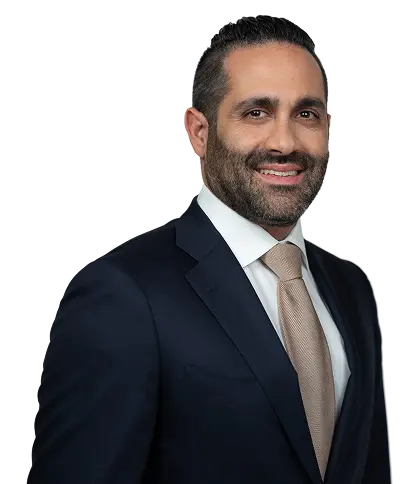
With Joseph Shirazi and Simon Esfandi at the helm, our firm is a trusted name in accident law in California.

Meet Our Managing Partners

Joseph Shirazi
Managing Partner · CA Bar #265403

National Top 100 Trial Lawyers and Avvo 10.0 Superb. Loyola Law School graduate. Recognized for his $14,500,000 truck accident verdict and a $13,000,000 trial verdict.

Read Full Bio →
Simon Esfandi — Managing Partner
Simon Esfandi
Managing Partner · CA Bar #275307

Super Lawyers Rising Star. Southwestern Law School graduate. Led the firm’s $9,870,000 motorcycle accident settlement and a $2,250,000 rideshare recovery.

Read Full Bio →
Firm Recognition
  • ★ National Top 100 Trial Lawyers
  • ★ Super Lawyers Rising Star
  • ★ Avvo 10.0 Superb Rating
  • ★ Top 40 Under 40
  • ★ Consumer Attorneys of California · CAALA · AAJ

Total Recovered for Clients
$250,000,000+
$14.5M truck verdict · $13M trial verdict · $9.87M motorcycle · $5M car accident
Past results do not guarantee future outcomes. Every case is unique.
Client Rating
★★★★★ 5.0
193+ verified Google reviews · No win, no fee

Countless Real Client Reviews Verified by Google

Jerry

After 10 accidents and 9 attorneys, the client met Simon, who stood out for his honesty and clear communication. Years later, after another accident, the client called Simon and was impressed by his professionalism and follow-through. Simon explained everything, connected him with top doctors, and kept every promise. It was the first time the client felt truly supported—highly recommending Simon and Joseph for their integrity and dedication.

Jacob

Jacob was rear-ended by a big rig and left nearly paralyzed for a year. He found Cooper Law Group, and Joseph and Simon personally helped him through the legal process. Over two years, they ensured he got the medical care and surgeries he needed, helped repair his car, and secured the compensation he deserved. He highly recommends them for truly fighting for their clients.

Blandine

During the early days of COVID, Blandine was hit by a car while biking to work. Alone and unsure of what to do, they found Compass Law Group. Joseph was the first to respond with care and clarity. Throughout the case, the team—Joseph, Simon, and Julie—provided support, regular check-ins, and made the client feel safe and cared for. They now consider the firm like family and highly recommend them for their compassion and competence.

Understanding Your Rights:

Frequently Asked
Questions

Understanding whether a claim exists is one of the challenges of personal injury law. This is why we offer free initial consultations to help you make this determination and allow you an avenue to vindicate your rights.

We’re committed to fighting for the rights of accident victims throughout Southern California, and, unlike other California personal injury attorneys, we will take on any case if we can help, no matter how big or small.

Personal injury involves harm to an individual’s body or property caused by someone else’s negligence. It can range from minor to significant injuries, often requiring legal action to recover damages. We specialize in representing and securing fair settlements for such victims.

Our client-focused approach ensures personalized attention, detailed case building, and compelling evidence presentation. We’re skilled in negotiating settlements and prepared for trial with aggressive strategies. Our firm maintains transparent communication, involves clients in the process, and utilizes a wide network of expert witnesses and resources to strengthen cases. Choosing us means trusting a team dedicated to your success and justice.

No matter the injury size, you have rights that need defending. Many injuries seem minor at first but can worsen over time. Ignoring treatment or legal advice risks your health and compensation. Seek immediate medical and legal help after any accident to ensure proper diagnosis and strengthen your compensation claim.