

Your Battle, Our Compass:
Sacramento College/Campus Sexual Abuse Attorney
If you experienced sexual abuse or assault on a Sacramento-area college or university campus, our attorneys are here to help. Compass Law Group has extensive experience handling campus sexual abuse cases throughout the Sacramento region and is committed to holding institutions and perpetrators accountable. Call us today for a free, confidential consultation at (916) 827-3262.


Who Can Be Held Liable for College/Campus Sexual Abuse in Sacramento?
Campus sexual abuse survivors in Sacramento have legal recourse against multiple parties. The individual perpetrator — whether a professor, coach, administrator, or fellow student — bears direct civil liability for their conduct. Critically, California Code of Civil Procedure §340.1 gives adult survivors of childhood sexual abuse until age 40, or five years from the date they discover resulting psychological injury, to file a civil claim, significantly extending the window for justice.
Sacramento-area colleges and universities — including California State University, Sacramento, American River College, Sacramento City College, and UC Davis — face institutional liability when they knew or should have known of an abuser’s conduct and failed to intervene. Under the doctrine of respondeat superior, a school is vicariously liable for abuse committed by employees acting within the scope of their employment. Separately, negligent hiring, negligent retention, and negligent supervision provide independent grounds to hold institutions accountable when they failed to screen candidates, investigate complaints, or remove known offenders from positions of trust over students.
- Individual perpetrators, including faculty, coaches, administrators, residential advisors, and fellow students
- The college or university itself (Sacramento State, American River College, Sacramento City College, Folsom Lake College, UC Davis)
- National fraternity and sorority organizations with Sacramento-area chapters, and their local chapter leadership
- Athletics departments and third-party sports program contractors operating on Sacramento campuses
- Campus security companies and contracted residential housing providers whose negligence enabled the abuse
Frequently Asked Questions: College/Campus Sexual Abuse Attorney Sacramento
What is the statute of limitations for college sexual abuse claims in Sacramento under CCP §340.1?
Under California Code of Civil Procedure §340.1, as amended by AB 218, survivors of childhood sexual abuse (under age 18) at Sacramento-area colleges have until age 40 to file a civil lawsuit, or within five years of discovering the psychological injury caused by the abuse, whichever is later. For adult survivors, the AB 2777 revival window under CCP §340.16 may extend the right to sue even for claims previously barred by older, shorter limitations periods. A Sacramento sexual abuse attorney can evaluate which deadline applies to your specific circumstances.
Can I file a sexual abuse lawsuit against Sacramento State University even if the abuse happened years ago?
Yes — depending on your age at the time of the abuse and which statutory revival window applies to your claim. AB 218 eliminated the mandatory Government Claims Act pre-filing requirement for childhood sexual abuse claims against public entities like California State University, Sacramento, and the AB 2777 revival window under CCP §340.16 reopens lapsed claims for adult survivors through December 31, 2026. If your claim was previously time-barred, you may still have a valid cause of action against Sacramento State before that hard deadline closes permanently.
What is the AB 2777 revival window and when does it close for Sacramento campus sexual abuse survivors?
AB 2777 added California Code of Civil Procedure §340.16, creating a limited revival window that allows adult survivors of institutional sexual assault to file civil lawsuits even if their claims were previously extinguished by an older, shorter statute of limitations. The revival window closes permanently on December 31, 2026, meaning survivors sexually assaulted as adults at Sacramento-area campuses — including Sacramento State, UC Davis, American River College, or Cosumnes River College — must initiate their lawsuit before that date or permanently forfeit their right to civil compensation. Retaining a Sacramento attorney well before that deadline is critical to preserve evidence, conduct discovery, and meet all procedural requirements.
How does AB 218 apply to campus sexual abuse victims at Sacramento-area colleges and community colleges?
AB 218 amended CCP §340.1 and applies to any survivor who was under 18 years old when sexually abused at a Sacramento-area institution, including schools operated by the Los Rios Community College District — American River College, Sacramento City College, and Cosumnes River College. The law extended the civil filing deadline to age 40 (or five years from discovery), waived the Government Claims Act pre-filing requirement against public educational entities, and opened a three-year lookback window allowing previously time-barred childhood abuse claims to be revived. AB 218 also added a treble damages provision that can triple a survivor’s compensatory award when the institution covered up or concealed reported abuse.
Who can be held liable for campus sexual abuse at Sacramento-area universities and community colleges?
Potentially liable parties in a Sacramento campus sexual abuse lawsuit include the individual perpetrator, the employing educational institution, and administrators who had actual or constructive knowledge of the abuse and failed to act. Public entities such as the California State University system (Sacramento State), the University of California (UC Davis), and the Los Rios Community College District can be sued directly under California law for negligent hiring, negligent supervision, and negligent retention of known abusers. Third-party contractors, affiliated fraternities, and campus organizations that controlled the environment where the abuse occurred may also face liability depending on the specific facts of the case.
What compensation can I recover in a Sacramento college sexual abuse lawsuit under California law?
Survivors of college campus sexual abuse in Sacramento may recover economic damages — including past and future medical treatment, psychiatric care, and lost income — as well as non-economic damages for pain and suffering, emotional distress, and loss of enjoyment of life. Under CCP §340.1, if the institutional defendant engaged in a cover-up of the abuse, a Sacramento County Superior Court may award up to three times the plaintiff’s proven compensatory damages in treble damages. Every case is evaluated individually, and the actual recovery depends on the duration of abuse, the institution’s conduct, and the documented impact on the survivor’s life.
Does Title IX apply to sexual abuse claims against Sacramento colleges and universities receiving federal funding?
Yes — Title IX of the Education Amendments of 1972 prohibits sex-based discrimination, including sexual assault and harassment, at any institution receiving federal financial assistance, which includes Sacramento State, UC Davis, American River College, Sacramento City College, and virtually every accredited Sacramento-area college. Under Title IX, a school can be held civilly liable when it had actual knowledge of the abuse and responded with deliberate indifference, a standard distinct from California’s negligence standard under CCP §340.1. Title IX claims carry a two-year statute of limitations and are filed in the Eastern District of California federal court, while state civil claims may offer broader remedies — consulting a Sacramento attorney about both avenues is essential.
How do I file a civil sexual abuse claim against UC Davis as a public University of California campus?
Prior to AB 218, claimants were required to file a government tort claim with the UC Board of Regents within six months of the incident before initiating a lawsuit against UC Davis; however, AB 218 eliminated that pre-filing requirement specifically for childhood sexual abuse claims under CCP §340.1. For adult survivor claims under the AB 2777 revival window (CCP §340.16), procedural requirements may still apply and must be assessed case by case before the December 31, 2026 deadline closes. A Sacramento attorney experienced in claims against University of California campuses can identify all applicable pre-litigation obligations and file suit in Sacramento County Superior Court or the Eastern District of California depending on the claims asserted.
What is the December 31, 2026 deadline and why does it matter for Sacramento campus sexual abuse survivors?
December 31, 2026 is the hard closing date for the AB 2777 revival window established under CCP §340.16, which temporarily restored the right to sue for adult survivors whose sexual assault claims against institutions had already lapsed under the prior statute of limitations. Once this date passes, any previously time-barred adult survivor claim is permanently extinguished regardless of the severity of the abuse or the institution’s misconduct. Sacramento-area survivors who were sexually assaulted as adults at Sacramento State, UC Davis, American River College, Cosumnes River College, or any other accredited local institution must retain counsel and file their lawsuit before this irreversible deadline.
Can I sue the Los Rios Community College District for sexual abuse by a professor at American River College or Sacramento City College?
Yes — the Los Rios Community College District is a public entity subject to civil liability under California law, and survivors of sexual abuse by professors, administrators, or staff at American River College, Sacramento City College, or Cosumnes River College can bring claims for institutional negligence and failure to supervise or report. AB 218 waived the Government Claims Act pre-filing requirement for childhood abuse victims, and the AB 2777 revival window under CCP §340.16 may apply to adult survivors through December 31, 2026. The district can also face liability under California’s Child Abuse and Neglect Reporting Act (CANRA) if mandatory reporters at its institutions failed to report known or reasonably suspected abuse.
What evidence is needed to file a campus sexual abuse lawsuit in Sacramento County Superior Court?
A civil sexual abuse lawsuit filed in Sacramento County Superior Court at 720 9th Street does not require a prior criminal conviction or even criminal charges — the civil standard of proof is a preponderance of the evidence, meaning it is more likely than not that the abuse occurred. Useful evidence includes Title IX investigation records, campus police reports, medical and psychiatric treatment records, communications with the school or abuser, and any prior complaints against the perpetrator. California’s civil discovery process allows your attorney to compel production of personnel files, prior incident reports, and internal disciplinary records that institutions may have otherwise concealed.
How does the Clery Act affect a civil sexual abuse lawsuit against a Sacramento college or university?
The Clery Act is a federal statute requiring colleges and universities receiving federal Title IV funding — including Sacramento State and UC Davis — to publicly report campus crime statistics and maintain transparent Sexual Violence and Prevention policies in their Annual Security Reports. While the Clery Act does not create a private right of action allowing survivors to sue directly under it, documented Clery Act violations and patterns of underreporting can be introduced as evidence of institutional negligence or deliberate indifference in a California civil lawsuit. A Sacramento sexual abuse attorney can obtain Annual Security Reports, prior Department of Education enforcement actions, and campus crime logs to corroborate claims of systemic institutional failure.
Will my Sacramento college sexual abuse lawsuit be filed in Sacramento County Superior Court or Eastern District of California federal court?
Most California-law civil claims — including those under CCP §340.1 and the AB 2777 revival window of CCP §340.16 — are filed in Sacramento County Superior Court, located at 720 9th Street, Sacramento, CA 95814. Federal claims under Title IX or 42 U.S.C. §1983 are filed in the United States District Court for the Eastern District of California, located at 501 I Street, Sacramento, CA 95814. Many survivors pursue parallel state and federal claims simultaneously, and an experienced Sacramento campus sexual abuse attorney can advise you on which venue and which combination of claims maximizes your potential recovery.
What are treble damages under CCP §340.1 and when do they apply in a Sacramento campus sexual abuse case?
Treble damages under California Code of Civil Procedure §340.1 authorize a court to award up to three times a plaintiff’s proven compensatory damages when the defendant institution took affirmative steps to conceal prior reports of sexual abuse rather than report or stop the abuser. To obtain treble damages in a Sacramento campus case — for example, against Sacramento State or a Los Rios District college — the plaintiff must prove the institution had knowledge of prior complaints and actively suppressed that information to protect its reputation or the perpetrator. This provision was added by AB 218 specifically to impose severe financial consequences on schools that enabled serial abusers through institutional cover-ups.
How does California law protect Sacramento campus sexual abuse survivors who previously reported the assault to their college's Title IX office?
California law does not require a prior Title IX report as a prerequisite to filing a civil lawsuit under CCP §340.1 or CCP §340.16, and failure to report to campus authorities does not waive or diminish any statutory rights. However, if you did report to a Sacramento-area college’s Title IX coordinator and the school failed to respond adequately, that institutional record constitutes powerful evidence of the school’s actual knowledge and deliberate indifference — a key element of both Title IX liability and California negligence claims. Under California’s discovery rules, Title IX investigation files, interim measures taken, findings, and correspondence are generally obtainable through civil litigation, and a Sacramento sexual abuse attorney can compel their production to build your case.
How We Value a College/Campus Sexual Abuse Case in Sacramento
Compass Law Group has recovered more than $250 million for abuse survivors across California, and our attorneys apply that same rigor when evaluating every Sacramento campus sexual abuse claim. Compensatory damages form the foundation of your case value — covering documented costs such as trauma therapy, emergency medical treatment, psychiatric care, and lost wages or diminished earning capacity if the abuse forced you to withdraw from Sacramento State, UC Davis, or another Sacramento County institution. Studies show survivors of campus sexual assault lose an average of 1.5 academic years following the incident, a concrete economic harm we document and quantify on your behalf.
Beyond economic losses, California law recognizes substantial compensation for emotional distress, loss of enjoyment of life, and the lasting psychological harm that campus abuse causes. When a university, fraternity, athletics program, or housing operator acted with negligence or deliberate indifference, courts may also impose punitive damages — penalties designed to punish institutional misconduct and deter future harm.
Critically, AB 218 and AB 2777 eliminated the statute of limitations for childhood sexual abuse claims and revived time-barred cases, while the AB 2777 lookback window created expanded recovery rights for adult survivors. These laws remove caps that once limited what Sacramento County survivors could receive. Call Compass Law Group at (916) 827-3262 for a free, confidential case valuation.
What to Do If You Are a College/Campus Sexual Abuse Survivor in Sacramento
- Get to a Safe Location Immediately — If you are in immediate danger, call 911 or contact campus police at Sacramento State (916-278-6851) or any Sacramento-area college campus. Your physical safety is the first priority — move to a trusted friend’s residence, a campus resource center, or a public space until you feel secure.
- Seek Medical Attention Without Delay — Go to a hospital or SANE (Sexual Assault Nurse Examiner) program — UC Davis Medical Center in Sacramento has a dedicated forensic exam program — for a confidential medical evaluation. A forensic exam can preserve critical physical evidence and connect you with emergency contraception, STI testing, and trauma support, even if you are unsure whether you want to report.
- Document Every Detail While Memory Is Fresh — Write down or voice-record everything you remember: the date, time, location, what was said, and any witnesses — including the names of campus staff, RAs, coaches, or administrators who may have known about or enabled the abuse. Secure any photographs, screenshots, social media messages, or emails related to the incident.
- Preserve All Evidence — Do not delete texts, emails, or app messages from the perpetrator or anyone at the institution. Save any university correspondence, Title IX office communications, disciplinary records, or campus incident reports in a secure location outside your school-issued accounts, which the institution can access or deactivate.
- Report to the Campus Title IX Coordinator (Optional but Available) — Sacramento-area colleges and universities are required under Title IX to investigate sexual misconduct complaints. Filing a campus report does not waive your right to pursue a separate civil lawsuit, and a civil attorney can advise you on whether reporting may strengthen or complicate your legal claim before you proceed.
- Contact a Sacramento College Sexual Abuse Attorney Before the AB 2777 Deadline — California’s AB 2777 (Sexual Abuse and Cover Up Accountability Act) opened a rare legal window allowing survivors to revive previously time-barred claims against institutions that concealed abuse — including colleges and universities. This window closes permanently on December 31, 2026. An attorney can evaluate whether your claim qualifies, including abuse by faculty, coaches, staff, or through a covered institution’s deliberate concealment.
If you are a college or campus sexual abuse survivor in Sacramento, time is critical — call our Sacramento attorneys today at (916) 827-3262 for a free, confidential consultation and let us help you understand your rights before the AB 2777 window closes.
Do I have a case?
Contact us today for a free consultation.
California's
Gold Standard
Injury Law Firm
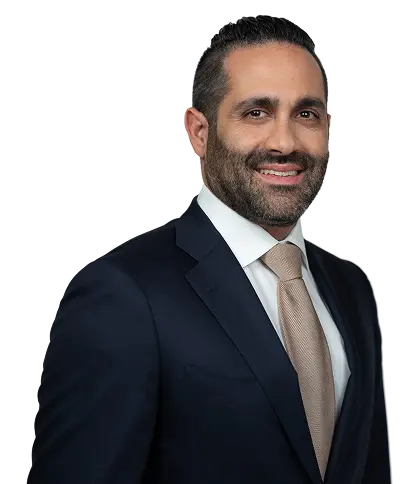
With Joseph Shirazi and Simon Esfandi at the helm, our firm is a trusted name in accident law in California.
Meet Our Managing Partners
National Top 100 Trial Lawyers and Avvo 10.0 Superb. Loyola Law School graduate. Recognized for his $14,500,000 truck accident verdict and a $13,000,000 trial verdict.
Read Full Bio →
Super Lawyers Rising Star. Southwestern Law School graduate. Led the firm’s $9,870,000 motorcycle accident settlement and a $2,250,000 rideshare recovery.
Read Full Bio →- ★ National Top 100 Trial Lawyers
- ★ Super Lawyers Rising Star
- ★ Avvo 10.0 Superb Rating
- ★ Top 40 Under 40
- ★ Consumer Attorneys of California · CAALA · AAJ

Countless Real Client Reviews Verified by Google


Jerry
After 10 accidents and 9 attorneys, the client met Simon, who stood out for his honesty and clear communication. Years later, after another accident, the client called Simon and was impressed by his professionalism and follow-through. Simon explained everything, connected him with top doctors, and kept every promise. It was the first time the client felt truly supported—highly recommending Simon and Joseph for their integrity and dedication.
Jacob
Jacob was rear-ended by a big rig and left nearly paralyzed for a year. He found Cooper Law Group, and Joseph and Simon personally helped him through the legal process. Over two years, they ensured he got the medical care and surgeries he needed, helped repair his car, and secured the compensation he deserved. He highly recommends them for truly fighting for their clients.
Blandine
During the early days of COVID, Blandine was hit by a car while biking to work. Alone and unsure of what to do, they found Compass Law Group. Joseph was the first to respond with care and clarity. Throughout the case, the team—Joseph, Simon, and Julie—provided support, regular check-ins, and made the client feel safe and cared for. They now consider the firm like family and highly recommend them for their compassion and competence.
Understanding Your Rights:
Frequently Asked
Questions
#1 Do I have a case?
Understanding whether a claim exists is one of the challenges of personal injury law. This is why we offer free initial consultations to help you make this determination and allow you an avenue to vindicate your rights.
We’re committed to fighting for the rights of accident victims throughout Southern California, and, unlike other California personal injury attorneys, we will take on any case if we can help, no matter how big or small.
#2 What is personal injury?
Personal injury involves harm to an individual’s body or property caused by someone else’s negligence. It can range from minor to significant injuries, often requiring legal action to recover damages. We specialize in representing and securing fair settlements for such victims.
#3 Why hire Compass Law Group?
Our client-focused approach ensures personalized attention, detailed case building, and compelling evidence presentation. We’re skilled in negotiating settlements and prepared for trial with aggressive strategies. Our firm maintains transparent communication, involves clients in the process, and utilizes a wide network of expert witnesses and resources to strengthen cases. Choosing us means trusting a team dedicated to your success and justice.
#4What if I didn't go to the hospital?
No matter the injury size, you have rights that need defending. Many injuries seem minor at first but can worsen over time. Ignoring treatment or legal advice risks your health and compensation. Seek immediate medical and legal help after any accident to ensure proper diagnosis and strengthen your compensation claim.