


Your Battle, Our Compass:
Los Angeles Workplace Sexual Abuse Attorney
If you experienced sexual abuse or assault in your Los Angeles workplace, our attorneys are here to help. Compass Law Group has extensive experience handling workplace sexual abuse cases throughout Los Angeles County and is committed to holding employers and perpetrators accountable. Call us today for a free, confidential consultation at (213) 320-1001.


California Civil Law and Nursing Home Sexual Abuse Claims in Sacramento County
Sacramento County nursing home residents who suffer sexual abuse have two powerful civil pathways. The Elder Abuse and Dependent Adult Civil Protection Act (Welfare & Institutions Code § 15610 et seq.) defines sexual abuse of a dependent adult as a form of elder abuse, triggering a heightened liability standard — claimants need only show recklessness, oppression, fraud, or malice rather than the ordinary negligence required in general personal injury cases. A successful EADACPA claim entitles survivors, or their families, to recover attorney’s fees, costs, and non-economic damages that survive the victim’s death under Code of Civil Procedure § 377.34 (as amended in 2022). Separately, AB 2777 opened a three-year revival window — running through January 1, 2026 — for adult sexual assault claims against entities, including nursing home operators, that engaged in a deliberate cover-up of the abuse. Sacramento County Superior Court handles these civil actions, and settlement data from 2022–2024 institutional sexual abuse cases in California shows median recoveries exceeding $500,000 when EADACPA enhanced remedies apply.Who Can Be Held Liable for Nursing Home Sexual Abuse in Sacramento?
In California, more than 1 in 10 nursing home residents report experiencing some form of abuse, with sexual abuse among the most underreported. Individual perpetrators — staff members, contracted caregivers, and other residents — bear direct personal liability for their acts. Under California Welfare & Institutions Code §15610.63, any unwanted sexual contact inflicted on an elder or dependent adult constitutes sexual abuse, triggering both criminal consequences and civil liability.
Sacramento nursing facilities and their corporate parent companies face institutional liability when abuse occurs on their premises. Under the doctrine of respondeat superior, an employer is legally responsible for the wrongful acts of employees committed within the scope of employment. When a certified nursing assistant (CNA), orderly, or other staff member employed by a Sacramento-area skilled nursing facility commits abuse during a shift, the facility itself can be held directly liable alongside the individual abuser.
Facilities bear independent liability for negligent hiring, supervision, and retention. A Sacramento nursing home that failed to conduct required background checks, ignored prior complaints, or retained an employee with a known history of misconduct faces punitive damages under Welfare & Institutions Code §15657 — available when abuse rises to recklessness, oppression, or malice toward a vulnerable resident.
- The individual abuser (staff member, CNA, orderly, nurse, or contractor)
- The Sacramento nursing home or skilled nursing facility (SNF)
- Corporate management companies and ownership groups overseeing the facility
- Third-party staffing agencies that placed the abuser without adequate vetting
- Administrators and supervisors who knew of abuse and failed to act
Frequently Asked Questions: Nursing Home Sexual Abuse Attorney Sacramento
What is the December 31, 2026 deadline for filing a Sacramento nursing home sexual abuse lawsuit under AB 2777?
AB 2777 (CCP §340.16) created a one-time revival window allowing adult sexual assault survivors whose claims had previously expired to file suit, but that window closes permanently on December 31, 2026. Sacramento survivors who were sexually abused in a nursing home as adults and previously missed the statute of limitations must file in Sacramento County Superior Court before that date or lose the right to sue forever. An attorney can evaluate whether your claim qualifies under this legislative revival even if the abuse occurred decades ago.
Who can be held liable for sexual abuse at a Sacramento County skilled nursing facility?
Under California’s Elder Abuse and Dependent Adult Civil Protection Act (W&I Code §15600 et seq.), multiple parties may share liability: the facility operator, the individual perpetrator, staffing agencies that placed unvetted workers, and corporate ownership entities. Title 22 of the California Code of Regulations imposes a heightened duty of care requiring background checks, supervision protocols, and immediate abuse reporting — violations of these regulations establish negligence per se. Even large national nursing home chains with Sacramento County facilities can be named as defendants in Sacramento County Superior Court.
What damages can a nursing home sexual abuse survivor recover in a Sacramento civil lawsuit?
California’s Elder Abuse Act (W&I Code §15657) authorizes enhanced remedies unavailable in standard negligence claims, including attorney’s fees, litigation costs, and punitive damages when recklessness or malice is proven. Compensatory damages typically include medical and psychological treatment costs, pain and suffering, and loss of dignity — and in wrongful death cases, survival damages under CCP §377.30. In 2024, California nursing home abuse verdicts averaged over $2.1 million when the heightened Elder Abuse Act standard was met.
How do I report suspected sexual abuse at a Sacramento County nursing home to state authorities?
Suspected sexual abuse should be reported simultaneously to the California Department of Public Health Licensing and Certification Division (1-800-554-0353), the Sacramento Long-Term Care Ombudsman (916-923-6669), and local law enforcement — either the Sacramento County Sheriff or Sacramento Police Department. Under Health and Safety Code §1418.8, nursing facility employees are mandatory reporters; failure to report is a criminal misdemeanor. Filing official reports creates a documented record that strengthens a subsequent civil lawsuit filed in Sacramento County Superior Court.
Can I file a civil lawsuit if the Sacramento District Attorney declined to criminally prosecute the nursing home abuser?
Yes — California law permits civil and criminal proceedings to proceed independently, and a prosecutor’s decision not to file charges does not bar a civil claim. The civil standard of proof is a preponderance of the evidence (more likely than not), far lower than the criminal standard of beyond a reasonable doubt, making civil recovery accessible even when criminal prosecution fails. Sacramento civil attorneys regularly obtain successful nursing home sexual abuse judgments and settlements in cases where the Sacramento County District Attorney declined to prosecute.
What is the difference between an Elder Abuse Act claim and a general negligence claim for nursing home sexual abuse in California?
A claim under California’s Elder Abuse and Dependent Adult Civil Protection Act (W&I Code §15600–15675) provides substantially stronger remedies than general negligence: it authorizes attorney’s fees, costs, and punitive damages when the defendant acted with recklessness, oppression, fraud, or malice. General negligence requires only proof of a duty and its breach, while an Elder Abuse Act claim requires showing the defendant’s conduct rose to the level of conscious disregard for the resident’s safety and rights. Sacramento courts have awarded punitive damages in nursing home cases where facilities concealed abuse or ignored repeated staff complaints.
How does California's AB 218 (CCP §340.1) apply to childhood sexual abuse that occurred in a Sacramento care facility?
Under AB 218, codified at CCP §340.1, survivors of childhood sexual abuse committed by an adult in an institutional setting — including licensed care facilities — may bring claims until age 40 or within 5 years of discovering the connection between their injuries and the abuse, whichever is later. Although AB 218’s one-time revival window (2020–2022) has closed, the extended prospective limitations period remains in effect for any survivor who has not yet reached age 40 or made the required discovery. Sacramento County Superior Court retains jurisdiction over these claims regardless of how long ago the abuse occurred, provided the survivor meets the statutory threshold.
What evidence is most critical in a Sacramento nursing home sexual abuse case?
Key evidence includes the facility’s internal incident reports, CDPH inspection records and past deficiency citations (publicly available through the California Health and Human Services data portal), staff personnel files and criminal background check records, and medical records documenting physical or psychological injuries. Under W&I Code §15633.5, Sacramento facilities must preserve records related to reported abuse — failure to do so supports a spoliation inference at trial. Surveillance footage and electronic access logs must be requested immediately, as many facilities overwrite recordings within 30 to 60 days.
Does California law require Sacramento nursing homes to report sexual abuse of residents to state regulators?
Yes — Health and Safety Code §1418.8 requires all nursing facility employees to report known or reasonably suspected sexual abuse to CDPH within 24 hours of discovery. Under Penal Code §11166, any care custodian — a statutory category that includes all nursing home staff — who fails to report suspected sexual abuse of a dependent adult faces criminal misdemeanor liability. Sacramento nursing homes that conceal abuse, fail to report, or retaliate against whistleblowers face additional civil liability under the Elder Abuse Act beyond the underlying abuse claim itself.
When does the general statute of limitations apply to Sacramento nursing home sexual abuse claims outside the AB 2777 revival window?
Outside the AB 2777 revival window, California’s standard limitations period for Elder Abuse Act claims involving nursing home sexual abuse is generally two years from the date of injury under CCP §335.1. However, under CCP §352, this period is tolled — paused — for the entire duration that a victim lacks the legal capacity to bring suit due to physical or mental disability, a provision critical for nursing home residents with dementia or cognitive impairment. An attorney should analyze whether tolling applies before concluding that a Sacramento nursing home claim is time-barred.
What Title 22 California Code of Regulations violations commonly support a nursing home sexual abuse lawsuit in Sacramento?
Title 22 CCR §72527 requires skilled nursing facilities to protect all residents from abuse and mandates adequate staffing to ensure resident safety, while §72329 requires criminal background checks on all employees prior to hiring. Section §72301 requires facilities to develop, implement, and document abuse prevention policies and provide staff training programs — failure to train is independently actionable. A Sacramento nursing home that ignored these requirements may be liable for negligence per se, meaning the regulatory violation itself establishes the breach-of-duty element without requiring additional proof of unreasonableness.
How is a nursing home sexual abuse lawsuit filed and processed in Sacramento County Superior Court?
A nursing home sexual abuse lawsuit is filed at the Gordon D. Schaber Sacramento County Courthouse, located at 720 9th Street, Sacramento, CA 95814, and is assigned to a civil department under the California Rules of Court and local Sacramento County rules. A Case Management Conference is required within 120 days of filing, where the court sets discovery deadlines and a trial schedule. Elderly or terminally ill plaintiffs in declining health may qualify for preferential trial setting under CCP §36, which can advance the trial date to within 120 days of the motion being granted — a vital option given the average age of nursing home sexual abuse survivors.
Can a family member file a nursing home sexual abuse lawsuit on behalf of a Sacramento resident who has dementia or lacks capacity?
Yes — under California Probate Code §4265 and W&I Code §15657.3, a person holding a valid Durable Power of Attorney may bring an Elder Abuse Act claim on behalf of an incapacitated nursing home resident, and a court-appointed conservator has the same authority. If no DPOA or conservatorship is in place, a family member may petition Sacramento County Superior Court’s Probate Division for emergency conservatorship to authorize the litigation. Upon the resident’s death, eligible heirs may pursue a wrongful death action under CCP §377.60 and a survival action under CCP §377.30.
Will a Sacramento nursing home sexual abuse case settle or go to trial, and what are typical outcomes?
Approximately 90 to 95 percent of Sacramento nursing home sexual abuse cases resolve through settlement, often after written discovery and depositions reveal internal facility records, staffing deficiencies, or prior unaddressed complaints of abuse. Settlement amounts in California nursing home sexual abuse cases typically range from $250,000 to over $3 million depending on severity of harm, strength of evidence, and the facility’s prior regulatory history with CDPH. Cases that proceed to trial in Sacramento County Superior Court often yield larger verdicts, particularly when punitive damages are sought under W&I Code §15657.
Does California's Elder Abuse Act allow punitive damages against Sacramento nursing home operators, and how are they calculated?
Yes — W&I Code §15657 expressly authorizes punitive damages against nursing home operators found to have committed elder abuse with recklessness, oppression, fraud, or malice, a lower threshold than the general punitive damages standard under Civil Code §3294. Civil Code §3294(b) permits courts to hold managing agents and officers personally liable for punitive damages when they authorized, ratified, or were responsible for the reckless conduct. Sacramento courts have upheld multi-million-dollar punitive awards against nursing home chains whose internal policies prioritized cost-cutting over resident safety, using financial disclosures to calculate awards proportionate to the defendant’s net worth.
How We Value a Nursing Home Sexual Abuse Case in Sacramento
California law entitles nursing home sexual abuse survivors in Sacramento County to multiple categories of financial recovery. Compensatory damages cover every quantifiable harm: emergency medical treatment, ongoing therapy with licensed trauma counselors, psychiatric care, and any wages lost while recovering or attending appointments. Studies show survivors of institutional sexual abuse require an average of two to five years of professional mental health treatment — costs that can reach $60,000 or more over that period. Our attorneys document each expense meticulously so nothing is left on the table.
Beyond economic losses, Sacramento courts recognize the profound non-economic harm abuse inflicts. Emotional distress, loss of dignity, anxiety, and PTSD are compensable injuries, and juries in Sacramento County have awarded substantial sums for these damages alone. When a nursing facility’s management or ownership knowingly concealed abuse or failed to act on documented complaints, California law authorizes punitive damages — designed specifically to punish institutional negligence and deter future misconduct.
Under AB 218 and AB 2777, California removed financial caps and extended recovery windows for survivors, meaning there is no arbitrary limit on what your case may be worth. At Compass Law Group, our attorneys have recovered more than $250 million for victims across California. Call (213) 320-1001 for a free, confidential case evaluation.
What to Do If You Are a Nursing Home Sexual Abuse Survivor in Sacramento
- Get to Safety First — If you or your loved one is still residing at the facility where the abuse occurred, request an immediate room or facility transfer through Sacramento County Adult Protective Services (APS) at (916) 874-9471. No survivor should remain in an environment where the abuser has continued access.
- Seek Medical Attention and Request a SART Exam — Go to UC Davis Medical Center or another Sacramento-area emergency room and ask for a Sexual Assault Response Team (SART) examination as soon as possible. Medical records documenting physical injuries are among the most critical pieces of evidence in a nursing home sexual abuse case.
- Document Everything You Can Remember — Write down dates, times, locations, the name of the alleged abuser, any witnesses, and anything the victim said immediately after the incident. In nursing home cases, contemporaneous notes carry significant weight because facility records are often incomplete or altered.
- Report the Abuse to Authorities — File a report with both Sacramento County APS and the California Department of Public Health (CDPH), which licenses and investigates nursing homes statewide. You may also file a complaint with the California Long-Term Care Ombudsman Program; these official reports create an independent record outside the facility’s control.
- Preserve All Evidence Before It Disappears — Request copies of the resident’s care plan, incident reports, medication logs, visitor logs, and any surveillance footage immediately — facilities are not required to retain footage indefinitely. An attorney can send a litigation hold letter to stop the destruction of records, which is why contacting legal counsel quickly is critical.
- Act Before the AB 2777 Revival Window Closes on December 31, 2026 — California’s AB 2777 opened a limited lookback window allowing survivors of institutional sexual abuse — including nursing home abuse — to file claims that would otherwise be time-barred. This window closes permanently on December 31, 2026; once it closes, many survivors lose the legal right to pursue compensation regardless of the severity of the abuse.
If you or a family member suffered sexual abuse in a Sacramento nursing home, call our attorneys today at (213) 320-1001 for a free, confidential consultation — we can help you understand your rights under AB 2777 and take immediate steps to preserve your claim before the deadline passes.
Do I have a case?
Contact us today for a free consultation.
California's
Gold Standard
Injury Law Firm
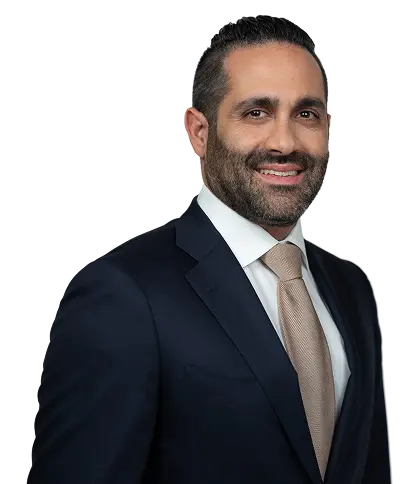
With Joseph Shirazi and Simon Esfandi at the helm, our firm is a trusted name in accident law in California.
Meet Our Managing Partners
National Top 100 Trial Lawyers and Avvo 10.0 Superb. Loyola Law School graduate. Recognized for his $14,500,000 truck accident verdict and a $13,000,000 trial verdict.
Read Full Bio →
Super Lawyers Rising Star. Southwestern Law School graduate. Led the firm’s $9,870,000 motorcycle accident settlement and a $2,250,000 rideshare recovery.
Read Full Bio →- ★ National Top 100 Trial Lawyers
- ★ Super Lawyers Rising Star
- ★ Avvo 10.0 Superb Rating
- ★ Top 40 Under 40
- ★ Consumer Attorneys of California · CAALA · AAJ

Countless Real Client Reviews Verified by Google


Jerry
After 10 accidents and 9 attorneys, the client met Simon, who stood out for his honesty and clear communication. Years later, after another accident, the client called Simon and was impressed by his professionalism and follow-through. Simon explained everything, connected him with top doctors, and kept every promise. It was the first time the client felt truly supported—highly recommending Simon and Joseph for their integrity and dedication.
Jacob
Jacob was rear-ended by a big rig and left nearly paralyzed for a year. He found Cooper Law Group, and Joseph and Simon personally helped him through the legal process. Over two years, they ensured he got the medical care and surgeries he needed, helped repair his car, and secured the compensation he deserved. He highly recommends them for truly fighting for their clients.
Blandine
During the early days of COVID, Blandine was hit by a car while biking to work. Alone and unsure of what to do, they found Compass Law Group. Joseph was the first to respond with care and clarity. Throughout the case, the team—Joseph, Simon, and Julie—provided support, regular check-ins, and made the client feel safe and cared for. They now consider the firm like family and highly recommend them for their compassion and competence.
Understanding Your Rights:
Frequently Asked
Questions
#1 Do I have a case?
Understanding whether a claim exists is one of the challenges of personal injury law. This is why we offer free initial consultations to help you make this determination and allow you an avenue to vindicate your rights.
We’re committed to fighting for the rights of accident victims throughout Southern California, and, unlike other California personal injury attorneys, we will take on any case if we can help, no matter how big or small.
#2 What is personal injury?
Personal injury involves harm to an individual’s body or property caused by someone else’s negligence. It can range from minor to significant injuries, often requiring legal action to recover damages. We specialize in representing and securing fair settlements for such victims.
#3 Why hire Compass Law Group?
Our client-focused approach ensures personalized attention, detailed case building, and compelling evidence presentation. We’re skilled in negotiating settlements and prepared for trial with aggressive strategies. Our firm maintains transparent communication, involves clients in the process, and utilizes a wide network of expert witnesses and resources to strengthen cases. Choosing us means trusting a team dedicated to your success and justice.
#4What if I didn't go to the hospital?
No matter the injury size, you have rights that need defending. Many injuries seem minor at first but can worsen over time. Ignoring treatment or legal advice risks your health and compensation. Seek immediate medical and legal help after any accident to ensure proper diagnosis and strengthen your compensation claim.