


Your Battle, Our Compass:

Los Angeles Workplace Sexual Abuse Attorney

If you experienced sexual abuse or assault in your Los Angeles workplace, our attorneys are here to help. Compass Law Group has extensive experience handling workplace sexual abuse cases throughout Los Angeles County and is committed to holding employers and perpetrators accountable. Call us today for a free, confidential consultation at (213) 320-1001.

TL;DR — Rideshare Sexual Abuse Attorney SacramentoA sacramento rideshare sexual abuse attorney can pursue civil claims against Uber, Lyft, or another platform for negligent driver screening and retention — separate from and in addition to any criminal case. California’s AB 2777 (the Sexual Abuse and Cover Up Accountability Act) extended the window for survivors to bring civil claims against entities that concealed abuse, and AB 218 revived time-barred childhood sexual assault claims through January 1, 2026. If you were assaulted in a rideshare vehicle anywhere in Sacramento or Sacramento County, call (213) 320-1001 for a free, confidential consultation.

Rideshare Sexual Abuse Civil Law in Sacramento and Sacramento County

Under California Civil Code § 1708.5 and Government Code § 12940, survivors of sexual assault in a rideshare vehicle have the right to sue the transportation network company (TNC) — not just the driver — for negligent hiring, inadequate background checks, and failure to warn passengers of known risks. Uber’s own 2022 U.S. Safety Report documented 3,824 reports of serious sexual assault across its platform in a two-year period, establishing a documented pattern courts have found relevant to corporate liability arguments. In Sacramento County Superior Court, plaintiffs have pursued both negligence and premises-liability theories against TNCs, treating the vehicle as an environment the company controlled and profited from. California’s AB 2777 created an additional pathway for survivors whose claims were previously blocked by the standard two-year personal-injury statute of limitations, provided the defendant entity engaged in a cover-up. An experienced attorney can evaluate which statutes apply to your specific incident date and circumstances.
★★★★★
5.0 / 5
195 Google Reviews  ·  Read Reviews ↗

Who Can Be Held Liable for Rideshare Sexual Abuse in Sacramento?

Multiple parties may bear civil liability when a rideshare passenger is sexually abused in Sacramento County. The driver who commits the assault faces direct personal liability for battery and sexual assault under California law. Beyond the individual perpetrator, rideshare corporations—including Uber and Lyft, which operate across Sacramento’s downtown Entertainment District, Sacramento International Airport (SMF), and surrounding communities—can be held institutionally liable when their own negligence contributed to the attack.

California law recognizes two primary theories for pursuing corporate accountability. Under respondeat superior, employers are vicariously liable for employees’ wrongful acts committed within the scope of employment; Uber and Lyft routinely classify drivers as independent contractors to limit this exposure, but courts have scrutinized that classification in sexual abuse cases. A stronger avenue is often negligent hiring, retention, and supervision: rideshare platforms owe passengers a duty to screen applicants, investigate misconduct complaints, and remove dangerous drivers. Failure to conduct adequate background checks or to act on prior abuse reports creates direct negligence liability. Survivors whose abuse began in childhood may invoke California Code of Civil Procedure §340.1, which extends the civil filing deadline to age 40—or five years from discovery of the abuse’s psychological harm.

  • The rideshare driver who committed the sexual assault
  • Uber Technologies, Inc. or Lyft, Inc. (negligent hiring, screening, or retention of the driver)
  • Third-party fleet operators or vehicle owners whose cars were used during the attack
  • Rideshare platform subsidiaries managing driver onboarding for the Sacramento region
  • Venue operators—such as hotels, nightclubs, or event venues in downtown Sacramento—that arranged pickups while ignoring known risk factors
Call Compass Law Group — Free Consultation for School Sexual Abuse Survivors

Frequently Asked Questions: Rideshare Sexual Abuse Attorney Sacramento

California’s AB 2777 opened a three-year revival window on January 1, 2023, allowing survivors to file sexual assault civil claims that were previously time-barred, with a hard deadline of December 31, 2026. This window applies regardless of when the assault occurred, meaning Sacramento survivors of Uber or Lyft driver assaults from years ago may still have an actionable claim if they file before that date. After December 31, 2026, this revival window permanently closes and previously time-barred claims will no longer be eligible.

Yes — under California negligence law, Uber and Lyft can be held liable for negligent hiring, negligent retention, and negligent supervision when their drivers commit sexual assault. Both companies have been the subject of mass tort litigation, and Uber’s own safety report disclosed over 3,000 sexual assaults across the U.S. in 2019-2020 alone, establishing their awareness of the systemic risk. Sacramento victims can bring claims in Sacramento County Superior Court at 720 9th Street, alleging the company failed to adequately screen or monitor its drivers.

California Code of Civil Procedure §340.1, as amended by AB 218 in 2019, gives adult survivors of childhood sexual abuse until age 40, or within five years of discovering psychological injury caused by the abuse, to file a civil lawsuit. If you were a minor when assaulted by a rideshare driver in Sacramento County, this extended statute of limitations may apply to your claim. The same legislation also created revival provisions allowing previously time-barred childhood abuse claims to be filed, which interact with the AB 2777 window for other adult survivor claims.

Civil lawsuits arising from rideshare sexual assaults in Sacramento County are filed in the Sacramento County Superior Court, located at 720 9th Street, Sacramento, CA 95814. Depending on the damages sought, the case may proceed in the court’s Unlimited Civil division if damages exceed $35,000, which is typical in sexual assault cases. Federal court may also be an option if the parties are from different states, as many Uber and Lyft corporate entities are incorporated in Delaware with principal offices in San Francisco.

The California Public Utilities Commission (CPUC) regulates Transportation Network Companies (TNCs) like Uber and Lyft under CPUC Decision D.13-09-045 and its subsequent amendments, requiring driver background checks, safety protocols, and insurance minimums. A violation of CPUC-mandated safety requirements can constitute negligence per se under California law, strengthening a civil claim by establishing that the rideshare company breached a legally imposed duty. CPUC records and TNC compliance filings are discoverable in Sacramento civil litigation and can help establish a pattern of inadequate driver oversight.

Under California Public Utilities Code §5433 and CPUC regulations, rideshare companies must maintain at least $1 million in commercial liability coverage per incident while a driver is transporting a passenger or en route to pick one up. This $1 million policy is separate from the driver’s personal insurance and applies from the moment a ride is accepted until the passenger exits the vehicle. If the assault occurred during an active ride or during the en-route period, this commercial coverage is the primary source of compensation, giving Sacramento victims access to substantially higher policy limits than a standard auto claim.

California Civil Code §1708.5 defines sexual battery as an intentional, harmful or offensive contact with an intimate part of another person committed without consent. In a civil rideshare case, a Sacramento plaintiff must prove the driver made such contact, that it was nonconsensual, and that it caused harm — a lower burden of proof than the criminal standard of beyond reasonable doubt. Unlike a criminal prosecution handled by the Sacramento County District Attorney, the civil action under §1708.5 allows the survivor to recover compensatory and punitive damages directly from both the driver and the rideshare company.

Yes — a criminal complaint filed with the Sacramento Police Department or the Sacramento County District Attorney’s Office and a civil lawsuit under California Civil Code §1708.5 are completely independent proceedings that can run simultaneously. A criminal conviction is not required to win a civil case, and in fact a civil case can proceed even if criminal charges are never filed or result in acquittal, because the civil burden of proof is preponderance of the evidence rather than beyond a reasonable doubt. Evidence gathered during a criminal investigation, including law enforcement reports and recorded statements, may also be obtained through civil discovery to support your Sacramento civil claim.

Under California law, a rideshare sexual assault survivor in Sacramento can recover economic damages including medical expenses, therapy costs, lost wages, and future earning capacity, as well as non-economic damages for pain and suffering, emotional distress, and loss of enjoyment of life. Punitive damages are also available under California Civil Code §3294 when a defendant’s conduct is found to constitute oppression, fraud, or malice — a standard that courts have applied where rideshare companies ignored known assault risks. Given Uber and Lyft’s documented awareness of systemic driver assault patterns, punitive damages claims have succeeded in similar California cases, sometimes resulting in multimillion-dollar jury awards.

Yes — under California negligent hiring doctrine, Uber or Lyft can be held liable if their background screening failed to identify a driver’s prior criminal history, particularly sex offense convictions, that would have prevented the driver from being approved. CPUC rules require TNCs to conduct background checks through accredited agencies, and failure to comply with those requirements can establish negligence per se in Sacramento civil proceedings. Additionally, if a driver had prior assault complaints reported through the app and the company retained the driver anyway, that constitutes negligent retention — a separate theory of liability that has been successfully argued in California rideshare cases.

California courts and federal circuit courts have increasingly scrutinized rideshare arbitration clauses in sexual assault cases, and California Code of Civil Procedure §1281.98 provides that arbitration agreements are unenforceable if the company fails to pay required arbitration fees on time. Furthermore, the federal Ending Forced Arbitration of Sexual Assault and Sexual Harassment Act (EFAA), effective March 3, 2022, allows survivors to invalidate pre-dispute arbitration agreements in sexual harassment and assault claims, giving Sacramento victims the right to litigate in Sacramento County Superior Court regardless of what the app’s terms of service state.

AB 2777, codified at California Code of Civil Procedure §340.16, created a revival window opening January 1, 2023 and closing December 31, 2026 for adult sexual assault claims that were barred solely by the statute of limitations. This means a Sacramento survivor assaulted by a rideshare driver in 2015, 2017, or any prior year may file a new civil lawsuit before December 31, 2026, even if the standard three-year limitations period under CCP §335.1 had already expired. The revival window applies to both the individual driver and the corporate rideshare entity, making it essential for Sacramento survivors with older claims to consult an attorney immediately given the approaching deadline.

Survivors should preserve all digital evidence including the ride receipt, the driver’s name and photo from the app, GPS trip data, and any in-app communications, as this data can be deleted or overwritten without a litigation hold demand sent to Uber or Lyft. A sexual assault forensic exam (SAFE exam) conducted at UC Davis Medical Center or another Sacramento County-approved facility can collect physical evidence that may be critical to both criminal and civil proceedings. Screenshots of the driver’s profile, any post-ride communications, and records of reports made to Uber or Lyft’s support system should also be saved immediately, as these documents establish notice to the company and are vital to proving a negligence claim.

California’s insurance regulations create three distinct coverage periods for TNC drivers: Period 1 (app on, no ride accepted) requires minimum $50,000 per person in liability coverage; Period 2 (ride accepted, en route to passenger) and Period 3 (passenger in vehicle) require $1 million in coverage under CPUC regulations. If a Sacramento assault occurred during Period 1, the available insurance coverage is lower, but a civil negligence claim against Uber or Lyft can still be pursued based on negligent hiring and supervision theories that are not limited by insurance period. An attorney experienced in California TNC law can analyze the driver’s app status at the time of the incident using records obtained through discovery from Uber or Lyft’s internal systems.

Yes — California AB 1182 (2021) required Uber and Lyft to submit annual safety reports to the CPUC disclosing the number and categories of sexual assault incidents reported on their platforms, and CPUC General Order 157-E imposes ongoing data reporting obligations. Failure to accurately report Sacramento-area incidents or to maintain records as required by CPUC regulations can expose the companies to regulatory sanctions and can be used as evidence of concealment in a civil lawsuit. Additionally, under California Penal Code §11166, certain licensed professionals who learn of sexual assaults against minors through rideshare incidents are mandated reporters, and a Sacramento survivor may request CPUC safety reports through public records requests to support their civil case.

Rideshare Sexual Abuse — Sacramento — image 1
Los Angeles school hallway — school sexual abuse attorney

How We Value a Rideshare Sexual Abuse Case in Sacramento

Rideshare sexual abuse survivors in Sacramento and throughout Sacramento County are entitled to full compensatory damages for every documented harm. Our attorneys calculate economic losses precisely: emergency medical care, ongoing therapy and psychiatric treatment, prescription costs, and lost wages or diminished earning capacity caused by trauma. California courts have awarded survivors substantial compensation — Compass Law Group has recovered more than $250 million for abuse and assault victims statewide, including cases arising from rideshare incidents across Sacramento County.

California law also recognizes extensive non-economic damages for emotional distress, PTSD, anxiety, and the lasting disruption to relationships and daily life that sexual assault inflicts. Where institutional negligence played a role — such as Uber’s or Lyft’s failure to conduct adequate background checks or act on prior complaints — Sacramento County courts have entered seven-figure pain and suffering awards. That same corporate recklessness can support punitive damages specifically designed to hold these companies financially accountable for enabling repeated harm.

Under California’s AB 218 and AB 2777, many survivors face no statutory damages cap and gain access to extended lookback windows to pursue claims. To understand what your case may be worth, call Compass Law Group at (213) 320-1001 for a free, confidential consultation.

Rideshare Sexual Abuse — Sacramento — image 2
Los Angeles school building exterior — school sexual abuse lawsuit

What to Do If You Are a Rideshare Sexual Abuse Survivor in Sacramento

  1. Get to Safety First — If you are still in a rideshare vehicle, exit immediately at a populated location such as a gas station, restaurant, or any public place in Sacramento. Call a trusted person or 911 if you feel you are in immediate danger.
  2. Seek Medical Care and Preserve Physical Evidence — Go to a Sacramento-area emergency room or sexual assault response center as soon as possible — do not shower, change clothes, or clean up beforehand. A forensic nurse examiner can collect and preserve critical physical evidence that may support your legal claim against Uber, Lyft, or another rideshare company.
  3. Document Everything About the Trip — Screenshot your rideshare app showing the driver’s name, photo, vehicle information, route map, and trip timestamp before the record disappears. Also save any text messages, emails, or in-app communications related to the trip.
  4. Report to Law Enforcement and the Rideshare Company — File a report with the Sacramento Police Department or Sacramento County Sheriff’s Office; a police report creates an official record and may trigger Uber’s or Lyft’s internal safety investigation. You are not required to report in order to pursue a civil claim, but documentation strengthens your case.
  5. Contact a Sacramento Rideshare Sexual Abuse Attorney — Rideshare sexual abuse cases involve complex insurance layers, corporate liability, and strict evidence-preservation timelines — an experienced attorney can send litigation hold letters to Uber or Lyft immediately to prevent destruction of GPS data, driver background check records, and complaint histories.
  6. Act Before the AB 2777 Revival Window Closes — December 31, 2026 — California’s AB 2777 opened a limited look-back window allowing survivors to revive previously time-barred sexual assault civil claims, but this window closes permanently on December 31, 2026. If your incident occurred years ago and you believed you had run out of time, you may still have a viable case — but only if you act now.

If you or someone you love was sexually abused during a rideshare trip in Sacramento, call our firm today at (213) 320-1001 for a free, confidential consultation — our attorneys will review your case, explain your rights under AB 2777, and fight to hold Uber, Lyft, and negligent drivers fully accountable.

Call Compass Law Group — Free Consultation for School Sexual Abuse Survivors
COMPASS LAW GROUP — LOS ANGELES OFFICE

Do I have a case?

Contact us today for a free consultation.

This field is for validation purposes and should be left unchanged.

California's
Gold Standard
Injury Law Firm

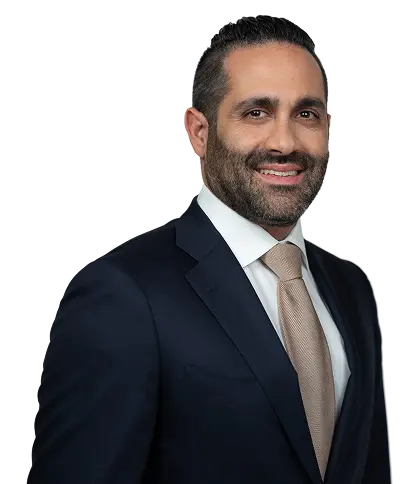
With Joseph Shirazi and Simon Esfandi at the helm, our firm is a trusted name in accident law in California.

Meet Our Managing Partners

Joseph Shirazi
Managing Partner · CA Bar #265403

National Top 100 Trial Lawyers and Avvo 10.0 Superb. Loyola Law School graduate. Recognized for his $14,500,000 truck accident verdict and a $13,000,000 trial verdict.

Read Full Bio →
Simon Esfandi — Managing Partner
Simon Esfandi
Managing Partner · CA Bar #275307

Super Lawyers Rising Star. Southwestern Law School graduate. Led the firm’s $9,870,000 motorcycle accident settlement and a $2,250,000 rideshare recovery.

Read Full Bio →
Firm Recognition
  • ★ National Top 100 Trial Lawyers
  • ★ Super Lawyers Rising Star
  • ★ Avvo 10.0 Superb Rating
  • ★ Top 40 Under 40
  • ★ Consumer Attorneys of California · CAALA · AAJ

Total Recovered for Clients
$250,000,000+
$14.5M truck verdict · $13M trial verdict · $9.87M motorcycle · $5M car accident
Past results do not guarantee future outcomes. Every case is unique.
Client Rating
★★★★★ 5.0
193+ verified Google reviews · No win, no fee

Countless Real Client Reviews Verified by Google

Jerry

After 10 accidents and 9 attorneys, the client met Simon, who stood out for his honesty and clear communication. Years later, after another accident, the client called Simon and was impressed by his professionalism and follow-through. Simon explained everything, connected him with top doctors, and kept every promise. It was the first time the client felt truly supported—highly recommending Simon and Joseph for their integrity and dedication.

Jacob

Jacob was rear-ended by a big rig and left nearly paralyzed for a year. He found Cooper Law Group, and Joseph and Simon personally helped him through the legal process. Over two years, they ensured he got the medical care and surgeries he needed, helped repair his car, and secured the compensation he deserved. He highly recommends them for truly fighting for their clients.

Blandine

During the early days of COVID, Blandine was hit by a car while biking to work. Alone and unsure of what to do, they found Compass Law Group. Joseph was the first to respond with care and clarity. Throughout the case, the team—Joseph, Simon, and Julie—provided support, regular check-ins, and made the client feel safe and cared for. They now consider the firm like family and highly recommend them for their compassion and competence.

Understanding Your Rights:

Frequently Asked
Questions

Understanding whether a claim exists is one of the challenges of personal injury law. This is why we offer free initial consultations to help you make this determination and allow you an avenue to vindicate your rights.

We’re committed to fighting for the rights of accident victims throughout Southern California, and, unlike other California personal injury attorneys, we will take on any case if we can help, no matter how big or small.

Personal injury involves harm to an individual’s body or property caused by someone else’s negligence. It can range from minor to significant injuries, often requiring legal action to recover damages. We specialize in representing and securing fair settlements for such victims.

Our client-focused approach ensures personalized attention, detailed case building, and compelling evidence presentation. We’re skilled in negotiating settlements and prepared for trial with aggressive strategies. Our firm maintains transparent communication, involves clients in the process, and utilizes a wide network of expert witnesses and resources to strengthen cases. Choosing us means trusting a team dedicated to your success and justice.

No matter the injury size, you have rights that need defending. Many injuries seem minor at first but can worsen over time. Ignoring treatment or legal advice risks your health and compensation. Seek immediate medical and legal help after any accident to ensure proper diagnosis and strengthen your compensation claim.