



Your Battle, Our Compass:
Los Angeles Workplace Sexual Abuse Attorney
If you experienced sexual abuse or assault in your Los Angeles workplace, our attorneys are here to help. Compass Law Group has extensive experience handling workplace sexual abuse cases throughout Los Angeles County and is committed to holding employers and perpetrators accountable. Call us today for a free, confidential consultation at (213) 320-1001.


College and Campus Sexual Abuse Civil Law in San Francisco and San Francisco County
San Francisco is home to several major colleges and universities — including San Francisco State University, the University of San Francisco, City College of San Francisco, and UCSF — all of which carry legal duties under California law and federal Title IX to prevent, investigate, and respond to sexual misconduct. When an institution fails in those duties, civil liability can attach under theories of negligent hiring, negligent supervision, and direct institutional negligence. California Education Code Section 67386 imposes affirmative obligations on campuses to adopt sexual violence prevention policies. Under the federal Clery Act, schools must disclose campus crime statistics and maintain transparent reporting procedures. Survivors filing civil suits in San Francisco County Superior Court can seek compensatory damages for medical expenses, lost earnings, pain and suffering, and emotional distress — with California’s two-year personal injury statute of limitations governing most new adult claims (Code of Civil Procedure § 335.1).
Who Can Be Held Liable for College/Campus Sexual Abuse in San Francisco?
California law allows survivors to pursue civil claims against both the individual perpetrator and the institution that enabled the abuse. Under California Code of Civil Procedure §340.1, survivors of campus sexual assault may file civil claims independently of any criminal proceedings. San Francisco-area colleges and universities—including San Francisco State University, the University of San Francisco, City College of San Francisco, and the Academy of Art University—face direct institutional liability when administrators had prior notice of misconduct and failed to act to protect students.
Two legal theories most commonly establish institutional responsibility. Respondeat superior holds a college liable when a professor, coach, resident advisor, or other employee commits abuse within the scope of their employment relationship. Negligent hiring and retention applies when the school knew—or should have known through reasonable background checks—that a staff member posed a sexual danger and continued to employ them regardless. Beyond the school itself, fraternity and sorority organizations and their national governing bodies may also bear liability when chapter leadership ignored known patterns of predatory conduct.
- The individual perpetrator (professor, coach, administrator, or fellow student)
- The college or university, for negligent supervision, failure to investigate, or Title IX violations
- Fraternity and sorority organizations and their national governing chapters
- Athletic departments and coaching staff who concealed or failed to report misconduct
- Third-party housing or campus service contractors whose employees committed abuse on or adjacent to campus
Frequently Asked Questions: College/Campus Sexual Abuse Attorney San Francisco
What is the December 31, 2026 deadline for San Francisco campus sexual abuse survivors to file a civil lawsuit?
Under California’s AB 2777 (the SILENCE Act, codified at CCP §340.1), adult survivors of sexual assault that occurred on or after January 1, 2009 may revive previously time-barred civil claims against institutions — including San Francisco colleges and universities — through December 31, 2026. This deadline was extended from the original 2023 cutoff by SB 1299 (2023). Survivors who have not yet filed must act before this window permanently closes, as no further extensions are currently authorized under California law.
Can I sue San Francisco State University or the University of San Francisco for campus sexual abuse under California law?
Yes. Both public institutions like San Francisco State University (part of the CSU system) and private institutions like the University of San Francisco can be sued for campus sexual abuse under CCP §340.1 and California negligence law. Public institutions such as SFSU are subject to the California Government Claims Act, which requires filing a government tort claim within six months of the incident — or the discovery of institutional negligence — before initiating a lawsuit in San Francisco Superior Court. Private institutions have no such pre-suit claim requirement, making the procedural path to court more direct.
How does AB 218 (CCP §340.1) protect survivors of childhood sexual abuse that occurred on a San Francisco college campus?
AB 218, signed in 2019 and codified under California Code of Civil Procedure §340.1, extended the statute of limitations for childhood sexual abuse — abuse occurring before age 18 — to age 40 or five years from the date the survivor discovers the psychological injury caused by the abuse, whichever is later. AB 218 also opened a three-year institutional revival window from January 1, 2020 through December 31, 2022 for previously expired childhood claims. San Francisco campus survivors abused as minors — including students in dual enrollment programs or summer courses at SFSU, UCSF, or City College of San Francisco — may still fall within the extended limitations period if they have not yet reached age 40.
Who can be held liable for campus sexual abuse at San Francisco colleges and universities?
Liability in San Francisco campus sexual abuse cases can extend beyond the individual perpetrator to the institution itself — including the Board of Trustees of the California State University (for SFSU), the Regents of the University of California (for UCSF), or the governing boards of private institutions like the University of San Francisco and Golden Gate University. Under California law, institutions may be held liable for negligent hiring, negligent supervision, failure to report under the Clery Act, and deliberate indifference to known sexual misconduct. In some cases, third-party student housing operators, Greek-letter organizations, or affiliated nonprofit entities may also be named as defendants in San Francisco Superior Court.
What damages can I recover in a San Francisco campus sexual abuse civil lawsuit?
California law allows campus sexual abuse survivors to recover both economic and non-economic damages in civil litigation filed in San Francisco Superior Court. Economic damages include past and future medical expenses, therapy costs, lost earnings, and educational disruption losses — courts have recognized substantial damages for derailed academic and professional trajectories. Non-economic damages for pain and suffering, emotional distress, and loss of enjoyment of life are uncapped in California sexual abuse cases, and punitive damages may be available where the institution acted with fraud, oppression, or malice — such as concealing a known predatory employee from students or accreditation authorities.
How does Title IX relate to a California civil lawsuit for campus sexual abuse at a San Francisco university?
Title IX of the Education Amendments of 1972 prohibits sex discrimination — including sexual harassment and assault — at any educational institution receiving federal funding, which includes SFSU, UCSF, City College of San Francisco, and most private San Francisco universities. A Title IX administrative complaint filed with the U.S. Department of Education’s Office for Civil Rights must be submitted within 180 days of the last discriminatory act, but filing administratively does not toll or replace California’s civil statute of limitations under CCP §340.1. California civil lawsuits under state negligence law and AB 2777 are separate proceedings and typically provide more powerful remedies — including uncapped non-economic damages — than federal Title IX administrative channels.
Can I file a campus sexual abuse lawsuit in California even if the abuser was never criminally charged or convicted?
Yes. A California civil lawsuit for campus sexual abuse is entirely independent of any criminal prosecution, and the burden of proof in civil court is the lower ‘preponderance of the evidence’ standard rather than the criminal ‘beyond a reasonable doubt’ standard. The San Francisco District Attorney’s decision not to prosecute, a criminal acquittal, or the expiration of criminal statutes of limitations have no bearing on your right to pursue civil claims under CCP §340.1. Many survivors have obtained substantial civil judgments against both individual perpetrators and San Francisco institutions even when no criminal charges were filed.
Does the AB 2777 revival window cover sexual abuse committed by a professor, coach, or staff member at a San Francisco college?
Yes. The AB 2777 revival window under CCP §340.1 applies to adult sexual assault claims against both the individual perpetrator and any institution whose negligent or wrongful conduct was a legal cause of the abuse — expressly including professors, coaches, teaching assistants, resident advisors, and administrative staff at San Francisco colleges and universities. To qualify, the assault must have occurred on or after January 1, 2009, and the perpetrator must have been an adult at the time. Institutional liability may attach where officials had prior notice of the perpetrator’s conduct, failed to implement adequate reporting policies under Title IX, or violated the Clery Act’s mandatory disclosure requirements.
What is the difference between AB 218 and AB 2777 for San Francisco campus sexual abuse survivors?
AB 218 (CCP §340.1) governs childhood sexual abuse claims — abuse that occurred when the survivor was under 18 years old — extending the limitations period to age 40 or five years from discovery, with an institutional revival window that closed December 31, 2022. AB 2777 (the SILENCE Act, also codified at CCP §340.1) governs adult sexual assault claims — where the survivor was 18 or older at the time — and creates a revival window through December 31, 2026 for conduct occurring on or after January 1, 2009. San Francisco campus survivors must identify which statute applies based on their age at the time of the abuse, as the applicable deadlines and eligibility requirements differ significantly.
When must a government tort claim be filed before suing a public San Francisco university for campus sexual abuse?
Before filing a civil lawsuit against a public California university — such as San Francisco State University (CSU system) or City College of San Francisco (San Francisco Community College District) — survivors must first file a government tort claim with the relevant public entity under the California Government Claims Act (Government Code §905 et seq.). Under Government Code §945.6, a civil lawsuit must generally be filed within six months of the rejection of the tort claim. Survivors should consult a sexual abuse attorney immediately given the interaction between the Government Claims Act requirements and the AB 2777 revival window deadline of December 31, 2026, as completing both the pre-claim process and case preparation typically requires six to twelve months.
How does the Clery Act strengthen a campus sexual abuse lawsuit against a San Francisco college or university?
The Clery Act (20 U.S.C. §1092(f)) requires colleges and universities receiving federal Title IV funding to disclose annual campus crime statistics and maintain transparent security policies — obligations applicable to SFSU, UCSF, USF, and City College of San Francisco. Violations of the Clery Act, including failure to report known sexual assaults, failure to issue timely emergency warnings, or deliberate misclassification of incidents, can be introduced as evidence of institutional negligence in California civil litigation. Clery Act annual security reports are public records, and discrepancies between reported statistics and internal incident records have been used effectively in San Francisco Superior Court to establish that institutions had constructive notice of systemic abuse.
Will a San Francisco campus sexual abuse lawsuit be filed in California state court or federal court?
Most California campus sexual abuse lawsuits are filed in San Francisco Superior Court under state law claims — including negligence, negligent supervision, and CCP §340.1 — which typically provide broader remedies than federal causes of action alone. Federal court is an option where Title IX claims are brought directly against the institution, but Title IX requires proof of the institution’s ‘deliberate indifference’ to known sexual harassment — a significantly higher threshold than California’s negligence standard. Attorneys handling San Francisco campus sexual abuse cases generally prefer California state court because it offers uncapped non-economic damages, punitive damages, and access to the favorable AB 2777 revival provisions unavailable under federal law.
How can a San Francisco campus sexual abuse attorney build a negligence case against a university before the December 31, 2026 deadline?
Building a negligence case against a San Francisco university requires documenting the institution’s prior notice of the perpetrator’s conduct — through Title IX complaint records, prior victim reports, employee personnel files, campus police reports, and Clery Act disclosures — and establishing the causal link between institutional failure and the survivor’s harm. Attorneys issue pre-litigation litigation holds and serve California Public Records Act requests to preserve institutional records before statutory retention periods expire. Given the December 31, 2026 deadline under AB 2777, survivors should retain counsel immediately, as investigation, government tort claim preparation (where required for public institutions), and case development typically require six to twelve months before a complaint can be filed in San Francisco Superior Court.
Does California's mandatory reporting law apply to sexual abuse at San Francisco colleges and universities?
Yes. California Penal Code §11165.7 designates certain university employees — including teachers, coaches, counselors, athletic trainers, and administrators at San Francisco colleges — as mandated reporters of known or suspected child abuse and neglect. For adult survivors, California Penal Code §11160 requires healthcare providers and others to report injuries resulting from assaults to law enforcement. Failure by university employees to report known sexual abuse as required by California law can constitute evidence of negligence per se in a civil lawsuit under CCP §340.1, significantly strengthening institutional liability claims where mandatory reporters remained silent despite knowledge of ongoing abuse.
What should I do immediately to protect my legal rights as a San Francisco campus sexual abuse survivor before the December 31, 2026 deadline?
Survivors should consult a California campus sexual abuse attorney as soon as possible to determine eligibility under AB 2777 (adult claims, CCP §340.1, deadline December 31, 2026) or AB 218 (childhood claims), since identifying the applicable revival window and satisfying any government tort claim prerequisites must occur before a lawsuit can be filed. Preserve all written communications with the institution, retain copies of any reports made to campus Title IX coordinators, campus police, or Dean of Students offices, and document medical or counseling records. For claims against public San Francisco institutions — SFSU, UCSF, or City College of San Francisco — early attorney involvement is especially critical because government tort claims must be filed and resolved before suit can be initiated in San Francisco Superior Court.
How We Value a College/Campus Sexual Abuse Case in San Francisco
Sexual abuse survivors at San Francisco colleges and universities are entitled to significant financial recovery — and under California law, the compensation available is broader than most victims realize. Compass Law Group has recovered more than $250 million for abuse survivors across California, and our attorneys apply that same depth of experience to every campus sexual abuse case we handle in San Francisco County. Compensation begins with economic damages: the documented, measurable costs abuse inflicts on your life. These include current and future psychotherapy and counseling expenses, psychiatric care, emergency medical treatment, hospitalizations, and prescription costs. If the trauma caused you to miss semesters, withdraw from your program, or lose employment, we calculate lost tuition, lost wages, and diminished earning capacity as part of your claim. Economic damages in California campus sexual abuse cases regularly reach six to seven figures when ongoing therapy, career disruption, and long-term medical needs are fully documented. Our attorneys work with medical experts, vocational specialists, and forensic accountants to ensure nothing is left on the table.
Beyond economic losses, California law recognizes that the harm suffered by sexual abuse survivors extends far deeper than any bill or pay stub can capture. Non-economic damages — including pain and suffering, emotional distress, loss of enjoyment of life, shame, humiliation, and the lasting psychological trauma of campus sexual abuse — are compensable in full. When the responsible party is a San Francisco institution such as a university, college, or associated organization, courts may also award punitive damages. Under California Civil Code Section 3294, punitive damages are available when a defendant’s conduct is found to be malicious, fraudulent, or oppressive — and institutional cover-ups of known abusers frequently meet that standard. San Francisco County juries have demonstrated willingness to hold large educational institutions accountable with substantial punitive verdicts when evidence shows administrators concealed abuse or failed to act on complaints.
California’s landmark AB 218 and AB 2777 eliminated traditional statutes of limitations for many sexual abuse claims, opening a path to recovery for survivors regardless of when the abuse occurred. These laws specifically apply to claims against institutions — meaning San Francisco colleges and universities that enabled, concealed, or failed to prevent abuse face unlimited liability with no cap on damages. If you were abused on a San Francisco campus at any point in your life, you may still have the right to pursue full compensation today. Our attorneys at Compass Law Group offer free, confidential consultations and handle every campus sexual abuse case on a contingency basis — you pay nothing unless we win. Call us now at (213) 320-1001 to speak directly with an attorney who understands what you are facing and what your case may be worth.
What to Do If You Are a College/Campus Sexual Abuse Survivor in San Francisco
- Get to Safety First — If you are in immediate danger, leave the situation and contact campus security or call 911. San Francisco’s college campuses, including SFSU, USF, and City College of San Francisco, all have campus police and emergency response resources available around the clock.
- Seek Medical Attention Promptly — Go to a hospital or sexual assault response center as soon as possible, even if you are unsure whether you want to report. UCSF Medical Center and San Francisco General Hospital both have trained Sexual Assault Nurse Examiners (SANEs) who can treat injuries and collect forensic evidence without requiring you to file a police report.
- Preserve All Evidence — Do not shower, change clothes, or discard anything you were wearing. Save all text messages, emails, social media communications, and any other contact with the perpetrator. If the abuse occurred in campus housing or a university facility, photograph the location before anything is altered.
- Document Everything You Remember — Write down a detailed account of what happened as soon as you are safe, including dates, times, locations, witnesses, and the identity of the abuser. If a university employee, coach, administrator, or faculty member was involved — or if the institution failed to act on prior complaints — record those details as well.
- Report Through Official Channels (If You Choose To) — You have the right to file a Title IX complaint with your college’s Title IX Coordinator, report to the San Francisco Police Department’s Special Victims Unit, or both — these are independent processes and one does not prevent the other. Reporting is never required to pursue a civil claim, but an official record can strengthen your case significantly.
- Contact a Sexual Abuse Attorney Before the AB 2777 Deadline — California’s AB 2777 Sexual Abuse and Cover Up Accountability Act opened a revival window allowing survivors to bring civil claims against institutions that concealed abuse — regardless of when the abuse occurred. This window closes December 31, 2026, and once it expires, these claims may be permanently time-barred. An attorney can evaluate whether your college or university bears civil liability and help you act before this critical deadline.
If you or someone you love suffered sexual abuse on a San Francisco college or university campus, call our attorneys today at (213) 320-1001 for a free, confidential consultation — there is no cost unless we win your case.
Do I have a case?
Contact us today for a free consultation.
California's
Gold Standard
Injury Law Firm
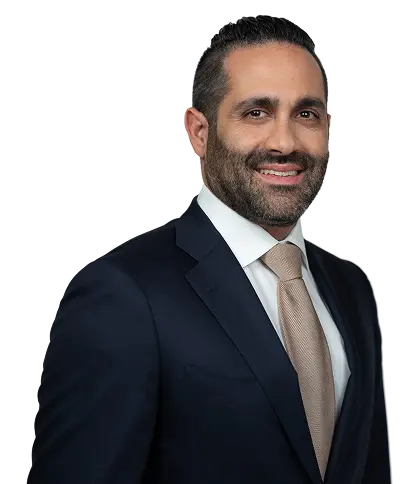
With Joseph Shirazi and Simon Esfandi at the helm, our firm is a trusted name in accident law in California.
Meet Our Managing Partners
National Top 100 Trial Lawyers and Avvo 10.0 Superb. Loyola Law School graduate. Recognized for his $14,500,000 truck accident verdict and a $13,000,000 trial verdict.
Read Full Bio →
Super Lawyers Rising Star. Southwestern Law School graduate. Led the firm’s $9,870,000 motorcycle accident settlement and a $2,250,000 rideshare recovery.
Read Full Bio →- ★ National Top 100 Trial Lawyers
- ★ Super Lawyers Rising Star
- ★ Avvo 10.0 Superb Rating
- ★ Top 40 Under 40
- ★ Consumer Attorneys of California · CAALA · AAJ

Countless Real Client Reviews Verified by Google


Jerry
After 10 accidents and 9 attorneys, the client met Simon, who stood out for his honesty and clear communication. Years later, after another accident, the client called Simon and was impressed by his professionalism and follow-through. Simon explained everything, connected him with top doctors, and kept every promise. It was the first time the client felt truly supported—highly recommending Simon and Joseph for their integrity and dedication.
Jacob
Jacob was rear-ended by a big rig and left nearly paralyzed for a year. He found Cooper Law Group, and Joseph and Simon personally helped him through the legal process. Over two years, they ensured he got the medical care and surgeries he needed, helped repair his car, and secured the compensation he deserved. He highly recommends them for truly fighting for their clients.
Blandine
During the early days of COVID, Blandine was hit by a car while biking to work. Alone and unsure of what to do, they found Compass Law Group. Joseph was the first to respond with care and clarity. Throughout the case, the team—Joseph, Simon, and Julie—provided support, regular check-ins, and made the client feel safe and cared for. They now consider the firm like family and highly recommend them for their compassion and competence.
Understanding Your Rights:
Frequently Asked
Questions
#1 Do I have a case?
Understanding whether a claim exists is one of the challenges of personal injury law. This is why we offer free initial consultations to help you make this determination and allow you an avenue to vindicate your rights.
We’re committed to fighting for the rights of accident victims throughout Southern California, and, unlike other California personal injury attorneys, we will take on any case if we can help, no matter how big or small.
#2 What is personal injury?
Personal injury involves harm to an individual’s body or property caused by someone else’s negligence. It can range from minor to significant injuries, often requiring legal action to recover damages. We specialize in representing and securing fair settlements for such victims.
#3 Why hire Compass Law Group?
Our client-focused approach ensures personalized attention, detailed case building, and compelling evidence presentation. We’re skilled in negotiating settlements and prepared for trial with aggressive strategies. Our firm maintains transparent communication, involves clients in the process, and utilizes a wide network of expert witnesses and resources to strengthen cases. Choosing us means trusting a team dedicated to your success and justice.
#4What if I didn't go to the hospital?
No matter the injury size, you have rights that need defending. Many injuries seem minor at first but can worsen over time. Ignoring treatment or legal advice risks your health and compensation. Seek immediate medical and legal help after any accident to ensure proper diagnosis and strengthen your compensation claim.