

Your Battle, Our Compass:
Los Angeles Workplace Sexual Abuse Attorney
If you experienced sexual abuse or assault in your Los Angeles workplace, our attorneys are here to help. Compass Law Group has extensive experience handling workplace sexual abuse cases throughout Los Angeles County and is committed to holding employers and perpetrators accountable. Call us today for a free, confidential consultation at (213) 320-1001.


Who Can Be Held Liable for Hotel/Venue Sexual Abuse in San Francisco?
Sexual abuse at a San Francisco hotel, convention center, or entertainment venue can expose multiple parties to civil liability — not just the individual perpetrator. California Civil Code §1714 imposes a duty of reasonable care on property owners and operators. When a Union Square hotel, SoMa nightclub, or event venue fails to screen employees, maintain adequate security, or address known risks of assault on its premises, that failure constitutes negligence actionable in civil court.
Under the doctrine of respondeat superior, a hotel or venue employer may be held vicariously liable for sexual assault committed by staff — a room attendant, security guard, or valet — acting within the scope of their duties. Even outside strict respondeat superior, California’s negligent hiring and retention doctrine holds institutions accountable when they knew or should have known an employee posed a danger to guests. Under CCP §340.1, California extends the civil statute of limitations for sexual abuse survivors, preserving the right to pursue claims against both individuals and the institutions that enabled the abuse.
- Hotel ownership entities and corporate parent companies, including national chains operating Union Square, Fisherman’s Wharf, and SoMa properties
- Hotel management companies and staffing agencies responsible for hiring, training, and supervising employees
- The individual perpetrator — whether an employee, independent contractor, or third-party guest enabled by inadequate venue security
- Third-party security firms contracted to protect guests at the hotel or event venue
- Event promoters and venue operators hosting private functions at San Francisco conference centers, banquet halls, or entertainment venues
Frequently Asked Questions: Hotel/Venue Sexual Abuse Attorney San Francisco
What is the deadline to file a previously time-barred hotel sexual assault lawsuit under California's AB 2777 revival window?
Under AB 2777, California Code of Civil Procedure §340.16(b)(3) opened a special revival window allowing adult survivors to revive previously time-barred sexual assault claims against entities — including hotels — that knew or should have known about the perpetrator’s dangerous conduct. This revival window closes permanently on December 31, 2026, meaning victims who miss this deadline lose the right to pursue compensation forever. If you were sexually assaulted at a San Francisco hotel at any point in the past, you may still have a viable claim before this deadline.
How can a San Francisco hotel be held legally liable for a sexual assault committed by one of its employees?
California law holds hotels vicariously liable for employee sexual assaults committed within the scope of employment under the doctrine of respondeat superior, and independently liable for negligent hiring, retention, or supervision under California Civil Code §1714. A hotel that failed to conduct background checks, ignored prior complaints about an employee, or provided an employee unsupervised access to guest rooms can face substantial civil liability. San Francisco hotels also face heightened scrutiny because California courts have consistently recognized innkeepers’ special duty of care to protect guests from foreseeable harm.
Who is eligible to file a claim under California's AB 2777 revival window for hotel or venue sexual abuse?
Adult survivors whose sexual assault claims against hotels, resorts, event venues, or other business entities were previously barred by the statute of limitations may qualify under CCP §340.16(b)(3), provided the entity knew or reasonably should have known of the perpetrator’s propensity for sexual misconduct, or took steps to cover up the assault. This includes survivors of attacks by hotel staff, security personnel, contractors, or other guests where the hotel facilitated or ignored the risk. The window applies regardless of how many years have passed since the assault, as long as the claim is filed before December 31, 2026.
What types of compensation can a sexual abuse survivor recover in a lawsuit against a San Francisco hotel?
Victims of hotel sexual abuse in San Francisco may recover economic damages including medical and psychological treatment costs, lost wages, and diminished future earning capacity, as well as non-economic damages for pain and suffering, emotional distress, and loss of enjoyment of life. California also permits punitive damages under Civil Code §3294 where a hotel acted with malice, oppression, or fraud — such as concealing prior complaints about an abusive employee. In cases involving egregious institutional cover-up, courts in San Francisco County Superior Court have awarded multi-million dollar verdicts encompassing all three categories of damages.
Can I sue a San Francisco hotel for sexual assault that occurred more than a decade ago?
Yes — under California’s AB 2777 revival window (CCP §340.16(b)(3)), adult survivors can file claims against hotels and venues for sexual assaults that occurred years or even decades ago if the entity knew about the perpetrator’s misconduct or concealed the abuse. Survivors of childhood sexual abuse occurring at hotel properties have an even broader window under CCP §340.1 (AB 218) of 22 years from their 18th birthday or five years from the date of discovery, whichever is later. A San Francisco sexual abuse attorney can evaluate whether your specific claim qualifies under one of these extended filing periods before the December 31, 2026 deadline.
How does California's premises liability law apply to sexual assault cases at San Francisco hotels and event venues?
Under California Civil Code §1714, property owners — including hotels, conference centers, and entertainment venues — owe a duty of reasonable care to all guests and invitees on their property. California courts have further recognized that innkeepers hold a heightened duty arising from the special relationship with guests, encompassing obligations to maintain adequate lighting, functional door locks, operational security systems, and trained security personnel. When a San Francisco hotel fails to implement reasonable security measures and a guest is sexually assaulted as a foreseeable result, the property owner can be held liable for the full extent of the victim’s damages.
What evidence is typically used to prove a San Francisco hotel was negligent in a sexual abuse case?
Key evidence in San Francisco hotel sexual abuse cases includes prior incident reports, internal complaints about the perpetrator, hiring and background check records, security camera footage, key card access logs showing room entry, and internal communications showing management was aware of dangerous conditions. Expert testimony from security professionals may establish that the hotel fell below industry standards, such as failing to follow American Hotel and Lodging Association security guidelines or San Francisco’s hotel safety ordinances. San Francisco County Superior Court’s broad civil discovery rules allow attorneys to compel hotels to produce records that may have been deliberately withheld or suppressed.
When does the AB 2777 revival window for adult sexual assault claims against California hotels and venues close?
California’s AB 2777 revival window under CCP §340.16(b)(3) closes on December 31, 2026, after which previously time-barred adult sexual assault claims against institutional entities cannot be revived under this provision. The Legislature enacted this fixed deadline to give survivors a defined opportunity to seek justice against hotels, resorts, nightclubs, and event venues that enabled or concealed sexual misconduct. Because investigation, litigation preparation, and filing can take many months, survivors should consult a San Francisco sexual abuse attorney well before the December 31, 2026 cutoff rather than waiting until the deadline approaches.
Does a San Francisco hotel have a legal duty to protect guests from sexual assault committed by other guests?
Yes — California Civil Code §1714 and the innkeeper’s common law duty require hotels to take reasonable precautions against foreseeable third-party criminal conduct, including guest-on-guest sexual assault. Courts evaluating hotel liability examine whether the hotel was aware of prior assaults on the property, whether security patrols were inadequate, and whether management ignored red flags such as reports of suspicious activity in isolated areas. A San Francisco hotel that fails to act on warning signs or maintains understaffed security in high-risk areas such as parking garages, stairwells, or poorly lit corridors can be held liable for resulting assaults.
Will my name be kept confidential if I file a sexual abuse lawsuit against a hotel in San Francisco County Superior Court?
California Code of Civil Procedure §340.1(q) expressly permits childhood sexual abuse survivors to file civil lawsuits using a pseudonym or as a Doe plaintiff to protect their identity throughout the proceedings. For adult survivors, courts in San Francisco County Superior Court have discretion to allow pseudonymous or sealed filings where disclosure would cause substantial harm and the plaintiff’s privacy interest outweighs the public’s interest in open proceedings. Your attorney can file a motion to proceed under a pseudonym at the outset of the case, and California courts routinely grant such protections in sexual abuse cases involving institutional defendants like hotels.
What court handles hotel sexual abuse lawsuits filed in San Francisco?
Civil sexual abuse claims against San Francisco hotels are filed in the San Francisco County Superior Court, located at the Civic Center Courthouse at 400 McAllister Street, San Francisco, CA 94102. This court has jurisdiction over all civil matters arising within the City and County of San Francisco, including negligence, premises liability, and institutional abuse claims brought under CCP §340.1 and CCP §340.16. San Francisco Superior Court’s complex litigation department has experience managing large institutional abuse cases and provides case management procedures tailored to the document-intensive nature of hotel liability litigation.
How does a hotel's negligent hiring or retention of an abusive employee affect my sexual abuse claim in California?
Under California law, a hotel can be held independently liable for negligent hiring if it failed to conduct a reasonable background check that would have revealed an employee’s history of sexual misconduct, and for negligent retention if it continued employing someone despite receiving complaints or discovering warning signs of abusive behavior. These claims exist separately from vicarious liability and can establish hotel fault even in cases where the assault technically fell outside the strict scope of the employee’s duties. In San Francisco hotel cases, an attorney can subpoena employment records, HR files, and prior incident reports during discovery to establish that management knew or should have known the risk the employee posed to guests.
Can I sue a San Francisco concert venue, nightclub, or convention center for sexual assault that occurred on their premises?
Yes — entertainment venues, nightclubs, convention centers, and event spaces in San Francisco are subject to the same premises liability standards under California Civil Code §1714 as hotels, and face liability for failing to maintain adequate security, lighting, or crowd management that allows sexual assaults to occur. Under AB 2777 (CCP §340.16(b)(3)), previously time-barred claims against these institutional defendants may also be revivable through December 31, 2026, if the venue knew about a pattern of sexual misconduct on its property and failed to act. California courts have found venue owners liable in cases involving inadequate security staffing, poorly monitored exits, and failure to respond to prior assault reports at San Francisco-area events.
What is the statute of limitations for childhood sexual abuse that occurred at a San Francisco hotel under CCP §340.1?
Under California Code of Civil Procedure §340.1, as amended by AB 218, survivors of childhood sexual abuse at hotels or other venues may file suit until the later of their 40th birthday — 22 years after reaching the age of majority — or five years from the date they discovered, or reasonably should have discovered, that their psychological injuries were caused by the abuse. This extended limitations period applies regardless of when the hotel abuse occurred, allowing adult survivors who suppressed memories or did not connect their trauma to the incident until later in life to still pursue civil claims. An attorney can evaluate whether your claim falls within this window or whether an additional legal theory provides an alternative path to compensation.
Does California's AB 2777 revival window apply to sexual assaults that occurred at San Francisco hotels operated by national chains?
Yes — CCP §340.16(b)(3) applies to any business entity operating in California, including national hotel chains and their California subsidiaries, franchisees, and management companies operating properties in San Francisco. Corporate defendants can be held liable under AB 2777 if their corporate policies, inadequate training programs, or systemic cover-up practices contributed to enabling sexual assaults at California locations. Survivors may name both the local hotel operator and the parent corporation as defendants, potentially accessing the greater financial resources needed to fully compensate serious abuse claims before the December 31, 2026 revival window closes permanently.
How We Value a Hotel/Venue Sexual Abuse Case in San Francisco
No single formula determines what a hotel or venue sexual abuse case is worth in San Francisco — but California law provides a clear path to full recovery. Compensatory damages cover every measurable loss: trauma therapy, emergency and ongoing medical care, lost wages, and diminished earning capacity. Documented treatment records give juries and insurers concrete evidence of harm, which consistently drives higher recoveries for survivors throughout San Francisco County.
Beyond economic losses, California courts award substantial damages for emotional distress — the anxiety, PTSD, and lasting psychological harm that often outlast physical injuries by years. When a hotel or venue demonstrated reckless disregard for guest safety through inadequate security, ignored complaints, or concealed staff misconduct, San Francisco juries can add punitive damages designed to punish the institution directly, not merely compensate the survivor.
Under AB 218 and AB 2777, California eliminated statutory caps on damages for institutional sexual abuse claims, including those against hotels and venues in San Francisco County — meaning no arbitrary ceiling limits what you can recover. Compass Law Group has secured more than $250 million for survivors across California. Call (213) 320-1001 for a free, confidential case evaluation.
What to Do If You Are a Hotel/Venue Sexual Abuse Survivor in San Francisco
- Get to a Safe Location Immediately — If you are still at the hotel or venue where the assault occurred, leave the premises and contact someone you trust. San Francisco has 24/7 crisis support through the San Francisco Women Against Rape (SFWAR) hotline at (415) 647-7273, and the UCSF Sexual Assault Response Team (SART) can provide immediate medical and forensic care.
- Seek Medical Attention and a Forensic Exam — Visit an emergency room or SART clinic as soon as possible — ideally within 72 hours — so that a Sexual Assault Forensic Examiner (SAFE nurse) can collect DNA evidence, document injuries, and preserve a rape kit that may be critical to your civil case. Even if you showered, medical evaluation is still valuable.
- Document Everything You Can Remember — As soon as you are safe, write down every detail: the name and address of the hotel or venue, the date and time, descriptions of the assailant and any staff who were present, and any prior complaints or incidents you know of. Photographs of any visible injuries, your clothing, and the location can serve as powerful corroborating evidence.
- Preserve Physical and Digital Evidence — Do not discard clothing or personal items from the incident — seal them in a paper bag and set them aside. Request or preserve any electronic records you have access to, including text messages, emails, app bookings, or receipts, and ask your attorney to formally demand that the hotel preserve surveillance footage before it is overwritten.
- Report to Authorities If You Choose To — You have the right to report the assault to the San Francisco Police Department (SFPD) at (415) 553-0123, though reporting is not required to pursue a civil claim against the hotel or venue. A police report can strengthen your case, and under California law, a civil lawsuit can proceed independently of any criminal investigation.
- Contact a San Francisco Hotel Sexual Abuse Attorney Before December 31, 2026 — California’s AB 2777 revival window gives survivors the rare opportunity to bring civil claims against hotels, venues, and other liable parties — including for incidents that occurred years or even decades ago — but this window closes on December 31, 2026. An experienced attorney can evaluate the hotel’s security failures, staff negligence, and any history of prior incidents that may support a substantial claim on your behalf.
If you or someone you love has been sexually assaulted at a San Francisco hotel or venue, do not wait to get legal help — call our firm today at (213) 320-1001 for a free, confidential consultation with a California sexual abuse attorney who will fight to hold the responsible parties accountable.
Do I have a case?
Contact us today for a free consultation.
California's
Gold Standard
Injury Law Firm
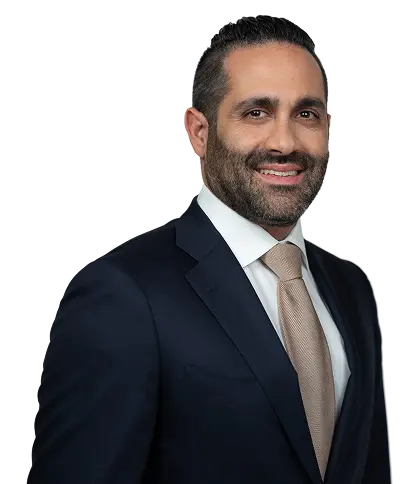
With Joseph Shirazi and Simon Esfandi at the helm, our firm is a trusted name in accident law in California.
Meet Our Managing Partners
National Top 100 Trial Lawyers and Avvo 10.0 Superb. Loyola Law School graduate. Recognized for his $14,500,000 truck accident verdict and a $13,000,000 trial verdict.
Read Full Bio →
Super Lawyers Rising Star. Southwestern Law School graduate. Led the firm’s $9,870,000 motorcycle accident settlement and a $2,250,000 rideshare recovery.
Read Full Bio →- ★ National Top 100 Trial Lawyers
- ★ Super Lawyers Rising Star
- ★ Avvo 10.0 Superb Rating
- ★ Top 40 Under 40
- ★ Consumer Attorneys of California · CAALA · AAJ

Countless Real Client Reviews Verified by Google


Jerry
After 10 accidents and 9 attorneys, the client met Simon, who stood out for his honesty and clear communication. Years later, after another accident, the client called Simon and was impressed by his professionalism and follow-through. Simon explained everything, connected him with top doctors, and kept every promise. It was the first time the client felt truly supported—highly recommending Simon and Joseph for their integrity and dedication.
Jacob
Jacob was rear-ended by a big rig and left nearly paralyzed for a year. He found Cooper Law Group, and Joseph and Simon personally helped him through the legal process. Over two years, they ensured he got the medical care and surgeries he needed, helped repair his car, and secured the compensation he deserved. He highly recommends them for truly fighting for their clients.
Blandine
During the early days of COVID, Blandine was hit by a car while biking to work. Alone and unsure of what to do, they found Compass Law Group. Joseph was the first to respond with care and clarity. Throughout the case, the team—Joseph, Simon, and Julie—provided support, regular check-ins, and made the client feel safe and cared for. They now consider the firm like family and highly recommend them for their compassion and competence.
Understanding Your Rights:
Frequently Asked
Questions
#1 Do I have a case?
Understanding whether a claim exists is one of the challenges of personal injury law. This is why we offer free initial consultations to help you make this determination and allow you an avenue to vindicate your rights.
We’re committed to fighting for the rights of accident victims throughout Southern California, and, unlike other California personal injury attorneys, we will take on any case if we can help, no matter how big or small.
#2 What is personal injury?
Personal injury involves harm to an individual’s body or property caused by someone else’s negligence. It can range from minor to significant injuries, often requiring legal action to recover damages. We specialize in representing and securing fair settlements for such victims.
#3 Why hire Compass Law Group?
Our client-focused approach ensures personalized attention, detailed case building, and compelling evidence presentation. We’re skilled in negotiating settlements and prepared for trial with aggressive strategies. Our firm maintains transparent communication, involves clients in the process, and utilizes a wide network of expert witnesses and resources to strengthen cases. Choosing us means trusting a team dedicated to your success and justice.
#4What if I didn't go to the hospital?
No matter the injury size, you have rights that need defending. Many injuries seem minor at first but can worsen over time. Ignoring treatment or legal advice risks your health and compensation. Seek immediate medical and legal help after any accident to ensure proper diagnosis and strengthen your compensation claim.