




Your Battle, Our Compass:

Los Angeles Workplace Sexual Abuse Attorney

If you experienced sexual abuse or assault in your Los Angeles workplace, our attorneys are here to help. Compass Law Group has extensive experience handling workplace sexual abuse cases throughout Los Angeles County and is committed to holding employers and perpetrators accountable. Call us today for a free, confidential consultation at (213) 320-1001.

TL;DR — Nursing Home Sexual Abuse Attorney San FranciscoA san francisco nursing home sexual abuse attorney can pursue civil claims against skilled nursing facilities, assisted living centers, and long-term care homes throughout San Francisco and San Francisco County under California’s Elder Abuse and Dependent Adult Civil Protection Act (Welfare & Institutions Code §§ 15600–15675), which allows survivors to recover compensatory damages, attorney’s fees, and punitive damages when a facility acted with recklessness or deliberate concealment. AB 218 extended the civil filing window to age 40 for childhood sexual abuse survivors — and, for adult survivors whose claims were previously time-barred by institutional cover-up, AB 2777 created a one-year revival window that ran through December 31, 2023. If you or a loved one suffered sexual abuse in a San Francisco nursing home, call (213) 320-1001 for a free, confidential consultation.

Nursing Home Sexual Abuse Civil Law in San Francisco County

San Francisco County nursing home residents are protected by overlapping layers of California civil law. The Elder Abuse and Dependent Adult Civil Protection Act (Welfare & Institutions Code §§ 15600–15675) establishes rights specifically for residents of skilled nursing facilities licensed under Health and Safety Code § 1430 — facilities the California Department of Public Health regulates and inspects. Unlike a standard negligence claim, a successful elder abuse action allows the court to award attorney’s fees and costs, making civil litigation financially accessible for survivors and families. Where evidence shows the facility’s conduct was reckless or intentional — for example, ignoring prior complaints about an abusive staff member or concealing incidents from regulators — courts may also impose punitive damages. San Francisco Superior Court has jurisdiction over these claims, and California’s mandatory elder abuse reporting statutes (Penal Code § 11160) mean incident records, state inspection reports, and facility staffing data are often available as evidence.
★★★★★
5.0 / 5
195 Google Reviews  ·  Read Reviews ↗

Who Can Be Held Liable for Nursing Home Sexual Abuse in San Francisco?

Multiple parties can be held legally responsible when a resident suffers sexual abuse in a San Francisco nursing home. The direct perpetrator—a nurse’s aide, orderly, therapist, or another resident—bears primary liability. California’s Elder Abuse and Dependent Adult Civil Protection Act (Welfare & Institutions Code §15610 et seq.) extends civil liability to any person or entity that commits, permits, or fails to prevent abuse of a dependent adult, and authorizes enhanced remedies including attorney’s fees under §15657.

Nursing home operators and their corporate parents face institutional liability under two theories. Respondeat superior holds facilities accountable for abuse committed by employees within the scope of their employment. Negligent hiring or retention applies when a San Francisco skilled nursing facility—licensed and inspected by the California Department of Public Health—knew or had reason to know a staff member posed a danger to residents. Failures in background screening or supervision establish negligence as a matter of law.

Staffing agencies that supply contract caregivers to San Francisco facilities share joint liability with the facility when their workers commit abuse, as courts treat both entities as joint employers for purposes of respondeat superior.

  • Individual abusers (employees, contractors, volunteers, or other residents)
  • The nursing home facility operator and on-site management
  • Parent corporations and private equity ownership groups
  • Third-party staffing agencies supplying contract caregivers
  • Property owners who lease to negligently operated facilities
Call Compass Law Group — Free Consultation for School Sexual Abuse Survivors

Frequently Asked Questions: Nursing Home Sexual Abuse Attorney San Francisco

Under California’s Elder Abuse and Dependent Adult Civil Protection Act (Welfare & Institutions Code §15657), most nursing home sexual abuse claims must be filed within two years of the abuse or its discovery. However, for survivors abused as minors, CCP §340.1 (as amended by AB 218) extends the deadline to age 40 or five years from discovery of the abuse-injury connection, whichever is later. A San Francisco nursing home sexual abuse attorney can identify which deadline applies and whether your previously time-barred claim qualifies for revival under the December 31, 2026 window.

AB 218, signed into law in 2019 and codified at CCP §340.1, extended the statute of limitations for childhood sexual abuse claims to age 40 or five years from the survivor’s discovery of the abuse’s psychological impact, whichever is later. The law eliminated the government claim requirement for institutional defendants — including publicly operated or publicly funded San Francisco nursing facilities — making it significantly easier to bring claims against those entities. AB 218 also created a lookback window reviving previously time-barred claims against institutional defendants such as nursing homes.

Potential defendants include the licensed facility operator, its management company, ownership entities, and the individual perpetrator, whether a staff member, contractor, or another resident whose dangerous propensities the facility failed to address. Under California’s respondeat superior doctrine and WIC §15657, institutions that authorize, ratify, or cover up abuse face enhanced liability including attorney’s fees and punitive damages. Third-party staffing agencies that placed inadequately screened workers at San Francisco County facilities may also be named as defendants.

California’s Elder Abuse and Dependent Adult Civil Protection Act (WIC §15657) provides economic damages covering medical expenses, therapy, and relocation costs, plus non-economic damages for pain, suffering, and emotional distress with no statutory cap. When a facility or its managing agent acted with recklessness, oppression, fraud, or malice, the court may also award attorney’s fees, litigation costs, and punitive damages under WIC §15657.3. Critically, unlike standard negligence actions, the Elder Abuse Act survival action preserves the full damages award — including non-economic damages — even after the victim’s death.

AB 2777 created a limited revival period allowing adult survivors of institutional sexual abuse to revive otherwise time-barred claims, with that window closing December 31, 2026. To qualify, the abuse must have been committed by an individual acting in a professional capacity and there must be evidence that the institution knew or should have known of the perpetrator’s propensity for abuse and took steps to conceal it. Adult nursing home residents whose civil claims were previously barred by California’s two-year limitations period should consult a San Francisco attorney immediately, as the December 31, 2026 deadline is firm and non-extendable.

Yes. Under Welfare & Institutions Code §15630, all nursing home staff and administrators are mandatory reporters required to report known or suspected sexual abuse of dependent adults to Adult Protective Services and local law enforcement — within two hours for incidents causing serious bodily injury and within 24 hours for all other incidents. Facilities certified under Medicare and Medicaid must also comply with 42 CFR §483.12, which requires immediate reporting to law enforcement and the California Department of Public Health (CDPH). A facility’s failure to report is a criminal offense under California law and constitutes evidence of the reckless disregard required to support enhanced Elder Abuse Act damages.

You should contact an attorney immediately upon discovering or suspecting abuse, because California nursing homes are typically required to retain surveillance footage for only 30 to 90 days and staffing records for three years, and a prompt litigation hold letter can prevent destruction of this critical evidence. Acting quickly also allows your attorney to retain a geriatric care expert and interview witnesses before the facility can coordinate its defense. If the victim is a current resident, an attorney can seek emergency court orders through San Francisco Superior Court to remove the resident from a dangerous environment while the civil case proceeds.

Yes. California courts have established that nursing homes owe a non-delegable duty to protect residents from foreseeable harm by other residents, grounded in both common-law negligence and the Elder Abuse Act. A facility can be held liable if it failed to conduct adequate intake risk assessments, ignored prior complaints about the perpetrating resident’s sexual aggression, or failed to implement supervision protocols required under Title 22 of the California Code of Regulations. San Francisco juries have held facilities accountable in resident-on-resident sexual abuse cases where the evidence showed the facility had notice of the risk and took no corrective action.

The most valuable evidence includes the facility’s staffing schedules and shift logs, the alleged perpetrator’s personnel file and prior complaint history, the nursing home’s abuse prevention policies and training records, CDPH inspection reports and citation history obtained through the department’s public licensing database, and the victim’s medical and psychological records. Incident reports filed with government agencies are admissible in California civil proceedings (unlike internal peer review documents protected under Evidence Code §1157) and can document the facility’s prior knowledge of the abuse. Your attorney can subpoena these records from the facility and from CDPH, and request incident data from the San Francisco Adult Protective Services case file.

Most civil nursing home sexual abuse cases arising from events in San Francisco County are filed in San Francisco Superior Court at 400 McAllister Street, San Francisco, CA 94102, which exercises general civil jurisdiction over tort claims under California Code of Civil Procedure §395. If the nursing home operator is incorporated in another state, federal diversity jurisdiction may permit removal to the U.S. District Court for the Northern District of California in San Francisco, but California’s Elder Abuse Act claims and punitive damages provisions are state law theories best litigated in state court. San Francisco Superior Court jurors are generally familiar with the high standard of care owed to dependent adults and have returned significant verdicts in elder abuse cases.

The California Department of Public Health licenses and surveys all skilled nursing facilities in San Francisco County under Health & Safety Code §1250 et seq. and Title 22 of the California Code of Regulations, conducting unannounced inspections and responding to abuse complaints. When sexual abuse is substantiated, CDPH can issue deficiency citations, impose civil monetary penalties under 42 CFR §488.400, and recommend decertification from Medicare and Medicaid programs administered by the Centers for Medicare & Medicaid Services. Official CDPH inspection reports and citation histories are publicly available through the department’s licensing portal and constitute admissible evidence of a facility’s pattern of regulatory non-compliance in a San Francisco civil lawsuit.

The San Francisco Long-Term Care Ombudsman Program, operated under Welfare & Institutions Code §9700 et seq. through the San Francisco Department of Aging & Adult Services, investigates complaints about nursing home abuse and advocates for residents’ rights at the facility level. While the Ombudsman can investigate and mediate complaints, it does not provide legal representation and cannot file civil lawsuits on behalf of victims. However, a substantiated Ombudsman finding of sexual abuse can serve as powerful corroborating evidence in a civil action filed in San Francisco Superior Court, and Ombudsman staff may be deposed as witnesses regarding their investigation findings.

A standard negligence claim under California Civil Code §1714 requires proof of duty, breach, causation, and damages, but does not allow recovery of attorney’s fees or punitive damages and caps survival action non-economic damages upon the victim’s death. In contrast, a claim under the Elder Abuse and Dependent Adult Civil Protection Act (WIC §15657) enables recovery of attorney’s fees, litigation costs, and punitive damages when the defendant acted with recklessness or malice, and preserves the full non-economic damages award in survival actions regardless of the victim’s death. Because the Elder Abuse Act requires proof of a higher standard of culpability — recklessness rather than mere negligence — experienced San Francisco attorneys typically plead both theories and let the evidence at trial determine which standard is met.

Yes. California’s Elder Abuse Act expressly preserves survival actions upon a victim’s death, allowing the estate to pursue the full range of damages — including non-economic damages for the victim’s pain and suffering — that the victim could have recovered during their lifetime under WIC §15657(b). A separate wrongful death claim under CCP §377.60 may also be brought by the surviving spouse, children, or other statutory heirs for their own economic and non-economic losses caused by the death. Unlike standard negligence wrongful death actions, Elder Abuse Act survival claims impose no cap on non-economic damages, making them particularly valuable in San Francisco cases where victims died from injuries sustained during nursing home sexual abuse.

Nursing home sexual abuse lawsuits in San Francisco Superior Court generally take between 18 months and four years from filing to resolution, depending on the number of defendants, the volume of discovery, and whether the case settles or proceeds to trial. Institutional defendants with professional liability insurers frequently settle during the discovery phase — typically 12 to 24 months after filing — when staffing records, internal incident reports, and prior complaint histories are produced and document the facility’s knowledge. Cases that reach a San Francisco jury trial have historically resulted in substantial verdicts in elder abuse matters, including awards exceeding $10 million against California nursing facilities found to have acted with recklessness or malice under WIC §15657.

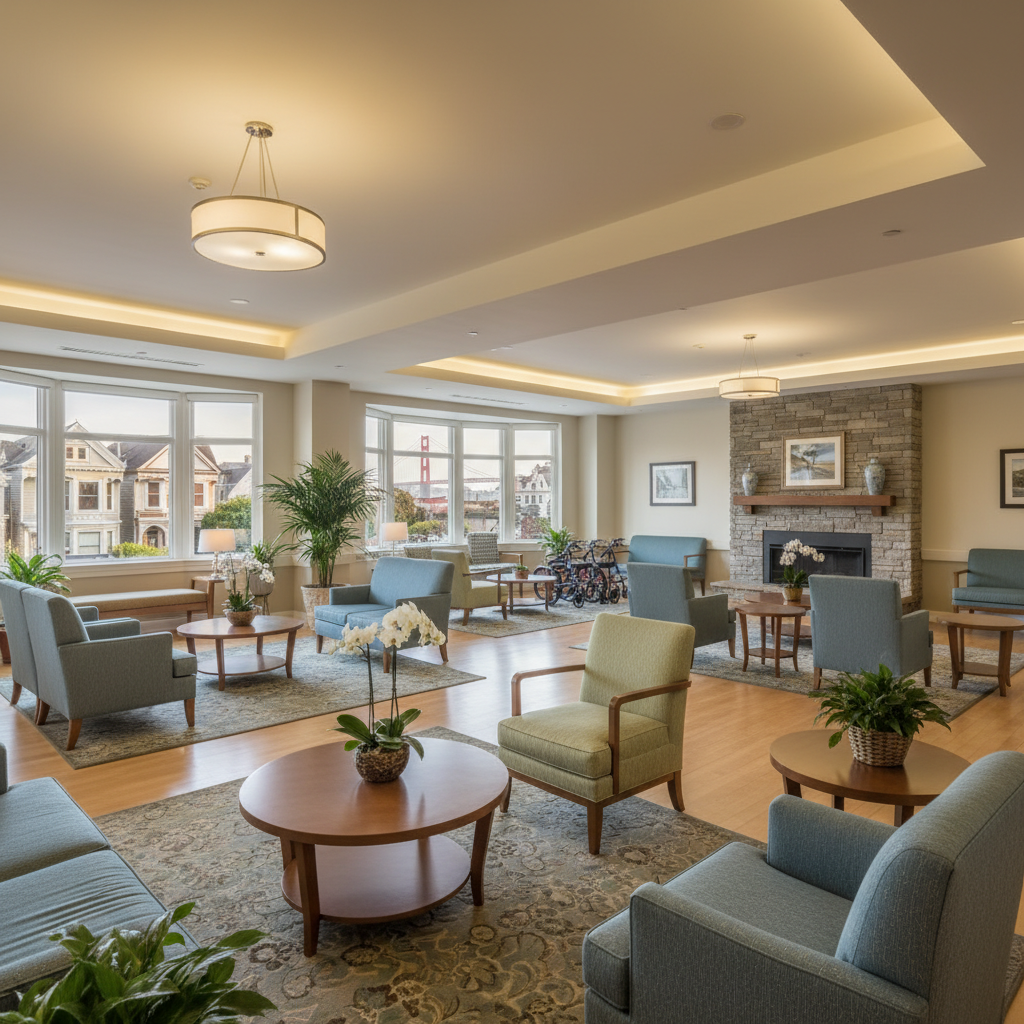
Nursing Home Sexual Abuse — San Francisco — image 1
Los Angeles school hallway — school sexual abuse attorney

How We Value a Nursing Home Sexual Abuse Case in San Francisco

Every nursing home sexual abuse case in San Francisco carries a unique set of damages, and our attorneys conduct a comprehensive analysis before placing a value on your claim. Compensatory damages form the foundation of recovery and typically include the full cost of psychological therapy and trauma counseling, medical treatment for physical injuries, prescription medications, and — where a victim was deprived of earned income or family caregiving capacity — lost wages and loss of earning potential. According to the National Council on Aging, the average elder abuse victim incurs more than $36,000 in direct costs, yet the psychological harm inflicted by sexual abuse inside a facility that owed your loved one a duty of protection is rarely captured by medical bills alone. We quantify emotional distress, pain and suffering, loss of dignity, and the lasting impact on quality of life as independent line items in every demand.

When a San Francisco County nursing home, assisted living facility, or corporate ownership group enabled abuse through negligent hiring, inadequate supervision, or deliberate concealment, California law permits punitive damages specifically designed to punish institutional misconduct. Under Assembly Bill 218 and Assembly Bill 2777, survivors of sexual abuse by institutional defendants may pursue unlimited punitive damage awards — there is no statutory cap. These landmark California laws also allow courts to impose treble damages against entities that covered up abuse, meaning a jury finding of concealment can triple the total verdict. Our attorneys are deeply familiar with how San Francisco Superior Court juries have valued institutional misconduct cases, and we build every file with trial in mind from day one.

With more than $250 million recovered for abuse survivors and seriously injured clients across California, Compass Law Group understands what it takes to hold corporate nursing home operators accountable in San Francisco and San Francisco County courts. If your family member was sexually abused in a care facility, call us today at (213) 320-1001 for a free, confidential consultation — there is no fee unless we win.

Nursing Home Sexual Abuse — San Francisco — image 2
Los Angeles school building exterior — school sexual abuse lawsuit

What to Do If You Are a Nursing Home Sexual Abuse Survivor in San Francisco

  1. Remove the Resident From Danger Immediately — If a San Francisco nursing home resident is in immediate danger, contact the facility administrator and request a room or unit transfer, or arrange emergency discharge to a safe location. Your first priority is stopping ongoing harm — no investigation or legal process requires the resident to remain in an unsafe environment.
  2. Document Everything You Observe — Write down dates, times, names of staff on duty, and a detailed description of what occurred or what the survivor disclosed. Photograph any visible injuries such as bruising, lacerations, or signs of physical trauma, and preserve those images with timestamps.
  3. Report the Abuse to the Appropriate Authorities — File a report with the California Department of Public Health (CDPH), which licenses and oversees nursing facilities statewide, and contact San Francisco Adult Protective Services at (415) 355-6700. Reporting creates an official record and may trigger a state inspection that preserves evidence you cannot access on your own.
  4. Preserve All Evidence and Medical Records — Request copies of the resident’s complete medical records, nursing notes, incident reports, and any facility surveillance footage before it is overwritten — California law requires facilities to retain video for a limited period. Do not allow the facility to perform an internal “investigation” without first securing these records independently.
  5. Contact a San Francisco Nursing Home Sexual Abuse Attorney — An experienced attorney can issue litigation holds to prevent destruction of evidence, identify all liable parties (including staffing agencies and corporate ownership chains), and pursue claims under California’s Elder Abuse and Dependent Adult Civil Protection Act, which allows for enhanced remedies including attorney’s fees and punitive damages.
  6. Act Before the AB 2777 Lookback Window Closes on December 31, 2026 — California’s AB 2777 opened a limited revival window allowing survivors to file sexual abuse claims that were previously barred by the statute of limitations — but this window closes permanently on December 31, 2026. If your loved one’s abuse occurred years ago and you believed the deadline had passed, you may still have a viable claim if you act now.

To speak with a San Francisco nursing home sexual abuse attorney about your legal options, call (213) 320-1001 for a free, confidential consultation — our team is available to evaluate your case and help you understand every right you have under California law.

Call Compass Law Group — Free Consultation for School Sexual Abuse Survivors
COMPASS LAW GROUP — LOS ANGELES OFFICE

Do I have a case?

Contact us today for a free consultation.

This field is for validation purposes and should be left unchanged.

California's
Gold Standard
Injury Law Firm

With Joseph Shirazi and Simon Esfandi at the helm, our firm is a trusted name in accident law in California.

Meet Our Managing Partners

Joseph Shirazi
Managing Partner · CA Bar #265403

National Top 100 Trial Lawyers and Avvo 10.0 Superb. Loyola Law School graduate. Recognized for his $14,500,000 truck accident verdict and a $13,000,000 trial verdict.

Read Full Bio →
Simon Esfandi — Managing Partner
Simon Esfandi
Managing Partner · CA Bar #275307

Super Lawyers Rising Star. Southwestern Law School graduate. Led the firm’s $9,870,000 motorcycle accident settlement and a $2,250,000 rideshare recovery.

Read Full Bio →
Firm Recognition
  • ★ National Top 100 Trial Lawyers
  • ★ Super Lawyers Rising Star
  • ★ Avvo 10.0 Superb Rating
  • ★ Top 40 Under 40
  • ★ Consumer Attorneys of California · CAALA · AAJ

Total Recovered for Clients
$250,000,000+
$14.5M truck verdict · $13M trial verdict · $9.87M motorcycle · $5M car accident
Past results do not guarantee future outcomes. Every case is unique.
Client Rating
★★★★★ 5.0
193+ verified Google reviews · No win, no fee

Countless Real Client Reviews Verified by Google

Jerry

After 10 accidents and 9 attorneys, the client met Simon, who stood out for his honesty and clear communication. Years later, after another accident, the client called Simon and was impressed by his professionalism and follow-through. Simon explained everything, connected him with top doctors, and kept every promise. It was the first time the client felt truly supported—highly recommending Simon and Joseph for their integrity and dedication.

Jacob

Jacob was rear-ended by a big rig and left nearly paralyzed for a year. He found Cooper Law Group, and Joseph and Simon personally helped him through the legal process. Over two years, they ensured he got the medical care and surgeries he needed, helped repair his car, and secured the compensation he deserved. He highly recommends them for truly fighting for their clients.

Blandine

During the early days of COVID, Blandine was hit by a car while biking to work. Alone and unsure of what to do, they found Compass Law Group. Joseph was the first to respond with care and clarity. Throughout the case, the team—Joseph, Simon, and Julie—provided support, regular check-ins, and made the client feel safe and cared for. They now consider the firm like family and highly recommend them for their compassion and competence.

Understanding Your Rights:

Frequently Asked
Questions

Understanding whether a claim exists is one of the challenges of personal injury law. This is why we offer free initial consultations to help you make this determination and allow you an avenue to vindicate your rights.

We’re committed to fighting for the rights of accident victims throughout Southern California, and, unlike other California personal injury attorneys, we will take on any case if we can help, no matter how big or small.

Personal injury involves harm to an individual’s body or property caused by someone else’s negligence. It can range from minor to significant injuries, often requiring legal action to recover damages. We specialize in representing and securing fair settlements for such victims.

Our client-focused approach ensures personalized attention, detailed case building, and compelling evidence presentation. We’re skilled in negotiating settlements and prepared for trial with aggressive strategies. Our firm maintains transparent communication, involves clients in the process, and utilizes a wide network of expert witnesses and resources to strengthen cases. Choosing us means trusting a team dedicated to your success and justice.

No matter the injury size, you have rights that need defending. Many injuries seem minor at first but can worsen over time. Ignoring treatment or legal advice risks your health and compensation. Seek immediate medical and legal help after any accident to ensure proper diagnosis and strengthen your compensation claim.