



Your Battle, Our Compass:
Los Angeles Workplace Sexual Abuse Attorney
If you experienced sexual abuse or assault in your Los Angeles workplace, our attorneys are here to help. Compass Law Group has extensive experience handling workplace sexual abuse cases throughout Los Angeles County and is committed to holding employers and perpetrators accountable. Call us today for a free, confidential consultation at (213) 320-1001.


Who Can Be Held Liable for Rideshare Sexual Abuse in San Francisco?
In San Francisco rideshare sexual abuse cases, the driver who committed the assault bears direct personal liability for battery, sexual assault, and related torts under California law. Under California Code of Civil Procedure §340.1, survivors of sexual abuse may benefit from an extended statute of limitations — critical in cases where victims delay reporting due to trauma or fear. Because passengers in San Francisco place inherent trust in rideshare drivers who control their movement and safety, courts treat that power imbalance as a factor weighing toward liability.
Uber Technologies and Lyft, Inc. — both headquartered in San Francisco — face institutional liability through negligent hiring and negligent retention claims. California Public Utilities Code §5385 requires Transportation Network Companies to perform background checks on every driver before approval. When those checks fail to screen out drivers with disqualifying criminal histories, or when companies retain drivers after red flags emerge, the TNC itself is directly negligent. This theory does not require proving respondeat superior, which Proposition 22 complicates by classifying drivers as independent contractors.
Liability may further extend to third-party background screening vendors contracted by Uber or Lyft, and to vehicle owners who negligently entrusted their car to an unfit driver. San Francisco’s Superior Court has jurisdiction over civil claims against all such parties, and multiple defendants can be named simultaneously under California’s joint-and-several liability principles.
- The individual rideshare driver (direct perpetrator — personal civil and criminal liability)
- Uber Technologies, Inc. or Lyft, Inc. (negligent hiring, negligent retention, failure to supervise under CA PUC §5385)
- Third-party background check vendors (such as Checkr, Inc., headquartered in San Francisco, contracted to screen TNC drivers)
- Vehicle owners (negligent entrustment if the vehicle was provided to an unfit driver)
- Rideshare insurers (Uber and Lyft carry $1 million commercial liability policies active during trips — insurers are proper defendants in settlement proceedings)
Frequently Asked Questions: Rideshare Sexual Abuse Attorney San Francisco
What is the December 31, 2026 deadline for filing a previously time-barred rideshare sexual assault claim in California?
California’s AB 2777, codified at Code of Civil Procedure §340.16, created a revival window allowing survivors to file adult sexual assault claims that were previously barred by the statute of limitations, but only if the assault was connected to a company’s deliberate concealment or cover-up of misconduct. This window closes permanently on December 31, 2026, and both Uber and Lyft have faced documented allegations of underreporting driver assault complaints to the California Public Utilities Commission and law enforcement. Survivors who were assaulted years ago by a rideshare driver in San Francisco may still qualify if Uber or Lyft suppressed their complaint. An attorney at the San Francisco Superior Court can file a qualifying claim before this deadline expires.
Can I sue Uber or Lyft directly if their driver sexually assaulted me in San Francisco?
Yes — despite rideshare companies classifying drivers as independent contractors under Proposition 22 (2020), California courts have recognized direct liability theories including negligent hiring, negligent retention, and negligent supervision when a company fails to conduct adequate background checks or ignores prior misconduct complaints. In 2023, Uber settled a multi-district litigation involving approximately 550 assault cases for an undisclosed amount, demonstrating that direct corporate liability is viable. Under California Civil Code §2100, common carriers owe passengers the utmost care, and California courts have applied heightened duty-of-care standards to TNCs. Filing against Uber or Lyft in San Francisco Superior Court, located at 400 McAllister Street, preserves claims against the corporate entity separate from any criminal case against the driver.
How does California's AB 2777 (CCP §340.16) apply to my Uber or Lyft sexual assault case in San Francisco?
Code of Civil Procedure §340.16, as amended by AB 2777, provides a three-year statute of limitations for adult sexual assault claims from the date of the assault or the date the survivor discovered — or reasonably should have discovered — the connection between their injury and the assault. The revival window added by AB 2777 extends this right to claims previously barred by time limits, specifically where the defendant entity engaged in a cover-up, defined broadly under the statute. Uber and Lyft’s alleged systematic underreporting of assault complaints to the CPUC strengthens the cover-up argument for San Francisco survivors. The December 31, 2026 hard deadline to file under the revival window makes immediate legal consultation essential.
Who can be held liable for rideshare sexual abuse occurring in San Francisco or San Francisco County?
Potentially liable parties include the rideshare driver individually, Uber Technologies Inc. or Lyft Inc. as corporate defendants, and in some cases third-party background check vendors whose negligent screening allowed dangerous drivers onto the platform. California’s negligent entrustment doctrine and the common carrier duty of care under Civil Code §2100 support holding Uber and Lyft accountable for foreseeable harms their drivers commit against passengers. San Francisco County juries have historically held corporations to high standards of passenger safety, particularly where internal warning signs were ignored. A successful claim may establish liability against multiple defendants simultaneously, maximizing available compensation.
What damages can I recover in a San Francisco rideshare sexual assault civil lawsuit?
California law permits recovery of economic damages including medical expenses, therapy costs, lost wages, and future earning capacity, as well as non-economic damages for pain and suffering, emotional distress, and loss of enjoyment of life. In cases involving Uber or Lyft where corporate officers acted with oppression, fraud, or malice — such as knowingly retaining a driver with prior assault complaints — California Civil Code §3294 permits additional punitive damages. A San Francisco jury in 2022 awarded a rideshare assault survivor over $7 million, reflecting the severe harm these cases cause. Your attorney will document all economic losses and engage expert witnesses to quantify non-economic harm for presentation in San Francisco Superior Court.
Does California's AB 218 (CCP §340.1) apply if I was a minor when I was sexually abused by a rideshare driver?
Yes — AB 218 substantially amended Code of Civil Procedure §340.1 to eliminate the statute of limitations for childhood sexual abuse claims against entities with five or more employees that owned, possessed, or controlled a premises where the abuse occurred, or employed the abuser in a role that contributed to the abuse. For rideshare abuse occurring to minors, this means Uber or Lyft could face claims with no upper time limit if the abuse occurred on or after January 1, 2020. For older childhood claims, the statute permits survivors to file until age 40 or within five years of discovering the psychological injury, whichever is later. San Francisco Superior Court has jurisdiction over these claims, and an attorney can assess whether the corporate defendant qualifies under the entity-liability provisions of §340.1.
What is the standard statute of limitations for adult rideshare sexual assault claims under CCP §340.16?
Under California Code of Civil Procedure §340.16, adult survivors of sexual assault generally have three years from the date of the assault, or three years from the date they discover or reasonably should have discovered that their psychological or physical injury was caused by the assault, whichever is later. The discovery rule is particularly important in rideshare cases where survivors may not immediately connect lasting trauma to a specific incident. For cases within the standard limitations period, filing in San Francisco Superior Court at 400 McAllister Street initiates the civil process independent of any criminal prosecution. Consulting an attorney quickly preserves evidence, including Uber’s or Lyft’s trip records, driver history, and complaint logs, which companies may otherwise overwrite.
How do failed background checks make Uber or Lyft liable for a driver's sexual assault in San Francisco?
California’s negligent hiring doctrine holds employers and entities responsible when they place an individual in a position that creates a foreseeable risk of harm and fail to exercise reasonable care in screening that individual. Uber and Lyft rely on automated background checks through vendors like Checkr that have been criticized for missing criminal records, particularly offenses from other states or countries. The CPUC’s General Order 157-E requires TNCs to conduct annual background checks, and failure to comply or to act on flagged results constitutes a statutory violation that supports civil liability. Internal documents produced in prior litigation have shown that both companies received assault complaints about drivers who remained active on the platform, establishing a pattern of negligent retention.
Can I file both a criminal complaint and a civil lawsuit for rideshare sexual assault in San Francisco simultaneously?
Yes — California law permits survivors to pursue criminal prosecution through the San Francisco District Attorney’s Office and a civil lawsuit in San Francisco Superior Court at the same time, as these are separate legal proceedings with different standards of proof. A civil claim requires proof by a preponderance of the evidence (more likely than not), whereas criminal conviction requires proof beyond a reasonable doubt, meaning a civil case can succeed even if criminal charges are not filed or result in acquittal. Civil proceedings also allow discovery of Uber’s or Lyft’s internal records — complaint logs, driver history, and safety protocols — that are not accessible in criminal cases. Filing a civil lawsuit early preserves your rights and allows your attorney to gather corporate evidence before it is destroyed or overwritten.
What evidence should I preserve immediately after a rideshare sexual assault in San Francisco?
Preserve the Uber or Lyft app on your phone without deleting the trip, as the digital record contains the driver’s identity, route data, and timestamps that your attorney can subpoena along with the company’s internal driver file. Seek medical attention at San Francisco General Hospital or another SANE-certified facility as soon as possible to document injuries and preserve forensic evidence — California law does not require you to file a police report to receive a sexual assault exam. Screenshot all in-app communications, save any text messages or email receipts related to the trip, and write a detailed account of what happened while memory is fresh. Contact the San Francisco Police Department’s Special Victims Unit at (415) 553-9225 to file a report, which creates an official record that strengthens both criminal and civil proceedings.
Will Uber or Lyft's direct settlement offers fairly compensate me for my sexual assault injuries?
Settlement offers from Uber or Lyft made before litigation are typically far below the true value of a claim because they are designed to resolve cases quickly before extensive discovery reveals the company’s internal knowledge of driver misconduct. In the 2023 Uber assault MDL, individual settlement values varied dramatically based on the severity of the assault and the strength of the negligent hiring evidence — cases with documented prior complaints against the driver commanded significantly higher awards. An attorney can identify all liable parties, quantify future therapy and medical costs, and use evidence of corporate cover-up to argue for punitive damages under California Civil Code §3294. Never sign a release or accept payment from Uber or Lyft without first consulting a San Francisco rideshare sexual abuse attorney, as signing waives all future claims.
How does the California Public Utilities Commission regulate rideshare safety, and how does this affect my assault claim?
The CPUC regulates Transportation Network Companies like Uber and Lyft under General Order 157-E, which mandates annual background check renewals, zero-tolerance sexual assault policies, and mandatory reporting of assaults to the CPUC within 10 days of a driver’s suspension. In 2022, the CPUC fined Lyft $5 million for failing to report safety incidents as required — a public record your attorney can use to demonstrate systemic regulatory non-compliance. Evidence of CPUC violations is directly relevant to negligence per se claims in San Francisco Superior Court, where proof of statutory violation establishes a presumption of negligence. Your attorney can file a public records request with the CPUC to obtain the regulated company’s incident reports and identify whether prior complaints involving the driver who assaulted you were filed or suppressed.
Does Uber's or Lyft's independent contractor classification for drivers prevent me from recovering compensation?
No — California courts and the legislature have consistently held that the independent contractor label does not insulate Uber or Lyft from liability when the company’s own negligence in screening, supervising, or retaining a driver caused the harm. California’s Borello test and the ABC test under Labor Code §2775 (AB 5) are tools for employment classification, but civil tort liability is governed by the separate negligent hiring and negligent entrustment doctrines, which do not require an employment relationship. The court in Jane Doe v. Uber Technologies held that plaintiffs can pursue direct negligence claims against the company regardless of how drivers are classified under labor law. San Francisco Superior Court has repeatedly allowed these claims to proceed to trial, and the independent contractor defense has not prevented substantial jury verdicts or settlements in assault cases.
When should I contact a San Francisco rideshare sexual abuse attorney after an assault by an Uber or Lyft driver?
Contact an attorney as soon as possible — ideally within days of the assault — because Uber and Lyft retain trip records, driver complaint logs, and internal communications on limited data retention schedules, meaning critical evidence may be deleted without a litigation hold. While California’s AB 2777 revival window extends the filing deadline to December 31, 2026 for qualifying historical claims, recent assaults should be pursued promptly to preserve forensic evidence and witness availability. An attorney can send an immediate evidence preservation letter (litigation hold notice) to Uber or Lyft corporate counsel in San Francisco, compelling them to retain all data relating to your driver and trip. Early retention also allows counsel to coordinate with law enforcement and the CPUC simultaneously, building the strongest possible foundation for your civil case.
What role does California Civil Code §51.9 play in a San Francisco rideshare sexual harassment or assault lawsuit?
California Civil Code §51.9 prohibits sexual harassment in professional, service, or business relationships where there is a power imbalance, explicitly including transportation providers among the covered relationships. This statute creates a civil cause of action separate from personal injury claims, allowing rideshare assault survivors to sue both the driver and Uber or Lyft for sexual harassment without proving the traditional employment relationship required under the Fair Employment and Housing Act (Government Code §12940). Section 51.9 permits recovery of actual damages, injunctive relief, punitive damages, and attorney’s fees, making it a powerful supplement to negligence claims in San Francisco Superior Court. The statute’s broad definition of covered relationships was specifically designed to protect consumers from abuse by service providers, and California courts have applied it to rideshare driver-passenger relationships.
How We Value a Rideshare Sexual Abuse Case in San Francisco
Sexual abuse survivors in San Francisco and San Francisco County may be entitled to substantial compensation across multiple damage categories. Compensatory damages form the foundation of every claim and cover the full scope of documented losses: emergency medical care, ongoing therapy with licensed trauma specialists, psychiatric treatment, prescription costs, and lost wages or diminished earning capacity when trauma prevents a survivor from returning to work. Our attorneys document every expense from day one, working with medical providers, economists, and mental health professionals to build a complete financial picture.
California law also allows recovery for non-economic harm — the emotional distress, anxiety, PTSD, and loss of enjoyment of life that follows a rideshare sexual assault. Beyond individual losses, courts may impose punitive damages directly against rideshare corporations like Uber and Lyft when evidence shows they failed to conduct adequate background checks or ignored prior driver misconduct reports. These institutional failures are common in San Francisco County cases and can dramatically increase total case value.
Under AB 218 and AB 2777, California removed the statute of limitations cap for many sexual abuse claims, opening the door to unlimited financial recovery regardless of when the assault occurred. With more than $250 million recovered for abuse survivors across California, Compass Law Group knows exactly how to maximize what San Francisco clients are owed. Call us today at (213) 320-1001 for a free, confidential consultation.
What to Do If You Are a Rideshare Sexual Abuse Survivor in San Francisco
- Get to a Safe Location Immediately — If you are still in or near the rideshare vehicle, exit as soon as it is safe to do so and move to a populated, well-lit area. Call a trusted person or 911 if you feel you are in immediate danger anywhere in San Francisco or San Francisco County.
- Seek Medical Attention Without Delay — Go to San Francisco General Hospital or another emergency facility for a sexual assault forensic exam (SAFE exam), even if you do not have visible injuries. A SAFE exam preserves critical physical evidence and connects you with a trained sexual assault nurse examiner who can document your injuries.
- Preserve All Digital Evidence Before It Disappears — Do not delete the rideshare app from your phone. Screenshot your trip receipt, the driver’s name and photo, your pickup and drop-off route, and any in-app communications. Uber and Lyft may purge trip data, and this evidence is essential to your civil claim.
- Report the Assault to Uber, Lyft, and Law Enforcement — File an incident report through the rideshare app’s safety center and report the assault to the San Francisco Police Department (SFPD). A police report creates an official record that strengthens your civil case and may trigger the company’s internal investigation.
- Contact a San Francisco Rideshare Sexual Abuse Attorney — Rideshare sexual abuse cases involve complex insurance structures, corporate liability, and strict evidence preservation deadlines. An experienced attorney can subpoena Uber or Lyft’s internal records, including prior complaints against the driver, before those records are destroyed.
- Act Before the AB 2777 Lookback Window Closes on December 31, 2026 — California’s AB 2777 opened a limited revival window for survivors whose civil claims were previously time-barred due to nondisclosure agreements or corporate cover-ups. This window closes permanently on December 31, 2026, and once it closes, these claims cannot be refiled under any circumstance.
If you or someone you love was sexually abused in a rideshare vehicle in San Francisco, call our legal team now at (213) 320-1001 for a free, confidential consultation — we are here to fight for the justice and compensation you deserve.
Do I have a case?
Contact us today for a free consultation.
California's
Gold Standard
Injury Law Firm
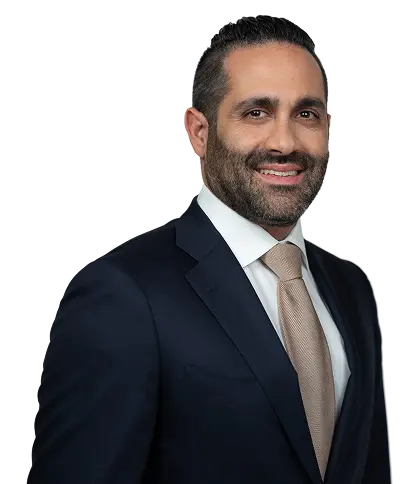
With Joseph Shirazi and Simon Esfandi at the helm, our firm is a trusted name in accident law in California.
Meet Our Managing Partners
National Top 100 Trial Lawyers and Avvo 10.0 Superb. Loyola Law School graduate. Recognized for his $14,500,000 truck accident verdict and a $13,000,000 trial verdict.
Read Full Bio →
Super Lawyers Rising Star. Southwestern Law School graduate. Led the firm’s $9,870,000 motorcycle accident settlement and a $2,250,000 rideshare recovery.
Read Full Bio →- ★ National Top 100 Trial Lawyers
- ★ Super Lawyers Rising Star
- ★ Avvo 10.0 Superb Rating
- ★ Top 40 Under 40
- ★ Consumer Attorneys of California · CAALA · AAJ

Countless Real Client Reviews Verified by Google


Jerry
After 10 accidents and 9 attorneys, the client met Simon, who stood out for his honesty and clear communication. Years later, after another accident, the client called Simon and was impressed by his professionalism and follow-through. Simon explained everything, connected him with top doctors, and kept every promise. It was the first time the client felt truly supported—highly recommending Simon and Joseph for their integrity and dedication.
Jacob
Jacob was rear-ended by a big rig and left nearly paralyzed for a year. He found Cooper Law Group, and Joseph and Simon personally helped him through the legal process. Over two years, they ensured he got the medical care and surgeries he needed, helped repair his car, and secured the compensation he deserved. He highly recommends them for truly fighting for their clients.
Blandine
During the early days of COVID, Blandine was hit by a car while biking to work. Alone and unsure of what to do, they found Compass Law Group. Joseph was the first to respond with care and clarity. Throughout the case, the team—Joseph, Simon, and Julie—provided support, regular check-ins, and made the client feel safe and cared for. They now consider the firm like family and highly recommend them for their compassion and competence.
Understanding Your Rights:
Frequently Asked
Questions
#1 Do I have a case?
Understanding whether a claim exists is one of the challenges of personal injury law. This is why we offer free initial consultations to help you make this determination and allow you an avenue to vindicate your rights.
We’re committed to fighting for the rights of accident victims throughout Southern California, and, unlike other California personal injury attorneys, we will take on any case if we can help, no matter how big or small.
#2 What is personal injury?
Personal injury involves harm to an individual’s body or property caused by someone else’s negligence. It can range from minor to significant injuries, often requiring legal action to recover damages. We specialize in representing and securing fair settlements for such victims.
#3 Why hire Compass Law Group?
Our client-focused approach ensures personalized attention, detailed case building, and compelling evidence presentation. We’re skilled in negotiating settlements and prepared for trial with aggressive strategies. Our firm maintains transparent communication, involves clients in the process, and utilizes a wide network of expert witnesses and resources to strengthen cases. Choosing us means trusting a team dedicated to your success and justice.
#4What if I didn't go to the hospital?
No matter the injury size, you have rights that need defending. Many injuries seem minor at first but can worsen over time. Ignoring treatment or legal advice risks your health and compensation. Seek immediate medical and legal help after any accident to ensure proper diagnosis and strengthen your compensation claim.