


Your Battle, Our Compass:

Los Angeles Workplace Sexual Abuse Attorney

If you experienced sexual abuse or assault in your Los Angeles workplace, our attorneys are here to help. Compass Law Group has extensive experience handling workplace sexual abuse cases throughout Los Angeles County and is committed to holding employers and perpetrators accountable. Call us today for a free, confidential consultation at (213) 320-1001.

TL;DR — Workplace Sexual Abuse Attorney San FranciscoCalifornia’s AB 2777 (2022) created a three-year revival window — open through December 31, 2026 — allowing adult survivors of workplace sexual assault to file civil claims that were previously barred by the statute of limitations, while AB 218 extended parallel protections for survivors of childhood institutional abuse. A san francisco workplace sexual abuse attorney can help San Francisco survivors hold employers, supervisors, and institutions civilly liable for enabling or covering up abuse, even when criminal charges were never filed. Call (213) 320-1001 now for a free, confidential consultation — time on your AB 2777 window may be limited.

Workplace Sexual Abuse Civil Law in San Francisco and San Francisco County

San Francisco workers who experience sexual abuse or assault in the workplace have the right to pursue civil damages independent of any criminal case. Under California’s Fair Employment and Housing Act (FEHA) and California Civil Code Section 1708.5, employers in San Francisco County can be held liable when they knew or should have known abuse was occurring and failed to act. AB 2777 specifically targets workplace and institutional settings, allowing survivors to revive lapsed claims through December 31, 2026. Recoverable damages include lost wages, medical and psychological treatment costs, pain and suffering, and punitive damages where an employer’s conduct was especially egregious. San Francisco’s concentration of major tech, finance, and hospitality employers makes third-party institutional liability — holding corporations and HR departments accountable — a critical component of these cases.

★★★★★
5.0 / 5
195 Google Reviews  ·  Read Reviews ↗

Who Can Be Held Liable for Workplace Sexual Abuse in San Francisco?

Workplace sexual abuse in San Francisco rarely has a single wrongdoer. Under California’s Fair Employment and Housing Act (Gov. Code §12940), employers with five or more employees bear strict liability for a supervisor’s sexual harassment and a legal duty to prevent abuse by co-workers and third parties. When an employer knew or should have known about ongoing misconduct and failed to act, that failure creates independent institutional liability — separate from the individual perpetrator’s own culpability.

Under respondeat superior, San Francisco employers — including major technology companies, UCSF Medical Center, hotel and restaurant groups along the Embarcadero, and the City and County of San Francisco — may be held vicariously liable for abuse committed within the scope of employment. Employers who failed to conduct adequate background checks or retained a known offender also face negligent hiring and negligent retention claims, theories that do not require proving the abuser acted within formal job duties. Staffing agencies that place workers into abusive environments share this exposure under joint-employer liability principles.

  • The individual perpetrator — directly liable for assault, battery, and intentional infliction of emotional distress
  • The employer — strictly liable under FEHA for supervisor harassment; liable for co-worker abuse when it knew or should have known and failed to intervene
  • Staffing agencies and labor contractors — jointly liable as co-employers when their placed workers commit abuse on San Francisco job sites
  • Property owners and facilities managers — liable for permitting recurring misconduct on their premises, including commercial office buildings and San Francisco hospitality venues
  • The City and County of San Francisco — liable as a government employer for sexual abuse by municipal employees, subject to mandatory Government Code claims procedures before suit
Call Compass Law Group — Free Consultation for School Sexual Abuse Survivors

Frequently Asked Questions: Workplace Sexual Abuse Attorney San Francisco

AB 2777, codified at California Code of Civil Procedure §340.16, created a limited revival window allowing adult survivors of sexual assault — including workplace assaults occurring on or after January 1, 2009 — to file civil claims even if the original statute of limitations had already expired. This window closes permanently on December 31, 2026, after which previously time-barred claims cannot be revived. San Francisco survivors whose claims were dismissed or never filed due to expired deadlines should consult an attorney immediately, as this is a one-time legislative opportunity.

Under California’s Fair Employment and Housing Act (Government Code §12940), employees must file a complaint with the Civil Rights Department (CRD) within three years of the last act of harassment or abuse. After the CRD issues a right-to-sue notice, claimants have one year to file in San Francisco Superior Court at 400 McAllister Street. Federal Title VII claims carry a shorter 300-day deadline to file with the Equal Employment Opportunity Commission, so preserving both timelines from the outset is critical.

California plaintiffs in workplace sexual abuse cases can recover economic damages including lost wages, future earning capacity, and medical and psychiatric treatment costs. Non-economic damages for pain, suffering, emotional distress, and loss of enjoyment of life are also recoverable without a statutory cap under FEHA. Unlike federal Title VII claims, which cap combined non-economic and punitive damages at $300,000 for larger employers, FEHA imposes no such limit, making California law significantly more favorable for San Francisco survivors.

Under Government Code §12940(j), California employers are strictly liable for sexual harassment and abuse committed by supervisors, meaning the employer cannot escape liability even if it was unaware of the conduct. For co-worker or third-party perpetrators, employers are liable if they knew or should have known about the abuse and failed to take immediate corrective action. San Francisco employers who ignored internal HR complaints, failed to investigate, or enabled a known abuser face direct liability under both FEHA and California common law negligent supervision claims.

Yes — Government Code §12940(h) expressly prohibits employers from retaliating against any employee who opposes sexual harassment, files a complaint with the CRD or EEOC, or participates in an investigation or proceeding under FEHA. Retaliatory acts including termination, demotion, schedule changes, or hostile treatment after reporting abuse constitute independent FEHA violations with their own damages claims. San Francisco workers should document all adverse employment actions with timestamps and preserve all communications with HR, supervisors, and management after making a report.

Filing with the Civil Rights Department (formerly the DFEH) is an administrative prerequisite under FEHA — claimants must exhaust this administrative remedy before filing a civil lawsuit in San Francisco Superior Court. The CRD investigates the complaint and may attempt mediation; if unresolved, it issues a right-to-sue notice that triggers the one-year window to file in court. Alternatively, claimants can request an immediate right-to-sue notice from the CRD without awaiting a full investigation, allowing faster access to San Francisco Superior Court while preserving all FEHA claims.

AB 218, which amended Code of Civil Procedure §340.1, extended the statute of limitations for childhood sexual abuse claims, giving survivors until age 40 — or five years from the date they discover the psychological injury was caused by the abuse, whichever is later — to file civil claims. The law also opened a three-year revival window from 2020 through 2022 for previously time-barred claims and eliminated the prior requirement to file a government claim when a public entity is a defendant. San Francisco survivors abused at work as minors — including interns, minor employees, or students in school-sponsored work programs — may have claims against employers, institutions, and individual perpetrators under this statute.

Yes — employer liability under FEHA and California common law does not depend on the perpetrator’s current employment status. An employer can be held liable for negligent hiring, negligent supervision, and negligent retention if it knew or should have known the employee posed a risk of sexual abuse before or during employment. San Francisco courts, applying the respondeat superior doctrine, have also found employer liability where abuse occurred within the scope of employment, even after the abuser’s departure, provided the conduct arose out of employment-related authority or duties.

Survivors should immediately preserve text messages, emails, voicemails, social media messages, and any written communications from the perpetrator or witnesses, as well as any photographs or surveillance footage where legally obtainable. Medical records, psychiatric evaluations, and documentation of physical injuries should be obtained as soon as possible, since contemporaneous medical evidence is among the most compelling proof in civil litigation. All internal complaints to HR, management, or supervisors — and any responses received — should be saved and if possible reported to the San Francisco Police Department, as a police report creates an independent official record that supports civil claims.

The vast majority of California civil sexual abuse cases resolve through settlement before trial, with San Francisco Superior Court statistics reflecting that fewer than five percent of civil cases proceed to a jury verdict. However, retaining an attorney who is prepared and capable of litigating through trial in San Francisco Superior Court is critical leverage in settlement negotiations, as defendants assess litigation risk based on opposing counsel’s trial record. Cases involving institutional defendants — hospitals, schools, staffing agencies, or large corporations operating in San Francisco — frequently involve pre-trial mediation before a JAMS or AAA neutral before any courtroom appearance.

FEHA (Government Code §12940 et seq.) covers California employers with five or more employees, while federal Title VII applies to employers with fifteen or more employees — meaning FEHA protects a broader class of San Francisco workers. FEHA does not cap compensatory or punitive damages, whereas Title VII caps combined non-economic and punitive damages at $300,000 for employers with 500 or more employees. San Francisco attorneys typically pursue claims under both statutes simultaneously, preserving all available remedies and giving plaintiffs access to both the CRD and EEOC administrative processes.

The December 31, 2026 deadline under CCP §340.16 (AB 2777, the STOP Act) applies to adult survivors of sexual assault — defined broadly to include sexual battery, rape, and related offenses — where the assault occurred on or after January 1, 2009, or where a defendant or related entity engaged in a cover-up of the abuse after that date. After December 31, 2026, the revival window closes permanently and previously expired claims cannot be revived under this statute regardless of any new facts or disclosures. San Francisco survivors who believe their claims are time-barred should obtain a legal evaluation before this deadline, as even cases involving institutional defendants or well-resourced employers may be viable if filed before the cutoff.

Contact an attorney as soon as safely possible after the incident — FEHA’s three-year clock begins running from the last act of abuse, and the December 31, 2026 AB 2777 revival window is a fixed legislative deadline that cannot be tolled. Early legal counsel ensures that evidence is preserved through formal litigation holds, that internal investigations do not compromise your claims, and that you do not make statements to HR or insurance adjusters that could be used against you. An attorney can also file a CRD complaint on your behalf to toll certain deadlines while a full case investigation is conducted.

Yes — San Francisco’s Police Code Article 33 (the City’s Human Rights Ordinance) provides additional protections against harassment and discrimination in workplaces operating within San Francisco County, and the San Francisco Office of Labor Standards Enforcement (OLSE) enforces local worker protection laws including paid sick leave provisions that allow survivors to take time off for medical and legal appointments. San Francisco’s Living Wage Ordinance and local contractor requirements can also expose city-funded employers to additional liability and administrative sanctions for civil rights violations. Survivors employed by San Francisco city agencies or contractors may also have claims under the California Tort Claims Act (Government Code §900 et seq.), which requires a government claim to be filed within six months of the incident.

Under Government Code §12940(j), FEHA imposes a duty on employers to take all reasonable steps to prevent and correct workplace sexual harassment and abuse by co-workers, supervisors, managers, and non-employees — including independent contractors, vendors, clients, and staffing agency workers. Individual supervisors can face personal liability for harassment under FEHA, and third-party contractors who directly committed abuse can be sued individually under California Civil Code §1708.5 (sexual battery) and related common law torts. San Francisco plaintiffs frequently name both the employing entity and the individual perpetrator as defendants, maximizing available insurance coverage and recovery while holding all responsible parties accountable.

Workplace Sexual Abuse — San Francisco — image 1
Los Angeles school hallway — school sexual abuse attorney

How We Value a Workplace Sexual Abuse Case in San Francisco

Calculating the full value of a workplace sexual abuse claim begins with compensatory damages — the documented economic losses you have suffered. These include the cost of therapy and psychological counseling (often $200–$400 per session in San Francisco), emergency medical treatment, ongoing mental health care, and any wages lost while you were unable to work. San Francisco County’s high cost of living means these out-of-pocket losses are frequently substantial, and our attorneys document every dollar to build the strongest possible demand against the responsible party.

California law also allows recovery for emotional distress, humiliation, loss of enjoyment of life, and lasting psychological impairment — damages that often exceed the economic losses in workplace abuse cases. When a San Francisco employer, staffing agency, or institution enabled or concealed the abuse, courts may further award punitive damages specifically designed to punish reckless institutional misconduct and deter future harm.

Under AB 218 and AB 2777, California eliminated statutory damages caps for qualifying sexual abuse claims, meaning there is no ceiling on what survivors may recover. At Compass Law Group, our attorneys have recovered more than $250 million for abuse survivors across California. Call (213) 320-1001 today for a free, confidential consultation.

Workplace Sexual Abuse — San Francisco — image 2
Los Angeles school building exterior — school sexual abuse lawsuit

What to Do If You Are a Workplace Sexual Abuse Survivor in San Francisco

  1. Remove Yourself From Immediate Danger — Your safety comes first: if the abuse is ongoing, distance yourself from the perpetrator as much as possible and, if needed, contact the San Francisco Police Department at 415-553-0123 or use a safe location outside the workplace to make that call.
  2. Seek Medical Attention and Preserve Physical Evidence — Visit a San Francisco hospital or SANE (Sexual Assault Nurse Examiner) clinic as soon as possible — Zuckerberg San Francisco General has a dedicated forensic nursing program — and avoid bathing, changing clothes, or discarding any items that may carry physical evidence.
  3. Document Everything in Writing — Record dates, times, locations, the abuser’s name and title, witnesses present, and any communications such as texts, emails, or voicemails; store copies outside your workplace accounts so your employer cannot access or delete them.
  4. Report Through Official Channels (If Safe to Do So) — File an internal complaint with your HR department in writing and consider filing a charge with the California Civil Rights Department (CRD) or the EEOC’s San Francisco office — both agencies cover San Francisco County employers and your report creates a formal record that strengthens your civil case.
  5. Act Before the AB 2777 Revival Window Closes — California’s AB 2777 reopened the statute of limitations for previously time-barred workplace sexual assault claims, but this revival window expires December 31, 2026 — if prior deadlines kept you from filing, this is your final opportunity to bring a civil claim in San Francisco County.
  6. Contact a San Francisco Workplace Sexual Abuse Attorney — An experienced attorney can advise you on civil claims against your employer under FEHA, identify third-party liability, and file suit before the AB 2777 deadline; the sooner you act, the better your chances of preserving critical evidence and witness memory.

If you or someone you love has experienced workplace sexual abuse in San Francisco, call our office today at (213) 320-1001 for a free, confidential consultation — we are here to help you understand your rights and take action before time runs out.

Call Compass Law Group — Free Consultation for School Sexual Abuse Survivors
COMPASS LAW GROUP — LOS ANGELES OFFICE

Do I have a case?

Contact us today for a free consultation.

This field is for validation purposes and should be left unchanged.

California's
Gold Standard
Injury Law Firm

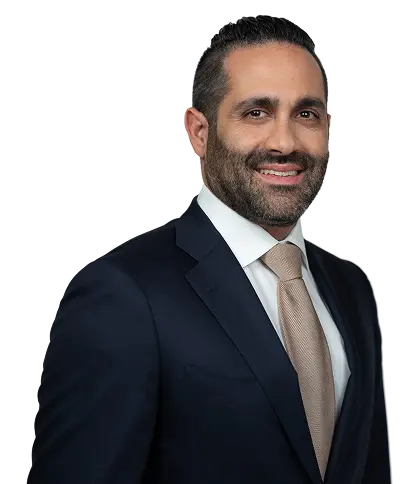
With Joseph Shirazi and Simon Esfandi at the helm, our firm is a trusted name in accident law in California.

Meet Our Managing Partners

Joseph Shirazi
Managing Partner · CA Bar #265403

National Top 100 Trial Lawyers and Avvo 10.0 Superb. Loyola Law School graduate. Recognized for his $14,500,000 truck accident verdict and a $13,000,000 trial verdict.

Read Full Bio →
Simon Esfandi — Managing Partner
Simon Esfandi
Managing Partner · CA Bar #275307

Super Lawyers Rising Star. Southwestern Law School graduate. Led the firm’s $9,870,000 motorcycle accident settlement and a $2,250,000 rideshare recovery.

Read Full Bio →
Firm Recognition
  • ★ National Top 100 Trial Lawyers
  • ★ Super Lawyers Rising Star
  • ★ Avvo 10.0 Superb Rating
  • ★ Top 40 Under 40
  • ★ Consumer Attorneys of California · CAALA · AAJ

Total Recovered for Clients
$250,000,000+
$14.5M truck verdict · $13M trial verdict · $9.87M motorcycle · $5M car accident
Past results do not guarantee future outcomes. Every case is unique.
Client Rating
★★★★★ 5.0
193+ verified Google reviews · No win, no fee

Countless Real Client Reviews Verified by Google

Jerry

After 10 accidents and 9 attorneys, the client met Simon, who stood out for his honesty and clear communication. Years later, after another accident, the client called Simon and was impressed by his professionalism and follow-through. Simon explained everything, connected him with top doctors, and kept every promise. It was the first time the client felt truly supported—highly recommending Simon and Joseph for their integrity and dedication.

Jacob

Jacob was rear-ended by a big rig and left nearly paralyzed for a year. He found Cooper Law Group, and Joseph and Simon personally helped him through the legal process. Over two years, they ensured he got the medical care and surgeries he needed, helped repair his car, and secured the compensation he deserved. He highly recommends them for truly fighting for their clients.

Blandine

During the early days of COVID, Blandine was hit by a car while biking to work. Alone and unsure of what to do, they found Compass Law Group. Joseph was the first to respond with care and clarity. Throughout the case, the team—Joseph, Simon, and Julie—provided support, regular check-ins, and made the client feel safe and cared for. They now consider the firm like family and highly recommend them for their compassion and competence.

Understanding Your Rights:

Frequently Asked
Questions

Understanding whether a claim exists is one of the challenges of personal injury law. This is why we offer free initial consultations to help you make this determination and allow you an avenue to vindicate your rights.

We’re committed to fighting for the rights of accident victims throughout Southern California, and, unlike other California personal injury attorneys, we will take on any case if we can help, no matter how big or small.

Personal injury involves harm to an individual’s body or property caused by someone else’s negligence. It can range from minor to significant injuries, often requiring legal action to recover damages. We specialize in representing and securing fair settlements for such victims.

Our client-focused approach ensures personalized attention, detailed case building, and compelling evidence presentation. We’re skilled in negotiating settlements and prepared for trial with aggressive strategies. Our firm maintains transparent communication, involves clients in the process, and utilizes a wide network of expert witnesses and resources to strengthen cases. Choosing us means trusting a team dedicated to your success and justice.

No matter the injury size, you have rights that need defending. Many injuries seem minor at first but can worsen over time. Ignoring treatment or legal advice risks your health and compensation. Seek immediate medical and legal help after any accident to ensure proper diagnosis and strengthen your compensation claim.