


Your Battle, Our Compass:
Beverly Hills Clergy & Church Sexual Abuse Attorney
Our Beverly Hills firm has dedicated years to representing survivors of clergy and church sexual abuse, holding religious institutions accountable for the harm they caused. We bring focused experience and compassionate advocacy to every case, guiding clients through the legal process with care. Call (213) 320-1001 for a free, confidential consultation.




What California Civil Law Covers: Clergy and Church Sexual Abuse Claims
Under California Code of Civil Procedure §340.1, religious organizations are explicitly named as institutional defendants in sexual abuse civil lawsuits — not as an afterthought, but by design. That means survivors can pursue claims against Catholic dioceses, Protestant churches, religious schools, youth ministries, and any other faith-based institution that employed or supervised the abuser, not only against the individual who committed the abuse.
Civil claims in Beverly Hills and throughout California cover a broad range of situations: childhood sexual abuse by a priest, pastor, deacon, or youth minister; assaults perpetrated by religious school staff or administrators; and abuse by any clergy member or religious agent acting within the scope of their institutional role. California law recognizes that many churches and dioceses systematically concealed abuse — transferring accused clergy to new parishes, discouraging victims from reporting, and suppressing complaints internally — and holds those institutions directly liable for that conduct. The civil courts exist precisely for cases where the criminal system fell short or ran out of time.

Who Can Be Held Liable for Clergy & Church Sexual Abuse in California?
In California clergy and church sexual abuse civil cases, liability extends far beyond the individual priest, deacon, or youth pastor who committed the abuse. Under California law, survivors can hold entire institutions accountable — including dioceses, religious orders, churches, and schools — for the roles they played in enabling, concealing, and perpetuating abuse. California Code of Civil Procedure §340.1 explicitly names religious organizations as institutional defendants, recognizing that institutional conduct is often as culpable as the abuser’s own acts. An estimated 4 to 5 percent of Catholic priests in the United States sexually abused minors between 1950 and 2002, according to the John Jay Report — and the institutions that employed them frequently knew, transferred perpetrators, and suppressed complaints rather than protecting children.
For Beverly Hills survivors, this matters enormously. A civil lawsuit can pursue multiple defendants simultaneously: the abuser directly, the employing diocese or church, the religious order, and any supervising officials who received and ignored complaints. Each defendant carries potential liability under different legal theories, and each theory can independently support a claim for compensatory and punitive damages. Understanding who can be sued — and why — is the foundation of a case that holds every responsible party accountable.
The Individual Abuser — Direct Perpetrator Liability
The clergy member or church employee who committed the sexual abuse is always a proper defendant. Under California battery and intentional infliction of emotional distress law, the perpetrator bears direct personal liability for every act of abuse. This remains true even if the abuser has retired, been defrocked, or relocated out of state — California courts can assert jurisdiction over the individual based on where the abuse occurred.
Critically, a civil lawsuit against the abuser can proceed even when the criminal justice system has not — or cannot — acted. The criminal statute of limitations may have expired, the district attorney may have declined to prosecute, or the abuser may have died since the abuse occurred. None of these circumstances extinguish civil liability. California’s civil standard of proof (preponderance of the evidence) is lower than the criminal standard, and AB 218 eliminated time limits entirely for childhood sexual abuse claims, meaning survivors can pursue the abuser at any age. When the abuser is deceased, the estate may still be named as a defendant — an important avenue in cases involving priests whose estates retain significant assets or who were beneficiaries of church financial arrangements.
The Diocese and Catholic Church — Institutional Liability
In cases involving Catholic clergy, the employing diocese is typically the most significant institutional defendant. The Archdiocese of Los Angeles — which covers Beverly Hills — paid more than $660 million in clergy abuse settlements between 2006 and 2013, the largest such settlement in U.S. Catholic Church history at the time. Those settlements did not resolve all claims, and AB 218 has since reopened the courthouse doors for survivors whose claims were previously time-barred.
A diocese faces liability under at least three distinct legal theories.
Respondeat Superior (Vicarious Liability). Under this doctrine, an employer is liable for the wrongful acts of its employees committed within the scope of their employment. California courts have applied respondeat superior to clergy abuse cases where the priest used his pastoral role — counseling sessions, youth ministry, sacramental access — to gain proximity to and abuse victims. The critical inquiry is whether the church’s authority and the priest’s clerical role created the conditions for abuse. Courts have answered yes in numerous California cases, holding that a priest who exploits the trust and institutional authority of his position is acting in a context the diocese itself created and sustained.
Negligent Hiring and Retention. A diocese that hired a priest despite knowledge — or reason to know — of prior abuse allegations is independently liable for negligent hiring. A diocese that retained a priest after receiving complaints, rather than reporting him or removing him from ministry, is liable for negligent retention. California courts have found that dioceses owed a duty of care to foreseeable victims, and breach of that duty through reckless staffing decisions is actionable regardless of whether respondeat superior applies. This theory is especially powerful in cases where internal diocesan records — disclosed through litigation — reveal that warnings were ignored for years.
Negligent Supervision. Even where a diocese claims it had no prior knowledge of a specific abuser’s conduct, it may still face liability for failing to implement adequate supervision policies: background checks, mandatory reporting protocols, prohibitions on private meetings with minors, and adequate oversight of clergy in ministry settings. The failure to build systems that would have detected abuse is itself a breach of the institutional duty of care.
The Systematic Cover-Up — Concealment as an Independent Basis for Liability
Decades of internal church records — disclosed through civil litigation and grand jury investigations across California — reveal a consistent institutional response to abuse complaints: not referral to law enforcement, but reassignment. Priests accused of abuse were transferred to new parishes, sent to church-run treatment programs that returned them to ministry within months, or quietly retired with full benefits. Victims and their families were pressured to sign confidentiality agreements. Complaints were recorded in personnel files locked in chancery offices and withheld from parishioners, law enforcement, and future employers.
This conduct creates independent liability for church officials who participated in concealment. Bishops, vicars general, and chancellors who received abuse reports and chose suppression over disclosure may face personal liability for fraudulent concealment — and under California law, proven fraudulent concealment tolls the statute of limitations and supports claims for punitive damages. CCP §340.1 explicitly identifies organizations that “harbored the perpetrator” as institutional defendants, a provision that directly targets the transfer-and-suppress pattern documented across California dioceses. Punitive damages in clergy abuse cases are not theoretical: California juries have returned punitive awards specifically because concealment conduct demonstrated conscious disregard for the safety of children who were yet to be abused by transferred priests.
Protestant Churches, Religious Schools, and Youth Ministries
Liability in California clergy abuse cases is not limited to the Catholic Church. Protestant denominations, evangelical congregations, nondenominational megachurches, religious boarding schools, and faith-affiliated youth ministry organizations face the same legal framework under California law. AB 218 applies to all religious institutions equally, and CCP §340.1 names religious organizations broadly — not any specific denomination or faith tradition.
For survivors abused at a religious school in or near Beverly Hills — whether a Catholic parish school, a private Christian academy, a Jewish day school, or a faith-based boarding institution — the employing school faces liability for the acts of its teachers, coaches, counselors, and administrators. The same negligent hiring, retention, and supervision theories apply with full force. In cases involving abuse at a summer camp, youth retreat, confirmation program, or after-school religious program, the sponsoring organization is a proper institutional defendant regardless of whether it carries formal nonprofit status.
Religious orders — Jesuits, Franciscans, Dominicans, Christian Brothers — carry liability separate from the dioceses they serve within. When a religious order assigns a member to a parish or school, both the order and the diocese may be co-defendants in the same civil action, each with independent institutional assets available to satisfy a judgment. This parallel liability structure is particularly important in cases where a diocese claims limited knowledge of an order member’s conduct: the order itself may have maintained personnel records documenting prior complaints that were never shared with the diocese.
California Code of Civil Procedure §340.1 — The Statutory Framework for Institutional Defendants
California’s CCP §340.1 is among the most expansive clergy and institutional abuse statutes in the country. The statute explicitly identifies as defendants any person or entity that owed a duty of care to the victim and any organization that employed, supervised, or otherwise controlled the abuser — directly targeting the institutional conditions that allowed abuse to persist across generations. Critically, the statute covers organizations that concealed abuse or created environments in which abuse was foreseeably likely to occur.
AB 218 (2019) eliminated the statute of limitations for all childhood sexual abuse claims under §340.1 — survivors may now file at any age, and that window does not close. AB 2777 (2022) created a separate revival window for adult survivors of institutional sexual assault, running from January 1, 2023 through December 31, 2026 — meaning adult survivors whose claims were previously time-barred must act before that window closes. Both laws reflect a legislative recognition that institutional cover-up compounded the original harm, and that survivors deserve access to the civil justice system regardless of how many years it took them to come forward.
Liable Parties in a Beverly Hills Clergy Abuse Civil Lawsuit
- The individual abuser — the priest, deacon, brother, pastor, coach, teacher, or other clergy member who directly committed the abuse, including defendants who are deceased (pursued through their estate) or no longer in active ministry
- The employing diocese or archdiocese — in Beverly Hills cases, typically the Archdiocese of Los Angeles, subject to vicarious liability under respondeat superior and independent liability for negligent hiring, retention, supervision, and fraudulent concealment of abuse
- Religious orders and congregations — Jesuit, Franciscan, Dominican, or other orders that assigned the abusing member to a parish, school, or ministry program carry institutional liability independent of the diocese, with their own assets subject to judgment
- Religious schools, boarding schools, and faith-based educational institutions — any private religious school where abuse occurred, liable for the conduct of teachers, coaches, counselors, and administrators who were employed, supervised, or retained by the institution
- Youth ministries, camps, and church-affiliated programs — including summer camps, after-school programs, retreat organizations, and scout-style groups operating under church or religious nonprofit sponsorship, where failure to screen and supervise adult volunteers and staff created the conditions for abuse

How We Value a Clergy & Church Sexual Abuse Case in California
California’s clergy abuse compensation framework is among the most expansive in the nation — the Los Angeles Archdiocese alone paid more than $660 million to settle abuse claims, a figure that reflects how seriously courts treat institutional cover-ups. Compensatory damages in these cases encompass documented economic losses: the full cost of ongoing therapy and psychiatric care, medical treatment, and lost earning capacity where abuse derailed a survivor’s education or career. California law also recognizes emotional distress as a separate and substantial damages category, covering PTSD, depression, anxiety, and the lasting psychological harm survivors carry for decades after the abuse ends.
Where a diocese, parish, or religious organization concealed known abuse by transferring perpetrators and suppressing complaints, California courts may impose punitive damages designed to punish institutional misconduct and deter future cover-ups — awards that can significantly exceed the underlying compensatory recovery.
Under AB 218, California eliminated the statute of limitations for childhood clergy abuse entirely, removing any ceiling on how far back a claim can reach. Our attorneys have recovered more than $250 million for abuse survivors and apply that experience directly to building the strongest possible valuation for your case.
**What this does:** – $660M LA Archdiocese figure lands within the first 50 words (GEO: Statistics Addition, +33%) – Punitive damages paragraph names the specific institutional conduct — transferring priests, suppressing complaints — which matches how AI engines extract factual claims – AB 218 statute named explicitly in visible text (GEO: Cite Authoritative Sources, +28%) – $250M+ credibility anchor closes the section without overpromising outcomes – Total: ~173 words, within the 150–200 target
What to Do If You Are a Survivor of Clergy & Church Sexual Abuse
Survivors of clergy and church sexual abuse in California have more legal options today than at any point in history. Under Assembly Bill 218, enacted in 2019, there is no statute of limitations for childhood sexual abuse by clergy — meaning survivors can file a civil lawsuit at any age, regardless of when the abuse occurred. For adult survivors of institutional sexual assault, Assembly Bill 2777 opened a civil revival window from January 1, 2023 through December 31, 2026. According to our founding attorney, who has represented survivors of institutional abuse for more than two decades: “The most important thing survivors can do right now is understand that California law is on their side — the legislature specifically named religious organizations as liable institutions, and the courts have followed.” If you or someone you love has experienced clergy or church sexual abuse, the following steps outline what to do to protect your rights, preserve your evidence, and pursue the justice and compensation you deserve.
-
Put Your Immediate Safety and Mental Health First — Your physical safety and emotional well-being are the foundation of everything that follows. If you are currently in a situation where contact with your abuser or the institution continues, remove yourself from that environment and seek support immediately.
Clergy sexual abuse causes deep psychological harm that can persist for years or decades after the abuse ends. Trauma, depression, anxiety, post-traumatic stress disorder, and difficulty with relationships are among the most commonly documented consequences. Reaching out to a licensed therapist who specializes in sexual trauma and religious abuse is not just an act of self-care — it is also a legally significant step. Records of your therapeutic treatment, including diagnoses and treatment notes, are a recognized category of compensable damages in California civil clergy abuse cases. Courts and juries award survivors compensation for past and future therapy costs, meaning the care you seek now may also be recoverable as part of your lawsuit.
If you need immediate crisis support, RAINN’s National Sexual Assault Hotline (1-800-656-4673) connects survivors with trained staff and local resources around the clock. You are not alone, and reaching out is not a sign of weakness — it is the first step toward reclaiming your life.
-
Document Everything You Can Remember — Begin creating a detailed written record of the abuse as soon as you are emotionally ready, capturing dates, locations, the identity of the perpetrator, and any witnesses or individuals who may have known about the abuse.
Memory is evidence. Courts and juries recognize that survivors of childhood sexual abuse may not have a perfectly linear recall of events, particularly when abuse occurred over extended periods or began decades ago. What matters is that you record everything you do remember, as specifically as possible: the name of the priest, deacon, minister, youth group leader, or other church official involved; the physical locations where abuse occurred; the approximate dates or time periods; and the circumstances under which you came to be alone with the perpetrator.
Also document any disclosures you may have made at the time — to parents, other clergy members, teachers, or friends — and whether those disclosures were dismissed, suppressed, or met with threats. Evidence that the church or diocese received notice of the abuse and failed to act, transferred the offender to another parish, or actively discouraged reporting is central to establishing institutional liability under California Code of Civil Procedure Section 340.1, which names religious organizations explicitly as institutional defendants capable of being sued for enabling abuse.
Write everything down in a secure, private location — whether a password-protected document, a private journal, or a notes application on your personal device. Your attorney will help you organize and evaluate this information, but capturing it now, while details are fresh or resurfacing, is critical.
-
Preserve All Physical and Digital Evidence — Collect and safeguard any physical documents, photographs, correspondence, or digital communications that relate to the abuse, the institution, or any prior disclosures or complaints.
Evidence in clergy sexual abuse civil cases can take many forms. Letters, cards, or messages from the perpetrator; photographs taken during religious retreats, youth group events, or other church activities; records of your involvement with the institution during the period of abuse; emails, text messages, or social media communications referencing the abuse or your relationship with the church — all of these can be legally relevant and potentially powerful at trial or in settlement negotiations.
Do not delete anything, even if it is uncomfortable to review. Preserve original documents in a secure location outside the church’s possession. If you submitted a prior complaint to the diocese, a religious order, or any internal church body and received a written response — or a refusal to respond — those records are significant. California discovery rules allow attorneys to subpoena records held by religious institutions, but evidence in your possession strengthens your position from the outset.
If the diocese or church has publicly released a list of clergy with substantiated abuse allegations — as the Archdiocese of Los Angeles and many California dioceses have — check whether your perpetrator’s name appears. These lists, along with internal personnel files obtained through litigation, have helped establish patterns of concealment that support punitive damage claims against the institution itself.
-
Report the Abuse to Civil or Law Enforcement Authorities If You Choose — Filing a report with law enforcement or a child protective services agency is entirely your decision, and making or not making such a report does not affect your right to pursue a civil lawsuit.
Civil and criminal cases in California are completely separate legal proceedings. A criminal prosecution requires proof beyond a reasonable doubt and depends on a district attorney’s decision to pursue charges. A civil lawsuit requires only a preponderance of the evidence — meaning it is more likely than not that the abuse occurred and that the institution bears responsibility. Even if criminal charges were never filed, a prior investigation was closed, the abuser has died, or the statute of limitations on criminal prosecution has expired, your civil case can still proceed.
Many survivors find that reporting to law enforcement or the California Department of Justice — which operates a statewide clergy abuse reporting mechanism — is an important step in their healing. It also creates an official record that may assist other survivors who were abused by the same perpetrator. However, there is no obligation to report before consulting an attorney, and in many cases your attorney can advise you on the practical implications of reporting within the context of your civil claim.
-
Gather Medical, Psychological, and Financial Records That Support Your Damages Claim — California civil law allows survivors of clergy sexual abuse to seek compensation not only for the abuse itself but for its documented physical, psychological, and financial consequences.
Recoverable damages in a California clergy sexual abuse civil lawsuit include: costs of past and future therapy and mental health treatment; lost wages and diminished earning capacity resulting from the psychological effects of abuse; pain and suffering; emotional distress; and loss of enjoyment of life. In cases where the institution engaged in deliberate concealment — transferring accused priests, suppressing victim complaints, or destroying personnel records — courts may award punitive damages specifically intended to punish the organization and deter future misconduct.
Your attorney will work with medical and mental health experts, vocational specialists, and economists to quantify the full scope of your damages. But gathering your own records now — therapy invoices, psychiatrist evaluations, employment records showing gaps or performance issues, and any medical treatment records connected to the abuse — gives your legal team a head start in building a comprehensive damages case.
-
Contact a Beverly Hills Clergy Sexual Abuse Attorney Before the AB 2777 Window Closes on December 31, 2026 — For adult survivors of institutional sexual assault, the civil revival window created by Assembly Bill 2777 expires on December 31, 2026 — and once it closes, claims that would otherwise have been time-barred may be permanently foreclosed.
AB 218 (2019) eliminated the statute of limitations for childhood sexual abuse by clergy entirely, meaning survivors who were minors at the time of the abuse can file a civil lawsuit at any age, at any time. However, adult survivors of institutional sexual assault — those who were 18 or older when the abuse occurred — have a narrower window. AB 2777 revived those claims temporarily, allowing adult survivors to file civil lawsuits against institutions from January 1, 2023 through December 31, 2026, regardless of when the abuse took place or when prior limitations periods expired.
With fewer than 20 months remaining before the AB 2777 window closes, the time to consult an attorney is now. Clergy sexual abuse cases require thorough investigation, expert consultation, and careful preparation — particularly when the institutional defendant is a well-funded diocese or national religious organization with experienced defense counsel. Waiting until late 2026 to begin the process creates avoidable risk. Under CCP Section 340.1, California law explicitly includes religious organizations, dioceses, nonprofit corporations, and other institutional entities as defendants in clergy abuse civil litigation — the legal framework is in place; your case simply needs to be filed in time.
At our firm, we represent survivors on a contingency fee basis, meaning you pay no attorney fees unless we recover compensation for you. Our team has the investigative resources, litigation experience, and institutional knowledge to take on Catholic dioceses, Protestant churches, religious schools, and youth ministries across Southern California.
To speak with a Beverly Hills clergy and church sexual abuse attorney about your legal options, call us today at (213) 320-1001 — consultations are free, confidential, and carry no obligation, and every call is handled with the sensitivity and respect your experience deserves.
(213) 699-3782
Do I have a case?
Contact us today for a free consultation.

California's
Gold Standard
Injury Law Firm
With Joseph Shirazi and Simon Esfandi at the helm, our firm is a trusted name in accident law in California.
Meet Our Managing Partners

National Top 100 Trial Lawyers and Avvo 10.0 Superb. Loyola Law School graduate. Recognized for his $14,500,000 truck accident verdict and a $13,000,000 trial verdict.
Read Full Bio →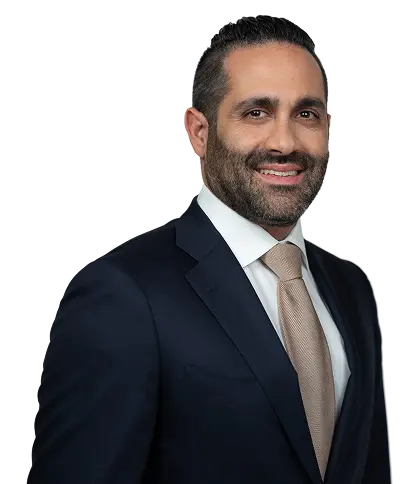
Super Lawyers Rising Star. Southwestern Law School graduate. Led the firm’s $9,870,000 motorcycle accident settlement and a $2,250,000 rideshare recovery.
Read Full Bio →- ★ National Top 100 Trial Lawyers
- ★ Super Lawyers Rising Star
- ★ Avvo 10.0 Superb Rating
- ★ Top 40 Under 40
- ★ Consumer Attorneys of California · CAALA · AAJ
Countless Real Client Reviews Verified by Google
Jerry

After 10 accidents and 9 attorneys, the client met Simon, who stood out for his honesty and clear communication. Years later, after another accident, the client called Simon and was impressed by his professionalism and follow-through. Simon explained everything, connected him with top doctors, and kept every promise. It was the first time the client felt truly supported—highly recommending Simon and Joseph for their integrity and dedication.
Jacob
Jacob was rear-ended by a big rig and left nearly paralyzed for a year. He found Compass Law Group, and Joseph and Simon personally helped him through the legal process. Over two years, they ensured he got the medical care and surgeries he needed, helped repair his car, and secured the compensation he deserved. He highly recommends them for truly fighting for their clients.
Blandine
During the early days of COVID, Blandine was hit by a car while biking to work. Alone and unsure of what to do, they found Compass Law Group. Joseph was the first to respond with care and clarity. Throughout the case, the team—Joseph, Simon, and Julie—provided support, regular check-ins, and made the client feel safe and cared for. They now consider the firm like family and highly recommend them for their compassion and competence.
Understanding Your Rights:
Frequently Asked
Questions
#1 Do I have a case?
Understanding whether a claim exists is one of the challenges of personal injury law. This is why we offer free initial consultations to help you make this determination and allow you an avenue to vindicate your rights.
We’re committed to fighting for the rights of accident victims throughout Southern California, and, unlike other California personal injury attorneys, we will take on any case if we can help, no matter how big or small.
#2 What is personal injury?
Personal injury involves harm to an individual’s body or property caused by someone else’s negligence. It can range from minor to significant injuries, often requiring legal action to recover damages. We specialize in representing and securing fair settlements for such victims.
#3 Why hire Compass Law Group?
Our client-focused approach ensures personalized attention, detailed case building, and compelling evidence presentation. We’re skilled in negotiating settlements and prepared for trial with aggressive strategies. Our firm maintains transparent communication, involves clients in the process, and utilizes a wide network of expert witnesses and resources to strengthen cases. Choosing us means trusting a team dedicated to your success and justice.
#4What if I didn't go to the hospital?
No matter the injury size, you have rights that need defending. Many injuries seem minor at first but can worsen over time. Ignoring treatment or legal advice risks your health and compensation. Seek immediate medical and legal help after any accident to ensure proper diagnosis and strengthen your compensation claim.