


Your Battle, Our Compass:
Beverly Hills College & University Sexual Abuse Attorney
Our Beverly Hills sexual abuse attorneys represent college and university students and former students who were victimized by professors, coaches, resident advisors, teaching assistants, or campus staff who abused a position of academic or institutional authority. If you or a loved one were abused at a California college or university, call us today at (213) 320-1001 for a free, confidential consultation.




Which College and University Personnel Are Covered by California Civil Law
California’s civil sexual abuse statutes reach any faculty member, coach, or staff person who exploits the trust and power imbalance inherent in an academic relationship, including tenured and adjunct professors, teaching assistants, graduate instructors, athletic coaches and trainers, resident advisors (RAs), dormitory and housing staff, academic advisors, and administrators. The legal theory runs on two parallel tracks: a breach of the institution’s duty of care to protect students from foreseeable harm on campus, and an intentional tort of battery, which requires no showing of negligence and supports punitive damages. Under California Civil Code Section 1708.5, any unlawful, offensive, or harmful contact of a sexual nature gives rise to a civil battery claim regardless of the abuser’s title or tenure status. These civil claims are entirely independent of any campus Title IX investigation or disciplinary proceeding — a Title IX finding, or the absence of one, does not determine the outcome of a civil lawsuit.

Who Can Be Held Liable for College & University Sexual Abuse in California?
In California, liability for college and university sexual abuse reaches every person and institution that committed, enabled, or failed to prevent the harm. The individual abuser — whether a professor, coach, RA, teaching assistant, or staff member — bears direct liability for battery and for violating the academic and supervisory trust the position carried. A campus Title IX office complaint and a civil lawsuit operate on entirely independent tracks: a Title IX finding of “responsible” or “not responsible” does not compensate you, and a stalled or dismissed Title IX investigation does not extinguish your civil claims.
Colleges, universities, and university systems face independent liability under two overlapping legal theories. Under respondeat superior, an institution is vicariously liable for abuse that occurs within the scope of an employee’s academic or supervisory duties — such as assault during office hours, a coaching session, or a supervised dormitory activity. Under negligent hiring, supervision, and retention, any institution that knew or should have known a professor, coach, or staff member posed a danger to students is directly liable under California Civil Code § 1714. A single prior complaint — made to a department chair, a Title IX coordinator, campus security, or human resources — is typically sufficient to establish that the institution had, or should have had, constructive knowledge of the risk before the abuse occurred.
- The individual abuser — the professor, coach, teaching assistant, resident advisor, or staff member who committed the abuse
- The college or university — through respondeat superior and direct negligence in hiring, credentialing, and supervision of faculty and staff
- The athletic department or academic program — for negligent retention or failure to act on prior internal complaints against a coach or faculty member
- The Title IX office or administrators — for suppressing, mishandling, or failing to investigate prior reports of misconduct
- University housing or residential life staff — where dormitory supervisors failed to act on known risk or witnessed misconduct and did not intervene

How We Value a College & University Sexual Abuse Case in California
The University of Southern California’s student health center scandal — in which a campus gynecologist abused students over nearly three decades while administrators received and disregarded complaints — resulted in more than $1 billion in combined civil settlements, among the largest campus sexual abuse settlements in U.S. history. That case reflects a fundamental truth about civil claims against colleges and universities: when institutional failure compounds individual wrongdoing, the financial accountability can be profound. At Compass Law Group, our attorneys have recovered more than $250 million for survivors across California, and we bring that same rigorous, evidence-based approach to every college and university sexual abuse case we accept.
Valuing your case begins with a complete accounting of every loss you have suffered — and every loss you will continue to suffer. California law allows survivors to recover compensatory damages covering therapy and ongoing mental health treatment, past and future medical expenses, and lost earnings or diminished earning capacity, including disruption to your education itself — withdrawn enrollment, lost scholarships, or a derailed academic trajectory are all compensable harms. Emotional distress and pain and suffering add a separate, uncapped layer of recovery. When a college or university knew or should have known about the abuse and failed to act, California Civil Code Section 3294 authorizes punitive damages that can dwarf the underlying compensatory award.
Under AB 218, survivors of childhood abuse — including students who were minors at the time of the abuse — face no statute of limitations. Adult survivors have an additional pathway: the AB 2777 revival window, effective January 1, 2023, remains open only through December 31, 2026. Whether the abuse happened last semester or decades ago, the law may still protect your right to full compensation.
Compensatory Damages: Calculating the True Financial and Academic Cost
Compensatory damages in a California college sexual abuse case divide into two categories: economic and non-economic. Economic damages are calculable losses supported by documentary evidence. Non-economic damages reflect harms that resist a simple dollar figure but are fully compensable under California law.
Economic damages in college and university abuse cases commonly include:
- Past and future therapy costs — Trauma-focused cognitive behavioral therapy, EMDR, psychiatric care, and medication management can continue for years after the abuse ends. We work with forensic economists to project the full lifetime cost of evidence-based treatment.
- Academic and career disruption — Lost tuition, forfeited scholarships, delayed graduation, withdrawn enrollment, and the documented impact of abuse on a survivor’s academic and professional trajectory.
- Lost wages and income — Time lost during the acute aftermath of disclosure, during depositions and trial, or due to lasting trauma responses that impair consistent employment.
- Lost earning capacity — When abuse derails a survivor’s intended career path or causes long-term psychological impairment, California law allows recovery for the lifetime difference between what you would have earned and what you are now able to earn.
We do not estimate economic damages. We document and substantiate every line item using academic transcripts, financial aid records, therapist invoices, payroll documentation, tax returns, and retained forensic economic experts.
Non-Economic Damages: Pain, Suffering, and Emotional Distress
California law recognizes that the most devastating consequences of college sexual abuse cannot be measured by tuition bills or pay stubs. Non-economic damages compensate for the full human cost of being violated by someone who controlled your grades, your playing time, your housing, or your academic future.
- Pain and suffering — Physical pain, discomfort, and the ongoing bodily experience of trauma and its physiological manifestations
- Emotional distress — Anxiety, depression, PTSD, shame, and the persistent psychological injury caused by abuse in an academic environment you could not simply leave without sacrificing your education
- Loss of enjoyment of life — The documented impact of the abuse on your relationships, academic engagement, and capacity for well-being
- Loss of educational opportunity — Scholarships, honors programs, research positions, or athletic standing lost as a direct consequence of the abuse or of leaving the program to escape it
California places no cap on non-economic damages in sexual abuse civil cases. Juries in these cases regularly return verdicts reflecting the particular severity of the academic context — because the student-institution relationship is built on a promise of safety that the abuser deliberately weaponized.
Punitive Damages: Holding Institutions Financially Accountable
When a college or university knew or should have known that a professor, coach, or staff member was abusing students — and failed to act — California Civil Code Section 3294 authorizes punitive damages. These damages are not calculated from your individual losses. They are designed to punish the institution and deter the pattern of institutional cover-up that allows serial abusers to remain on campus for years.
Punitive damages become available when we can establish by clear and convincing evidence that the defendant acted with malice, oppression, or fraud. In institutional cases, this means demonstrating one or more of the following:
- Prior student complaints about the abuser were received and ignored or suppressed
- The institution retained the professor, coach, or staff member despite documented red flags
- Department chairs, deans, or Title IX coordinators were informed of misconduct and chose inaction
- Hiring or renewal policies were circumvented to keep a high-profile faculty member or coach in place
- The institution actively discouraged reporting or failed to maintain mandatory reporting procedures
Institutional defendants — large university systems, athletic departments, private colleges — carry significant financial exposure when this evidence exists. The USC student health center settlements were driven in substantial part by evidence that administrators received and disregarded complaints over multiple decades. That pattern of institutional knowledge and deliberate inaction is precisely the conduct California’s punitive damages statute is designed to punish and deter.
AB 218 and AB 2777: California’s Expanded Recovery Windows
California leads the nation in legislative protection for survivors of institutional sexual abuse. Two landmark statutes directly govern the recovery window available to victims of college and university abuse.
AB 218 (2019) eliminated the statute of limitations entirely for civil claims involving childhood sexual abuse. If you were under 18 at the time of the abuse — including dual-enrollment high school students taking college courses, or early-admission students — there is no filing deadline.
AB 2777 (2022) created a limited revival window for adult survivors. If your abuse occurred on or after January 1, 2009, or if an organization or institution covered up the abuse, you may file a new claim under this statute regardless of whether the prior limitations period has expired. This revival window closes permanently on December 31, 2026. Survivors who have not yet spoken with an attorney are working against a hard statutory deadline.
Both statutes operate entirely independently of any Title IX proceeding or campus disciplinary process. A Title IX finding of “not responsible” does not bar a civil claim. The civil track belongs entirely to the survivor, is governed by the lower preponderance-of-the-evidence standard, and can proceed regardless of how any Title IX proceeding concludes — or whether one is ever initiated.
How Compass Law Group Builds and Maximizes Case Value
“No two college sexual abuse cases are identical,” says a Compass Law Group senior attorney. “What determines case value is not just what the abuser did — it is what the institution knew, when they knew it, what they chose to do with that knowledge, and how many students were exposed as a result of that choice. We investigate every layer.”
Our case valuation methodology reflects more than $250 million in California recoveries and includes the following:
- Full academic and disciplinary record review — We analyze Title IX files, HR records, and departmental communications for evidence of the abuse itself and for internal communications suggesting institutional awareness of prior complaints.
- Forensic expert retention at intake — We retain psychiatric experts and forensic economists before the first demand is sent, not after a settlement offer arrives.
- Institutional investigation — We issue litigation holds, subpoena personnel and Title IX files, and depose administrators, department chairs, and supervisors. The institution’s knowledge — and the timeline of that knowledge — is a central factual question in every college abuse case.
- Dual-track strategy — We coordinate Title IX complaints when appropriate, use Title IX investigative records in civil discovery, and ensure a campus proceeding does not inadvertently compromise civil case strategy.
- Punitive damages analysis from day one — If the facts support a punitive damages claim against the institution, we build that case in parallel with compensatory damages from the moment of intake.
California law does not require a Title IX finding of responsibility — or any campus disciplinary outcome — before you can sue an abuser or the institution that employed them. The civil burden of proof is preponderance of the evidence: more likely than not. That is a fundamentally different threshold than a campus tribunal standard, and it means cases a university declines to act on can and regularly do succeed in California civil court.
If you were abused by a professor, coach, resident advisor, or any college or university employee in California, you are entitled to a full, confidential accounting of what your case may be worth and what California law allows you to recover. The AB 2777 revival window closes December 31, 2026. Contact our Beverly Hills office today for a free, confidential consultation.

What to Do If You Are a Survivor of College & University Sexual Abuse
Taking action after sexual abuse by a professor, coach, resident advisor, or any college employee is one of the most difficult steps a person can face — especially when your housing, grades, or academic standing feel tied to the abuser’s goodwill. Studies consistently show that most students who experience sexual misconduct by someone in a position of academic authority never file a formal report, and many who do are told by their school that “nothing can be done.” That is not true. California law gives survivors specific, powerful legal tools, including civil lawsuits that are entirely separate from any Title IX complaint or campus disciplinary process. The steps below are designed for exactly this situation: abuse by someone who held academic or institutional authority over you. Follow them in order, at whatever pace you are able.
- Remove Yourself from the Abuser’s Direct Supervision — Your immediate safety comes first: where possible, drop the course, request a schedule or dormitory change, or step back from the team or program supervised by the person who abused you, without needing to explain your full reasoning. Most California colleges and universities have an interim measures process that can arrange a schedule, housing, or advisor change while an investigation is pending — you do not have to wait for a final Title IX finding to request this. Leaving a class, team, or program does not forfeit your right to your academic standing, and it does not prejudice your civil case. Abusers in academic settings often rely on students’ fear of losing a grade, a scholarship, or playing time to maintain silence — removing yourself from direct supervision breaks that control.
- Write Down Everything You Remember — Now — Memory is evidence, and in civil sexual abuse litigation it is among the most powerful evidence you have. As soon as it is safe to do so, write a private, detailed account of every incident you can recall: the date, the time, the location on or off campus, exactly what the professor, coach, or staff member said and did, whether anyone else was present or nearby, and how you felt and responded. Include incidents that, at the time, you rationalized as mentoring or normal academic contact — courts understand that students are conditioned to defer to faculty and coaching authority and often do not immediately recognize abuse as abuse. Store this written account somewhere only you can access. Your contemporaneous written record, created close in time to the events, carries significant legal weight.
- Preserve Every Piece of Evidence You Have Access To — Before filing any complaint or taking public action, gather and secure the documentation that already exists. Save any text messages, emails, DMs, or written communications from the professor, coach, RA, or staff member — including anything sent through university email or learning-management systems, which the school can be compelled to preserve. Photograph any physical evidence if it is safe to do so. Write down the names of anyone who was present during any incident, including classmates, teammates, or other students you told about the abuse at or near the time it occurred — these individuals may be critical witnesses. If the abuser or the institution contacts you after you raise a concern, do not respond without speaking to an attorney first, and save every communication they send.
- Report to Your School’s Title IX Office — and Understand What It Does and Does Not Do — Filing a report with your college or university’s Title IX coordinator is an important step for campus safety: it can trigger an investigation, result in the abuser’s removal or termination, and protect other students. However, it is essential to understand that a Title IX complaint and a civil lawsuit are two completely independent legal tracks that do not affect each other. A Title IX finding does not compensate you financially. The Title IX office does not award damages, does not pay your therapy costs, and does not recover lost tuition or scholarships. Equally important: a Title IX finding of “not responsible” does not bar you from pursuing a civil lawsuit, because the legal standards and burdens of proof are different. Many survivors assume that if the school’s investigation clears the abuser, they have no case. That is wrong. Your civil attorney can pursue your claim regardless of what the Title IX process concludes.
- Contact a California Sexual Abuse Attorney Who Handles Campus Cases — Civil lawsuits against colleges and universities involve overlapping legal theories — negligent hiring and supervision, intentional battery, and breach of the institution’s duty to protect students — and they frequently implicate the university system itself, not just the individual abuser. An experienced California sexual abuse attorney will evaluate not just the abuser’s conduct but what the institution knew or should have known, and whether it failed to investigate prior complaints, adequately supervise faculty and coaching staff, or respond to red flags apparent before your abuse occurred. Universities often carry substantial insurance coverage and endowment assets, and the institution is a critical part of any comprehensive civil claim.
- Act Before the AB 2777 Revival Window Closes on December 31, 2026 — California’s AB 2777 (2022) created a limited revival window that allows adult survivors of sexual assault — including those abused on a California college or university campus — to file civil claims that would otherwise be time-barred under the statute of limitations. That window opened January 1, 2023, and it closes permanently on December 31, 2026. If you were abused as an adult student by a professor, coach, RA, or staff member, and you previously believed you had missed the deadline to sue, you may still have a valid claim under AB 2777 — but only if you act before the end of 2026. For survivors who were minors at the time of the abuse, AB 218 (2019) separately eliminated the statute of limitations entirely. Do not make assumptions about whether your case is time-barred without speaking to an attorney. The consequences of waiting past December 31, 2026 for adult survivor claims are irreversible — once that window closes, it cannot be reopened by any court.
If you are ready to speak with a California sexual abuse attorney about a professor, coach, resident advisor, or any college or university employee who violated your trust, call our Beverly Hills office today at (213) 320-1001 for a free, completely confidential consultation — our team handles these cases with the sensitivity and legal precision they demand, and there is no fee unless we recover compensation for you.
(213) 699-3782
Do I have a case?
Contact us today for a free consultation.

California's
Gold Standard
Injury Law Firm
With Joseph Shirazi and Simon Esfandi at the helm, our firm is a trusted name in accident law in California.
Meet Our Managing Partners

National Top 100 Trial Lawyers and Avvo 10.0 Superb. Loyola Law School graduate. Recognized for his $14,500,000 truck accident verdict and a $13,000,000 trial verdict.
Read Full Bio →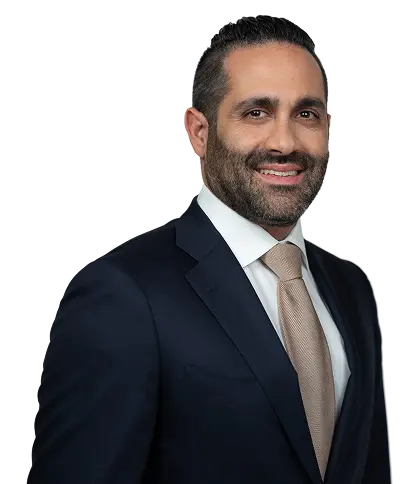
Super Lawyers Rising Star. Southwestern Law School graduate. Led the firm’s $9,870,000 motorcycle accident settlement and a $2,250,000 rideshare recovery.
Read Full Bio →- ★ National Top 100 Trial Lawyers
- ★ Super Lawyers Rising Star
- ★ Avvo 10.0 Superb Rating
- ★ Top 40 Under 40
- ★ Consumer Attorneys of California · CAALA · AAJ
Countless Real Client Reviews Verified by Google
Jerry

After 10 accidents and 9 attorneys, the client met Simon, who stood out for his honesty and clear communication. Years later, after another accident, the client called Simon and was impressed by his professionalism and follow-through. Simon explained everything, connected him with top doctors, and kept every promise. It was the first time the client felt truly supported—highly recommending Simon and Joseph for their integrity and dedication.
Jacob
Jacob was rear-ended by a big rig and left nearly paralyzed for a year. He found Compass Law Group, and Joseph and Simon personally helped him through the legal process. Over two years, they ensured he got the medical care and surgeries he needed, helped repair his car, and secured the compensation he deserved. He highly recommends them for truly fighting for their clients.
Blandine
During the early days of COVID, Blandine was hit by a car while biking to work. Alone and unsure of what to do, they found Compass Law Group. Joseph was the first to respond with care and clarity. Throughout the case, the team—Joseph, Simon, and Julie—provided support, regular check-ins, and made the client feel safe and cared for. They now consider the firm like family and highly recommend them for their compassion and competence.
Unable to load reviews.
Understanding Your Rights:
Frequently Asked
Questions
#1 Do I have a case?
Understanding whether a claim exists is one of the challenges of personal injury law. This is why we offer free initial consultations to help you make this determination and allow you an avenue to vindicate your rights.
We’re committed to fighting for the rights of accident victims throughout Southern California, and, unlike other California personal injury attorneys, we will take on any case if we can help, no matter how big or small.
#2 What is personal injury?
Personal injury involves harm to an individual’s body or property caused by someone else’s negligence. It can range from minor to significant injuries, often requiring legal action to recover damages. We specialize in representing and securing fair settlements for such victims.
#3 Why hire Compass Law Group?
Our client-focused approach ensures personalized attention, detailed case building, and compelling evidence presentation. We’re skilled in negotiating settlements and prepared for trial with aggressive strategies. Our firm maintains transparent communication, involves clients in the process, and utilizes a wide network of expert witnesses and resources to strengthen cases. Choosing us means trusting a team dedicated to your success and justice.
#4What if I didn't go to the hospital?
No matter the injury size, you have rights that need defending. Many injuries seem minor at first but can worsen over time. Ignoring treatment or legal advice risks your health and compensation. Seek immediate medical and legal help after any accident to ensure proper diagnosis and strengthen your compensation claim.