


Your Battle, Our Compass:
Beverly Hills Rideshare Sexual Abuse Attorney
Our Beverly Hills attorneys have successfully represented victims of rideshare sexual abuse — holding drivers and platforms like Uber and Lyft accountable under California law. With a proven record in civil claims involving rideshare assaults, we fight to recover the maximum compensation our clients deserve. Call us today at (213) 320-1001 for a free, confidential consultation.



What Rideshare Sexual Abuse Covers Under California Civil Law
California civil law recognizes a broad range of sexual misconduct committed by rideshare drivers as grounds for a civil lawsuit — including rape, digital penetration, groping, indecent exposure, non-consensual photographing, and verbal sexual coercion during a ride. Unlike a criminal case, a civil claim does not require proof beyond a reasonable doubt; the preponderance of evidence standard allows survivors to hold both the driver and the TNC liable even when no criminal conviction has been obtained. Under Civil Code §2100, Uber, Lyft, and every Transportation Network Company regulated by the California Public Utilities Commission are classified as common carriers, legally obligated to exercise the utmost care and diligence for passenger safety. That elevated duty gives Beverly Hills survivors grounds to pursue the corporation directly for negligent driver screening, failed background checks, and suppression of prior assault reports — not merely the individual driver who committed the act.

Who Can Be Held Liable for Rideshare Sexual Abuse in California?
When a rideshare driver commits sexual assault, at least two parties face civil liability — the driver who carried out the attack, and the company that deployed him. In 2018, Uber paid $148 million to settle claims it had concealed hundreds of sexual assaults by its own drivers, establishing a direct precedent for institutional accountability in California courts. Under California Civil Code §2100, rideshare companies are common carriers bound by the highest duty of care to every passenger they transport — a heightened standard enforced by the California Public Utilities Commission under Title 4, Division 2, Section 16 of the California Code of Regulations.
Liability does not depend on Uber’s or Lyft’s classification of drivers as independent contractors. California courts have imposed accountability under negligent hiring and negligent entrustment theories when inadequate background checks placed dangerous drivers on these platforms. Where the assault occurs during an active trip, respondeat superior doctrine can tie corporate liability directly to the driver’s conduct. Evidence from the 2023 CPUC sexual assault reporting requirements further allows survivors to document institutional patterns of neglect — and to support claims for punitive damages against the company itself.
- The rideshare driver — directly liable for sexual assault, battery, and intentional infliction of emotional distress under California tort law
- Uber or Lyft (the TNC) — liable under the common carrier duty of care (Civil Code §2100), negligent hiring, and negligent retention when driver screening failed
- Third-party background check vendors — liable if defective or incomplete screening reports failed to surface a driver’s disqualifying history
- The vehicle owner — potentially liable under negligent entrustment if the owner knew or had reason to know the driver posed a risk to passengers
- Corporate parent entities or affiliated platforms — liable when parent companies, subsidiaries, or technology partners shared responsibility for driver vetting, deployment, or incident reporting

How We Value a Rideshare Sexual Abuse Case in California
No dollar amount restores what was taken from you, but California law entitles rideshare sexual abuse survivors to substantial financial recovery — and the full value of your claim is almost always larger than you expect at first. The attorneys at Compass Law Group have recovered more than $250 million for California victims, and in rideshare sexual assault cases, we pursue every available category of compensation: emergency and ongoing medical costs, long-term therapy and psychiatric care, lost income, non-economic pain and suffering, and punitive damages targeting Uber or Lyft directly for institutional negligence. A 2018 California attorney general investigation revealed that Uber had concealed approximately 3,000 sexual assault reports from state regulators — evidence of the kind of systematic corporate cover-up that regularly produces seven- and eight-figure civil recoveries in this state.
California law also provides a remedy most states do not. Under AB 2777 and the AB 218 framework for unlimited institutional recovery, survivors whose claims were previously time-barred may have a fully revived right to sue through December 31, 2026, if the rideshare company covered up the assault, misrepresented driver safety records, or concealed prior complaints against the same driver. If you believed it was too late to act, it may not be.
Compensatory Damages: What You Have Already Lost
Compensatory damages reimburse you for every concrete loss the assault caused. California courts divide these into economic damages — losses with a verifiable dollar value — and non-economic damages, which require a different evaluation framework. Both are fully recoverable in a rideshare sexual assault civil lawsuit against the driver, the company, or both.
Medical and emergency care costs include the emergency room visit, sexual assault nurse examiner (SANE) examination, forensic testing, follow-up treatment for physical injuries, and any prescribed medications. If the assault involved physical violence — bruising, lacerations, injuries from restraint or struggle — every related treatment cost is recoverable from the responsible parties.
Psychological treatment and trauma therapy typically represent the largest economic damages category in sexual assault civil litigation. Survivors of rideshare sexual assault frequently require years of individual therapy, EMDR, trauma-focused cognitive behavioral therapy, psychiatric medication management, and crisis intervention services. California courts have approved future therapy cost projections spanning five to ten years or longer when expert witnesses establish ongoing PTSD, complex trauma, or major depressive disorder caused by the assault. We retain licensed forensic psychologists and economists to document and project your full treatment needs — not a minimal estimate designed to facilitate an early settlement, but a complete projection built to withstand challenge at trial.
Lost wages and earning capacity are recoverable when the assault caused you to miss work, leave a position, or reduced your ability to function at your prior professional level. PTSD-related symptoms — panic attacks, hypervigilance, depression, inability to use rideshare or public transportation — frequently affect employment in ways that compound over time. For professionals, executives, or high earners whose careers were materially disrupted, lost earning capacity alone can represent a seven-figure damages category. We quantify this loss with vocational and economic expert testimony, not estimates.
Non-Economic Damages: The Harm Numbers Alone Cannot Capture
California imposes no cap on non-economic damages in personal injury and sexual assault civil cases. A survivor is entitled to full, fair compensation regardless of how large that number must be — and in rideshare sexual assault litigation in Los Angeles County, juries have demonstrated a willingness to award substantial non-economic damages when the evidence of harm and corporate indifference is properly presented.
Pain and suffering encompasses both the physical experience of the assault and the persistent psychological distress it produces. California courts and juries routinely award multiples of economic damages for pain and suffering in serious sexual assault cases — sometimes three to five times therapy and medical costs, sometimes far more depending on the severity of the conduct and the defendant’s culpability.
Emotional distress and PTSD are independent compensable injuries under California law. Post-traumatic stress disorder, generalized anxiety disorder, depression, sleep dysfunction, and sexual trauma resulting from an assault are recognized harms supported by expert psychiatric testimony. The California Supreme Court has confirmed that emotional distress damages for direct assault victims are not subject to the limitations applicable to bystander or negligent infliction claims — you are the primary injured party, and your distress is fully compensable without a separate threshold showing.
Loss of enjoyment of life compensates for activities, relationships, and experiences you can no longer access or engage with as you did before the assault. This includes intimate and romantic relationships, professional confidence, social participation, and any pursuit the trauma has foreclosed. When psychological expert testimony connects specific life losses to the assault and its aftermath, Los Angeles area juries have historically returned generous awards under this category.
Punitive Damages: Holding Uber and Lyft Accountable at the Institutional Level
Punitive damages require proof that the defendant acted with malice, fraud, or oppression under California Civil Code Section 3294. In rideshare sexual assault litigation, the facts frequently satisfy this standard — not because every case involves obvious malice, but because California law designates Uber and Lyft as Transportation Network Companies subject to the highest duty of care applicable to any carrier under Civil Code Section 2100, and because both companies have documented histories of suppressing rather than addressing driver violence.
Uber’s $148 million settlement with California in 2018 — paid specifically because the company concealed sexual assault data from state regulators — established on the public record that Uber’s institutional response to driver violence was suppression and concealment, not remediation. Lyft has faced a comparable pattern of sexual assault litigation across California courts. When we can demonstrate that a rideshare company knew or should have known that a driver posed a risk through inadequate background screening, failed to act on prior complaints, and then suppressed reports of misconduct, the predicate for punitive damages exists.
The California Public Utilities Commission’s 2023 sexual assault reporting requirements for TNCs now mandate public disclosure of assault data. Historical failure to comply with predecessor CPUC reporting obligations — or active misrepresentation to investigators and victims — is admissible evidence of the malice or oppression required for punitive damages. We obtain CPUC filings, regulatory correspondence, and internal incident records through discovery as standard practice in every rideshare sexual assault case we take.
The AB 2777 Revival Window and Unlimited Recovery Against Cover-Up Defendants
California’s AB 2777, signed into law in September 2022, created a three-year revival window for adult sexual assault claims otherwise barred by the statute of limitations. The window runs from January 1, 2023, through December 31, 2026 — and it applies specifically when the defendant is a corporation or institution that engaged in a cover-up of the sexual assault, as that term is defined in the statute.
For rideshare survivors, this window is significant. If Uber or Lyft suppressed assault reports, misrepresented the scope of their driver screening, discouraged victims from filing police reports, or took steps to prevent civil claims from proceeding — conduct documented across multiple California proceedings — the cover-up element required by AB 2777 may be established in your case. Survivors who were assaulted years ago, who were told by company representatives that no action could be taken, or who signed documents they believed waived their rights should speak with our attorneys before the December 31, 2026 deadline. That deadline is statutory and will not be extended.
The AB 218 framework further provides that when an institutional defendant covered up abuse, California removes its damages caps entirely — meaning your recovery ceiling is determined only by what a jury concludes is fair. These two statutes together represent the most favorable legal environment for sexual abuse survivors in California’s history, and both are available now.
How Our Beverly Hills Attorneys Build Your Case Value
Calculating the full value of a rideshare sexual assault claim requires a litigation-grade investigation from the first day of representation. We begin by securing the complete record: the driver’s background check and screening history with the TNC, prior complaints filed against that driver, CPUC safety filings and incident disclosures, the company’s internal communications, and any law enforcement records. Each document either confirms a known damages category or opens a new avenue of liability against the company.
We retain independent expert witnesses as standard practice — forensic economists to project future economic losses across your career and treatment timeline, licensed psychiatrists or psychologists to document trauma, PTSD severity, and treatment requirements, and rideshare industry safety experts to establish the standard of care that Uber or Lyft failed to meet. Our damages analyses are built to withstand cross-examination at trial, which consistently produces stronger results at every stage of the case — whether that means a pre-trial settlement, mediation, or a jury verdict.
Uber and Lyft each maintain large legal defense teams whose primary function is to minimize what survivors recover. Our attorneys have litigated rideshare sexual assault cases across California and are familiar with the company-specific tactics these defendants deploy — including attempts to enforce arbitration clauses (which California courts have increasingly refused to apply in sexual assault cases following AB 51), arguments that the driver’s independent contractor status insulates the company from liability, and disputes over whether the assault occurred within the driver’s scope of TNC service. We anticipate and counter each of these strategies with the specific California statutes, CPUC regulations, and case precedents that govern TNC liability.
If you were sexually assaulted by an Uber or Lyft driver in the Beverly Hills area, contact Compass Law Group for a confidential, no-cost case evaluation. The AB 2777 revival window closes December 31, 2026. The process of understanding what your case is worth begins with a single conversation.

What to Do If You Are a Survivor of Rideshare Sexual Abuse
Uber’s own U.S. Safety Report documented more than 3,000 sexual assaults across its platform in a single two-year period — and that figure represents only incidents that were actually reported to the company. In California, rideshare companies like Uber and Lyft are classified as common carriers under Civil Code §2100, which holds them to the highest duty of care of any transportation provider. That distinction matters because it means a civil lawsuit can target not only the driver who committed the assault, but the company whose background check failures, inadequate screening policies, and in some cases deliberate concealment of prior incidents made the abuse possible. The steps you take in the immediate aftermath of an assault — and in the weeks that follow — can determine whether that accountability is ever achieved. Here is what to do.
- Get to Safety First — If you are still in the vehicle or in an unsafe location, leave immediately: go to a well-lit public place, enter a business, or flag down a bystander. Call 911 if you are in immediate danger. Do not attempt to confront the driver or resolve the situation yourself — your physical safety takes absolute priority over any evidence preservation step that comes after.
- Seek Medical Attention and Preserve Physical Evidence — Go to a hospital emergency room or a designated Sexual Assault Response Team (SART) center as soon as possible — ideally within 72 hours of the assault. A Sexual Assault Forensic Examination (SAFE kit, commonly called a rape kit) collects biological and physical evidence of the assault that can corroborate your account in both criminal proceedings and your civil lawsuit against the rideshare company. Do not shower, change clothes, or wash any items involved in the assault before the examination. Beyond the forensic exam, your medical records — including diagnoses of physical injury, acute stress reaction, PTSD, and required treatment — will form the foundation of your compensatory damages claim. Every therapy session, prescription, and follow-up visit is a documented economic harm attributable to the assault.
- Report the Incident to Law Enforcement and to the Rideshare Company — File a police report as soon as you are ready and able to do so. You are not required to pursue criminal charges, but the police report creates an official timestamped record that is powerful civil evidence. Separately, report the incident through Uber’s or Lyft’s in-app safety reporting tools. Under regulations adopted by the California Public Utilities Commission (CPUC) in 2023, Transportation Network Companies are required to collect and report sexual assault data to the state — and those internal company reports can be subpoenaed during civil litigation, potentially revealing patterns of prior incidents the company was aware of and failed to act on. However, do not provide a recorded statement, written account, or detailed description to the rideshare company’s insurance adjusters or legal representatives without your own attorney present. Their role is to limit the company’s liability, not to help you.
- Document and Preserve All Digital Evidence From the Ride — Before time passes or the app updates, take screenshots of everything: the completed trip receipt (which shows the driver’s name, photo, vehicle description, route, and timestamp), the driver’s profile page, your GPS trip map, and any in-app messages or notifications. Save all text messages, emails, or voice messages you sent immediately after the assault describing what happened — courts treat contemporaneous accounts as highly credible evidence. If there were bystanders at any point during or after the incident, collect their names and contact information. This digital trail is uniquely valuable in rideshare cases because it establishes — with precision — who the driver was, when and where the assault occurred, and that Uber or Lyft directly facilitated the match between you and that driver through their platform. It is the link that connects the company’s negligent entrustment of a dangerous driver to your harm.
- Do Not Accept a Settlement or Sign Anything From the Rideshare Company — The moment an incident is reported, Uber and Lyft route the matter to their legal and insurance teams, whose objective is to resolve your claim as cheaply and quietly as possible. You may receive an outreach from an insurance adjuster, a company “victim support” representative, or a third-party claims handler offering a payment in exchange for signing a release. Do not sign anything. California’s AB 51 (2020) provides strong protections against forcing sexual assault survivors into mandatory arbitration, meaning you very likely have the right to pursue your claims in open court — but certain documents, if signed before you consult an attorney, could be used to argue you waived those rights. Uber’s $148 million settlement in 2018 arose in part from the company’s practice of using confidential arbitration to silence assault survivors. You do not have to repeat that outcome.
- Contact a Beverly Hills Rideshare Sexual Abuse Attorney Immediately — the AB 2777 Window Is Closing — Under California Code of Civil Procedure §335.1, survivors of sexual assault generally have three years from the date of the incident to file a civil lawsuit for assault and battery. But if Uber, Lyft, or another rideshare company concealed knowledge of prior assaults by the same driver — or suppressed patterns of abuse across its platform — Assembly Bill 2777 (2022) may dramatically expand your options. AB 2777 created a limited revival window allowing previously time-barred civil claims to be filed through December 31, 2026, specifically in cases involving institutional cover-up of sexual assault. Uber’s documented concealment of driver assault records, which formed the basis of the 2018 $148 million multi-state settlement, is precisely the type of conduct AB 2777 was designed to address. An experienced rideshare sexual abuse attorney can evaluate whether your claim qualifies, identify every liable party — including the company under negligent hiring, negligent retention, and agency theories — and pursue the full scope of damages available under California law. This window does not extend. Every month of delay narrows your options.
Understanding the AB 2777 Revival Window
Assembly Bill 2777 is one of the most significant expansions of survivor rights in California history. Signed into law in September 2022, it opened a three-year window — January 1, 2023 through December 31, 2026 — during which sexual assault survivors can revive civil claims that were previously barred by the statute of limitations, provided a corporate defendant engaged in a cover-up that concealed the abuse. Uber’s documented suppression of sexual assault reports prior to its 2018 settlement, and Lyft’s parallel litigation history in California, establish a plausible cover-up basis for claims involving those companies. If you were assaulted by a rideshare driver at any point in the past and believed you had no legal recourse because too much time had passed, that assumption may no longer be correct. An attorney can assess your specific timeline and circumstances — but only if you act before the window permanently closes.
What Compensation Can You Recover?
A successful civil lawsuit against a rideshare company and its driver can result in substantial compensation. Recoverable damages in California sexual assault civil cases typically include: past and future medical expenses, costs of therapy and long-term PTSD treatment, lost wages and diminished earning capacity, pain and suffering, and emotional distress damages. Courts may also award punitive damages where a corporate defendant — such as Uber or Lyft — knew of a dangerous pattern of driver conduct and failed to act. “When a company like Uber profits from every trip while cutting corners on driver screening,” as sexual abuse attorneys regularly argue in these cases, “California law allows a jury to send a financial message that goes beyond compensating the victim.” Uber’s 2018 $148 million settlement and Lyft’s ongoing civil settlement track record in California reflect the real financial exposure these companies face when their institutional failures are brought before a court.
If you were sexually assaulted or abused by a rideshare driver in Beverly Hills or anywhere in California, call (213) 320-1001 now for a free, strictly confidential consultation — our attorneys represent rideshare sexual abuse survivors on a contingency basis, meaning you pay nothing unless we recover compensation for you.
(213) 699-3782
Do I have a case?
Contact us today for a free consultation.

California's
Gold Standard
Injury Law Firm
With Joseph Shirazi and Simon Esfandi at the helm, our firm is a trusted name in accident law in California.
Meet Our Managing Partners

National Top 100 Trial Lawyers and Avvo 10.0 Superb. Loyola Law School graduate. Recognized for his $14,500,000 truck accident verdict and a $13,000,000 trial verdict.
Read Full Bio →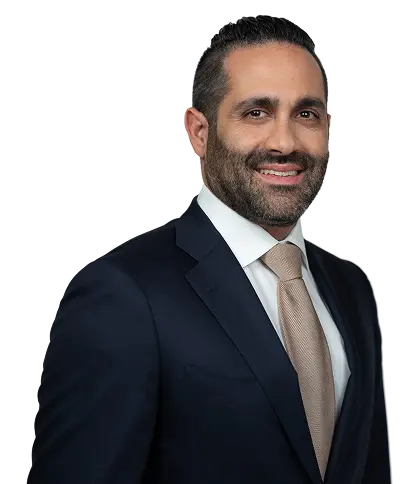
Super Lawyers Rising Star. Southwestern Law School graduate. Led the firm’s $9,870,000 motorcycle accident settlement and a $2,250,000 rideshare recovery.
Read Full Bio →- ★ National Top 100 Trial Lawyers
- ★ Super Lawyers Rising Star
- ★ Avvo 10.0 Superb Rating
- ★ Top 40 Under 40
- ★ Consumer Attorneys of California · CAALA · AAJ
Countless Real Client Reviews Verified by Google
Jerry

After 10 accidents and 9 attorneys, the client met Simon, who stood out for his honesty and clear communication. Years later, after another accident, the client called Simon and was impressed by his professionalism and follow-through. Simon explained everything, connected him with top doctors, and kept every promise. It was the first time the client felt truly supported—highly recommending Simon and Joseph for their integrity and dedication.
Jacob
Jacob was rear-ended by a big rig and left nearly paralyzed for a year. He found Compass Law Group, and Joseph and Simon personally helped him through the legal process. Over two years, they ensured he got the medical care and surgeries he needed, helped repair his car, and secured the compensation he deserved. He highly recommends them for truly fighting for their clients.
Blandine
During the early days of COVID, Blandine was hit by a car while biking to work. Alone and unsure of what to do, they found Compass Law Group. Joseph was the first to respond with care and clarity. Throughout the case, the team—Joseph, Simon, and Julie—provided support, regular check-ins, and made the client feel safe and cared for. They now consider the firm like family and highly recommend them for their compassion and competence.
Understanding Your Rights:
Frequently Asked
Questions
#1 Do I have a case?
Understanding whether a claim exists is one of the challenges of personal injury law. This is why we offer free initial consultations to help you make this determination and allow you an avenue to vindicate your rights.
We’re committed to fighting for the rights of accident victims throughout Southern California, and, unlike other California personal injury attorneys, we will take on any case if we can help, no matter how big or small.
#2 What is personal injury?
Personal injury involves harm to an individual’s body or property caused by someone else’s negligence. It can range from minor to significant injuries, often requiring legal action to recover damages. We specialize in representing and securing fair settlements for such victims.
#3 Why hire Compass Law Group?
Our client-focused approach ensures personalized attention, detailed case building, and compelling evidence presentation. We’re skilled in negotiating settlements and prepared for trial with aggressive strategies. Our firm maintains transparent communication, involves clients in the process, and utilizes a wide network of expert witnesses and resources to strengthen cases. Choosing us means trusting a team dedicated to your success and justice.
#4What if I didn't go to the hospital?
No matter the injury size, you have rights that need defending. Many injuries seem minor at first but can worsen over time. Ignoring treatment or legal advice risks your health and compensation. Seek immediate medical and legal help after any accident to ensure proper diagnosis and strengthen your compensation claim.