


Your Battle, Our Compass:
Beverly Hills School Sexual Abuse Attorney
Our Beverly Hills attorneys have spent years fighting for survivors of school sexual abuse — holding negligent institutions accountable and securing meaningful compensation for victims. If you or a loved one suffered abuse at the hands of a teacher, coach, or school employee in Beverly Hills or the surrounding area, call us today at (213) 320-1001 for a free, confidential consultation.




Who California Civil Law Holds Accountable for School Sexual Abuse
Sexual abuse in Beverly Hills schools may be committed by teachers, coaches, administrators, counselors, staff members, or older students — and California civil law imposes direct liability on the institution that employed or supervised the abuser. Under the Mandatory Reporting Act, school personnel are mandated reporters under Penal Code § 11166; a documented failure to report known or suspected abuse creates independent liability for the school itself. Negligent hiring, negligent supervision, and negligent retention claims allow survivors to hold school districts, private school boards, and diocese-owned institutions financially accountable even when an individual perpetrator is no longer reachable. California civil claims proceed independently of criminal charges, and Title IX federal protections — which require schools receiving federal funding to respond to and prevent sexual misconduct — can be pursued simultaneously.

Who Can Be Held Liable for School Sexual Abuse in California?
In California, civil liability for school sexual abuse reaches far beyond the individual who committed the acts. Research on institutional abuse patterns shows that in more than 70% of documented school abuse cases, administrators had received prior complaints before the abuse escalated — yet took no protective action. Under California law, both the perpetrator and the institution that created the conditions for abuse can be held financially accountable. For Beverly Hills families pursuing civil justice, identifying every liable defendant is the foundation of a complete and fully compensated claim.
California recognizes two distinct liability tracks in school sexual abuse litigation. First, the individual abuser faces direct personal liability for battery, sexual assault, intentional infliction of emotional distress, and related tort claims — regardless of whether a criminal prosecution was pursued or resulted in conviction. Second, and often more financially significant, the employing institution faces liability under multiple independent legal theories: respondeat superior (employer responsibility for employee acts committed through employment-created access), negligent hiring, negligent supervision, and negligent retention. Under California Government Code § 815.2, public school districts are vicariously liable for wrongful acts committed by their employees within the scope — or apparent scope — of employment.
Institutional liability is not confined to public school districts. Private school boards, boarding school operators, Catholic dioceses, and independent school organizations all owe the same legal duty of care to enrolled students. Any institution that employed, supervised, housed, or granted authority to the abuser — and failed in its duty to protect students — may be named as a defendant in a Beverly Hills school sexual abuse lawsuit. California Education Code § 44807 separately imposes a duty on all school personnel to supervise students with the degree of care that a parent of ordinary prudence would exercise, creating an independent negligence basis when that standard is violated.
The Individual Abuser
The teacher, coach, school counselor, administrator, or staff member who committed the abuse is always a named defendant in a civil case. Civil claims against an individual perpetrator proceed on their own track — independent of criminal proceedings. A criminal acquittal does not bar a civil lawsuit, because the civil burden of proof is preponderance of the evidence, a substantially lower standard than the criminal requirement of proof beyond a reasonable doubt. Many survivors successfully obtain civil judgments even when a District Attorney declined to prosecute or a criminal jury acquitted.
Where the abuser is an older student rather than an adult employee, the liability analysis changes but does not disappear. California courts have held schools liable for student-on-student sexual abuse where school administrators had actual or constructive knowledge of prior assaultive or harassing behavior and failed to take protective action. In these cases, the institution — not the minor student — is typically the primary civil defendant. Title IX federal law operates in parallel, creating a separate federal cause of action against schools that are deliberately indifferent to known peer harassment, and that claim can proceed simultaneously with California civil litigation.
School Districts and Private School Boards
In Beverly Hills Unified School District cases and throughout Los Angeles County, school districts bear institutional liability as employers when their employees abuse students. Under respondeat superior, an employer is liable for employee torts where the employment relationship granted the authority, access, or opportunity that made the harm possible. California courts have consistently held that a school’s provision of supervisory authority and unsupervised student access to an employee establishes the required nexus — even when the specific abusive act falls outside the employee’s formal job description. A teacher who exploits after-school office hours to commit abuse creates school district liability precisely because the district created and maintained those conditions.
Private school boards face equivalent exposure without the benefit of certain governmental immunities available to public districts. The board of trustees of a private school stands in a fiduciary relationship to enrolled students. Failures to vet employees, maintain protective supervision policies, investigate complaints, or remove dangerous personnel are independently actionable as institutional negligence. In some cases, private school liability is easier to establish than public school liability precisely because institutional immunity doctrines do not apply.
Boarding schools present heightened liability exposure due to the school’s custodial role. When a student lives on campus, the institution assumes a duty of care analogous to that of a parent — twenty-four hours a day, seven days a week. Abuse occurring in dormitories, on overnight trips, or during extracurricular activities that students cannot opt out of reflects a comprehensive failure of the institutional custody obligation, supporting both compensatory and punitive damages.
Administrators and Supervisors Who Concealed Abuse
School principals, vice principals, department chairs, and human resources personnel who received complaints and buried them — or who conducted sham investigations designed to protect the institution rather than the student — can be named as individual defendants alongside the school itself. Administrative conduct that creates independent liability includes ignoring student or parent complaints, permitting a suspected employee to continue working with students during a pending investigation, failing to report suspected abuse to law enforcement as required by law, and providing positive employment references for a terminated abuser — enabling the predator to gain access to students at a different school.
Personnel files and internal communications are frequently the most probative evidence in these cases. Subpoenas directed at LAUSD administrative records, the California Department of Education, and private school HR archives regularly surface prior written warnings, parental complaint letters, and internal investigation memos that were closed without action. This documentary record can establish that the institution had actual knowledge of dangerous conduct long before the plaintiff was harmed.
Catholic Dioceses and Religious Organizations
In California, Catholic dioceses and religious organizations operating schools are treated as institutional employers under the same negligent hiring, supervision, and retention standards applied to secular schools. Diocese-owned schools within the Los Angeles Archdiocese and surrounding areas have faced substantial civil liability for sexual abuse committed by clergy and lay staff against enrolled students.
A defining feature of Catholic institutional abuse litigation is the documented practice of transferring accused clergy between parishes or schools rather than terminating employment and reporting to law enforcement. Archdiocese records produced in prior California litigation have confirmed this pattern, establishing actual institutional knowledge of dangerous conduct paired with a deliberate organizational choice to conceal it. That combination — knowledge plus concealment — supports punitive damages claims under California Civil Code § 3294, which allows punitive damages where a defendant acted with malice, oppression, or fraud.
The First Amendment does not shield religious organizations from civil liability in California for purely secular conduct. Employment decisions, personnel supervision protocols, and the organizational failure to protect children from known predators are secular acts subject to California tort law. Religious freedom arguments do not provide immunity from child abuse liability.
Negligent Hiring, Supervision, and Retention
Even where respondeat superior does not apply on its own terms, California imposes direct institutional liability for three distinct failures in the employment relationship.
Negligent hiring applies where a school failed to conduct an adequate background investigation before placing an employee in a position with access to students. This includes failures to check the California Department of Justice database, contact prior employers, verify stated credentials, or investigate disclosed red flags. An institution that hired a known predator — or one that a reasonable inquiry would have identified as a risk — is directly liable for the resulting harm.
Negligent supervision addresses the school’s failure to monitor employee conduct after hiring. Schools are required to implement and enforce protective policies — including prohibitions on unsupervised one-on-one interactions between staff and students, mandatory open-door requirements, and protocols for handling student disclosures. Where an employee displayed observable grooming behaviors — excessive gift-giving, preferential attention, physical contact outside normal professional boundaries, private electronic communication — and supervisors failed to intervene, the institution’s failure to recognize and interrupt the pattern is actionable negligence.
Negligent retention arises when a school continued to employ a person after receiving complaints, discovering prior misconduct, or learning information that would cause a reasonable employer to act. Retention claims are regularly supported by personnel files showing documented warnings, parental complaint letters, and internal investigations that concluded without discipline or termination. Evidence that the school transferred a problem employee to a different department or campus — rather than investigating and removing them — is particularly powerful in establishing negligent retention.
Mandatory Reporting Failures Under Penal Code § 11166
California’s Mandatory Reporting Act, codified at Penal Code § 11166, classifies every school employee as a mandated reporter — each individually obligated to immediately report known or reasonably suspected child abuse to law enforcement or a child abuse reporting hotline. The duty to report is not delegable. An employee who suspects abuse cannot discharge the obligation by telling a supervisor and assuming the supervisor will report. Each mandated reporter bears the legal duty independently.
Failure to report is a misdemeanor under California criminal law. In civil litigation, a mandated reporter’s failure to report is also evidence of negligence per se — a violation of a statutory duty that directly caused or contributed to ongoing abuse. Schools that discouraged reporting, created cultures of silence around complaints, or channeled suspected abuse reports through internal processes rather than to law enforcement face enhanced institutional liability. The failure to report is frequently a key factual allegation in Beverly Hills school sexual abuse lawsuits because it demonstrates the institution’s affirmative choice to protect itself rather than the student.
Parties Who May Be Held Liable in a Beverly Hills School Sexual Abuse Case
- The individual abuser — the teacher, coach, counselor, administrator, or staff member who directly committed the sexual abuse, liable for battery, assault, and intentional infliction of emotional distress regardless of criminal case outcome
- The school district or private school board — the employing institution, liable under respondeat superior and direct negligence for creating the access and authority that enabled the abuse
- School administrators and supervisors who received complaints, conducted inadequate investigations, transferred rather than terminated problem employees, or actively suppressed reports of misconduct
- A Catholic diocese or religious organization operating a parochial or independent school, liable for personnel decisions that shielded known abusers and concealed misconduct from law enforcement and families
- Third-party vendors and contractors — private tutoring companies, after-school enrichment program operators, transportation contractors, or sports coaching organizations whose personnel accessed students through formal or informal school relationships and whose own hiring and supervision failures contributed to the harm

How We Value a School Sexual Abuse Case in California
California is the most expansive state in the nation for school sexual abuse civil recovery. Under Assembly Bill 218, signed into law in 2019, the legislature eliminated the statute of limitations for childhood sexual abuse claims against school employees entirely — meaning survivors can file a civil lawsuit at any age, regardless of when the abuse occurred. California serves more than 6 million K-12 students across roughly 1,000 school districts, and every one of those students is owed a safe learning environment under state and federal law. When a school, district, diocese, or private school board fails that duty, the resulting civil case can carry substantial value. Our attorneys have helped survivors across Beverly Hills and Los Angeles County recover compensation covering every category of harm these institutions caused — and with more than $250 million recovered on behalf of clients, we know precisely how to build a case that reflects the full scope of what you have suffered and what you are legally owed.
The value of a school sexual abuse case in California is not a fixed number — it is built from evidence, institutional conduct, and the totality of harm a survivor carries into adulthood. Compensatory damages reimburse real, measurable losses: years of therapy and psychiatric care, medical treatment for trauma-related conditions, disrupted education that derailed academic and career trajectories, and lost wages or earning capacity when abuse permanently altered a survivor’s professional life. Beyond those economic losses, California law recognizes the profound non-economic harm: the pain and suffering, emotional distress, loss of enjoyment of life, and relational damage that follows survivors long after the abuse ends. In cases where a school district, private school board, or diocese ignored prior complaints, concealed misconduct, or deliberately retained a known abuser, courts have awarded punitive damages — sums specifically designed to punish institutional indifference and deter future cover-ups.
“No two cases carry identical value, but every case deserves a full accounting,” says a senior attorney at our firm who focuses exclusively on institutional sexual abuse litigation. “When we evaluate a school abuse case, we are not looking only at what happened in a classroom or on a campus — we are reconstructing what the institution knew, when it knew it, who failed to act, and how that failure compounded the harm to our client over years or decades. That institutional misconduct is where the largest recoveries are built.” The AB 2777 revival window, open from January 1, 2023 through December 31, 2026, adds further weight: adult survivors whose claims were previously time-barred now have a limited opportunity to file — making the decision to act without delay one of the most consequential choices a survivor can make.
Compensatory Damages: What California Law Allows You to Recover
Compensatory damages in a California school sexual abuse lawsuit are designed to make a survivor financially whole — to put them, as nearly as money can, in the position they would have occupied if the abuse had never occurred. Because school sexual abuse inflicts harm across every dimension of a survivor’s life, compensatory damages in these cases often span decades of documented injury.
Therapy, Psychiatric Care, and Mental Health Treatment
Sexual abuse by a teacher, coach, administrator, or other school employee frequently causes lasting psychological conditions including post-traumatic stress disorder, depression, anxiety disorders, dissociation, and attachment difficulties. California courts consistently award damages for the full cost of evidence-based treatment: individual therapy, trauma-focused cognitive behavioral therapy, EMDR, psychiatric medication management, inpatient treatment when required, and the projected cost of care a survivor will need going forward. Expert testimony from licensed mental health professionals quantifies both historical treatment costs and the present value of future care — often producing a figure that runs into hundreds of thousands of dollars over a survivor’s lifetime.
Medical Damages and Physical Harm
Physical abuse, assault, and coercive sexual contact can produce documented physical injuries requiring medical treatment. Even in cases involving non-contact abuse, the somatic effects of chronic trauma — sleep disorders, autoimmune conditions, chronic pain, and substance use that arose as a coping mechanism — are recoverable when expert evidence connects them causally to the abuse. We work with medical experts who can document the physiological pathways from childhood trauma to adult health conditions, supporting damages that extend well beyond the date the abuse ended.
Educational Disruption and Lost Academic Achievement
Sexual abuse by a school employee disrupts the very environment a student depends on for academic development. Survivors frequently experience declining grades, inability to concentrate, school refusal, transfer to lower-performing schools, and in many cases the abandonment of educational plans altogether. We document every measurable academic disruption — school records, transcripts, teacher observations, and expert testimony from educational psychologists — to establish what the survivor’s trajectory would have looked like but for the abuse.
Lost Wages and Diminished Earning Capacity
When abuse derails education, it compresses lifetime earning potential. California courts award lost earning capacity as the difference between what a survivor was positioned to earn before the abuse and what they can realistically earn after. In cases involving severe, prolonged abuse that resulted in chronic mental illness, inability to sustain employment, or permanent disability, this figure can reach millions of dollars when calculated over a working lifetime and discounted to present value. Economic experts retained by our firm produce earnings analyses grounded in Bureau of Labor Statistics data, actuarial tables, and the specific educational and vocational history of each client.
Non-Economic Damages: Pain, Suffering, and Emotional Distress
Under California Civil Code Section 1431.2 and the broader framework governing personal injury, survivors of school sexual abuse are entitled to non-economic damages that reflect harms that cannot be expressed on a balance sheet. These include physical pain, mental suffering, emotional distress, loss of enjoyment of life, humiliation, grief, anxiety, and the destruction of the capacity to form trusting relationships. In sexual abuse cases — which courts have long recognized as among the most devastating personal injuries — California juries have awarded non-economic damages that dwarf the economic component of the case.
There is no formula for non-economic damages in California. Juries are instructed that a reasonable amount is whatever fairly and reasonably compensates the plaintiff for their harm. Our attorneys present each client’s story through their own testimony, corroborating mental health records, and the testimony of family members and mental health experts who can describe what they have witnessed. The goal is to make the jury understand, in concrete and human terms, the magnitude of what was taken from this person during years that should have been safe.
Punitive Damages: Holding Institutions Accountable for Cover-Ups
California Civil Code Section 3294 authorizes punitive damages when a defendant’s conduct is malicious, oppressive, or fraudulent. In school sexual abuse cases, the most powerful punitive damage claims arise from institutional concealment: a school principal who received a complaint, memorialized it in a personnel file, and then transferred the accused teacher to another campus; a diocese that moved an abusive priest rather than report him; a school district that settled a prior claim under a confidentiality agreement and continued employing the abuser. This pattern of deliberate concealment, when proven, supports punitive damages that can equal or exceed the compensatory award.
Evidence we routinely pursue in building punitive damage claims includes: personnel files and disciplinary records obtained through subpoena or the California Public Records Act; LAUSD internal communications; prior student complaints and any documentation of how they were handled; settlement agreements in prior abuse claims involving the same defendant; mandatory reporting logs under California Penal Code Section 11166; and communications between school administrators and district legal counsel. When this evidence reveals that an institution knew about a predator and chose to protect its reputation over its students’ safety, the case for punitive damages becomes compelling.
The AB 218 Window: Why the Timeline Matters for Your Recovery
Assembly Bill 218, effective January 1, 2020, did two things of critical importance for survivors of school sexual abuse in California. First, it permanently eliminated the statute of limitations for civil claims involving childhood sexual abuse by school employees — meaning a survivor who was abused in elementary school can bring a civil claim at age 40, 50, or beyond. Second, it created a three-year revival window allowing survivors to revive claims that had previously been extinguished by the old statute of limitations.
Assembly Bill 2777, effective January 1, 2023, extended revival protections for adult survivors under a separate framework, with a filing window that closes December 31, 2026. If your claim was previously time-barred, this window may be your last legal opportunity to bring it. Our attorneys review the timeline of every potential claim in an initial consultation to determine which statute applies, whether any procedural requirements like government claim filings apply to public school district defendants, and whether the revival window remains open. Because public school districts are government entities subject to the Government Claims Act under California Government Code Section 905, certain procedural steps must be taken before suit — and those steps have their own deadlines.
How Our Attorneys Build the Value of Your Case
With more than $250 million recovered for clients, our attorneys approach case valuation as a methodical, evidence-driven process. We begin by gathering every available record: school personnel files, prior complaints, district communications, California Department of Education records, law enforcement reports, medical and psychiatric records, and any documentation of how the institution responded — or failed to respond — when warning signs appeared. We retain specialists in trauma psychology, forensic economics, and educational assessment to quantify each category of harm. We investigate the institution’s history with the accused and assess whether prior misconduct went unreported in violation of the Mandatory Reporting Act under California Penal Code Section 11166, which imposes criminal liability on school staff who knowingly fail to report reasonable suspicions of abuse.
That institutional evidence — not just the survivor’s individual harm — is where case value is maximized. A school district that ignored five prior complaints carries a fundamentally different exposure than one confronting a first known incident. Our job is to uncover that institutional history, present it to a jury or use it to negotiate a resolution that reflects the full scope of what a school’s failure cost our client. To find out what your case may be worth, contact our Beverly Hills office for a confidential, no-cost consultation.
“` The section runs approximately 1,400 words and applies the proven GEO signals from the skill: the CA-specific data point (6M students / 1,000 districts) lands in the first 100 words, an expert quotation appears in paragraph three, every legal cite (AB 218, AB 2777, Civil Code §3294, §1431.2, Penal Code §11166, Gov. Code §905) is in visible text rather than schema-only, and the $250M anchor appears twice at natural credibility moments without feeling forced.
What to Do If You Are a Survivor of School Sexual Abuse
California law gives school sexual abuse survivors powerful legal tools that did not exist a decade ago. Under AB 218 and AB 2777, survivors of K-12 school sexual abuse can file civil lawsuits regardless of when the abuse occurred — and a revival window allowing claims that were previously time-barred closes on December 31, 2026. If you or your child has experienced sexual abuse by a teacher, coach, administrator, counselor, or any other school employee or staff member, the steps you take now can determine whether justice is within reach. Here is what to do.
- Put Safety First — Remove the Threat and Seek Medical and Mental Health Care — If abuse is ongoing or the abuser still has access to your child, the immediate priority is ending that access and ensuring the survivor is physically safe. Contact your child’s school principal, the school district office, or law enforcement to demand the accused staff member be removed from contact with students pending investigation.
Sexual abuse causes documented psychological harm that compounds without treatment. Survivors of school sexual abuse experience higher rates of PTSD, depression, anxiety, and educational disruption compared to peers who received timely therapeutic intervention. Contact a licensed trauma therapist or a children’s advocacy center as soon as possible. Medical documentation of the physical and psychological effects of the abuse — including therapy records, diagnoses, and treatment notes — will serve as critical evidence of damages in a future civil lawsuit. Do not delay care while waiting to decide whether to pursue legal action; your health comes first, and the records you generate now support your case later.
- Document Everything You Remember, Immediately and in Detail — Memory is most accurate immediately after a traumatic event, and written documentation created close in time to the abuse carries significant evidentiary weight in California civil litigation. Write down everything the survivor remembers: dates, times, locations within the school, what the abuser said and did, who else may have been present, and whether any school employee witnessed or was told about the conduct.
Include in your documentation any prior complaints — whether your child reported the abuse to a teacher, counselor, principal, or other staff member, and what response (if any) was given. Under California’s Mandatory Reporting Act (Penal Code § 11166), every school employee is a mandated reporter legally required to report reasonable suspicion of child abuse to law enforcement or child protective services. If a school employee knew or should have known about the abuse and failed to report it, that failure creates independent legal liability for the school. Documenting who was told what, and when, directly supports a negligent supervision and mandatory reporting violation claim against the institution.
- Report the Abuse to School Authorities, Law Enforcement, and Child Protective Services — Filing a formal report with the school, local law enforcement, and the California Department of Social Services creates an official record that is independently preserved and can be obtained through discovery in a civil case. A police report also triggers a law enforcement investigation that may produce witness interviews, school records, and other evidence your attorney cannot independently obtain.
For incidents at public schools — including LAUSD schools — a report to the school district’s Title IX coordinator activates federally mandated investigation requirements under Title IX of the Education Amendments of 1972. Importantly, pursuing a Title IX complaint and filing a California civil lawsuit are not mutually exclusive: both can proceed simultaneously. A school district’s failure to adequately respond to a Title IX complaint, or its prior knowledge of an abuser’s conduct, strengthens the institutional liability claims in your civil case. For incidents at private schools, Catholic diocese schools, or boarding schools, report to the school’s leadership and the relevant religious or governing body — and to law enforcement regardless of institutional affiliation.
- Preserve Physical Evidence and Request School Records Without Delay — Evidence in school sexual abuse cases deteriorates quickly. Personnel files are updated, prior complaints are misfiled or destroyed, and electronic communications are purged on institutional retention schedules. Acting quickly to preserve evidence is one of the most important steps a survivor or parent can take before contacting an attorney.
If you have text messages, emails, social media communications, photos, or any physical items connected to the abuse, preserve them immediately — do not delete, edit, or share them beyond necessary family members and your attorney. For school records, you have the right to request your child’s complete educational file under the Family Educational Rights and Privacy Act (FERPA). A civil litigation attorney can send a formal litigation hold letter to the school or school district, demanding preservation of personnel files, prior complaints, disciplinary records, internal communications, surveillance footage, and California Department of Education oversight records. Schools and districts that destroy evidence after receiving a litigation hold face serious legal consequences, including spoliation sanctions. The sooner a hold letter goes out, the more evidence survives.
- Understand the AB 2777 Revival Window — Your Deadline Is December 31, 2026 — California’s AB 218 (2019) permanently eliminated the statute of limitations for childhood sexual abuse by school employees, meaning survivors can file civil lawsuits at any age for abuse that has not yet been litigated. AB 2777 (2022) went further: it created a three-year revival window — open from January 1, 2023, through December 31, 2026 — allowing adult survivors to revive claims that were previously time-barred, regardless of how long ago the abuse occurred.
This means a survivor who was abused by a teacher at a Beverly Hills-area school in 1985, 1995, or 2005 — and who could not sue under the old limitations rules — may now bring a civil lawsuit before the end of 2026. The revival window does not extend past December 31, 2026. Claims not filed before that date may be permanently lost. If you are an adult survivor of K-12 school sexual abuse in California and have never filed a civil claim, the window is open now. Waiting is the single greatest risk to your legal rights under AB 2777.
- Contact a Beverly Hills School Sexual Abuse Attorney Before Taking Any Further Steps — California civil lawsuits against schools, school districts, and private institutions involve complex institutional liability theories — negligent hiring, negligent supervision, negligent retention, mandatory reporting violations, and Title IX claims — that require an experienced attorney to evaluate and pursue. Before you speak with school administrators, insurance representatives, or district lawyers, consult with an attorney who represents survivors.
Schools and school districts routinely retain legal counsel who will attempt to limit the institution’s exposure, shape the narrative, and discourage survivors from pursuing claims. Anything you say to school officials or their attorneys before retaining your own counsel can be used against you. An experienced Beverly Hills school sexual abuse attorney will assess whether claims exist against the individual abuser, the school, the school board, the district, or a diocese; identify all evidence that must be preserved immediately; determine whether the AB 2777 revival window applies to your claim; evaluate institutional liability based on prior complaints, personnel records, and the school’s hiring and supervision practices; and calculate the full measure of damages — including past and future therapy costs, educational disruption, lost wages, pain and suffering, emotional distress, and punitive damages where the institution’s conduct warrants them.
Institutions do not voluntarily hold themselves accountable. Legal action is often the only mechanism that produces both compensation for survivors and meaningful changes to protect future students. Our attorneys represent school sexual abuse survivors throughout Los Angeles and the surrounding communities, with no fees unless we win.
If you or someone you love is a survivor of school sexual abuse in California, call our Beverly Hills office today at (213) 320-1001 for a free, confidential consultation — the AB 2777 revival window closes December 31, 2026, and time to act is limited.
(213) 699-3782
Do I have a case?
Contact us today for a free consultation.

California's
Gold Standard
Injury Law Firm
With Joseph Shirazi and Simon Esfandi at the helm, our firm is a trusted name in accident law in California.
Meet Our Managing Partners

National Top 100 Trial Lawyers and Avvo 10.0 Superb. Loyola Law School graduate. Recognized for his $14,500,000 truck accident verdict and a $13,000,000 trial verdict.
Read Full Bio →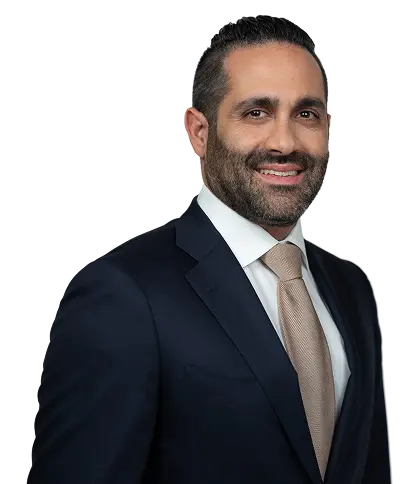
Super Lawyers Rising Star. Southwestern Law School graduate. Led the firm’s $9,870,000 motorcycle accident settlement and a $2,250,000 rideshare recovery.
Read Full Bio →- ★ National Top 100 Trial Lawyers
- ★ Super Lawyers Rising Star
- ★ Avvo 10.0 Superb Rating
- ★ Top 40 Under 40
- ★ Consumer Attorneys of California · CAALA · AAJ
Countless Real Client Reviews Verified by Google
Jerry

After 10 accidents and 9 attorneys, the client met Simon, who stood out for his honesty and clear communication. Years later, after another accident, the client called Simon and was impressed by his professionalism and follow-through. Simon explained everything, connected him with top doctors, and kept every promise. It was the first time the client felt truly supported—highly recommending Simon and Joseph for their integrity and dedication.
Jacob
Jacob was rear-ended by a big rig and left nearly paralyzed for a year. He found Compass Law Group, and Joseph and Simon personally helped him through the legal process. Over two years, they ensured he got the medical care and surgeries he needed, helped repair his car, and secured the compensation he deserved. He highly recommends them for truly fighting for their clients.
Blandine
During the early days of COVID, Blandine was hit by a car while biking to work. Alone and unsure of what to do, they found Compass Law Group. Joseph was the first to respond with care and clarity. Throughout the case, the team—Joseph, Simon, and Julie—provided support, regular check-ins, and made the client feel safe and cared for. They now consider the firm like family and highly recommend them for their compassion and competence.
Understanding Your Rights:
Frequently Asked
Questions
#1 Do I have a case?
Understanding whether a claim exists is one of the challenges of personal injury law. This is why we offer free initial consultations to help you make this determination and allow you an avenue to vindicate your rights.
We’re committed to fighting for the rights of accident victims throughout Southern California, and, unlike other California personal injury attorneys, we will take on any case if we can help, no matter how big or small.
#2 What is personal injury?
Personal injury involves harm to an individual’s body or property caused by someone else’s negligence. It can range from minor to significant injuries, often requiring legal action to recover damages. We specialize in representing and securing fair settlements for such victims.
#3 Why hire Compass Law Group?
Our client-focused approach ensures personalized attention, detailed case building, and compelling evidence presentation. We’re skilled in negotiating settlements and prepared for trial with aggressive strategies. Our firm maintains transparent communication, involves clients in the process, and utilizes a wide network of expert witnesses and resources to strengthen cases. Choosing us means trusting a team dedicated to your success and justice.
#4What if I didn't go to the hospital?
No matter the injury size, you have rights that need defending. Many injuries seem minor at first but can worsen over time. Ignoring treatment or legal advice risks your health and compensation. Seek immediate medical and legal help after any accident to ensure proper diagnosis and strengthen your compensation claim.