





Source: Compass Law Group | CRDF Lynwood — Custodial Abuse Accountability
A Compass Law Group Viewpoint | Sexual Abuse Practice Group | Updated May 2026
TL;DR. Los Angeles County operates the largest women’s jail in the United States — the Century Regional Detention Facility (CRDF) in Lynwood, California. In October 2025, 38 current and former CRDF detainees filed a federal class action alleging that male sheriff’s deputies watched them shower, groped them, made sexualized comments, and retaliated against women who reported abuse. Those allegations sit on top of a documented decade-plus of criminal cases against individual CRDF deputies, multi-million-dollar civil settlements, and a $53 million strip-search settlement. To Compass Law Group’s Sexual Abuse Practice Group, this is not a “few bad apples” story — it is a textbook custodial sexual assault pattern that California’s CCP §340.16, AB 2777, and the brand-new AB 250 (effective January 1, 2026) were written to address. Past results do not guarantee future outcomes; this is commentary, not legal advice.
Why We Are Publishing This Now
Compass Law Group, LLP has been representing California survivors of personal injury and sexual abuse since 2017. Our firm — led by managing partners Joseph Shirazi and Simon Esfandi — has recovered more than $250 million for clients across our practice areas. Our Sexual Abuse Practice Group, with Lead Trial Counsel Sean Shriver at the front of the courtroom, represents survivors in claims involving schools, hospitals, religious organizations, employers, law enforcement and custodial settings, and other institutions that failed to protect them.
In recent months, two parallel currents have collided in Los Angeles County. First, the federal class-action lawsuit filed in October 2025 against L.A. County over conditions at CRDF in Lynwood has expanded as additional women come forward — including, per Los Angeles Times reporting in January 2026, allegations from women who say they were sexually assaulted in a “blind spot” stairwell while handcuffed. Second, AB 250, signed by Governor Newsom on October 13, 2025 and effective January 1, 2026, opened a new revival window under CCP §340.16 specifically targeting adult sexual-assault claims against entities that engaged in cover-up conduct. That window is open through December 31, 2027.
Put bluntly: more women are coming forward, more allegations are surfacing, and California law has never given adult survivors of custodial sexual abuse more pathways to civil accountability than it does right now. Some of those pathways close on December 31, 2026 (AB 2777). Others stay open through December 31, 2027 (AB 250). The window matters. So does the math.
Source: Compass Law Group | 30+ Years Representing California Survivors
 ▶ Free Consultation — (213) 320-1001
This viewpoint piece walks through what the public record shows about CRDF, what the controlling California statutes actually say, and how Compass Law Group reads the institutional pattern — without commenting on any specific pending case and without providing legal advice.
The Facility: What CRDF Actually Is
The Century Regional Detention Facility (CRDF) is a women’s jail at 11705 South Alameda Street, Lynwood, CA 90262. It is operated by the Los Angeles County Sheriff’s Department (LACSD) and is — by population and bed count — the largest women’s jail in the United States. Since 2006, CRDF has housed essentially every female inmate in Los Angeles County who is awaiting arraignment, awaiting trial, or serving a county sentence.
A few facts about CRDF that frame the rest of this article:
- The facility’s average daily population fluctuates significantly, but routinely runs into the thousands. Turnover is high — many women cycle in and out within days or weeks awaiting bail, arraignment, or release.
- CRDF is one of seven jails operated by LACSD; it is the only one designated for women countywide.
- The facility was constructed and brought online in 2006, replacing the older Sybil Brand Institute for Women, which closed in 1997.
- CRDF is subject to the federal Prison Rape Elimination Act of 2003 (PREA) — codified at 34 U.S.C. §§30301–30309 — which sets baseline protections against custodial sexual abuse and establishes audit and reporting requirements.
A March 2018 Los Angeles Times report examined CRDF’s compliance with PREA and raised early questions about the facility’s institutional safeguards. Those questions have only grown louder.
The Pattern: What the Public Record Shows
When Compass Law Group’s Sexual Abuse Practice Group examines an institutional defendant, we start with the public-record timeline. For CRDF, that timeline is unusually well-documented. Drawing on published court filings, news coverage from the Los Angeles Times, The Guardian, LA Focus, Witness LA, and the Los Angeles County Board of Supervisors’ own settlement minutes:
Criminal Cases Against CRDF Deputies
- September 2019 — Deputy Giancarlo Scotti was sentenced to two years in state prison after pleading no contest to engaging in sexual activity with female inmates. Scotti had been charged with sexually assaulting six female inmates, ages 24 to 42, while working at CRDF. (See Penal Code §289.6, which makes sexual activity by a custodial officer with a person confined in a detention facility a felony — consent is not a defense.)
- July 2020 — Roy’ce Bass, a former CRDF custody assistant, was arrested and charged with four counts of engaging in sexual activity with a detainee stemming from misconduct between August 2017 and January 2018.
- November 2023 — Former deputy Jonathan Tejada Paredes was arrested following a sexual-assault allegation involving a woman incarcerated at CRDF.
- Additional administrative discipline, terminations, and internal investigations have been documented in LACSD records and in reporting by the L.A. Times and Witness LA.
Civil Settlements Paid by Los Angeles County
- November 2018 — L.A. County agreed to pay a total of approximately $3.9 million to settle claims by two former CRDF inmates and a third potential plaintiff arising from custodial sexual assault.
- February 2019 — The L.A. County Board of Supervisors approved a $950,000 settlement for a former CRDF inmate who alleged she was sexually assaulted by Deputy Giancarlo Scotti.
- October 2019 — The Board approved an additional $325,000 settlement to a different victim of Deputy Scotti.
- Multiple additional six- and seven-figure settlements with women alleging custodial sexual abuse at CRDF have been approved by the Board of Supervisors and disclosed in publicly available agendas and minutes.
The $53 Million Strip-Search Settlement
Separate from but contextually relevant to the sexual-abuse claims, Los Angeles County paid approximately $53 million to settle a class action over strip-search practices at CRDF and related facilities between March 2008 and January 2015. Those searches — which courts and counsel described as “bordering on sexual assault” — included women being made to stand in oil mixed with menstrual blood from previous searches, ordered to remove tampons and pads without the ability to wash their hands, and observed in some cases by male staff. The strip-search settlement is not the same set of facts as the current sexual-abuse cases, but it tells us something about the institutional culture in which the sexual-abuse allegations developed.
The October 2025 Federal Class Action
In late October 2025, civil rights attorney Brian Dunn and co-counsel filed a federal class-action complaint in the U.S. District Court for the Central District of California on behalf of an initial group of 38 current and former CRDF detainees. According to the complaint and subsequent reporting in L.A. Focus News (February 2026) and the Los Angeles Times (January 13, 2026 — Conner Sheets, “L.A. County women’s jail inmates allege sexual abuse by guards: ‘We’re all broken'”):
- Male deputies allegedly watched women shower through windows and unsecured sightlines that lacked basic privacy partitions.
- Plaintiffs allege deputies groped them, made sexualized comments about their bodies, and retaliated against women who reported the misconduct — including through cell reassignments, loss of privileges, and disciplinary write-ups.
- Two named plaintiffs allege that they were sexually assaulted in a stairwell that constitutes a “blind spot” in CRDF’s camera coverage, while they were handcuffed.
- The lawsuit seeks class certification, declaratory and injunctive relief, and damages.
Notably, several plaintiffs chose to file under their own names rather than as Jane Does — a decision their lead counsel described as reflecting both the scale of the allegations and the survivors’ desire to be publicly heard. Other plaintiffs are proceeding pseudonymously, as is standard in custodial-abuse cases.
LACSD has stated publicly that it “maintains a zero-tolerance policy towards any form of sexual abuse or harassment within its facilities” and that it investigates every allegation. Counsel for the plaintiffs has acknowledged that since the suit was filed, conditions inside CRDF appear to have shifted in some respects — including increased presence of female deputies in certain areas and temporary privacy measures installed near shower locations.
From Compass Law Group’s vantage point, the post-filing operational changes are themselves evidentiary — they tell a court that the facility was able to install privacy measures and adjust deputy assignments. The question the litigation will press is why those measures were not in place years earlier.

5 Steps CRDF Survivors Should Take Now
- Document everything immediately. Write down dates, deputy names or descriptions, witnesses, and any disciplinary write-ups you received. Even fragments of detail matter in custodial abuse cases.
- File a government claim within 6 months. Under Gov. Code §911.2, adult sexual assault claims against L.A. County and LACSD generally require a written claim within six months of the assault. This is the single most time-sensitive deadline in your case.
- Preserve physical and documentary evidence. Medical records, kite/grievance submissions, correspondence with attorneys or outside contacts, and any PREA complaint filings are all potentially relevant evidence.
- Request a confidential attorney consultation immediately. Attorney-client privilege protects every detail you share from your first phone call. A qualified attorney will evaluate your government claim deadline, the AB 2777 and AB 250 windows, and your individual damages — at no cost.
- Know the legislative windows before they close. AB 2777 closes December 31, 2026. AB 250 closes December 31, 2027. Missing either window may permanently bar time-lapsed claims against entities that engaged in cover-up conduct.
The Legal Framework: What California Law Actually Gives Adult Survivors
If you read our prior viewpoint on the LAUSD–Mark Berndt litigation, you saw the framework that governs childhood sexual assault claims (CCP §340.1, §340.11, AB 218, Government Code §905(m)). Custodial sexual abuse at a women’s jail involves adult survivors, and a different — but equally important — set of statutes applies. Here is the working legal map as of 2026:
1. California Code of Civil Procedure §340.16 — The Adult Sexual Assault Statute
CCP §340.16 governs the statute of limitations for civil actions to recover damages from sexual assault occurring on or after the survivor’s 18th birthday. The baseline rule under §340.16(a) is the later of:
- 10 years from the date of the last act, attempted act, or assault with intent to commit an act of sexual assault, or
- 3 years from the date the plaintiff discovered or reasonably should have discovered that an injury or illness resulted from the assault.
The statute incorporates the criminal definitions of sexual assault from the California Penal Code, including:
- Penal Code §243.4 — sexual battery
- Penal Code §261 — rape
- Penal Code §264.1 — rape in concert
- Penal Code §286 — sodomy by force or duress
- Penal Code §287 — oral copulation by force or duress
- Penal Code §289 — sexual penetration by force or duress
- Penal Code §289.6 — sexual activity by custodial officer with confined person (the statute most directly relevant to CRDF deputies)
This is a meaningful upgrade from the pre-2019 framework, which generally treated adult sexual-assault civil claims under the two-year battery statute (CCP §335.1).
2. AB 2777 — The Sexual Abuse and Cover-Up Accountability Act (CCP §340.16(b)(3) Revival Window)
Signed by Governor Newsom on September 19, 2022, Assembly Bill 2777 — known as the Sexual Abuse and Cover-Up Accountability Act and authored by Assembly Member Buffy Wicks — created a three-year revival window under §340.16. The window:
- Opened January 1, 2023
- Closes December 31, 2026 — approximately eight months from this article’s publication
- Applies to sexual-assault claims against perpetrators and against entities that covered up the assault for conduct occurring on or after January 1, 2009
- Includes a separate, more restrictive one-year revival window (closed December 1, 2023) for older cover-up claims
For survivors of CRDF abuse, AB 2777 is significant because it captures a substantial portion of the conduct alleged in the public record — much of which falls within the post-2009 window.
3. AB 250 — The 2025 Cover-Up Revival Window (CCP §340.16, as amended)
This is the newest piece of the picture and the one most California sexual-abuse readers haven’t fully absorbed yet. Assembly Bill 250, signed by Governor Newsom on October 13, 2025 and effective January 1, 2026, amends §340.16 to create a second revival window specifically targeting adult sexual-assault claims against entities that engaged in cover-up conduct. The window:
- Opens January 1, 2026
- Closes December 31, 2027 — approximately 20 months from this article’s publication
- Applies to claims against entities that engaged in a “concerted effort to hide evidence relating to a sexual assault that incentivizes individuals to remain silent or prevents information relating to a sexual assault from becoming public or being disclosed to the plaintiff,” including but not limited to the use of nondisclosure agreements or confidentiality agreements
- Allows revival of perpetrator claims when brought alongside cover-up entity claims
A survivor whose facts fit both AB 2777 and AB 250 may file under both frameworks for procedural protection. Filing under both is a litigation strategy decision a qualified attorney should walk through with each client.
4. The Government Tort Claims Act — A Critical Trap for Adult Survivors
This is the single biggest procedural difference between childhood and adult sexual-assault claims against public entities in California, and it is the one most likely to cost survivors their case if they do not move fast. Under the Government Claims Act (Gov. Code §§810 et seq., particularly §911.2), a person seeking damages from a public entity — including L.A. County and LACSD — must generally present a written claim within six months of the date of the underlying injury.
For childhood sexual assault, Government Code §905(m) explicitly exempts CCP §340.1 claims from the six-month claim presentation requirement. For adult sexual assault, no equivalent exemption exists in §905.
The legislative record on AB 2777, as analyzed in Advocate Magazine‘s “Revival of Adult Sexual Abuse Claims” piece, expressly acknowledges this gap. The opposing business coalition pointed out during AB 2777’s passage that the bill would need to eliminate the six-month claim-presentation deadline to apply meaningfully to public entities — and the bill did not do that. AB 250 likewise does not, on its face, exempt adult sexual-assault revival claims from the Government Claims Act.
The practical result for survivors of CRDF abuse — and any other public-entity custodial setting in California — is that the six-month government claim deadline can be the single most important date on the calendar. Doctrines like equitable tolling, late-claim relief under Gov. Code §911.4, the “delayed discovery” rule, and the special accrual rules for sexual assault may all apply on a fact-specific basis, but they are exceptions to the rule, not substitutes for the rule.
This is not a deadline a survivor should be calculating alone in the middle of trauma. It is a deadline a qualified attorney should be calculating with the survivor — fast.
5. Federal Causes of Action — 42 U.S.C. §1983 and the Eighth Amendment
Custodial sexual assault implicates not only state tort law but also federal civil-rights law. 42 U.S.C. §1983 allows survivors to sue state and local officials, in their individual and official capacities, for violations of rights “secured by the Constitution and laws” of the United States. Custodial sexual abuse violates:
- The Eighth Amendment’s prohibition on cruel and unusual punishment (for convicted persons)
- The Fourteenth Amendment’s Due Process Clause (for pretrial detainees, the population at CRDF)
- PREA standards as evidence of clearly established standards of care
The U.S. Supreme Court’s decision in Farmer v. Brennan, 511 U.S. 825 (1994), established the modern “deliberate indifference” standard for §1983 claims involving custodial sexual abuse. Federal §1983 claims have their own statute of limitations — California’s two-year personal-injury statute (CCP §335.1) generally governs — but federal claims often survive when state-law claims face procedural hurdles, and vice versa.
6. Damages: What’s Actually Recoverable
Adult sexual-assault claims in California — including custodial sexual-assault claims — are not subject to the Medical Injury Compensation Reform Act (MICRA) caps. The full range of California personal-injury damages applies:
- Economic damages — past and future medical expenses, mental-health treatment, lost wages, lost earning capacity, vocational disruption
- Non-economic damages — pain and suffering, emotional distress, loss of enjoyment of life, humiliation, anxiety
- Punitive damages — under Civil Code §3294, where the defendant is shown by clear and convincing evidence to have acted with malice, oppression, or fraud (note: punitive damages against public entities are barred by Government Code §818, but available against individual defendants and private contractors)
In custodial sexual-assault cases, the non-economic damages component is often the largest figure on the verdict form. That is by design: California law recognizes that the harm of sexual violence by a state actor — committed against a person who is, by definition, in custody and unable to leave — is not adequately captured by a stack of medical bills.
Source: Compass Law Group | $250M+ Recovered for California Survivors

Compass Law Group Represents CRDF Survivors
Our Sexual Abuse Practice Group represents survivors in custodial settings across California. Free, confidential consultations — No win, no fee.
How Compass Law Group Reads the CRDF Pattern
Without commenting on any specific pending case, and without claiming to predict outcomes, the Compass Law Group Sexual Abuse Practice Group’s read on the public CRDF record relies on the same framework we apply to every institutional defendant:
- Was there prior notice? The 2018 PREA reporting, the 2019 Scotti criminal case, the 2020 Bass criminal case, the 2023 Tejada Paredes arrest, and the multi-million-dollar civil settlements all predate the October 2025 federal class action. By the time the most recent allegations were made, L.A. County had been on explicit, repeated notice that custodial sexual abuse at CRDF was a documented, recurring problem.
- Were institutional safeguards adequate? The fact that named plaintiffs allege assaults occurred in a camera blind spot — and that privacy measures were apparently installed only after the lawsuit was filed — speaks directly to the negligent-supervision and §1983 deliberate-indifference theories.
- Was retaliation alleged? Yes — and that is an independent constitutional violation under the First Amendment retaliation framework, in addition to its evidentiary value on the underlying claims.
- Are the survivors’ damages serious? In custodial sexual-assault cases, the answer is almost always yes. Survivors incarcerated during the abuse cannot leave, cannot escape the perpetrator, and frequently cannot access trauma-informed mental-health care during their incarceration. The downstream PTSD, complex PTSD, depressive, and substance-use trajectories are well-documented in the medical literature.
The most predictable thing about institutional sexual-abuse litigation is that the first wave of cases is rarely the last. Miramonte/Berndt produced a 2014 settlement of $139 million, a 2024 settlement of $3.55 million, and a 2026 settlement of $30.5 million — and counting. We see no reason to believe the CRDF litigation will follow a different arc.
What This Viewpoint Does Not Do
We want to be direct about the limits of this piece:
- We are not commenting on any specific pending CRDF case. Our analysis is grounded entirely in publicly filed pleadings, published news coverage, public Board of Supervisors records, and the text of California and federal statutes.
- We are not evaluating any individual reader’s case. Every case turns on the survivor’s specific facts, the institutional evidence, available defendants, and statutory windows.
- We are not offering legal advice. This is a viewpoint piece. A confidential consultation with a qualified California attorney is the right next step for any potential survivor.
- We are not predicting verdicts or settlements. Past results do not guarantee future outcomes.
- We are not disparaging the men and women of LACSD who serve professionally. The vast majority of California correctional staff serve honorably. The conduct alleged in the public record is, by definition, a betrayal of that work.
What Survivors of CRDF Abuse — or Custodial Abuse Anywhere in California — Should Know
If you or a loved one were sexually abused, harassed, or assaulted while incarcerated at Century Regional Detention Facility, Twin Towers Correctional Facility, Men’s Central Jail, North County Correctional Facility, Pitchess Detention Center, or any California state prison or county jail, here is the operational picture as of May 2026:
- Pseudonymous filing is standard. California state and federal courts routinely allow Jane Doe filings, sealed records, and protective orders in custodial sexual-abuse cases.
- Confidentiality is protected from your first phone call to an attorney. Attorney-client privilege is absolute and does not depend on whether you ultimately decide to file a case.
- Retaliation is itself a cause of action. If you reported abuse and faced disciplinary write-ups, cell reassignments, loss of privileges, or pressure to recant, those facts are independently litigable.
- Government claim deadlines are short. For adult sexual-assault claims against public entities in California, the six-month claim-presentation deadline under Gov. Code §911.2 can be a hard ceiling. Fact-specific exceptions exist, but you cannot count on them without counsel reviewing your timeline.
- AB 2777 closes December 31, 2026. AB 250 closes December 31, 2027. The §340.16 baseline 10-year statute applies to qualifying claims regardless. Read the calendar.
- You do not pay unless we recover. Compass Law Group, like most California plaintiffs’ firms handling custodial sexual-abuse cases, works on a contingency-fee basis. There is no out-of-pocket cost to begin a confidential conversation.
- A consultation commits you to nothing. You can call, talk through your timeline, and decide not to file. That is also a valid outcome of the conversation.
Why Compass Law Group Is Speaking Up About CRDF
Our Sexual Abuse Practice Group represents survivors across California — in cases involving schools, hospitals, religious institutions, employers, youth-serving organizations, and custodial settings. The CRDF pattern is, in our view, the most important institutional sexual-abuse story currently unfolding in Los Angeles County after the LAUSD–Berndt arc. It involves:
- A public entity defendant (L.A. County) with documented prior notice
- A federal class action that is likely to expand as additional women come forward
- An active state-court litigation environment under §340.16, AB 2777, and AB 250
- A closing AB 2777 window on December 31, 2026 that will time-bar otherwise viable claims if survivors do not act
- A vulnerable plaintiff population — incarcerated women — for whom the practical barriers to coming forward are extraordinarily high
If you are a current or former CRDF detainee, a family member of someone who is or was incarcerated there, or a person who experienced sexual abuse in any California custodial setting, Compass Law Group’s Sexual Abuse Practice Group is available for a free, confidential consultation at any of our California offices.
Get Your Free Consultation Today
If you or someone you care about was sexually abused while incarcerated at CRDF or any California jail or prison, Compass Law Group’s Sexual Abuse Practice Group is available for a free, confidential consultation. No win, no fee. Pseudonymous filings welcomed.
References & Sources
- California Code of Civil Procedure §340.16 — Adult Sexual Assault Statute
- California Legislative Information — Assembly Bill 2777 (Sexual Abuse and Cover-Up Accountability Act)
- California Legislative Information — Assembly Bill 250 (2025 Cover-Up Revival Window)
- Prison Rape Elimination Act (PREA) — 34 U.S.C. §§30301–30309
- CDC — Sexual Violence: Data and Statistics
Written & legally reviewed by Compass Law Group partners

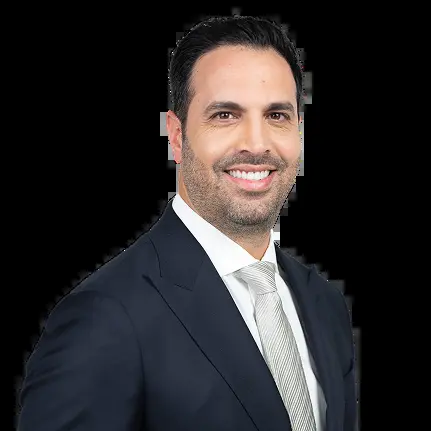
Joseph Shirazi
Managing Partner, Compass Law Group, LLP
California State Bar #265403 · Loyola Law School, J.D.
Joseph Shirazi is the Managing Partner of Compass Law Group, LLP, leading the firm’s personal-injury, catastrophic-injury, and wrongful-death trial practice. He authored the analysis on this page.
Profiles: Avvo · Super Lawyers · Justia · LinkedIn · CA State Bar · Full Bio →
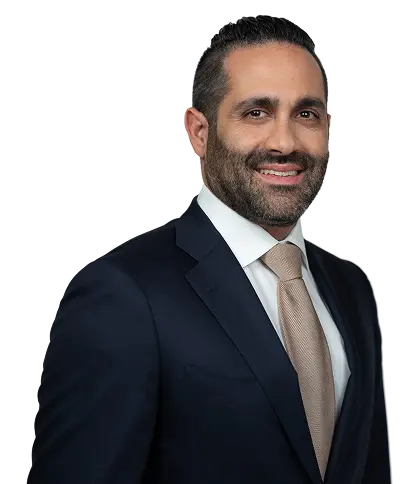
Simon Esfandi
Partner & Co-Founder, Compass Law Group, LLP
California State Bar #275307 · Loyola Law School, J.D.
Simon Esfandi is a Partner and Co-Founder of Compass Law Group, LLP. He reviewed this page for legal accuracy. Compass represents California injury and abuse survivors on a No Win, No Fee basis.
Profiles: Avvo · Super Lawyers · Justia · LinkedIn · CA State Bar · Full Bio →
Past results do not guarantee future outcomes. This article is legal information, not legal advice.