






On July 9, 2026, the Gridley Police Department arrested Robert “Brian” Bassett, 58, a former mayor of Gridley in Butte County, California, on multiple felony sexual assault charges. Authorities allege that the victim was a juvenile foreign exchange student who had been placed in Bassett’s home through a host-family program and was repeatedly sexually abused while in his care. Bassett was booked into the Butte County Jail. These are allegations only. Bassett has been charged, not convicted, and is presumed innocent unless and until proven guilty in a court of law.
Video: KCRA 3 report on the arrest.
- A former Gridley (Butte County) mayor was arrested July 9, 2026 on multiple felony sexual assault charges involving a foreign exchange student placed in his home — allegations only.
- Host-family and exchange-program abuse is a recognized pattern; placement and sponsor organizations can bear civil responsibility for negligent screening, placement, or supervision.
- California’s AB 218 (Code of Civil Procedure §340.1) gives childhood sexual abuse survivors until age 40, or five years from discovery, to file a civil claim.
- A civil case is separate from the criminal case, can proceed regardless of the criminal outcome, and does not require a conviction.
- Survivors can usually file confidentially as a “Jane Doe” or “John Doe.”
A survivor abused by a host parent may have both a criminal case (prosecuted by the district attorney) and a separate civil claim for money damages against the abuser and, in many cases, the exchange program, placement agency, or school that arranged and was responsible for supervising the placement. California’s sexual abuse laws give survivors years — often decades — to come forward.
What we know about the Gridley case
According to the Gridley Police Department, the investigation began after the department received information that a juvenile foreign exchange student had been repeatedly sexually abused. As KCRA 3 reported, the department arrested Bassett, a former mayor of the city, and he now faces multiple felony charges. Because the case is at the charging stage, the specific counts and the evidence behind them will be tested in court. Nothing here should be read as a finding that Bassett did what is alleged — he is entitled to the presumption of innocence, and this article discusses the general legal landscape that surrounds cases of this type.
What makes host-family cases distinct is the trust structure around them. A foreign exchange student is a minor placed, often thousands of miles from family, into a stranger’s home by an organization that vouches for that home. When abuse is alleged in that setting, the law looks not only at the individual but at every organization that had a duty to screen, place, and supervise safely.
How California law protects sexual abuse survivors
California has some of the strongest survivor-protection laws in the country. The most important is Assembly Bill 218, codified at Code of Civil Procedure §340.1. Under §340.1, a survivor of childhood sexual abuse generally has until age 40, or five years from the date they discover that a psychological injury was caused by the abuse, to file a civil lawsuit — whichever is later. The statute also allows enhanced damages of up to three times the amount that would otherwise be awarded when a non-perpetrator defendant (such as an institution) engaged in a cover-up.
For survivors who were adults at the time, California’s Code of Civil Procedure §340.16 and the sexual-battery provisions of Civil Code §1708.5 provide additional avenues. These laws exist for a reason: research and decades of case experience show that survivors often need many years before they are able to disclose what happened. To learn more about how these deadlines work, see our guide to the California sexual abuse claims process.
Who can be held civilly liable in a host-family abuse case?
Civil liability in an exchange-student case often reaches well beyond the individual accused of abuse. Potentially responsible parties can include:
- The individual abuser — directly, for the assault or battery.
- The exchange or sponsor organization — U.S. exchange programs are expected to screen host families, conduct home visits, and monitor placements. A program that negligently vetted or supervised a host home may share responsibility.
- A placement or recruitment agency — where a third party arranged the housing.
- A school district — if a school arranged, sponsored, or oversaw the placement, the same duty-of-care and mandated-reporter obligations that apply to school sexual abuse cases can apply here.
Institutional liability generally turns on what each organization knew or should have known and whether it took reasonable steps to prevent foreseeable harm. This is the same negligence framework that governs clergy, youth-organization, and other institutional abuse claims.
What compensation can a survivor recover?
California does not cap damages in sexual abuse cases. A survivor may recover economic damages (past and future therapy and medical care, lost earnings, and lost earning capacity) and non-economic damages (pain, suffering, emotional distress, and loss of enjoyment of life). Where a cover-up by an enabling institution is proven, §340.1 permits treble damages. Every case is different, and past results never guarantee future outcomes — but the point of a civil claim is to hold every responsible party accountable and to fund the long road of recovery. Our overview of how a case is valued explains the factors in detail.
It is also worth understanding why exchange-student cases so often involve more than one defendant. Designated exchange-program sponsors operate under standards that call for careful host-family vetting, in-person home checks, regular contact with the student, and prompt action on any report of concern. When those safeguards break down, the resulting harm is frequently foreseeable — and foreseeability is the heart of a negligence claim. A thorough investigation looks at the sponsor’s screening file, the frequency and quality of its monitoring, and whether earlier warning signs were ignored. That is the difference between a claim aimed only at an individual and one that reaches the organizations that placed a child in harm’s way.
What survivors and families can do now
- Get to safety and support. Reach out to a trusted adult, counselor, or a survivor hotline such as RAINN (800-656-4673).
- Preserve information. Save messages, photos, documents, and the names of the exchange program, sponsor, and any school involved in the placement.
- Understand your privacy. A civil claim can usually be filed anonymously as a “Jane Doe” or “John Doe” to protect your identity.
- Know the two tracks. The criminal case belongs to the prosecutor; your civil case belongs to you and is separate.
- Talk to a sexual abuse attorney about your deadline under §340.1 and the organizations that may share responsibility. Consultations are free and confidential.
How Compass Law Group helps sexual abuse survivors
Compass Law Group represents sexual abuse survivors throughout California from offices in Sacramento, Oakland, San Francisco, and Los Angeles. We handle these cases with discretion and compassion, investigate the institutions that enabled the abuse, and advance every case cost on a strict No Win, No Fee basis — survivors pay nothing unless we recover for them. If you or someone you love was harmed in a host-family, exchange, or institutional setting, you can read more in our guides on the AB 218 lawsuit process and how sexual abuse compensation works in California.
Frequently Asked Questions
Can I file a civil lawsuit while the criminal case is still ongoing?
Yes. A civil claim for damages is separate from the district attorney’s criminal prosecution and can be filed and pursued regardless of whether, or when, the criminal case resolves. A criminal conviction is not required to win a civil case — the burden of proof is lower in civil court.
Can a foreign exchange or host-family program be held responsible?
Potentially. If a sponsor, placement agency, or school negligently screened, placed, or supervised the student and that negligence enabled the abuse, California law may allow a claim against that organization in addition to the individual accused.
How long do I have to file a sexual abuse claim in California?
Under AB 218 (CCP §340.1), survivors of childhood sexual abuse generally have until age 40, or five years from discovering the harm, whichever is later. Adult survivors have separate deadlines. Because these rules are fact-specific, confirm your deadline with an attorney.
Will my identity be protected if I come forward?
In many California sexual abuse cases survivors can proceed anonymously using a “Jane Doe” or “John Doe” designation to keep their name out of the public record.
What compensation can a survivor recover?
Survivors may recover economic damages (therapy, medical care, lost earnings) and non-economic damages (pain, suffering, emotional distress). Where a cover-up by an institution is proven, CCP §340.1 allows enhanced damages of up to three times the award.
Does it cost anything to talk to a lawyer?
No. Consultations at Compass Law Group are free and confidential, and we work on a No Win, No Fee basis — you pay nothing unless we recover for you.
Speak With a California Sexual Abuse Attorney
Compass Law Group represents sexual abuse survivors across California — confidential, compassionate, and on a strict No Win, No Fee basis. Your call is private and there is no obligation.
References
- KCRA 3 — video report
- Napa Valley Patch — original report
- California Code of Civil Procedure §340.1 (AB 218)
- RAINN — National Sexual Assault Hotline
Written & legally reviewed by Compass Law Group partners

Joseph Shirazi
Managing Partner, Compass Law Group, LLP
California State Bar #265403 · Loyola Law School, J.D.
Joseph Shirazi is the Managing Partner of Compass Law Group, LLP, leading the firm’s personal-injury, catastrophic-injury, and wrongful-death trial practice. He authored the analysis on this page.
Profiles: Avvo · Super Lawyers · Justia · LinkedIn · CA State Bar · Full Bio →
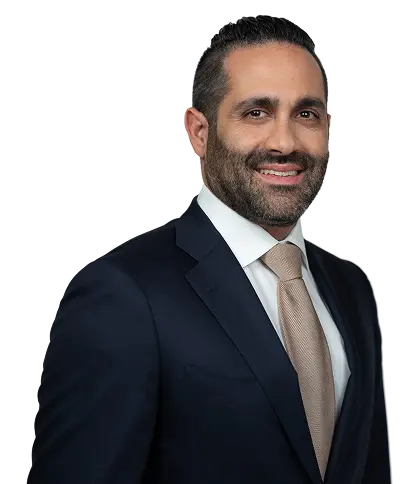
Simon Esfandi
Partner & Co-Founder, Compass Law Group, LLP
California State Bar #275307 · Loyola Law School, J.D.
Simon Esfandi is a Partner and Co-Founder of Compass Law Group, LLP. He reviewed this page for legal accuracy. Compass represents California sexual abuse survivors on a No Win, No Fee basis.
Profiles: Avvo · Super Lawyers · Justia · LinkedIn · CA State Bar · Full Bio →
Past results do not guarantee future outcomes. This article is legal information, not legal advice.