



Under California Code of Civil Procedure § 377.60, specific family members — a surviving spouse, domestic partner, children, and certain other heirs or dependents — may bring a wrongful-death lawsuit when a loved one is killed by another’s wrongful act or negligence.
Reviewed against the current statutory text at leginfo.legislature.ca.gov. This page is legal information, not legal advice.
Exact Statute Text
377.60. A cause of action for the death of a person caused by the wrongful act or neglect of another may be asserted by any of the following persons or by the decedent’s personal representative on their behalf: (a) The decedent’s surviving spouse, domestic partner, children, and issue of deceased children, or, if there is no surviving issue of the decedent, the persons… who would be entitled to the property of the decedent by intestate succession…
(b) … whether or not qualified under subdivision (a), certain persons who were dependent on the decedent may also recover…
Read the full, current section at the official source: Cal. Code Civ. Proc. § 377.60 (leginfo).
In Plain English
- Who may sue: surviving spouse or domestic partner, children, and grandchildren of deceased children come first.
- If no such heirs: those entitled to the estate by intestate succession may sue (e.g., parents, siblings).
- Dependents: certain financially dependent people (e.g., a putative spouse, stepchildren, parents) may also recover.
- Deadline: generally two years from the date of death (CCP § 335.1).
Key Terms Defined
Wrongful death
A civil claim for the death of a person caused by another’s wrongful act or neglect, brought by the statutory heirs.
Intestate succession
The default order of inheritance when there is no will — used to identify eligible claimants when there is no spouse or child.
Personal representative
The estate’s representative, who may bring the claim on the heirs’ behalf.
Purpose & Context
Section 377.60 defines exactly who has the right to seek compensation for a loved one’s death, prioritizing the closest family members and extending to certain dependents — ensuring those most affected can hold the responsible party accountable.
Real-World Example
A parent of two children is killed by a negligent driver. Under § 377.60, the surviving spouse and children may bring a wrongful-death claim — and must generally do so within two years of the death under § 335.1.
Who may file under CCP § 377.60
| Priority | Who may sue |
|---|---|
| First | Surviving spouse or domestic partner, children, issue of deceased children |
| If none of the above | Those entitled by intestate succession (e.g., parents, siblings) |
| Dependents | Certain financially dependent persons (putative spouse, stepchildren, parents) |
| On their behalf | The decedent’s personal representative |
Related California Statutes
Why 377.60 Matters
For injured people & families
Knowing who has standing — and acting within two years — is the threshold step to holding a responsible party accountable for a loved one’s death. See our California wrongful death lawyer page.
For defendants
Standing is often contested; a defendant may challenge whether a claimant qualifies as a proper heir or dependent under § 377.60.
Frequently Asked Questions
Who can file a wrongful death lawsuit in California?
Under CCP § 377.60, a surviving spouse or domestic partner, children, and issue of deceased children — and, if none, intestate heirs and certain dependents.
Can parents or siblings sue for wrongful death?
Yes, generally if there is no surviving spouse, domestic partner, or child — through intestate succession — or if they were dependents.
How long do we have to file?
Generally two years from the date of death (CCP § 335.1).
Can the estate bring the claim?
Yes. The decedent’s personal representative may assert the claim on the heirs’ behalf.

Joseph Shirazi — Managing Partner · California State Bar #265403
Joseph Shirazi is the Managing Partner of Compass Law Group, LLP, representing injury and abuse survivors throughout California.
Verified profiles: Avvo · Super Lawyers · Justia · Elite Lawyer · LinkedIn · CA State Bar
Legally reviewed by Simon Esfandi, Partner & Co-Founder (CA Bar #275307).
Disclaimer: This page provides general legal information about California law and is not legal advice. Reading it does not create an attorney-client relationship. Past results do not guarantee future outcomes.
Meet Our Managing Partners
National Top 100 Trial Lawyers and Avvo 10.0 Superb. Loyola Law School graduate. Recognized for his $14,500,000 truck accident verdict and a $13,000,000 trial verdict.
Read Full Bio →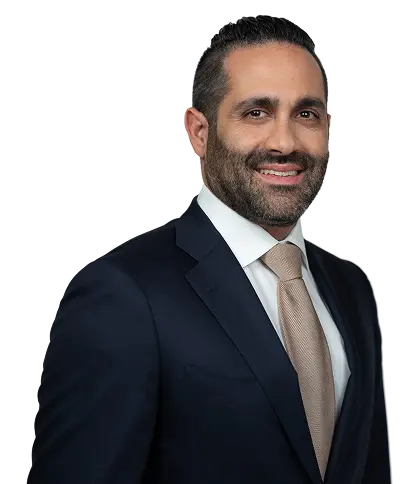
Super Lawyers Rising Star. Southwestern Law School graduate. Led the firm’s $9,870,000 motorcycle accident settlement and a $2,250,000 rideshare recovery.
Read Full Bio →- ★ National Top 100 Trial Lawyers
- ★ Super Lawyers Rising Star
- ★ Avvo 10.0 Superb Rating
- ★ Top 40 Under 40
- ★ Consumer Attorneys of California · CAALA · AAJ