






Your Battle, Our Compass:
Beverly Hills Institutional Sexual Abuse Attorney
Our Beverly Hills sexual abuse attorneys hold institutions accountable — the schools, churches, hospitals, talent agencies, studios, hotels, and youth organizations whose negligent hiring, failed supervision, ignored complaints, or outright cover-ups allowed abuse to happen. If you or a loved one were abused by someone an institution placed in a position of trust, call us today at (213) 320-1001 for a free, confidential consultation.


⚠️ Important Deadline: December 31, 2026
California’s AB 2777 lookback window for adult sexual assault claims closes on December 31, 2026. If your assault occurred on or after January 1, 2009 — or if an institution covered it up — you may be able to file a civil lawsuit even if the standard statute of limitations would otherwise bar your claim, but only if you file before the deadline.
Schedule a free, confidential consultation with Compass Law Group, LLP — we’ll evaluate your case and explain your options. No win, no fee.
What Counts as Institutional Sexual Abuse in California
Institutional sexual abuse is not a single case type — it is a theory of accountability. It applies whenever an organization created the conditions for abuse and then failed to prevent, report, or stop it. The individual who committed the abuse is always liable, but in an institutional case the deeper question is what the organization knew, when it knew it, and what it chose to do with that knowledge. Beverly Hills concentrates an unusual density of these institutions in a small footprint, and our attorneys pursue all four of the failure patterns that define institutional liability:
- Negligent supervision and cover-up — the institution ignored complaints, failed to supervise a known risk, quietly transferred an abuser, or actively concealed misconduct to protect its reputation.
- Failure to report (mandated reporters) — teachers, doctors, clergy, coaches, and administrators are legally required to report suspected child abuse under California Penal Code §11165.7, and an institution that stayed silent breached that duty.
- Entertainment-industry institutions — Beverly Hills and Century City talent agencies, management firms, studios, and production companies that used access, contracts, and non-disclosure agreements to enable and silence abuse.
- Schools, religious organizations, and medical providers — the three classic institutional contexts, each with its own duty of care and its own pattern of failure.
These claims are entirely independent of any criminal case, licensing complaint, or internal investigation. You do not need a conviction, a police report, or the institution’s cooperation to hold it civilly accountable.
Who Can Be Held Liable for Institutional Sexual Abuse in Beverly Hills?
In California, liability for institutional sexual abuse reaches every person and organization that committed, enabled, or failed to prevent the harm. The individual abuser bears direct liability for battery under California Civil Code §1708.5. But the reason to bring an institutional claim is that the organization behind the abuser almost always shares — and often bears the greater — responsibility, and it almost always has the resources to make a survivor whole.
Institutions face liability under two overlapping theories. Under respondeat superior, an organization is vicariously liable for abuse committed within the scope of an employee’s duties. Under negligent hiring, supervision, and retention, an institution that knew or should have known an employee, volunteer, or contractor posed a danger is directly liable under the general duty of care in California Civil Code §1714. A single prior complaint — to a principal, a bishop, a hospital administrator, a Title IX office, an HR department, or an agency partner — is typically enough to establish that the institution had constructive knowledge of the risk before the abuse occurred.
Failure to Report: The Mandated-Reporter Breach
California’s Child Abuse and Neglect Reporting Act designates a long list of professionals as mandated reporters under Penal Code §11165.7 — teachers, school administrators, physicians, therapists, clergy in many circumstances, coaches, and childcare providers among them. When a mandated reporter learns of suspected child sexual abuse and stays silent, the institution that employed them has breached a statutory duty, and that silence is frequently what allowed a serial abuser to continue for years. Failure-to-report evidence is central to establishing that an institution’s inaction was not an oversight but a choice.
Cover-Ups and Concealment
The most damaging institutional cases involve active concealment: complaints that were received and buried, abusers quietly moved to another campus, parish, hospital, or set, and records that were altered or destroyed. California law treats this conduct harshly. AB 218 authorizes treble (triple) damages where a claim of childhood sexual abuse is proven to have been covered up by an institution, and AB 2777’s revival window expressly reaches adult claims where an entity engaged in a cover-up.
Institutions our Beverly Hills attorneys hold accountable include:
- Schools and school districts — public and private, K–12 and higher education, for negligent supervision and mandated-reporter failures. See our Beverly Hills school sexual abuse attorney page.
- Churches, dioceses, and religious organizations — for reassigning known abusers and suppressing reports. See our Beverly Hills clergy sexual abuse attorney page.
- Hospitals, clinics, and medical groups — for credentialing and retaining providers who abused patients. See our Beverly Hills doctor sexual abuse attorney page.
- Employers, talent agencies, studios, and hotels — for enabling workplace and guest-facing abuse. See our Beverly Hills workplace sexual abuse attorney page.
- Youth organizations and programs — camps, clubs, and athletic programs that failed to screen or supervise the adults they placed with children.
How We Value an Institutional Sexual Abuse Case in California
The largest sexual abuse recoveries in California history are institutional cases. The University of Southern California’s student health center scandal produced more than $1 billion in combined settlements after evidence showed administrators received and disregarded complaints for decades. The Archdiocese of Los Angeles and the Boy Scouts of America reorganizations resolved thousands of claims for billions more. Those outcomes reflect a fundamental truth: when institutional failure compounds individual wrongdoing, financial accountability can be profound. At Compass Law Group, our attorneys have recovered more than $250 million for survivors across California, and we bring that same evidence-driven approach to every institutional case we accept.
Valuing an institutional case begins with a complete accounting of every loss you have suffered and will continue to suffer. California law allows survivors to recover compensatory damages for therapy and ongoing mental health treatment, past and future medical expenses, lost earnings and diminished earning capacity, and the disruption abuse causes to education, career, and daily life. Emotional distress and pain and suffering add a separate, uncapped layer of recovery.
Punitive Damages: Holding Institutions Financially Accountable
When an institution knew or should have known abuse was occurring and failed to act, California Civil Code §3294 authorizes punitive damages. These are not calculated from your individual losses — they are designed to punish the organization and deter the pattern of institutional cover-up that allows serial abusers to remain in place. Punitive damages become available when we establish by clear and convincing evidence that the institution acted with malice, oppression, or fraud, which in institutional cases typically means proving one or more of the following:
- Prior complaints about the abuser were received and ignored, suppressed, or destroyed
- The institution retained or quietly transferred the abuser despite documented red flags
- Mandated reporters within the organization failed their duty under Penal Code §11165.7
- Leadership was informed of misconduct and chose inaction to protect the institution’s reputation
- The institution used contracts or non-disclosure agreements to discourage or silence reporting
Entertainment-Industry Institutions and the End of Silencing NDAs
Beverly Hills and neighboring Century City form the administrative center of the entertainment industry, and for decades abusers there weaponized access and non-disclosure agreements to coerce and silence survivors. California has moved aggressively against this. Senate Bill 820 (2019) and the Silenced No More Act, Senate Bill 331 (2022), prohibit settlement and employment provisions that prevent disclosure of factual information about sexual assault, harassment, or discrimination. If you signed an NDA relating to abuse at a Beverly Hills agency, studio, or production company, that agreement may be void and unenforceable — and the institution that used it remains liable.
AB 218 and AB 2777: California’s Expanded Recovery Windows
Two landmark statutes govern the recovery window in institutional cases, and distinguishing them correctly matters. AB 218 (2019), codified at Code of Civil Procedure §340.1, eliminated the statute of limitations entirely for civil claims involving childhood sexual abuse. If you were under 18 at the time, there is no filing deadline, and proven institutional cover-ups can trigger treble damages. AB 2777 (2022) created a limited revival window for adult survivors: if your abuse occurred on or after January 1, 2009 — or if an organization covered it up — you may file even if the ordinary limitations period has expired. That adult revival window closes permanently on December 31, 2026. Survivors who have not yet spoken with an attorney are working against a hard statutory deadline.
What to Do If You Are a Survivor of Institutional Sexual Abuse
Coming forward about abuse enabled by a powerful institution — a school district, a diocese, a hospital system, a talent agency, a studio — is one of the most difficult steps a person can take, precisely because the organization has resources, lawyers, and a reputation to defend. California law gives survivors specific, powerful tools, including civil lawsuits that are entirely separate from any internal investigation, licensing complaint, or criminal case. The steps below are designed for exactly this situation. Follow them in order, at whatever pace you are able.
- Prioritize your safety and get support — If you or a child are in immediate danger, call 911. For confidential, 24/7 support, the national sexual assault hotline through RAINN can connect you with a trained advocate. You do not have to decide anything about a lawsuit to reach out.
- Write down everything you remember — now — Memory is evidence. As soon as it is safe, record a private, detailed account of every incident: dates, times, locations, exactly what was said and done, who else was present or nearby, and — critically for an institutional case — every time you or anyone else reported concerns to the organization, and how it responded.
- Preserve institutional evidence and do not sign anything — Institutional cases turn on what the organization knew. Keep emails, letters, texts, complaint forms, and personnel or transfer records if you have them. Do not sign a settlement, release, or non-disclosure agreement offered by the institution without independent legal advice — under SB 820 and SB 331, many such agreements are unenforceable against sexual abuse survivors in California.
- Understand your deadline — For childhood abuse, AB 218 means there is generally no statute of limitations. For adult abuse, the AB 2777 revival window closes December 31, 2026. Because deadlines depend on your specific facts, confirm yours with an attorney rather than assuming a claim is time-barred.
- Talk to a Beverly Hills institutional abuse attorney — An experienced civil attorney can issue litigation-hold letters to stop the destruction of institutional records, subpoena personnel and complaint files, and build the timeline of institutional knowledge that drives case value. Your first conversation with us is free and confidential, and your identity is protected by attorney-client privilege from the moment you call.
Compass Law Group is headquartered in Beverly Hills, in the heart of the city where many of these institutions operate. Our attorneys handle institutional sexual abuse cases with trauma-informed care, complete confidentiality, and a No Win, No Fee guarantee. If you were abused by someone a sexual abuse lawyer would recognize an institution should have stopped — at a school, church, hospital, agency, studio, hotel, or youth program anywhere in the Beverly Hills area — call us at (213) 320-1001 for a free, completely confidential consultation. The AB 2777 revival window closes December 31, 2026, and there is no fee unless we recover compensation for you.
(213) 699-3782
Do I have a case?
Contact us today for a free consultation.
California's
Gold Standard
Injury Law Firm
With Joseph Shirazi and Simon Esfandi at the helm, our firm is a trusted name in accident law in California.
Meet Our Managing Partners
National Top 100 Trial Lawyers and Avvo 10.0 Superb. Loyola Law School graduate. Recognized for his $14,500,000 truck accident verdict and a $13,000,000 trial verdict.
Read Full Bio →
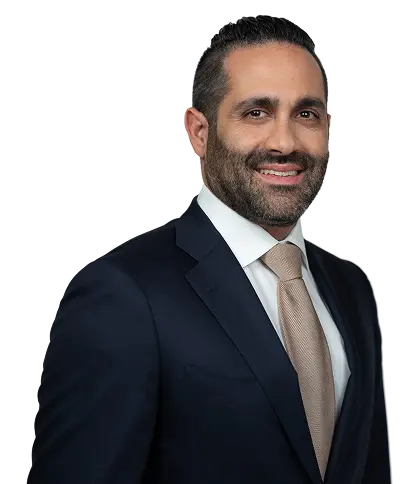
Super Lawyers Rising Star. Southwestern Law School graduate. Led the firm’s $9,870,000 motorcycle accident settlement and a $2,250,000 rideshare recovery.
Read Full Bio →- ★ National Top 100 Trial Lawyers
- ★ Super Lawyers Rising Star
- ★ Avvo 10.0 Superb Rating
- ★ Top 40 Under 40
- ★ Consumer Attorneys of California · CAALA · AAJ
Countless Real Client Reviews Verified by Google


Jerry
After 10 accidents and 9 attorneys, the client met Simon, who stood out for his honesty and clear communication. Years later, after another accident, the client called Simon and was impressed by his professionalism and follow-through. Simon explained everything, connected him with top doctors, and kept every promise. It was the first time the client felt truly supported—highly recommending Simon and Joseph for their integrity and dedication.
Jacob
Jacob was rear-ended by a big rig and left nearly paralyzed for a year. He found Cooper Law Group, and Joseph and Simon personally helped him through the legal process. Over two years, they ensured he got the medical care and surgeries he needed, helped repair his car, and secured the compensation he deserved. He highly recommends them for truly fighting for their clients.
Blandine
During the early days of COVID, Blandine was hit by a car while biking to work. Alone and unsure of what to do, they found Compass Law Group. Joseph was the first to respond with care and clarity. Throughout the case, the team—Joseph, Simon, and Julie—provided support, regular check-ins, and made the client feel safe and cared for. They now consider the firm like family and highly recommend them for their compassion and competence.
Understanding Your Rights:
Frequently Asked
Questions
#1 Do I have a case?
Understanding whether a claim exists is one of the challenges of personal injury law. This is why we offer free initial consultations to help you make this determination and allow you an avenue to vindicate your rights.
We’re committed to fighting for the rights of accident victims throughout Southern California, and, unlike other California personal injury attorneys, we will take on any case if we can help, no matter how big or small.
#2 What is personal injury?
Personal injury involves harm to an individual’s body or property caused by someone else’s negligence. It can range from minor to significant injuries, often requiring legal action to recover damages. We specialize in representing and securing fair settlements for such victims.
#3 Why hire Compass Law Group?
Our client-focused approach ensures personalized attention, detailed case building, and compelling evidence presentation. We’re skilled in negotiating settlements and prepared for trial with aggressive strategies. Our firm maintains transparent communication, involves clients in the process, and utilizes a wide network of expert witnesses and resources to strengthen cases. Choosing us means trusting a team dedicated to your success and justice.
#4What if I didn't go to the hospital?
No matter the injury size, you have rights that need defending. Many injuries seem minor at first but can worsen over time. Ignoring treatment or legal advice risks your health and compensation. Seek immediate medical and legal help after any accident to ensure proper diagnosis and strengthen your compensation claim.
